Pickled Condiments
Gaeta Olive
Also: oliva di Gaeta, itrana olive, Roman olive
Lazio's plump purple-black olive — mild brine, yielding flesh, and a fruity depth that makes it the definitive Italian antipasto and puttanesca olive.
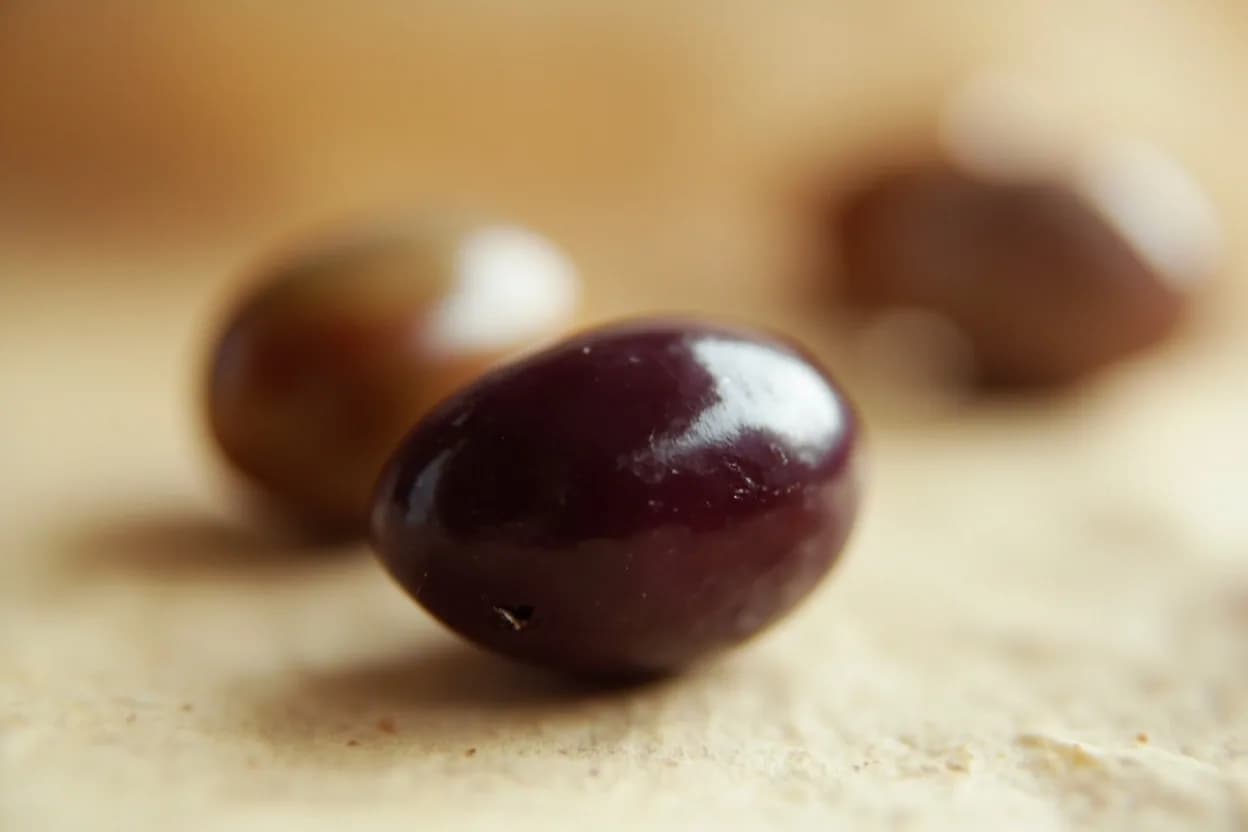
Gaeta olives come from the Itrana cultivar grown around the coastal Lazio town of Gaeta and into Campania. Harvested at near-full ripeness (turning purple to dark brown), they are either brine-cured in a mild salt solution or dry-salt-cured, which concentrates their flavor into a wrinkled, meaty fruit. The result is softer and milder than the sharp Kalamata or the assertive Sicilian varieties — their brine is gentle, their oil content is high, and their flavor carries a slight fruity sweetness alongside the salt.
In photos
Flavour profile
Classic pairings
- Pasta all'puttanescaItalian (Lazio / Campania)
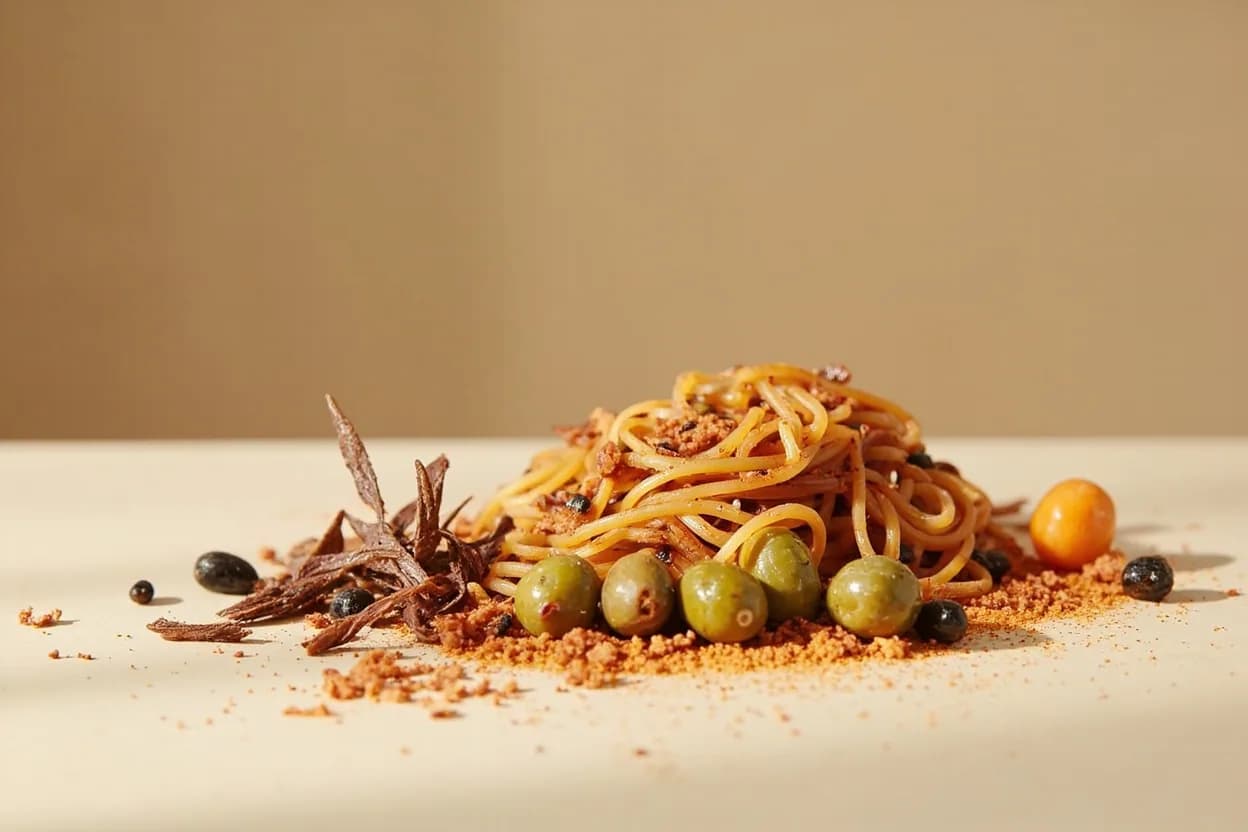
The canonical Neapolitan-Roman pasta: Gaeta olives contribute fruity brine without overpowering the anchovy and caper base; their softness disperses into the sauce.
- AnchovyItalian
Salt and umami at two intensities — the Gaeta's mildness is the foil that lets the anchovy lead; essential in puttanesca and on pizza Napoletana.
- CaperItalian
Brine plus acid plus brine: this trio (olive, caper, anchovy) is the flavor engine of Lazio and Campania pasta sauces; each contributes a different salt register.
- San Marzano tomatoItalian
Gaeta's fruit and mild brine echo the low-acid sweetness of San Marzano; together they form the base of Rome's agrodolce pasta tradition.
- Fresh mozzarella di bufalaItalian
Cool milky fat tames the brine; the olive's soft texture and the cheese's curd create a harmonious antipasto pairing that needs only good bread.
- Crusty pane di casa or focacciaItalian
The simplest deployment: bread's neutrality allows the olive's oil content to express itself; pressed into Lazio-style pizza bianca, Gaeta olives are quintessential.
- Braised lamb (abbacchio)Italian (Lazio)
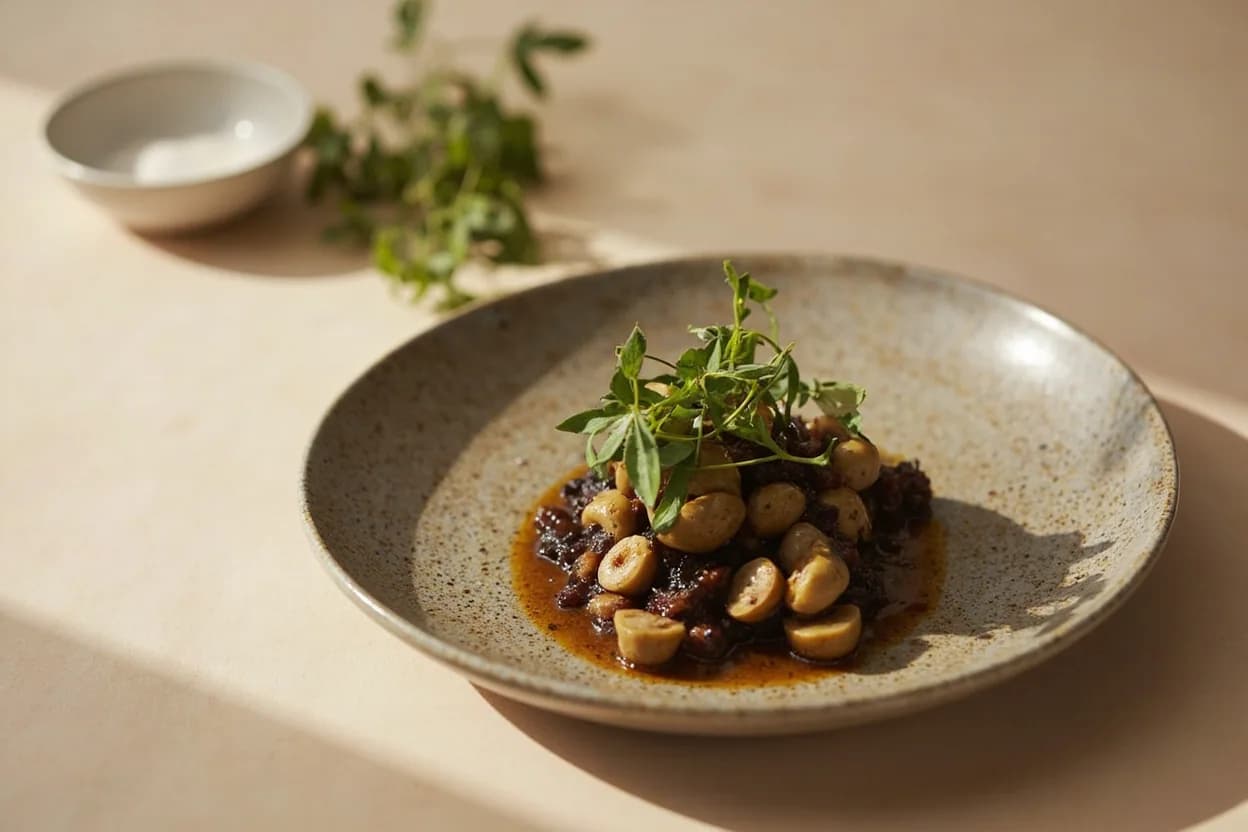
Roman abbacchio alla cacciatora features Gaeta olives simmering with the lamb; the fruit's mild brine seasons the meat without competing with rosemary and wine.
Adventurous pairings
- Dark grape must (vincotto)
Gaeta's dried-fruit undertone is amplified by vincotto's concentrated grape sweetness; a few olives draped with a thread of vincotto make a startling antipasto.
- Bottarga (cured tuna or mullet roe)
Two preserved sea-products from the same Italian pantry tradition; bottarga's briny umami and Gaeta's fruity mildness balance each other on grilled crostini.
- Honey and ricotta
The agrodolce impulse of Central Italian cooking: salty-fruity Gaeta olives alongside fresh ricotta drizzled with chestnut honey is a natural Umbrian/Lazio appetizer.
- Slow-roasted beet
Earthy, sweet roasted beet and salty-fruity olive create a color-and-flavor mirror; a pinch of orange zest bridges them.
- Fregola sarda with seafood
Adding pitted Gaeta olives to Sardinian fregola with clams or mussels enriches the sauce without demanding attention; the mild brine elevates the broth.
Tread carefully
- Heavily smoked fish (kipper, smoked mackerel)avoid
Smoke overpowers the olive's subtle fruitiness; both are assertively salty, and without a contrasting element the pairing is monotonous.
- Aged sharp cheeses (Parmigiano Reggiano grated)avoid
Grated Parmigiano's intense savory sharpness tends to flatten Gaeta's mild fruit rather than complement it; use young or soft cheeses instead.
- Very tannic young red wine (unoaked young Nebbiolo, unaged Sangiovese)avoid
Harsh tannins clash with the olive's brine and fat; polyphenols from both sources collide rather than harmonize. Choose older vintages or fruitier reds.
How to use it
- Pit and roughly chop to add to pasta sauces — let them dissolve partially into oil-based ragù
- Marinate whole in extra-virgin olive oil with fennel pollen, lemon zest, and dried chili for an easy antipasto
- Toss into bread dough for schiacciata or pizza bianca (Gaeta olives pressed into focaccia are traditional in Lazio)
- Warm in white wine and garlic as a simple sauce base for fish or chicken
- Blend with capers, anchovies, and olive oil for a Roman-style tapenade / pasta condiment
Appears in
Related flavours
- Kalamata Olive
The Greek cousin — sharper acid, more intense; Gaeta is milder and fruitier; they share the puttanesca application but give different results
- Caper
Constant companion in Lazio-Campania cooking; together they form the salt-acid backbone of Roman pasta sauces
The umami bridge that elevates the Gaeta's mild brine in every classic Italian pasta sauce context
- Castelvetrano Olive
Sicilian green alternative — sweeter, crunchier, buttery; a useful substitution in antipasto when Gaeta is unavailable
References
- 1.Essentials of Classic Italian Cooking — Marcella Hazan (1992)
- 2.The Oxford Companion to Food — Alan Davidson (3rd ed., 2014)
- 3.Rome: Centuries in an Italian Kitchen — Oretta Zanini De Vita (2013)
- 4.Italian Food — Elizabeth David (revised ed., 1999)
Confidence: high
Notes
Dry-cured vs. brine-cured Gaeta
Gaeta olives sold in Italian delis appear in two forms: the more common brine-cured version (moist, round, purple-black) and the traditional dry-salt-cured version (wrinkled, shriveled, more intense flavor). The dry-cured style is closer to Moroccan oil-cured olives in texture and concentration; it is excellent with aged pecorino and rough bread, while the brine-cured type is better for cooking (pasta sauces, braises) where its moisture integrates into the dish.