Vegetables & Fruits
San Marzano Tomato
Also: pomodoro San Marzano, S. Marzano tomato, DOP San Marzano, plum tomato San Marzano
Italy's most revered sauce tomato — low in acid, high in sweetness and flesh — pairs best with ingredients that let its purity speak.
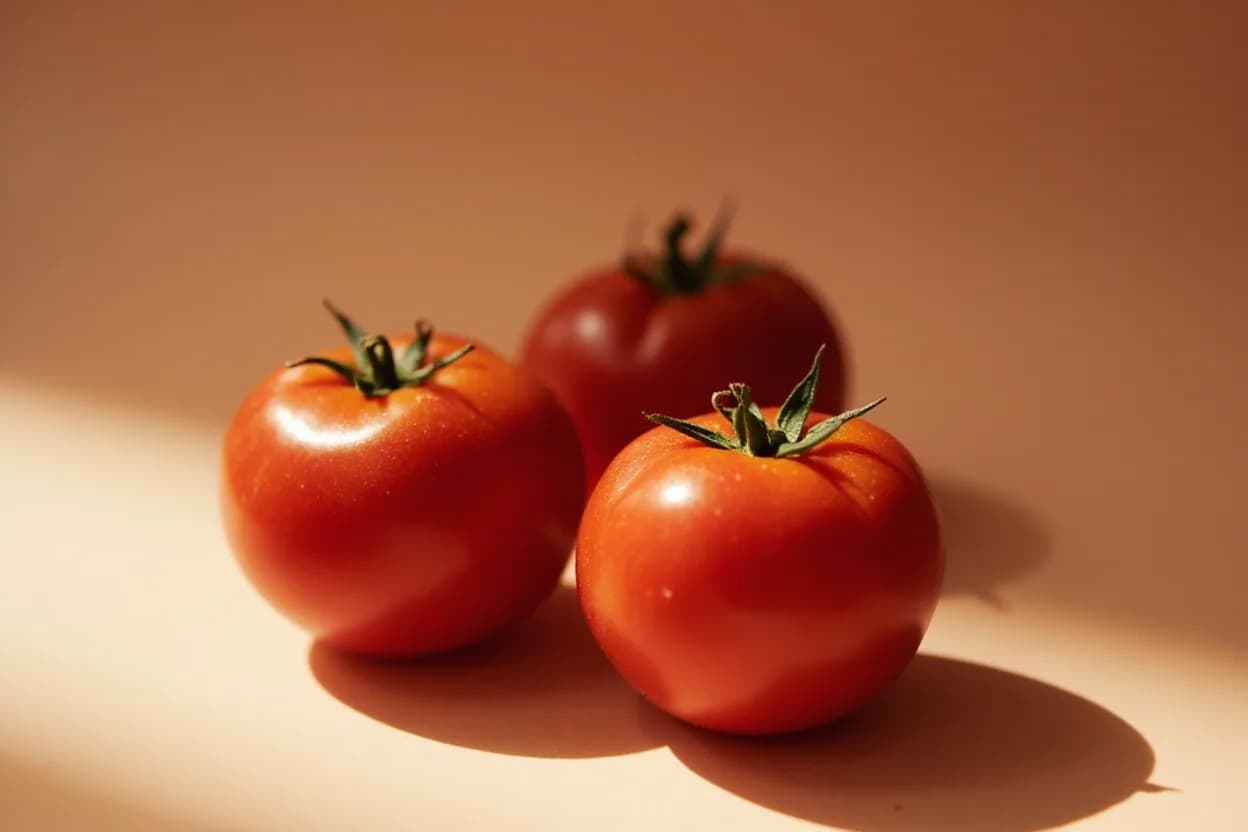
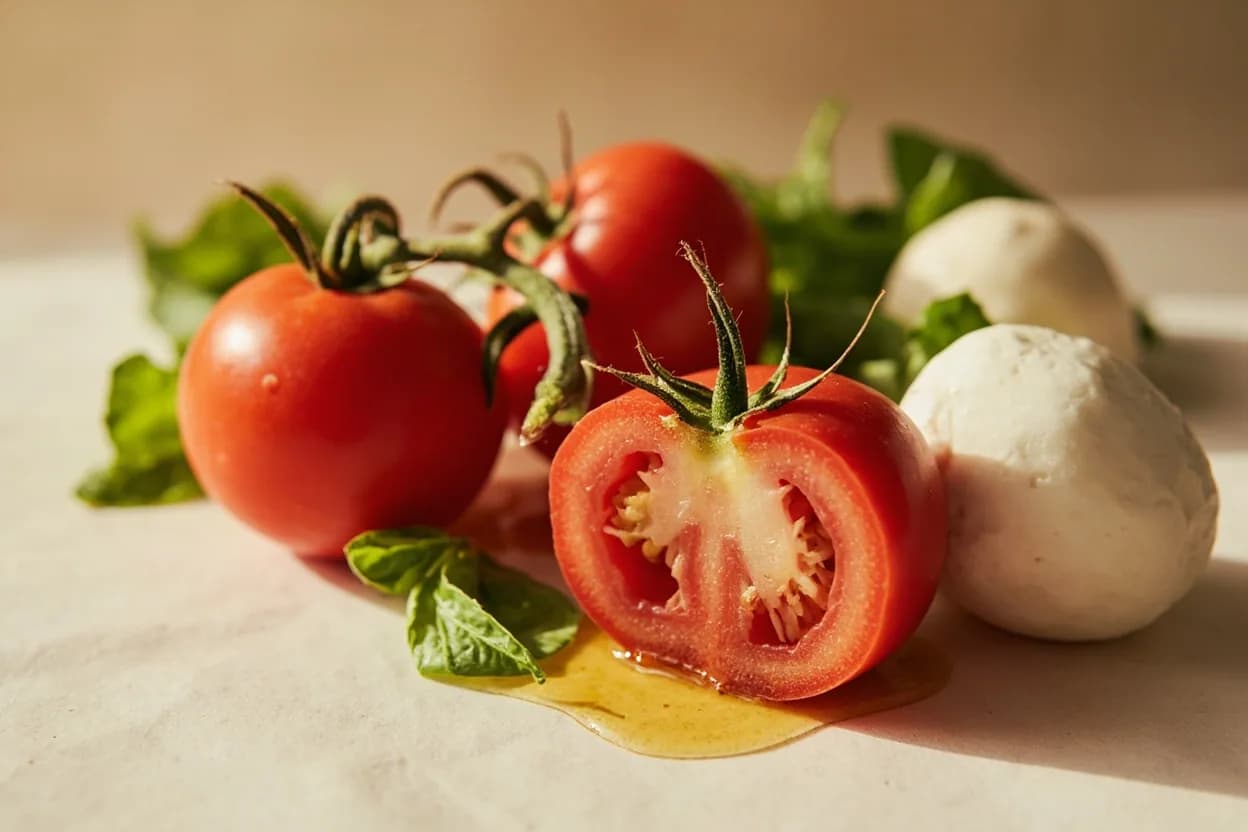
San Marzano tomatoes are an elongated plum variety grown in the volcanic soils of the Agro Sarnese-Nocerino zone near Naples, Italy, classified DOP (Denominazione di Origine Protetta). Their thick, meaty walls, minimal seed cavity, and reduced water content give them a concentrated sweetness and only gentle acidity compared to most tomatoes. The flavor is clean and bright rather than aggressively tart, with a lingering umami depth from their terroir. They are the canonical ingredient for Neapolitan pizza sauce (Pizza Napoletana STG requires them) and the base of countless southern Italian braises and pasta sauces.
In photos
Flavour profile
Classic pairings
- Fior di latte / Buffalo mozzarellaItalian (Neapolitan)
The classic Neapolitan pairing: the tomato's gentle sweetness and clean acid balance the milky, neutral richness of fresh mozzarella. On a Margherita, neither ingredient dominates — they form a single flavor entity.
- Fresh basilItalian
Basil's anise-sweet, slightly peppery herbaceousness is the canonical aromatic partner. Added after cooking (or used raw atop pizza), it preserves its volatile oils and lifts the tomato's sweetness.
- Extra-virgin olive oilItalian
A generous drizzle of grassy, fruity Campanian or Sicilian olive oil enriches the tomato's body and carries its fat-soluble aromatic compounds. San Marzano sauce without olive oil is thin and incomplete.
- GarlicItalian
Gently sautéed or crushed raw into sauce, garlic adds sulfurous depth and warmth that frames the tomato's sweetness. The two are inseparable in sugo al pomodoro.
- Spaghetti / long pastaItalian
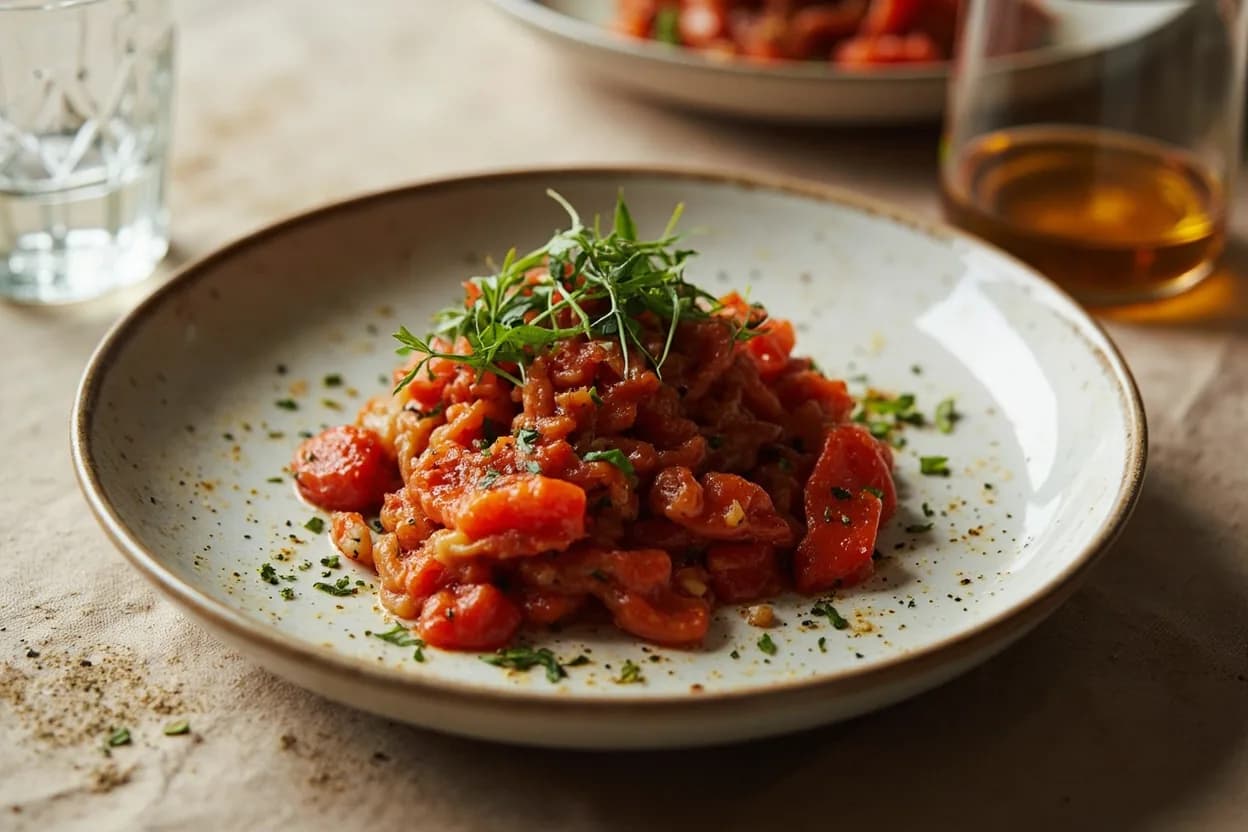
San Marzano's silky, clingy sauce adheres perfectly to long pasta. The low acid and high sugar mean the sauce cooks quickly without bitterness, making it the definitive choice for pomodoro and marinara.
- Parmigiano-ReggianoItalian
Aged Parmigiano's crystalline umami and salt amplify the tomato's savory depth. The fat in the cheese also enriches the sauce without masking the San Marzano's inherent sweetness.
- Lamb (slow-braised)Italian (Southern)
The tomato's low acid makes it ideal for long braises; it mellows even further with time, creating a sweet-savory sauce base that complements lamb's gamey richness without curdling cream or toughening proteins.
Adventurous pairings
The volcanic heat and pork-fat richness of Calabrian nduja melt into San Marzano's sweet pulp to create a deeply savory, aromatic sauce — the sweetness moderates the spice while the fat carries it.
- Anchovies
Melted anchovies in olive oil before adding the tomato create a puttanesca-adjacent depth; the fish's salinity and umami become invisible in the finished sauce but add a third dimension that plain salt cannot.
- Burrata with preserved lemon
Preserved lemon's fermented citrus edge plays against San Marzano's gentle sweetness, while burrata provides cool dairy cushion — a contemporary plate that respects the tomato's character.
- Smoked ricotta
Ricotta affumicata's gentle smokiness and grainy texture contrast the tomato's smooth sweetness; together they recall the flavors of Sicily's pasta alla Norma but with a more pronounced smoke register.
- Balsamic-glazed onion
Slowly caramelized onions finished with aged balsamic deepen San Marzano sauce into something almost jamlike — especially effective in slow-cooked pasta al forno.
Tread carefully
- Cream-heavy saucesavoid
Adding significant cream undercuts the point of San Marzano — its clean, bright tomato character gets masked. A splash is acceptable (vodka sauce), but rich cream sauces are better built on more neutral tomato bases.
- High-acid wine added lateavoid
Splashing raw high-acid red wine at the end of cooking adds sharpness that fights the tomato's low-acid profile; wine should be added early and reduced so it integrates, not competes.
- Sugar (added)avoid
Cooks sometimes add sugar to balance acidic tomatoes; San Marzano is already naturally sweet and adding sugar pushes the sauce into candy territory that obscures the tomato's complexity.
How to use it
- Crush by hand before cooking — blenders create too uniform a texture and can introduce bitterness from seeds
- Cook briefly (15–20 minutes) for bright, fresh sauce; longer cooking (1+ hour) converts it to a deeper, concentrated ragù base
- Drain canned San Marzanos of some juice before cooking to avoid watery sauce, reserving liquid to adjust consistency
- Use at room temperature when topping Neapolitan pizza — the oven will finish it; cooking beforehand makes it grainy
- Finish sauce with a swirl of raw extra-virgin olive oil off heat to preserve its fresh character
Appears in
Related flavours
A New World relative with similarly low acid but tangier, citrus-forward profile — different use cases but overlapping logic
Used to add the acidity that San Marzano lacks when brightness is needed without additional tomato
The spicy, fatty Calabrian salumi that pairs exceptionally well with the tomato's sweetness in modern Italian cooking
References
- 1.Mastering Pizza — Marc Vetri
- 2.The Geometry of Pasta — Caz Hildebrand & Jacob Kenedy
- 3.Italian Food — Elizabeth David
- 4.Disciplinare di produzione del Pomodoro S. Marzano dell'Agro Sarnese-Nocerino DOP (EU Commission specification)
Confidence: high
Notes
DOP vs. imitation
True DOP San Marzano must be grown in a delimited zone in Campania; many canned 'San Marzano style' tomatoes are grown elsewhere and lack the volcanic soil complexity. For maximum flavor benefit, verify the DOP seal. Canned are often superior to fresh imported versions — they are packed at peak ripeness.
The sauce school of thought
Neapolitan pizza doctrine calls for uncooked San Marzano sauce on the dough — the high oven temperature (450–500°C in a wood-fired oven) cooks it in seconds, preserving its brightness. For pasta, a 15–20 minute simmer suffices; longer cooking is reserved for meat-based ragù where the tomato is a background note rather than the star.