Preserved & Cured Fish
Salted Fish (Ham Yu)
Also: ham yu, haam yu, 鹹魚, Cantonese salted fish, mui heung, ikan asin
Cantonese cooking's most pungent powerhouse — salted, sun-dried fish that delivers outsized savory impact in tiny amounts.
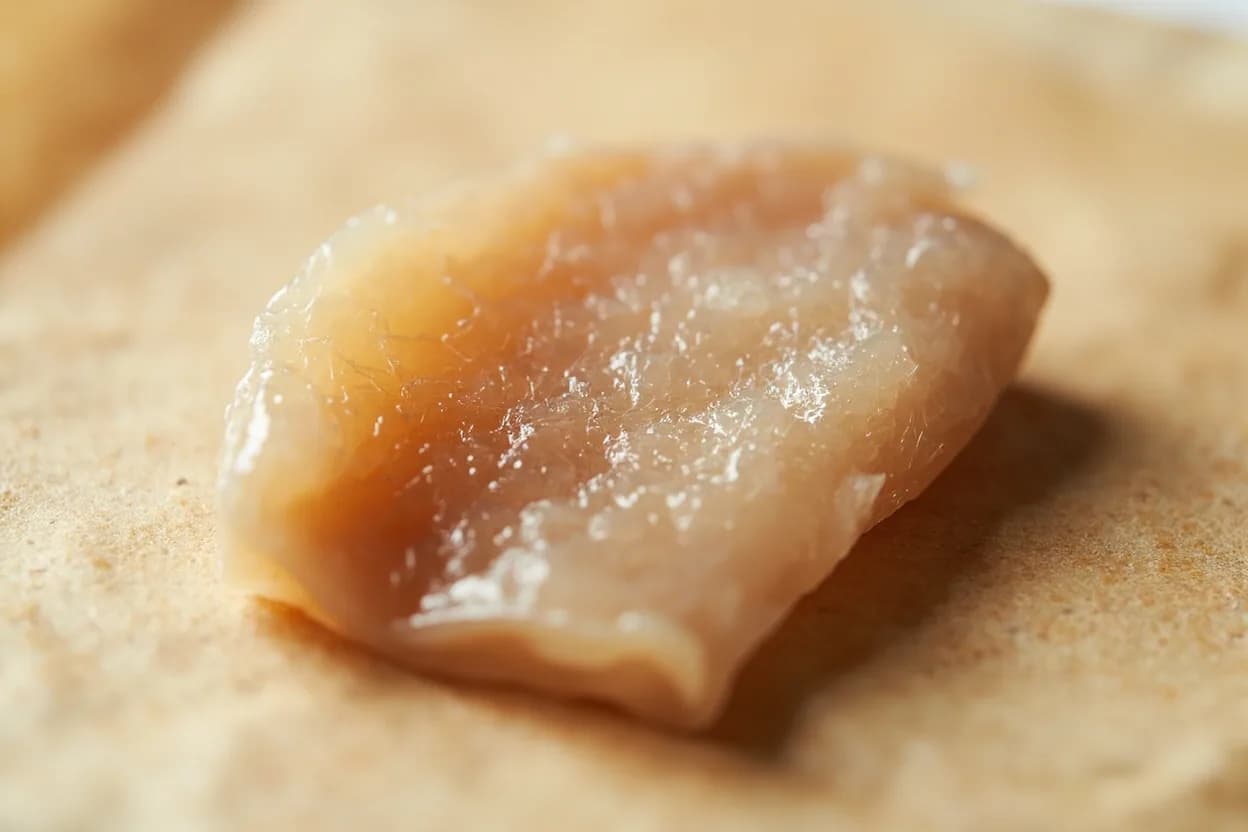
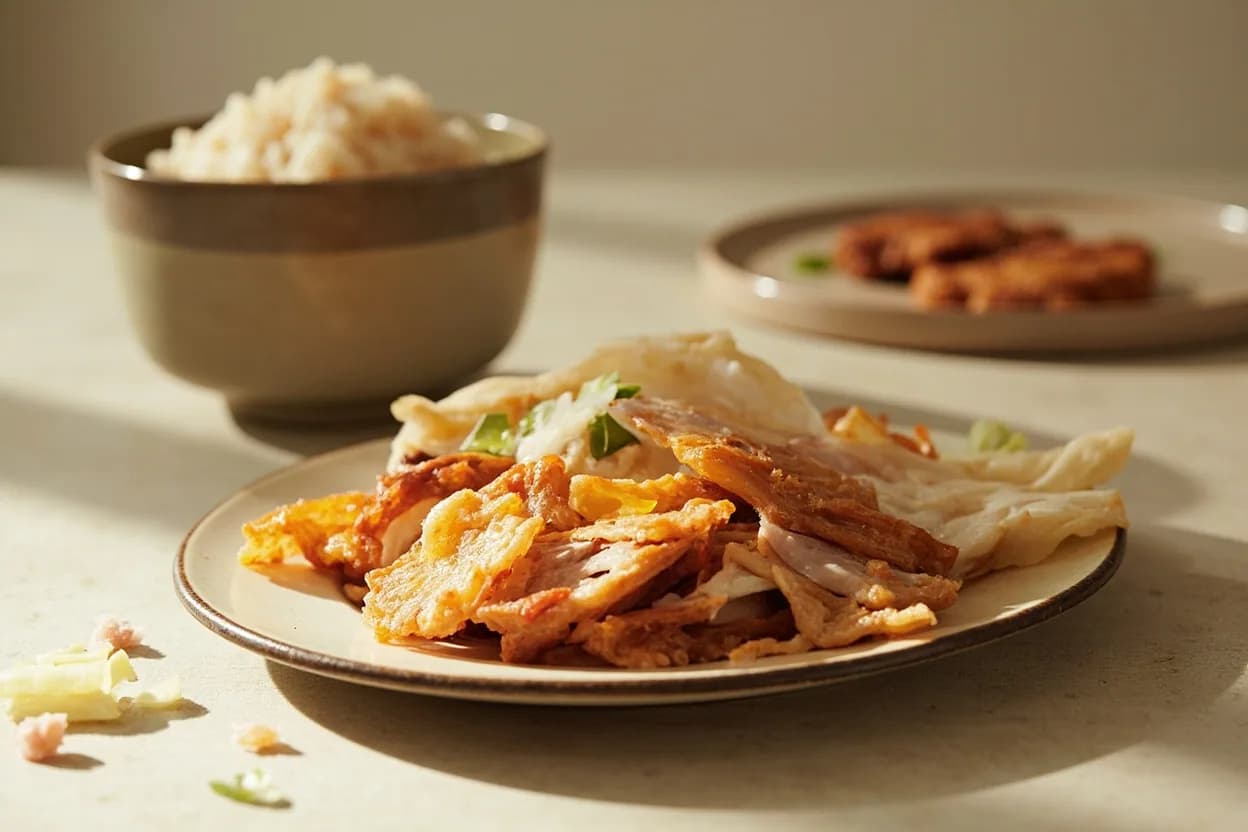
Ham yu (鹹魚) is fish — most commonly yellow croaker, pomfret, or threadfin — that has been dry-salted and sun-dried until it takes on a hard, almost jerky-like texture and an intensely concentrated, salty-funky aroma. Two main styles exist: the drier, firmer 'moi heung' style (dried until very stiff, milder) and the softer, more pungent 'mui heung' (partially dried, fermented-forward). Used in tiny amounts as a flavor agent — rarely as a protein in its own right — ham yu is prized for its ability to elevate rice dishes, steamed preparations, and stir-fries with deep umami and a characteristic fermented oceanic punch that cooks into dishes rather than sitting on top of them.
In photos
Flavour profile
Classic pairings
- Steamed pork patty (jing yuk paeng)Cantonese
The definitive ham yu pairing: minced pork is mixed with small cubes of mui heung salted fish and steamed — the fat of the pork rounds the fish's aggression, producing a dish far greater than its parts.
- Steamed rice (bai fan)Cantonese
A flake of ham yu alongside plain steamed rice is one of the oldest Cantonese comfort meals — the intense salt and funk need the bland starch to absorb and balance.
- Fried rice (chao fan)Cantonese
A small dice of ham yu is the secret in authentic Cantonese fried rice — it provides the base savoriness that separates home-style from restaurant versions.
- Stir-fried water spinach (ong choy)Cantonese
Ham yu adds the salt-and-funk layer that water spinach's mild, vegetal character needs; the high-heat wok blisters the fish and mellows its raw pungency.
- Steamed tofuCantonese
Silken tofu steamed with slivers of ham yu and a drizzle of soy and sesame oil — the fish's intensity highlights the tofu's subtle sweetness.
- Congee (jook)Cantonese
Small pieces of ham yu stir-cooked into congee deliver salt and depth without the need for additional seasoning; they partially dissolve into the rice porridge.
- Steamed eggs (jing dan)Cantonese
Finely minced ham yu blended into egg custard before steaming adds an umami depth that makes the eggs taste richer without any visible fish.
Adventurous pairings
- Pasta carbonara
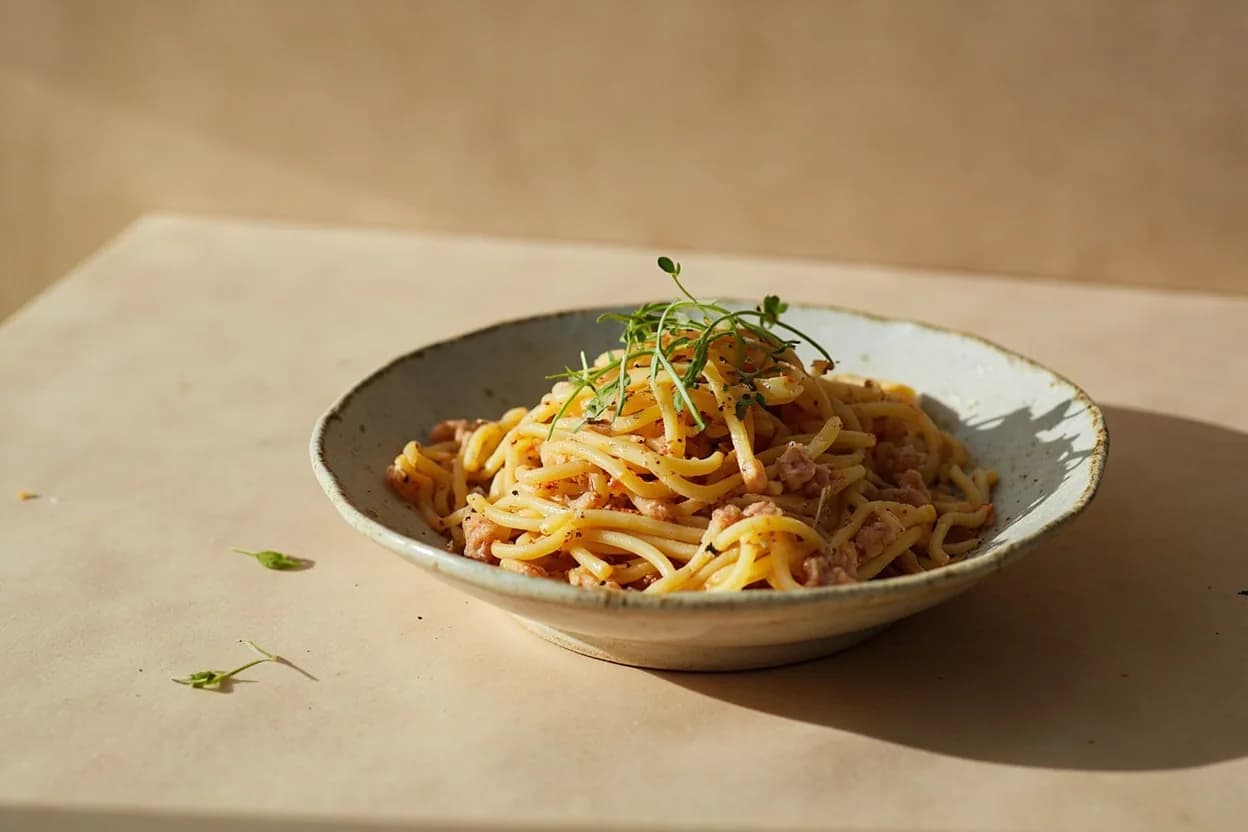
A tiny amount of finely minced ham yu added to the guanciale fat replaces additional salt and adds fermented depth; the egg sauce and fat absorb the funk beautifully.
- Butter-basted potatoes
Crumbled moi heung over roasted crushed potatoes adds a crispy, salty, umami crunch that functions like anchovy breadcrumbs in Italian cooking — but more pungent.
- Avocado toast
A sliver of moi heung (milder style) over creamy avocado on toast — salt, fat, funk, and richness align; finish with chili and lime.
- Fresh corn
The sweetness of summer corn is dramatically amplified by a small amount of ham yu sautéed into butter; the contrast between sweet corn and fermented fish is electrifying.
- Shakshuka-style tomato braise
A flake dissolved into the tomato base adds Mediterranean-adjacent umami that transforms the sauce without any detectably 'Asian' note.
Tread carefully
- Delicate seafood (scallops, crab, lobster)avoid
Ham yu's pungent fermented character overwhelms sweet shellfish and turns the dish muddy and saline.
- Milk-based sauces or soupsavoid
The amines in fermented ham yu react unpleasantly with dairy proteins, producing off-flavors and a curdling tendency.
- Raw preparations (sashimi, ceviche)avoid
The curing does not translate into raw contexts — ham yu needs cooking to mellow its volatiles; used raw, it simply tastes aggressively salty and ammoniac.
- Subtle herb-forward dishesavoid
Parsley, chervil, tarragon, or other delicate herbs are obliterated by ham yu's force — their aromatics cannot compete.
How to use it
- Rinse briefly under cold water to remove surface salt before frying — this lets you control final salinity
- Fry small pieces in oil first until golden and aromatic before adding other ingredients — this mellows the raw funk
- Mince very finely and mix into meat patties or dumplings for invisible umami enrichment
- Wrap in foil and steam gently to rehydrate for salads or room-temperature uses
- Store refrigerated once opened in an airtight container — residual moisture causes off-flavors at room temperature
- Pair always with fatty or starchy counterparts — the fat tames and the starch absorbs
Appears in
Related flavours
- Fermented shrimp paste (har cheong)
Cantonese fermented counterpart — similarly pungent but crustacean-based; both used in small doses
Spicy fermented bean paste — shares the 'powerful seasoning in small quantities' ethos; different flavor family
Italian liquid equivalent — the same principle of fermented fish-as-condiment, Mediterranean lineage
Complementary fermented depth; combining miso and ham yu stacks umami from two different fermentation pathways
References
- 1.The Food of China — E.N. Anderson (Yale University Press, 1988)
- 2.Breath of a Wok — Grace Young (Simon & Schuster, 2004)
- 3.Land of Fish and Rice — Fuchsia Dunlop (W.W. Norton, 2016)
- 4.Chinese Food Made Easy — Ching-He Huang (HarperCollins, 2008)
Confidence: high
Notes
Two styles, two applications
The moi heung (dry-style) is firmer and milder — better for frying whole or in large pieces, or crumbling over dishes. The mui heung (soft/wet-style) is more intensely fermented, partially liquefied at room temperature, and used in smaller quantities mixed into meat or stirred into sauces. Always confirm which style a recipe requires.
A diaspora ingredient
Ham yu traveled with Cantonese emigrants throughout Southeast Asia, becoming ikan asin in Indonesia and pla kem in Thailand. Each variant reflects local fish species and drying conditions, but the fundamental flavor logic — intense preserved fish as seasoning, not protein — is identical.