Fats, Pastes & Condiments
Salted Butter
Also: sel butter, beurre salé, beurre demi-sel
Cream and salt in their most elemental union — a finishing fat, a pastry fat, and the world's most persuasive bread companion.
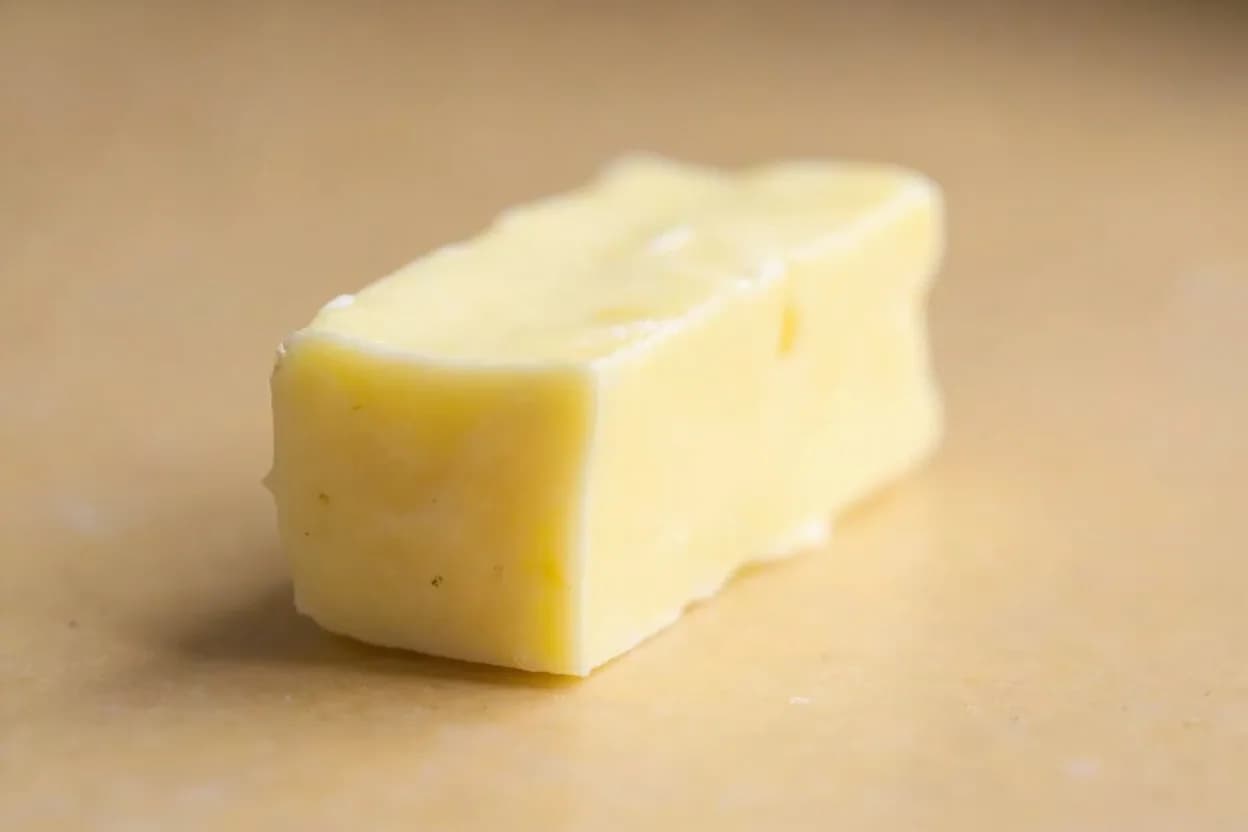
Salted butter is churned cream with 1.25–2% salt added — enough to season perceptibly and to extend shelf life, which is why salted butter predates refrigeration. In Brittany (beurre demi-sel and beurre salé), and in Normandy, salted butter is a culinary identity: sea-salt crystals (fleur de sel or gros sel) are folded into high-fat (84–86%) cultured cream to produce a finishing butter of extraordinary character — not merely a seasoned fat but a condiment. Flavor-wise, the salt amplifies the cream's natural sweetness, extends its fat-coating sensation on the palate, and provides crystalline textural contrast when used as a spread or finishing element.
In photos
Flavour profile
Classic pairings
- Good bread (sourdough, pain de campagne, baguette)French
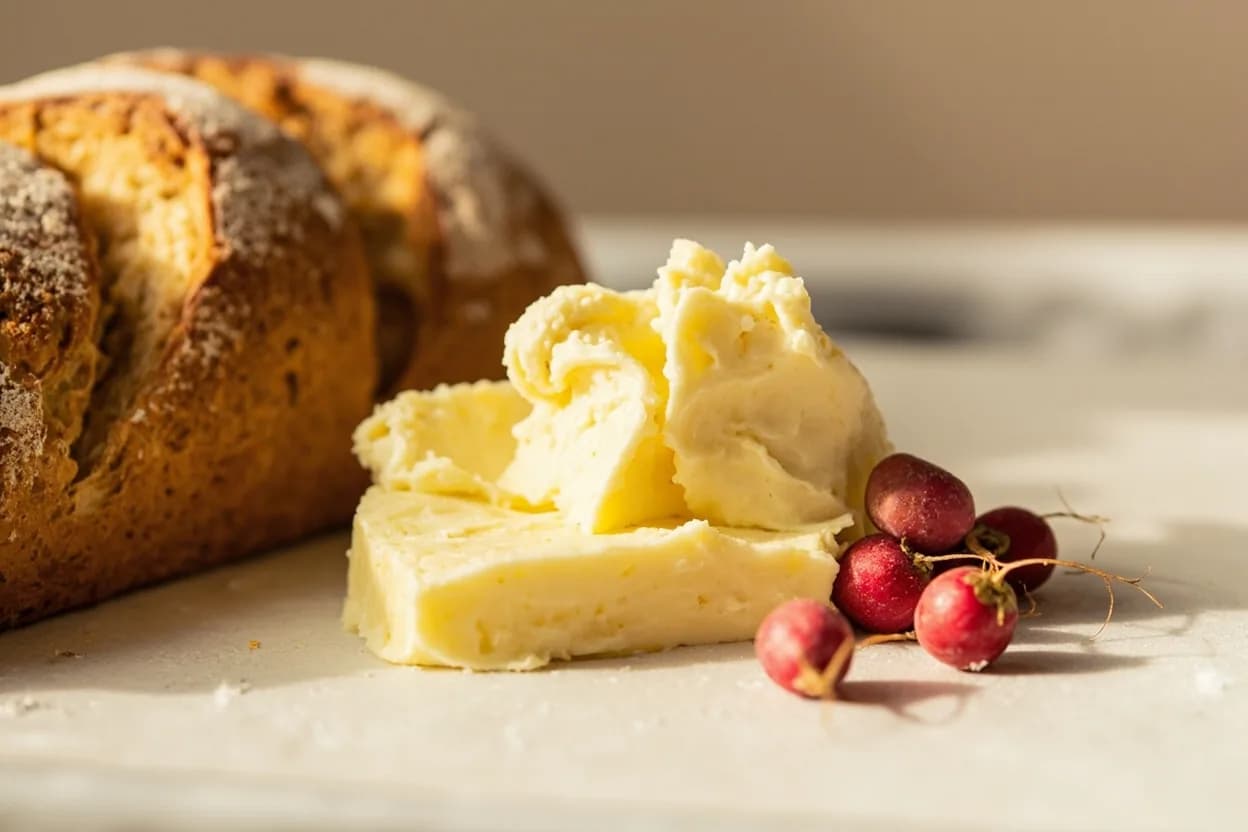
The canonical pairing of human civilization — the salt in the butter seasons the bread's mild crumb while the fat carries wheat flavor. In France, beurre demi-sel on a baguette is a meal.
- RadishesFrench
The Parisian classic: cold salted butter spread thick on bread with fresh radishes and a pinch of fleur de sel. The peppery crunch of radish against cold, salty fat is textbook simplicity.
- ShortbreadScottish
Salted butter is the only correct fat for Scottish shortbread — the salt in the butter prevents the high-sugar dough from reading overly sweet and adds a savory-biscuit edge.
- Caramel (salted caramel sauce)French/Breton
Whisking salted butter into caramel at the end is the defining technique of beurre salé caramel, a Breton specialty now global — the salt breaks the sweetness and amplifies flavor.
- Corn on the cobAmerican
Hot corn brushed with cold salted butter is a pure fat-starch interaction: the salt and cream draw out the corn's natural sweetness; unsalted butter tastes flat by comparison.
- Steak (finishing)French/American
A cold knob of salted butter melted over a rested steak is the steakhouse finishing technique — the salt seasons the crust while the fat enriches the pan juices.
- Chocolate chip cookiesAmerican
Baking with salted butter in chocolate chip cookies eliminates the need for added salt while the distributed salt crystals create micro-pockets of sweet-savory contrast.
Adventurous pairings
- Miso (compound butter)
Mashing white miso into salted butter doubles the umami-salt signature and produces a finishing compound butter of extraordinary depth for noodles, grilled fish, or corn.
Finely minced preserved lemon rind worked into salted butter creates a compound with citrus, brine, and cream in perfect tension — outstanding on fish, grilled chicken, or flatbread.
- Dark chocolate (on bread)
Thick cold salted butter spread on bread with a square of 70%+ dark chocolate — a French after-school snack that is greater than the sum of its parts: the salt opens the cocoa's depth.
- Honey and sea salt
Salted butter with a drizzle of raw honey on warm toast creates a sweet-salt-fat triangle that is a minimalist dessert of uncommon satisfaction.
Tread carefully
- Precise pastry requiring exact salt control (macarons, Swiss meringue)avoid
In professional pastry where salt is measured to the gram for structural or flavor balance, salted butter introduces variable salinity that can destabilize results — unsalted butter with measured salt is correct.
- Hollandaise and emulsified butter saucesavoid
The salt-to-fat ratio in salted butter is unpredictable at scale — unsalted butter with measured salt gives proper control over the sauce's seasoning balance.
- Delicate cream desserts (panna cotta, blanc manger)avoid
Any salinity in the fat will read clearly through a cream dessert's clean dairy profile — these require neutral cream and separately measured salt.
How to use it
- Use cold from the refrigerator as a bread spread — it cuts rather than smears, yielding better texture
- For compound butters (herbed, miso, preserved lemon), use salted as the base and do not add further salt
- Monte (finish) pan sauces by swirling a cold knob of salted butter off-heat — the salt seasons the sauce simultaneously with the enrichment
- In cookie and quick-bread baking, substitute 1:1 for unsalted butter and omit the salt in the recipe to use salted butter intentionally
- Make beurre demi-sel at home: work fleur de sel crystals into good cultured butter and refrigerate; the crystals stay intact and provide textural pops
Appears in
Related flavours
The finishing salt of Brittany that goes into beurre salé — when used together as separate elements (butter + finishing salt on top) the two layers of salt provide different textural moments.
- Unsalted butter
The controlled-salt alternative — neither superior, but each has a domain; unsalted for precision pastry and hot sauces, salted for finishing and casual baking.
- Cream
Salted butter's precursor — reducing cream and adding salt traces the flavor back to the source; useful in understanding why salted butter tastes richer than unsalted at the same fat content.
References
- 1.Paula Wolfert, 'The Cooking of South-West France' (1983)
- 2.Clotilde Dusoulier, 'Chocolate & Zucchini' (2007)
- 3.Harold McGee, 'On Food and Cooking: The Science and Lore of the Kitchen' (2004)
- 4.Dorie Greenspan, 'Around My French Table' (2010)
Confidence: high
Notes
Beurre demi-sel vs. beurre salé
In French designation, beurre demi-sel contains 0.5–3% salt; beurre salé contains more than 3%. The canonical Breton beurre salé — sold in pottery crocks in Quimper markets — sits at the upper range with visible crystals of gray sea salt from Guérande. This is distinct from American salted butter, which is typically a milder 1.2–1.6% with fine iodized salt.
The fat percentage matters
European and Breton salted butters range from 82–86% butterfat, versus the US legal minimum of 80%. The additional fat makes a perceptible difference in cooking — more richness, less water to cook off, better emulsification in sauces — and in spreading texture.