Chocolate
Ganache Setting Temperature
Also: ganache set point, ganache crystallization temperature, truffle ganache temperature
Ganache sets soft for truffles at 18–20°C room temperature; refrigerate to 4°C for sliceable slabs — emulsion stability throughout determines texture and shelf life.
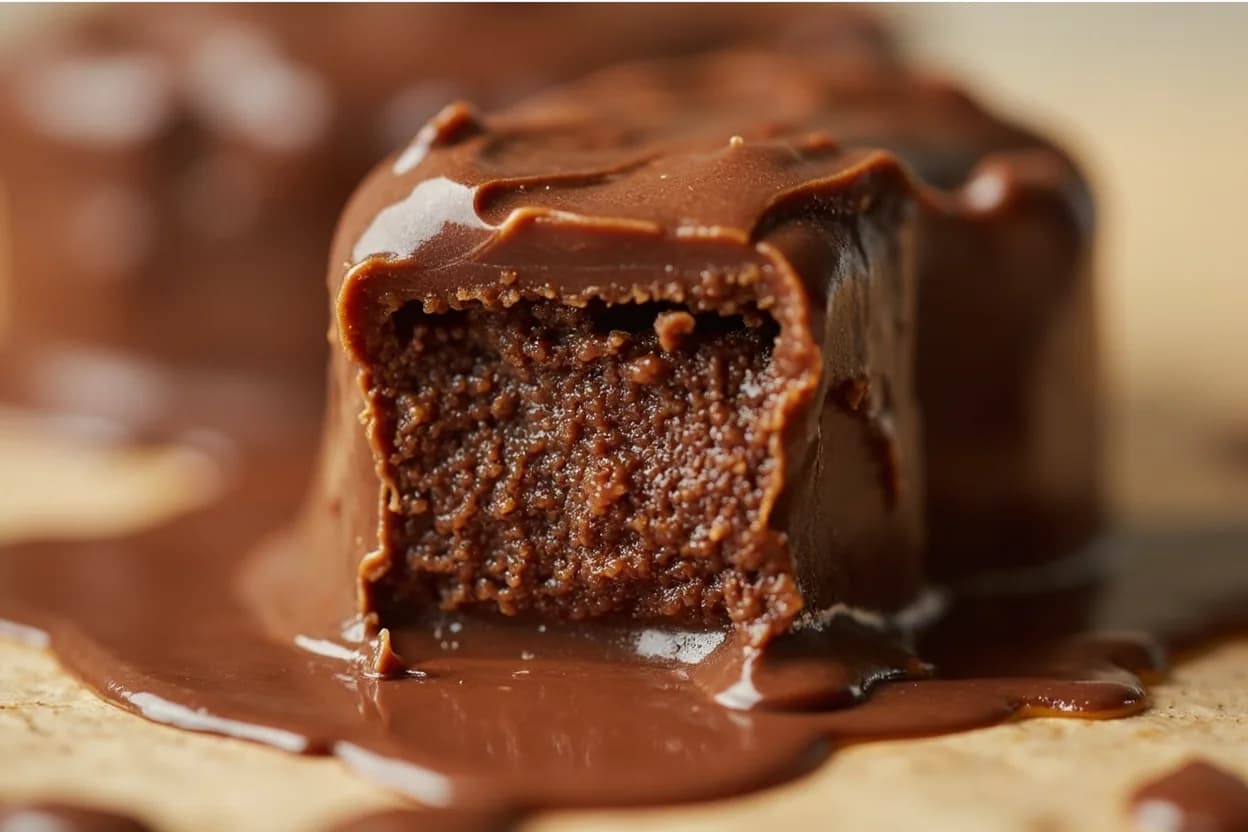
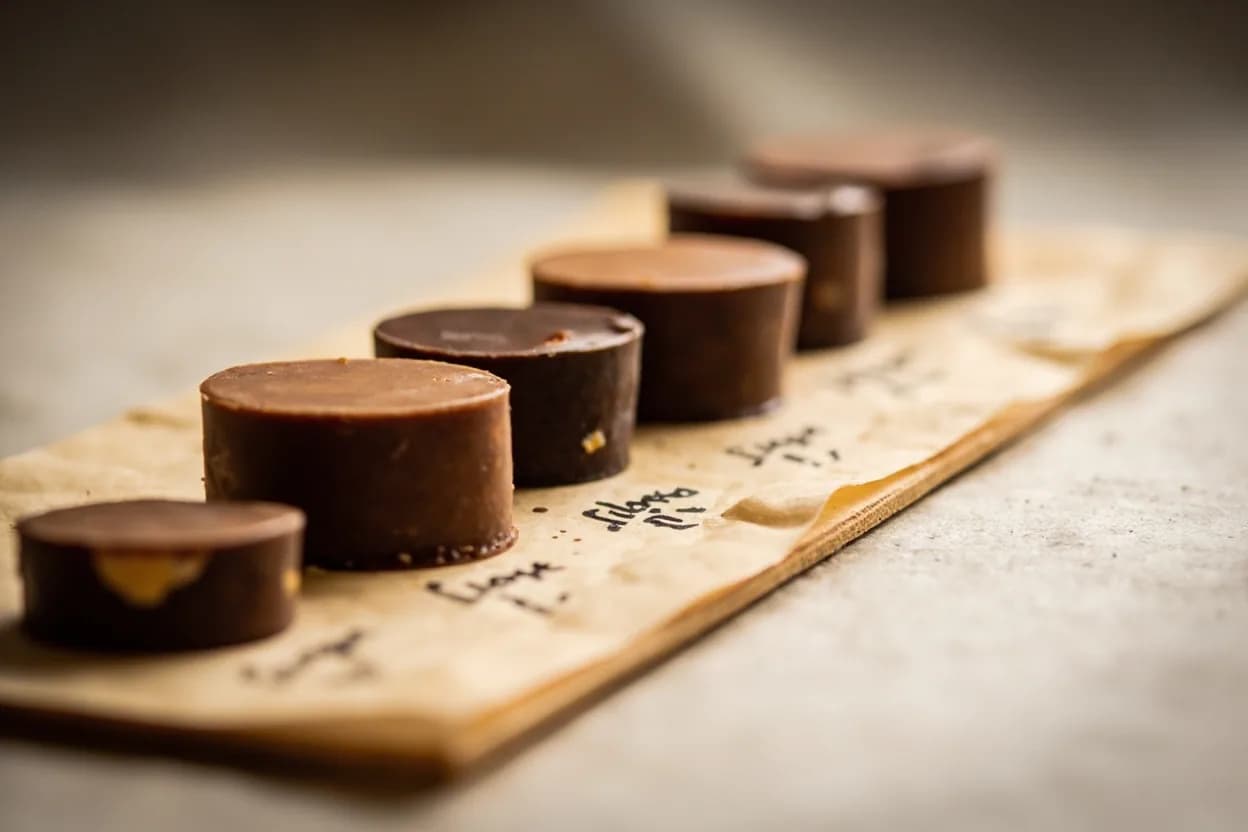
Ganache is a stable emulsion of hot cream (or other dairy/liquid) and chocolate, where water-in-fat (and fat-in-water) droplets are suspended by the lecithin in chocolate and stabilized by cooling. Setting temperature determines the final texture: at 18–20°C ambient, ganache firms to a soft, scoopable consistency ideal for hand-rolled truffles; at refrigerator temperature (4°C), the same ganache becomes firm enough to slice cleanly for pralines or enrobed squares. The cocoa butter in the chocolate is the primary structural fat — it crystallizes as it cools, transitioning the liquid emulsion into a semi-solid. For molded truffle shells, the ganache fill must be piped at precisely the right temperature: warm enough to flow, cool enough not to melt the shell.
In photos
What happens
As ganache cools below the cream-chocolate emulsification temperature (~50°C), cocoa butter begins nucleating Form V crystals (if the chocolate was tempered), causing a gradual thickening from liquid to gel to solid. The rate of cooling determines crystal size and texture: slow cooling at room temperature produces a smooth, fudge-like texture with larger crystal networks that give ganache its characteristic creaminess. Rapid chilling in a refrigerator or freezer creates many small crystals quickly, resulting in a firmer but sometimes slightly grainy texture. Invert sugar or glucose in the formula extends the range of stable temperatures and slows crystallization for a more forgiving set. Above 35°C, ganache is fully liquid (cocoa butter melts); below 10°C, it is very firm and can crack when cut if it contains a high proportion of dark chocolate.
What to look for
- At 28–30°C (piping stage), ganache flows smoothly off a spatula in a slow, thick ribbon without dripping
- At 18–20°C (room-temperature set), properly set ganache holds a clean scoop shape but yields to gentle thumb pressure
- At 4°C (refrigerated), ganache resists thumb pressure and can be cut cleanly with a wire or warm knife
- A glossy, smooth surface indicates good emulsion stability — a greasy or separated surface signals a broken emulsion
- The smell remains cleanly chocolatey at all stages; off-dairy or rancid notes indicate spoilage or overheating of cream
How to check
- Touch test at room temperature: run a clean fingertip across the surface — properly set ganache should peel away cleanly with a slight pull
- For sliceable slabs, refrigerate for minimum 2 hours, then test with a warm chef's knife — clean cut with no squashing indicates correct firmness
- Use a digital thermometer to verify piping temperature (28–32°C) before filling molds — too hot and the shell melts, too cool and the ganache tears the shell on injection
- For truffles, allow to set at exactly room temperature (not refrigerator) for a minimum of 4–6 hours for optimal texture before rolling
Food safety
Carryover & resting
Ganache does not have traditional meat-style carryover, but it continues to firm as it approaches thermal equilibrium with the environment. When removing from refrigeration, allow time to temper to room temperature (30–60 minutes depending on batch size) before rolling or cutting — cold ganache is brittle and will crack if handled immediately.
The science behind it
- Cocoa Butter Polymorphism
The crystal form of the cocoa butter in the chocolate used to make ganache affects the final set texture
- Emulsion Stability
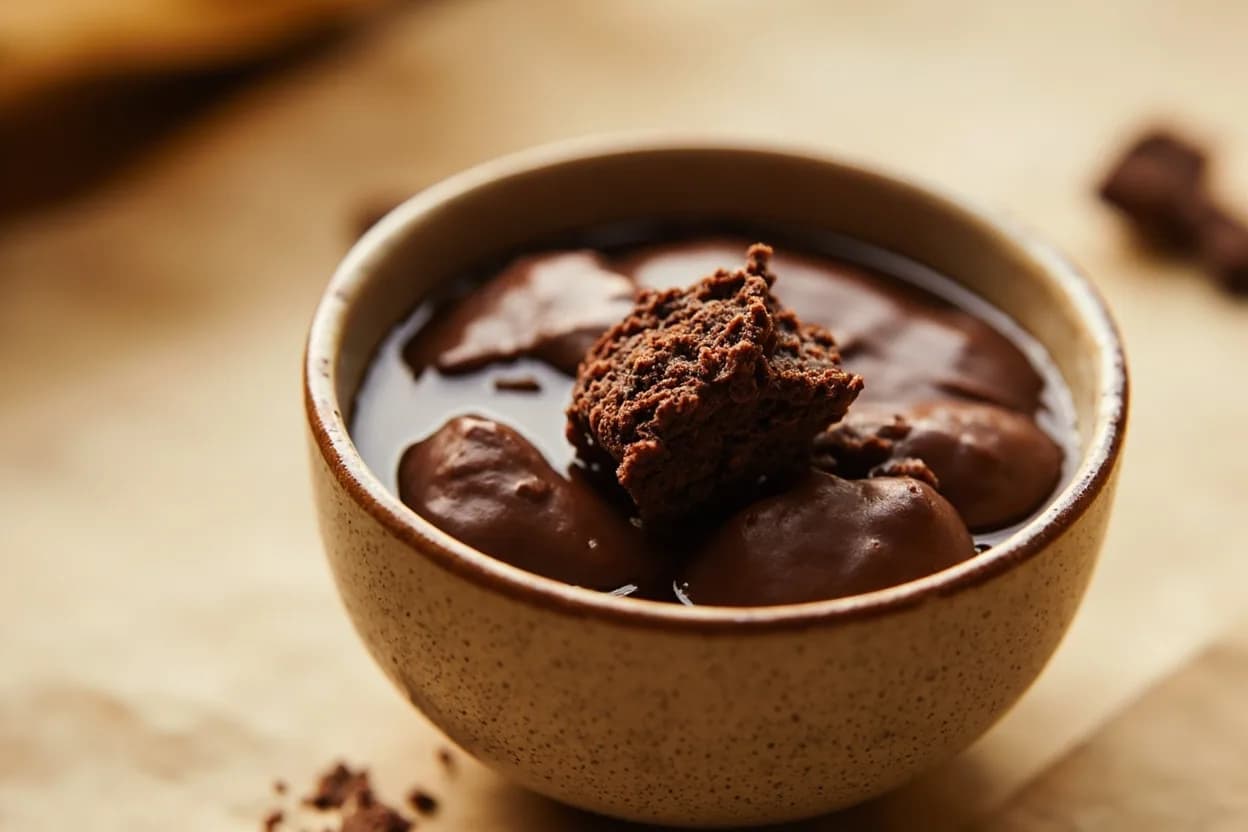
Ganache is a water-in-fat emulsion; broken ganache (separated fat) can be re-emulsified by adding warm cream and blending
- Water Activity
Ganache shelf life is governed by water activity; glucose and invert sugar lower Aw to extend stability
Whether ganache chocolate was properly tempered affects the crystallization character of the set ganache
- Truffle Rolling
Ganache set at exactly 18–20°C produces the ideal scoop-and-roll consistency for hand-rolled truffles
Appears in
References
- 1.Chocolates and Confections — Peter Greweling (CIA)
- 2.The Art of the Chocolatier — Ewald Notter
- 3.Patisserie: Mastering the Fundamentals of French Pastry — Christophe Felder
- 4.On Food and Cooking: The Science and Lore of the Kitchen — Harold McGee
Confidence: high
Notes
Ganache ratios and set firmness
Dark chocolate ganache at a 2:1 chocolate-to-cream ratio sets firm at room temperature; 1:1 sets soft and spreadable; 3:1 sets very firm and sliceable. Milk and white chocolate ganaches require proportionally less cream (or more chocolate) to achieve equivalent firmness because of their higher milk fat content, which remains liquid at room temperature and softens the set.
Repairing a broken ganache
A greasy, grainy, or separated ganache has broken — the emulsion has collapsed and fat has separated. To repair: allow the broken ganache to cool to 35°C, then add 15–20ml of warm cream at 35–40°C in a thin stream while blending with an immersion blender. The lecithin present will re-emulsify the mixture if temperature is matched. Over-blending or adding cold cream causes further separation.