Bread & Dough Doneness
Hollow Knock Test
Also: tap test, knuckle knock, hollow thump test, bread tap test, drum test
Tapping the base of a bread loaf and hearing a hollow, resonant thump confirms the interior has set — a traditional doneness cue used alongside internal temperature.
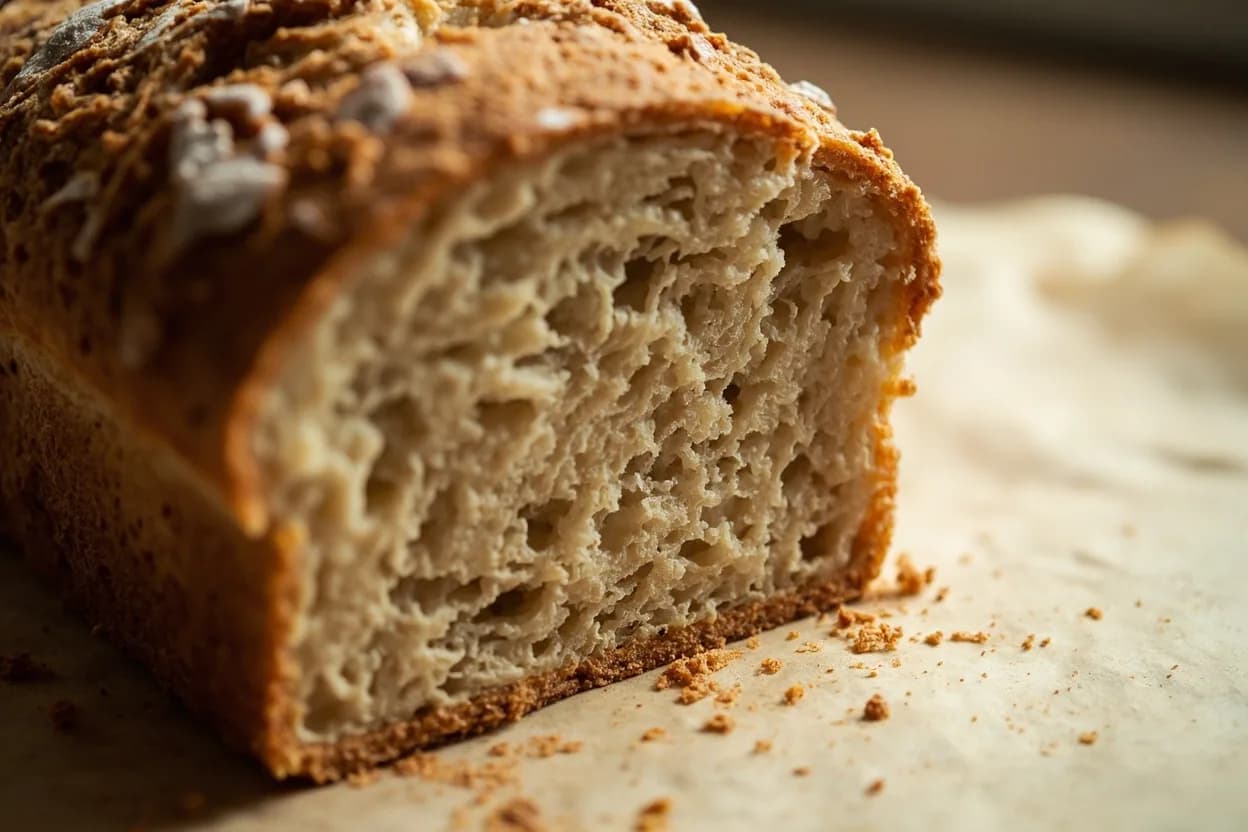
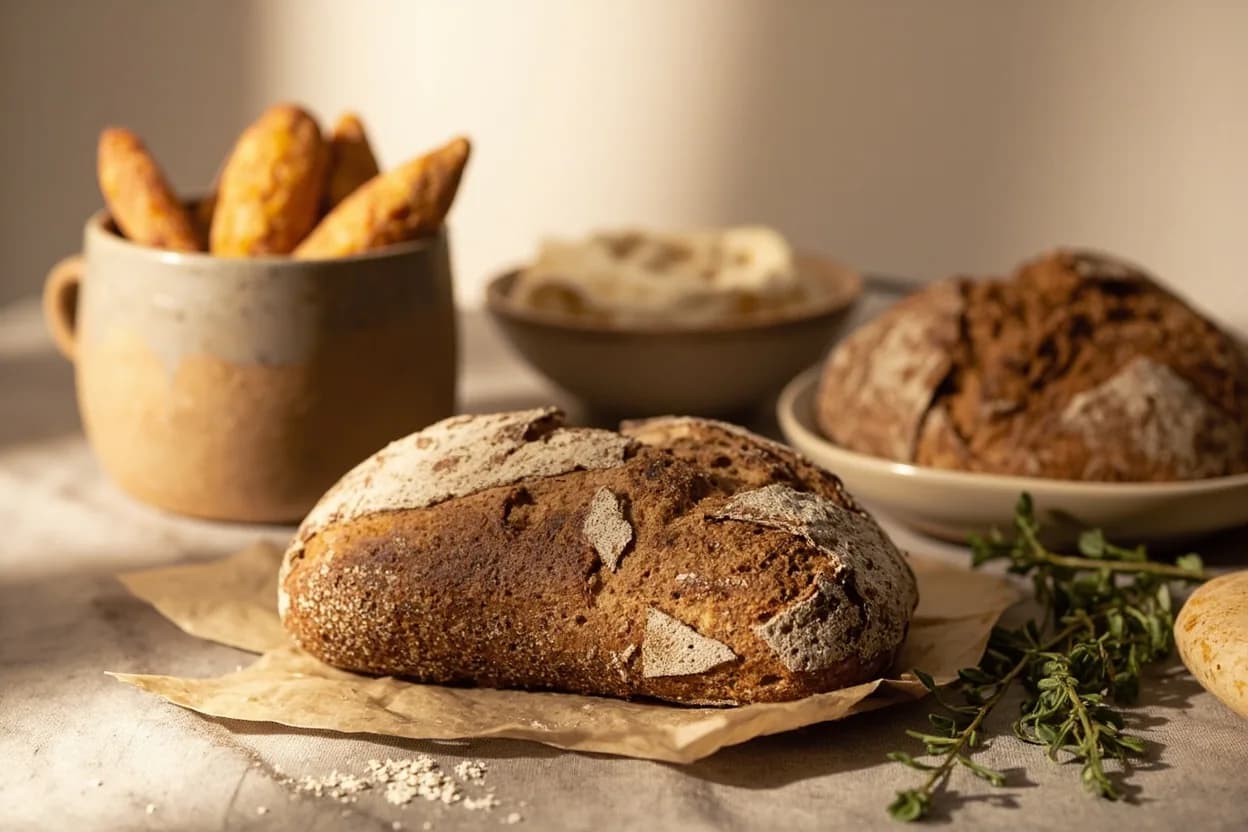
The hollow knock test is a tactile and auditory doneness check performed on bread by removing the loaf from its pan or baking surface, turning it upside down, and knocking firmly on its base with a knuckle. A fully baked loaf sounds hollow and resonant — like tapping a drum — because the crumb has set, moisture has driven off sufficiently, and the structure is no longer dense with wet dough. A dense, dull thud indicates the interior is still underbaked and wet. The test has been used in European bread baking for centuries and remains a reliable supporting indicator, though it is now considered secondary to internal temperature readings.
In photos

What happens
The hollow knock test is a tactile and auditory doneness check performed on bread by removing the loaf from its pan or baking surface, turning it upside down, and knocking firmly on its base with a knuckle. A fully baked loaf sounds hollow and resonant — like tapping a drum — because the crumb has set, moisture has driven off sufficiently, and the structure is no longer dense with wet dough. A dense, dull thud indicates the interior is still underbaked and wet. The test has been used in European bread baking for centuries and remains a reliable supporting indicator, though it is now considered secondary to internal temperature readings.
What to look for
- A hollow, resonant, drum-like sound when the base is knocked firmly with one or two knuckles
- The base crust feels firm and dry, not soft or yielding, under the knocking hand
- The loaf has pulled away slightly from the sides of the pan (for pan breads)
- The overall loaf feels noticeably lighter than when it went in — significant moisture has evaporated
- A dull, dense thud indicates moisture-laden underbaked crumb
- For pan loaves, the sides and bottom should be evenly golden, not pale
How to check
- Remove the loaf from its pan or baking vessel and, using an oven mitt, turn it base-side up
- Knock firmly two or three times on the center of the base with a bent knuckle (index or middle finger)
- Listen for a clear, hollow, resonant sound — compare it to tapping an empty cardboard box versus a full one
- Confirm with an instant-read thermometer: insert into the center of the base for an unobtrusive read; target is typically 93–99°C (200–210°F) for lean breads
- For sourdough and whole-grain loaves with denser crumbs, extend baking slightly beyond the hollow knock point to ensure full moisture evaporation
Food safety
The science behind it
- Internal bread temperature
The gold standard: most lean breads are done at 93–99°C (200–210°F); enriched breads at 88–93°C (190–200°F)
- Crumb structure setting
As bread bakes past 70–80°C (158–176°F), starch fully gelatinizes and proteins coagulate, creating the rigid open crumb that produces the hollow sound
- Moisture evaporation
Water loss during baking reduces density; the lighter, drier interior is acoustically resonant while a wet interior dampens sound
- Maillard browning
The same high-heat phase that browns the crust also contributes to crumb drying and the acoustic change the knock test detects
- Pan release
A bread that has pulled cleanly away from its pan sides is a parallel visual cue to the hollow knock
Appears in
References
- 1.The Bread Baker's Apprentice — Peter Reinhart (Ten Speed Press, 2001)
- 2.English Bread and Yeast Cookery — Elizabeth David (Allen Lane, 1977)
- 3.Modernist Bread — Myhrvold & Migoya (The Cooking Lab, 2017)
- 4.Bread — Jeffrey Hamelman (Wiley, 2004)
Confidence: high
Notes
Why hollow means done
The acoustic change from dull to hollow occurs because the crumb has transformed from a dense, moisture-laden matrix to an open, set, air-pocketed structure. Wet dough is acoustically dense — sound energy is absorbed. Fully baked crumb is airy and rigid — sound energy resonates. The hollow knock is essentially listening to the interior microstructure through the bread's own body.
Limitations and when to rely on a thermometer instead
The hollow knock is less reliable for very dense breads (100% rye, high-hydration whole grain), enriched loaves (brioche, challah, pain de mie), or filled breads. These may produce a somewhat hollow sound before they are fully baked through. In a professional kitchen, a calibrated probe thermometer is always the definitive check; the hollow knock serves as a quick field test and a tactile skill worth developing for intuitive baking.