Egg Doneness
Hard-Boiled Egg: Fully Set
Also: hard cooked egg, fully cooked egg, hard-set egg, boiled egg
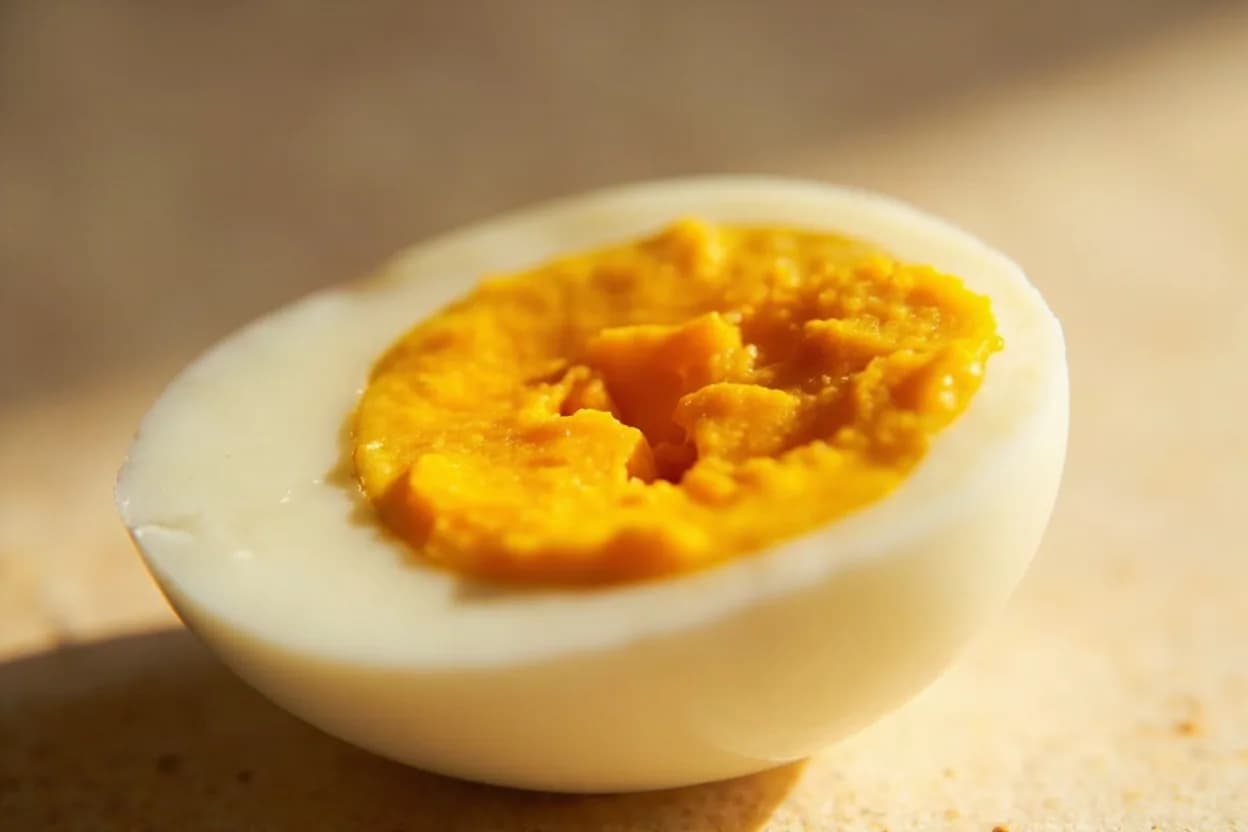
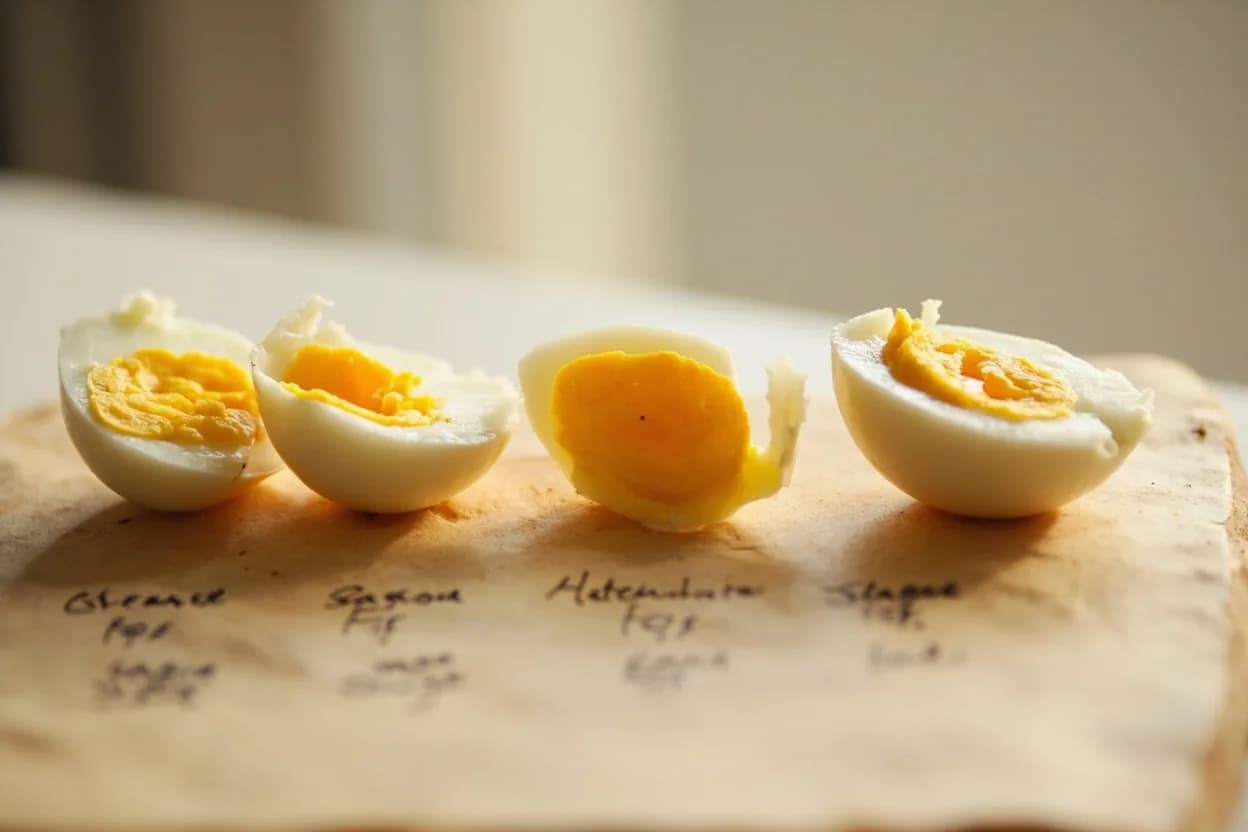
White and yolk are both completely coagulated and solid throughout, with a pale, firm yolk that should be uniformly yellow — not grey-green.
A hard-boiled egg is cooked until every protein in both the white and yolk has fully denatured and cross-linked into a stable solid gel. The target internal yolk temperature is 77°C (170°F) or above, sustained long enough to eliminate all liquid or jammy texture. The critical quality distinction is preventing the grey-green ferrous sulfide ring that forms on the yolk surface when hydrogen sulfide (released from the white) reacts with iron in the yolk at excessive temperatures or prolonged cooking times. Properly executed, the yolk is uniformly pale yellow, firm but not rubbery, and separates cleanly from the white.
In photos
What happens
Above 77°C, the remaining yolk lipoproteins and phosvitin fully denature, forming a solid, self-supporting gel. White proteins are completely set well before this point (ovomucin sets around 60°C, ovalbumin fully by 80°C under sustained heat). The grey-green discolouration that plagues overcooked eggs is ferrous sulfide (FeS): hydrogen sulfide gas escapes from cysteine residues in the white as temperature and time increase; it migrates inward and reacts with iron in the yolk surface, producing an unpleasant metallic off-flavour and the characteristic ring. Stopping cooking at 77–80°C and ice-shocking immediately prevents FeS formation.
What to look for
- Yolk is uniformly pale, opaque yellow with no translucency or wet sheen
- Yolk holds its dome shape when halved and does not smear or flow
- No grey-green ring at the yolk–white interface in a properly cooked egg
- White is firm, springy, and cuts cleanly without tearing
- Mild, clean egg aroma — sulphurous smell indicates overcooking
How to check
- Time in boiling water: lower cold large eggs, cook 11–13 min, transfer to ice water for at least 5 min
- Spin the egg on a flat surface: a fully cooked egg spins smoothly; a raw or under-set egg wobbles due to liquid interior
- Halve and inspect: uniform pale yolk with no wet centre and no FeS ring indicates proper doneness
- Probe thermometer in yolk if needed: 77°C confirms full coagulation
Food safety
Carryover & resting
Ice shocking immediately after cooking is essential — residual shell heat continues cooking the yolk for several minutes and is the primary cause of grey-green rings in home cooking. A 5–10 minute ice bath drops the yolk below 65°C and fully arrests further FeS formation.
The science behind it
The stage deliberately avoided by stopping at 63–65°C before full yolk coagulation
Hard-poached reaches the same yolk temperature via water bath rather than in-shell boiling
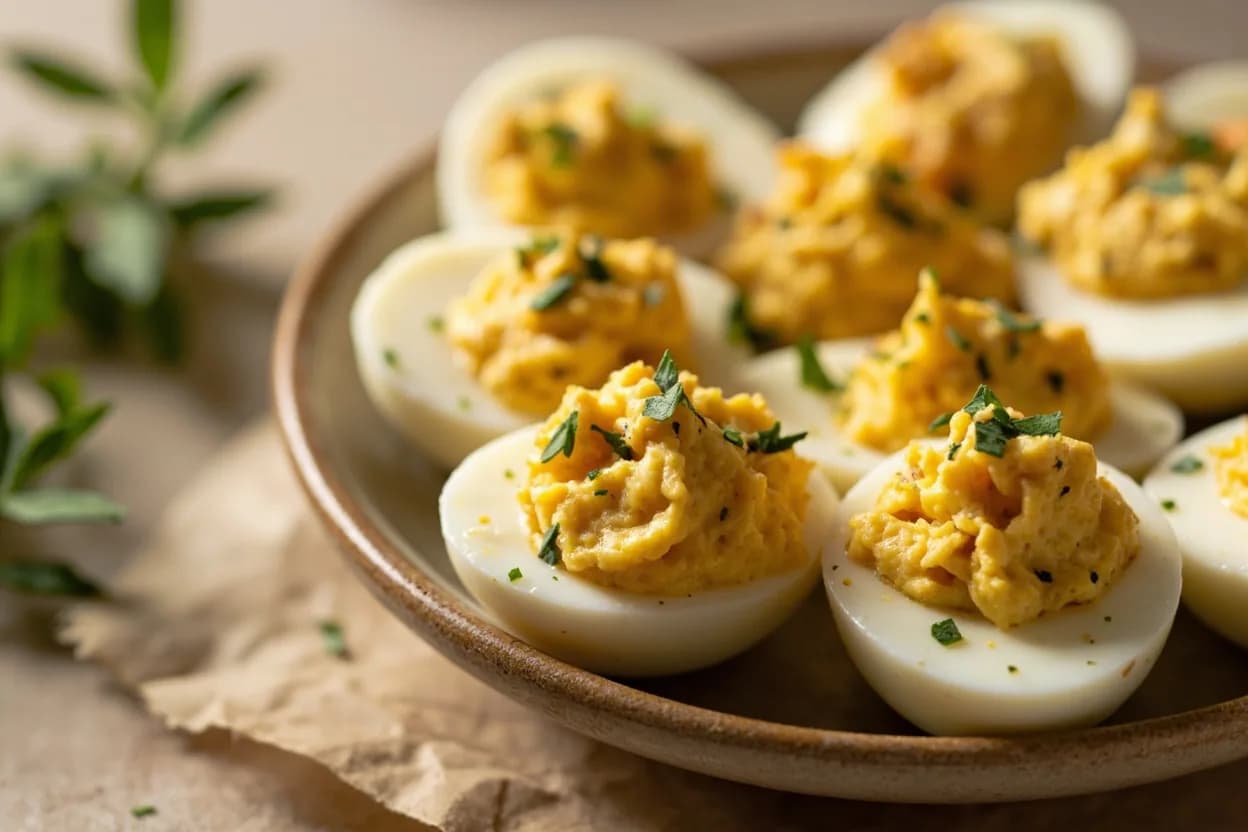
Absent in boiled eggs — the wet environment prevents surface browning; deviled-egg or scotch-egg frying adds this separately
- Hydrogen Sulfide Off-Flavour
The compound responsible for overcooked-egg smell and grey-green ring formation
Appears in
References
- 1.On Food and Cooking — Harold McGee
- 2.The Food Lab — J. Kenji López-Alt
- 3.USDA Food Safety and Inspection Service: Shell Eggs from Farm to Table
- 4.Joy of Cooking — Irma S. Rombauer, Marion Rombauer Becker, Ethan Becker
Confidence: high
Notes
The grey-green ring: cause and cure
The grey-green ferrous sulfide ring is purely a function of excess heat and time — not egg age or freshness. The fix is binary: cool the egg rapidly and do not overcook it. Starting eggs in already-boiling water (rather than cold water) gives a more precise time window, since the heat penetration rate is more predictable from a known start point. Ice-shocking is the most important single step.
Peeling difficulty and egg age
Fresh eggs notoriously resist peeling because the white adheres tightly to the inner membrane when the pH is low. Eggs that are 7–14 days old peel far more easily. Adding baking soda (½ tsp per litre) to the boiling water raises the pH of the white and improves peelability of fresh eggs. Steam-cooking (12 min in a steamer basket over boiling water) is reported to produce the easiest-peeling results regardless of egg age.