Egg Doneness
Soft-Boiled Egg Yolk: Jammy Stage
Also: jammy egg, ramen egg doneness, ajitsuke tamago target, 6-minute egg, 7-minute egg, molten yolk
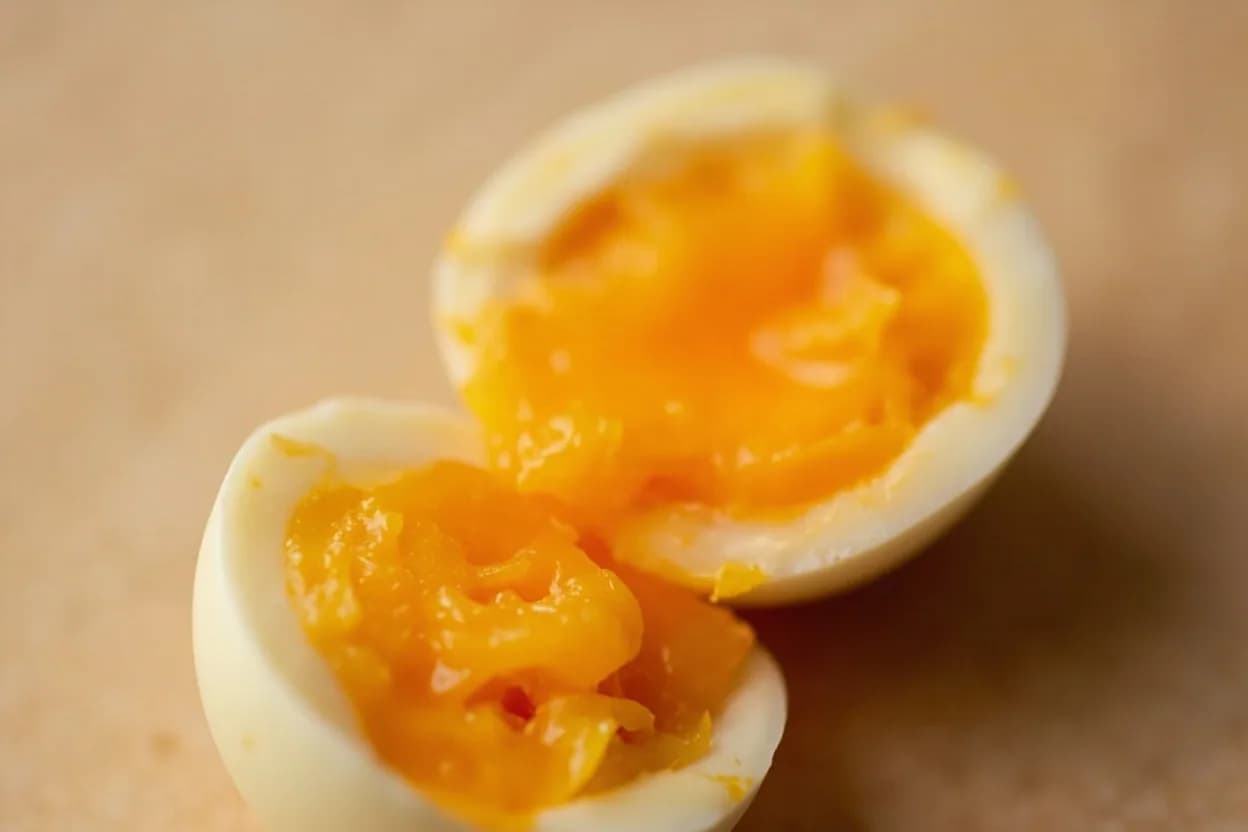
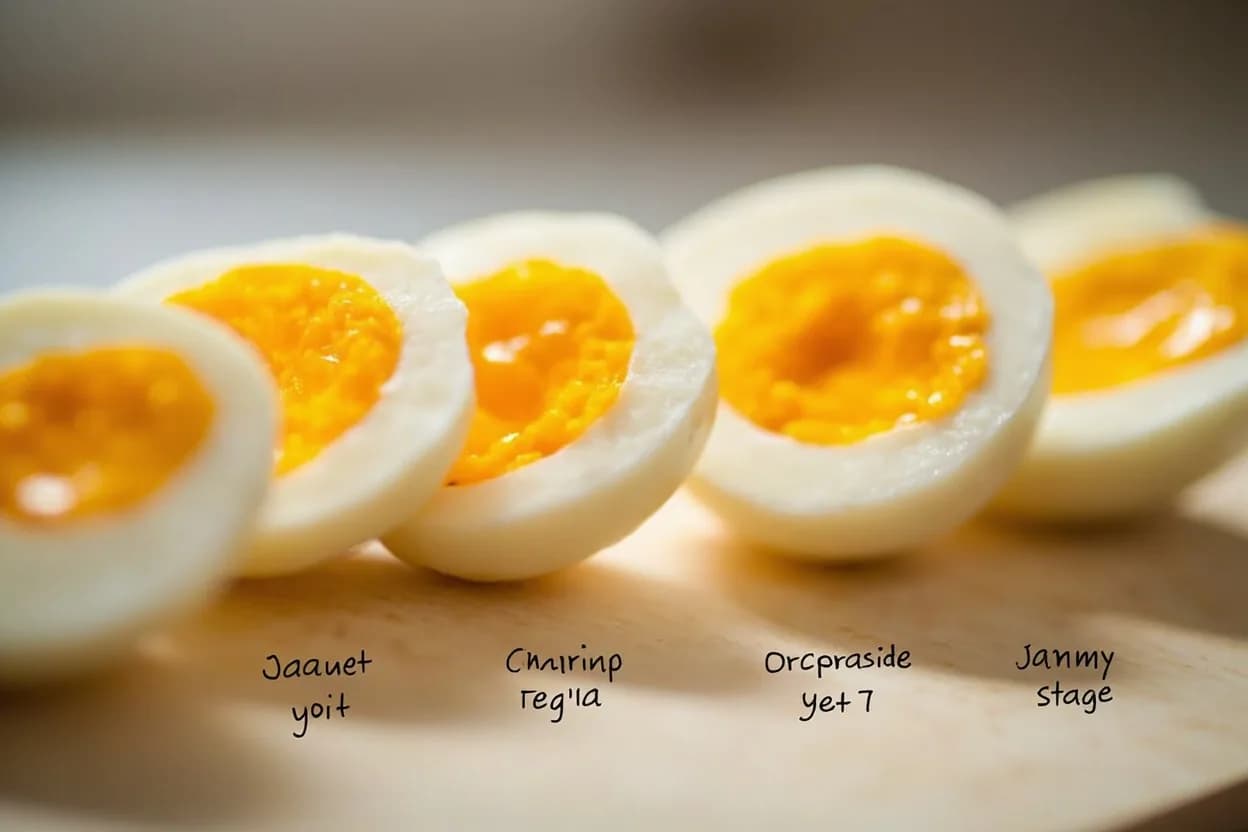
The yolk is fudgy, thick, and deeply golden — neither runny nor chalky — the universally coveted sweet spot for ramen eggs and grain bowls.
The jammy stage describes an egg yolk that has partially coagulated into a viscous, spreadable consistency resembling thick jam or soft caramel. The yolk proteins have denatured enough to lose all liquid fluidity but have not fully cross-linked into the chalky, crumbly texture of a hard-boiled egg. Achieved by holding the yolk at approximately 63–65°C (145–149°F) for an extended period — classically via sous vide — or by boiling a large cold egg for 6.5–7.5 minutes and immediately shocking in ice water. The white is fully set; the yolk surface is just gelled while the interior retains a concentrated, almost marmalade-like density.
In photos
What happens
At 63°C, low-density lipoprotein complexes in the yolk begin to partially denature, increasing viscosity without triggering full gel formation. Sustained time at this temperature drives further protein unfolding, producing a self-supporting but unctuous texture. In boiling-water methods, the yolk surface briefly exceeds 63°C while the core lags; ice-shocking halts the gradient before the centre firms beyond jammy. The high fat content of egg yolk (approximately 30%) contributes to the rich, almost creamy mouthfeel at this stage, distinct from the drier feel of a set yolk.
What to look for
- Yolk is deep orange-gold, visually dense, and slightly domed when the egg is halved
- Yolk holds its shape when cut but sags and smears when pressed — not runny, not crumbly
- No translucent or liquid centre visible at the cut face
- White is fully opaque and peels cleanly without tearing
- Rich, eggy aroma concentrated by the partial denaturation of yolk lipoproteins
How to check
- Sous vide: set circulator to 63°C, cook in shell for 45–60 min, then transfer to ice water
- Boil method: bring water to a rolling boil, lower cold large eggs gently, cook exactly 6 min 30 sec–7 min, transfer immediately to ice water for 5+ min
- Peel one test egg and halve it — yolk should hold a domed shape and smear like soft cheese, not flow or crumble
- Slight tackiness when pressed with a fingertip indicates the jammy stage; liquid resistance means under; dryness means over
Food safety
Carryover & resting
Ice-shocking is non-negotiable — jammy yolks overcook rapidly in residual shell heat. A 5-minute ice bath fully arrests cooking. Marinate peeled eggs in soy-mirin brine (ajitsuke tamago) for 4–8 hours; the salt osmosis slightly firms the outer yolk layer but preserves the jammy core.
The science behind it
Shares the same target yolk temperature but achieved in shell via boiling or sous vide rather than water bath
The doneness stage avoided by pulling at the jammy point; excess time or temperature tips the yolk to chalky
- Sous Vide Precision Cooking
The most reliable method for reproducible jammy yolks across a large batch
A different yolk preparation — whipped rather than heat-coagulated — used in génoise and zabaione
Appears in
References
- 1.The Food Lab — J. Kenji López-Alt
- 2.Modernist Cuisine at Home — Myhrvold and Bilet
- 3.On Food and Cooking — Harold McGee
- 4.Journal of Food Science: Thermal Denaturation of Egg Yolk Lipoproteins
Confidence: high
Notes
Altitude and boiling-point adjustment
Water boils at lower temperatures at altitude (e.g. ~94°C at 1,800 m / 6,000 ft). Because the yolk absorbs heat more slowly in cooler boiling water, add 30–60 seconds to the boil time per 600 m (2,000 ft) of elevation to compensate. Sous vide is unaffected by altitude.
The ramen-egg brine
Classic ajitsuke tamago brine is 3 parts soy sauce, 1 part mirin, 1 part sake or water, briefly simmered. Peeled jammy eggs rest in this brine 4–24 hours under refrigeration. Longer soaking firms the surface osmotically, creating a pleasantly chewy edge against the jammy core — a deliberate textural counterpoint prized in quality ramen shops.