Smoking & Curing
Smoke Temperatures: Cold vs. Hot Smoking
Also: cold smoking, hot smoking, smoke temperature
Cold smoke stays below 30°C to flavor without cooking; hot smoke runs 80–120°C to cook and smoke simultaneously.
Smoking divides into two fundamentally different processes based on chamber temperature. Cold smoking operates below 30°C (86°F) — the food receives smoke flavor compounds without any meaningful heat cooking. Hot smoking runs the chamber at 80–120°C (175–250°F), simultaneously flavoring and cooking the product to a safe internal temperature. A middle zone sometimes called 'warm smoking' falls between 30–60°C (86–140°F) and represents the most microbiologically dangerous range.
In photos
What happens
In cold smoking, phenolic compounds (guaiacol, syringol, cresols) and carbonyl compounds from wood combustion deposit on the food surface, imparting color and flavor without denaturing proteins. Water activity at the surface drops slightly, but the interior remains raw. In hot smoking, these same smoke compounds deposit while heat simultaneously denatures muscle proteins, renders collagen, and drives internal temperatures to pathogen-lethal levels. The danger zone (30–60°C) sustains rapid bacterial growth — protein denaturation hasn't begun, yet temperatures are warm enough to accelerate pathogen multiplication, making extended exposure here acutely hazardous.
What to look for
- Cold-smoked products feel cold or barely room-temperature to the touch at the surface
- Hot-smoked foods develop a tacky pellicle surface called the smoke ring just beneath the bark
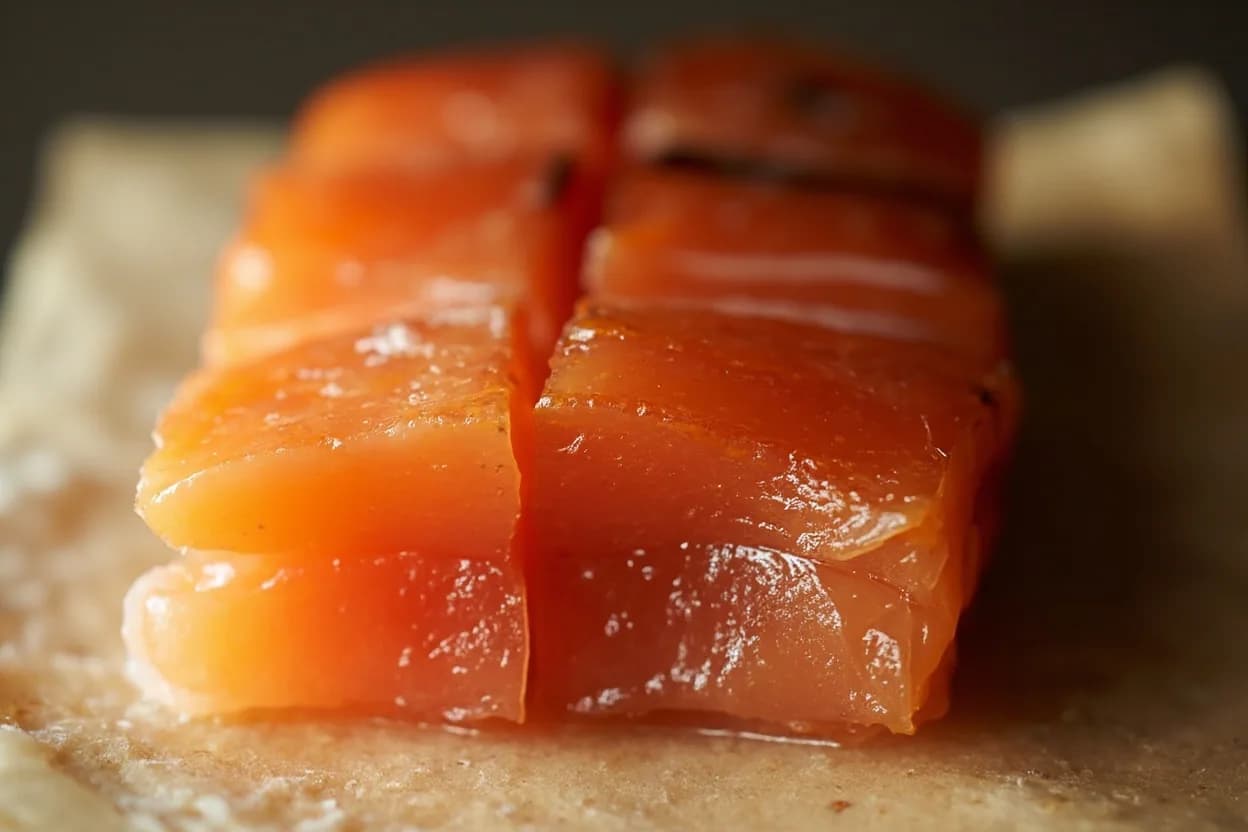
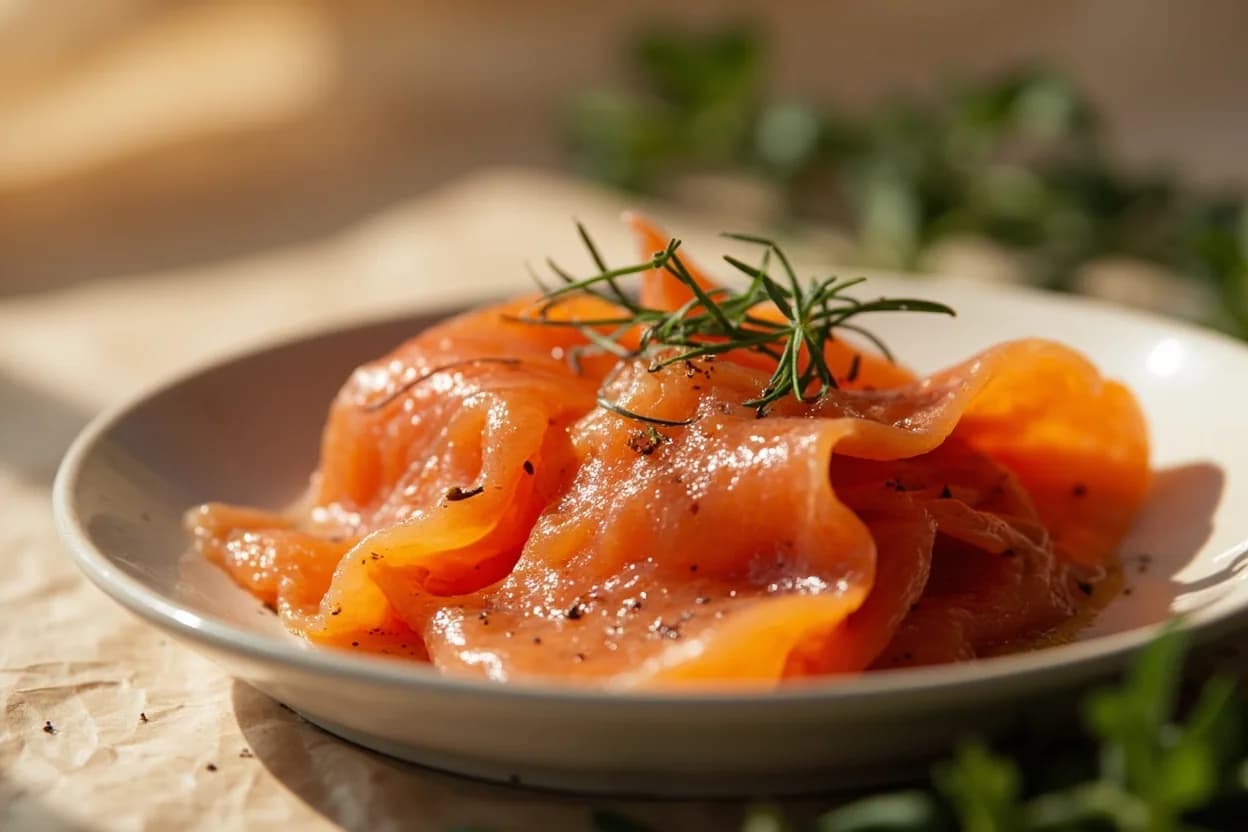
- Cold-smoked salmon turns translucent amber with a silky, raw texture
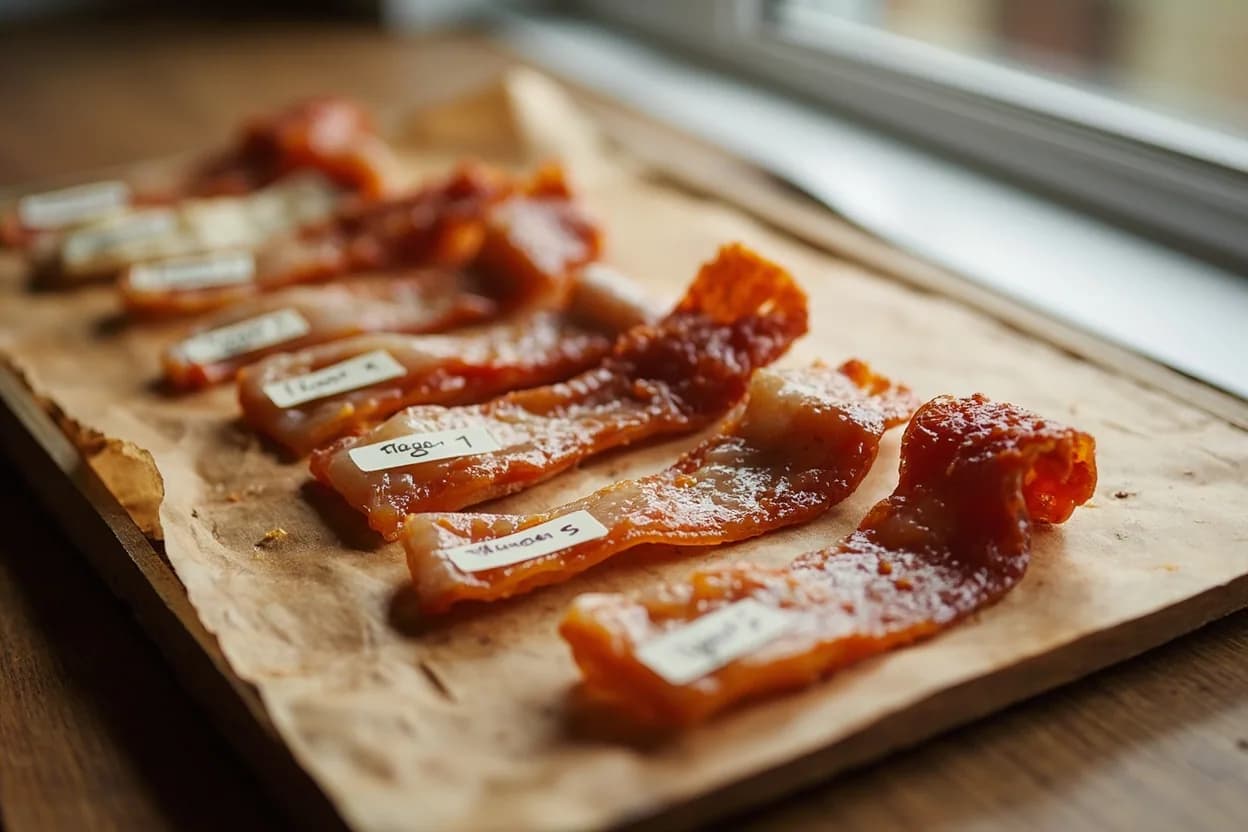
- Hot-smoked meat develops a firm, set texture as proteins coagulate
- Thin blue smoke (rather than white billowing smoke) indicates optimal combustion for either method
- Cold-smoked cheese softens slightly but holds its shape; hot-smoked cheese would melt
How to check
- Use a dedicated smoker thermometer mounted at grate level — not the lid thermometer, which reads 20–30°C higher
- For cold smoking, verify ambient and food temperatures with an instant-read probe before and during smoking
- Monitor with a remote dual-probe thermometer: one for chamber air, one inserted in food
- In cold smoking rigs, check that ice or refrigeration is maintaining food below 5°C during long sessions
- Verify hot-smoked items reach target internal temp (e.g., 63°C for fish, 71°C for poultry) before pulling
Food safety
Carryover & resting
Hot-smoked meats carry over 2–5°C after removal from the smoker, so pull brisket, pork shoulder, or whole chickens 3–5°C below target and rest tented. Cold-smoked products have no carryover consideration.
The science behind it
- Pellicle Formation
The tacky protein layer that forms when cured meat dries before smoking; essential for smoke adhesion in both methods
Cold smoking relies on low Aw via curing for safety; hot smoking achieves safety through heat
Surface browning that contributes to bark in hot smoking; absent in cold smoking
- Wood Combustion Temperature
Smoke generator must burn wood at 300–400°C to produce flavor-rich smoke without excess tar
- Nitrite Curing
Critical pre-treatment for cold-smoked sausage; inhibits Clostridium botulinum in anaerobic smoke environments
Appears in
References
- 1.On Food and Cooking — Harold McGee
- 2.Charcuterie: The Craft of Salting, Smoking, and Curing — Michael Ruhlman & Brian Polcyn
- 3.USDA Food Safety and Inspection Service: Smoking Meat and Poultry
- 4.The Art of Making Fermented Sausages — Stanley Marianski
Confidence: high
Notes
The pellicle is non-negotiable
Before hot smoking, cured meat must air-dry until the surface is tacky — the pellicle. Without it, smoke condenses into watery droplets that slide off rather than bonding to the surface, producing a blotchy, bitter result. Refrigerate uncovered on a rack for 1–4 hours after brining, or run a fan at low speed until the surface feels dry and slightly sticky.
Cold smoking in warm climates
Cold smoking is genuinely difficult when ambient temperatures exceed 20°C. Solutions include smoking only at night, placing the food chamber over ice, or using a cold smoke generator (ProQ, Smoking Gun) that physically separates the heat source from the food. Attempting cold smoking on a hot day routinely pushes food into the 30–60°C danger zone.