Poultry Doneness
Smoked Turkey Breast Target
Also: smoked turkey doneness, turkey breast smoke point, pit-smoked turkey breast
Pull at 157–160°C internal, rest to 165°F; the smoke ring is cosmetic — juiciness lives in not overshooting the stall.
A smoked turkey breast is considered done when the thickest part of the breast reaches an internal temperature that ensures pathogen safety while preserving moisture. USDA mandates 165°F (74°C) for whole poultry, but pasteurization is time-dependent: holding at 157°F (69°C) for 15 seconds achieves the same 7-log10 Salmonella reduction. Pitmasters therefore pull at 157–160°F (69–71°C) and allow carryover heat during a covered rest to coast to the safe threshold — arriving at a juicier result than hard-stopping at 165°F. The pink smoke ring visible on smoked turkey is a cosmetic artifact of nitric oxide chemistry, not an indicator of undercooking.
In photos
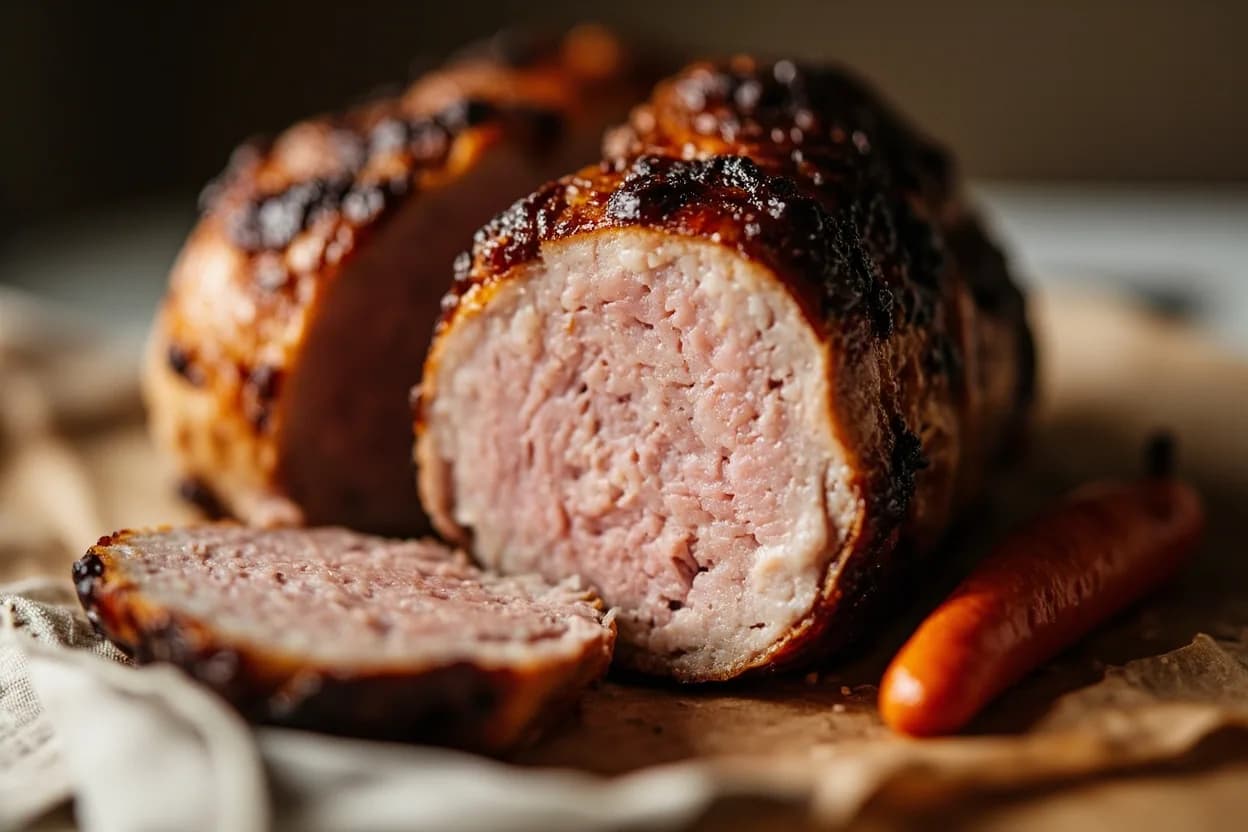
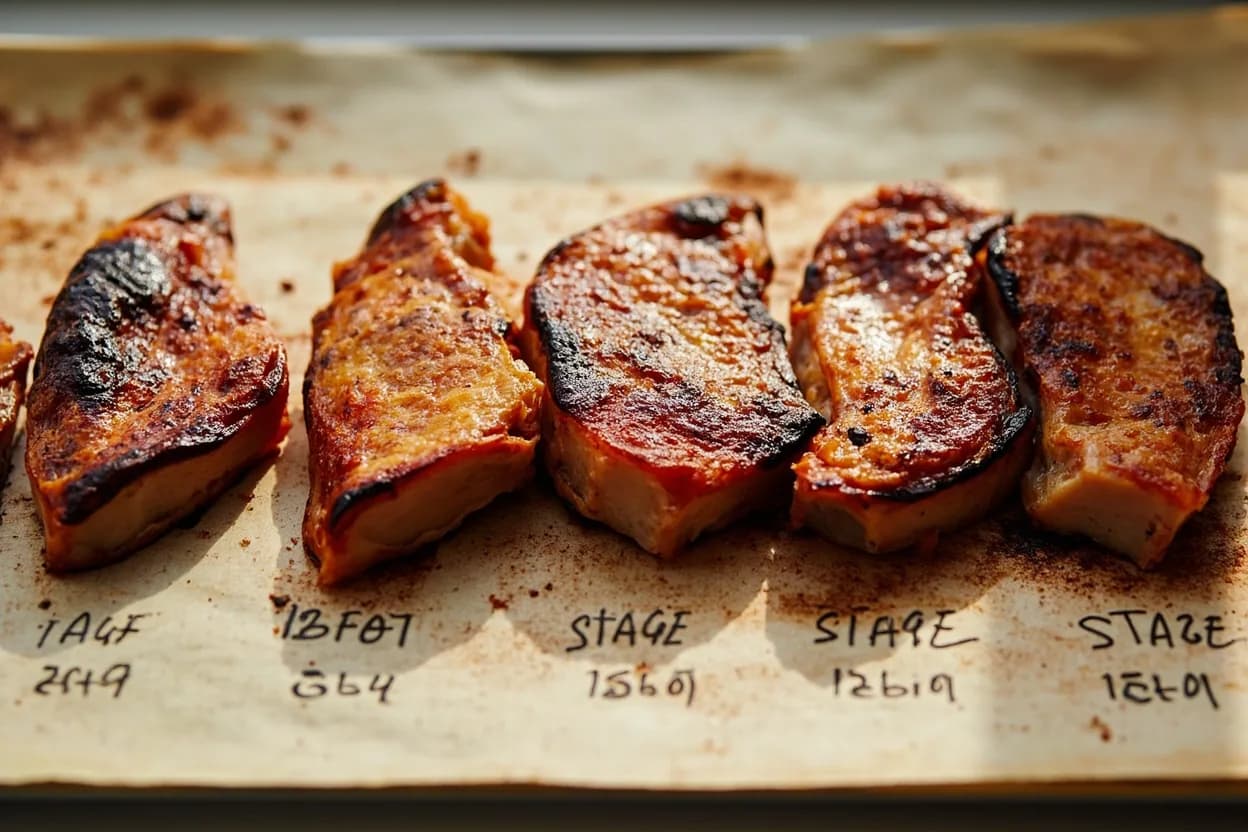
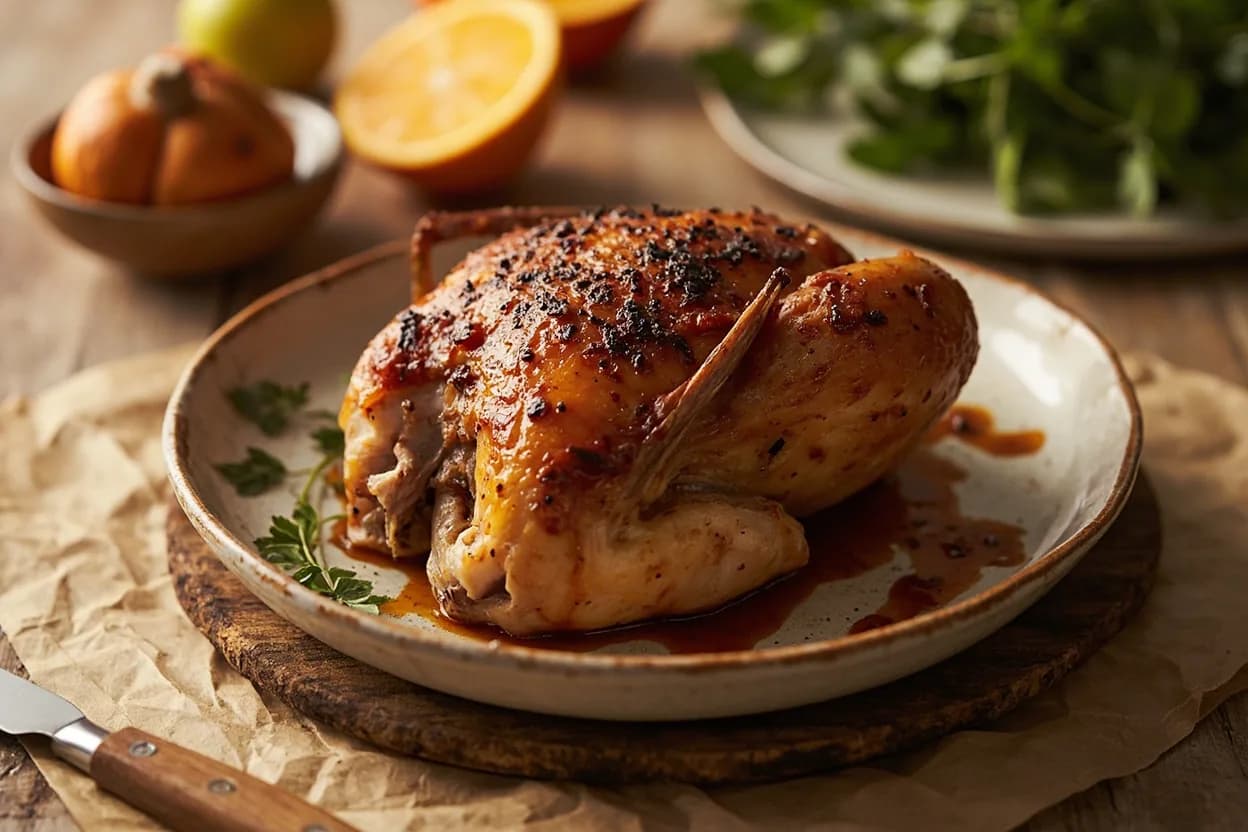
What happens
Turkey breast is lean, with little intramuscular fat to buffer against moisture loss. As internal temperature rises through 60–65°C, myosin proteins denature and muscle fibers begin contracting, expelling moisture. The 'stall' common in large pork cuts is less pronounced in turkey breast but still occurs around 155–160°F as evaporative cooling from surface moisture balances heat input. Simultaneously, nitric oxide from wood smoke reacts with myoglobin to form nitrosomyoglobin, fixing a rosy-pink color in the outer 6–12mm regardless of doneness — this is the smoke ring. Pulling at 157°F and resting allows residual heat to complete pasteurization without pushing the breast through the steep moisture-loss curve that occurs above 165°F.
What to look for
- Deep mahogany bark on the exterior; smoke ring visible as a 6–12mm pink band just beneath the surface when sliced
- Clear juices run when a skewer is inserted at the thickest point — no pink tinge
- The breast feels firm but gives slightly under firm finger pressure through a folded towel
- Steam rises gently when rested breast is sliced — not a flood of juice, which would indicate insufficient rest
- Flesh is white with a slightly pearlescent interior sheen, not chalky or fibrous
How to check
- Insert an instant-read thermometer horizontally into the thickest part of the breast, avoiding contact with the bone or any injected brine pocket
- Check at least two locations — the geometric center and a point halfway between center and the narrower end — as smoked breasts cook unevenly
- Pull from smoker at 157–160°F (69–71°C), tent loosely with foil, and rest 20–30 minutes; final temperature should reach 165°F (74°C)
- Use a leave-in probe during the smoke for continuous monitoring and to catch the stall
Food safety
Carryover & resting
A bone-in smoked turkey breast carries over 5–8°F (3–4°C) under foil over a 20–30 minute rest. Boneless breasts carry over less — about 3–5°F (2–3°C). Factor this into the pull temperature: pulling at 157–160°F reliably coasts to 165°F during rest.
The science behind it
Nitric oxide from wood smoke binds myoglobin, creating a fixed pink color that is cosmetic and not a doneness indicator
- The stall (evaporative plateau)
Heat input equals evaporative cooling around 150–160°F; turkey breast experiences a milder stall than pork shoulder or brisket
- Time-temperature pasteurization
USDA FSIS Table A: lower temperatures held longer achieve equivalent lethality to 165°F instant
- Brining for moisture retention
Wet or dry brine raises water-holding capacity via osmosis/salt dissolution of proteins, giving more buffer against the overshoot zone above 165°F
Appears in
References
- 1.USDA FSIS Appendix A — Compliance Guidelines for Meeting Lethality Performance Standards for Certain Meat and Poultry Products
- 2.Franklin Barbecue: A Meat-Smoking Manifesto — Aaron Franklin & Jordan Mackay
- 3.Meathead: The Science of Great Barbecue and Grilling — Meathead Goldwyn
- 4.On Food and Cooking: The Science and Lore of the Kitchen — Harold McGee
Confidence: high
Notes
Bone-in vs. boneless
Bone-in turkey breast smokes more evenly because the bone acts as a thermal conductor distributing heat from inside, and the natural fat cap above the bone self-bastes during cooking. Boneless breasts are faster but prone to uneven cooking and dry out more readily; netting or trussing helps maintain shape and reduces exposed surface area.
Wood choice and the smoke ring
Fruitwoods (apple, cherry) produce thinner blue smoke that penetrates deeply and generates a well-defined smoke ring. Hickory and oak deliver stronger flavor but can overpower mild turkey breast if used exclusively. A combination — oak base with cherry finish — is a common competition approach. The ring depth correlates with smoke duration and nitric oxide concentration, not doneness.