Fish & Seafood Doneness
Shrimp: Pink & Curled Doneness Stages
Also: prawn doneness, shrimp color change, C-shape vs O-shape shrimp, shrimp curl test, pink shrimp doneness
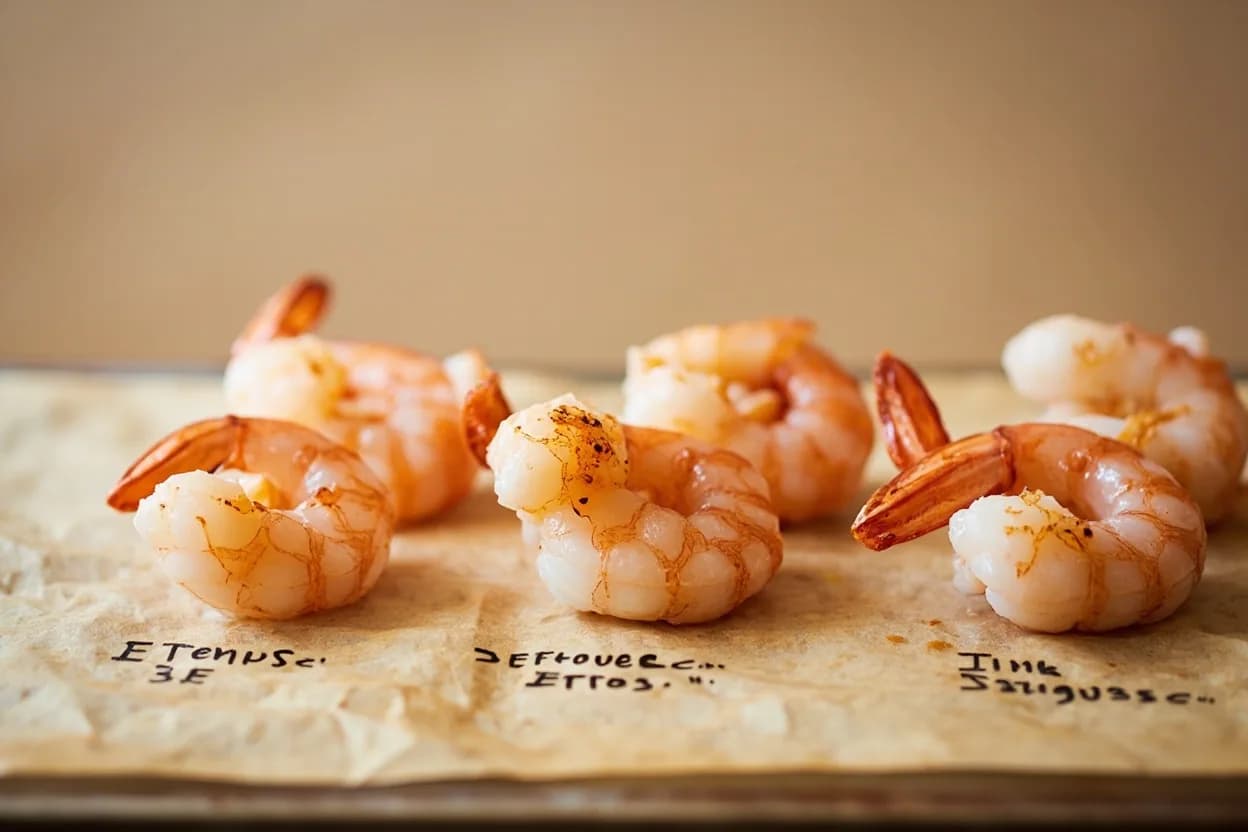
Shrimp is done at the C-shape stage — pink-white, fully opaque, with a gentle curve — and ruined at the O-shape, which signals overcooked, tough, and dry.
Shrimp cooks extremely fast and passes through doneness in a matter of seconds, making visual cues essential. The progression moves from grey-translucent (raw) to pink-white-opaque (done) to pink-orange (overcooked) on the color axis, and from straight (raw) through a gentle C-curve (done) to a tight O-ring (overcooked) on the shape axis. The C-shape — where the tail end of the shrimp curves toward the head end but the two do not touch — corresponds approximately to an internal temperature of 50–60°C (120–140°F) depending on species and size. Beyond that, the muscle proteins continue contracting, tightening the curl until the tail and head ends press together (O-shape), producing rubbery, dry flesh.
In photos

What happens
Raw shrimp muscle is translucent because the proteins (primarily myosin and actin) allow light to pass through. As heat is applied, myosin denatures first (~40–50°C), causing initial opacity and the pink pigment (astaxanthin bound in crustacyanin protein) to be released and become visible. Full opacity indicates actin has begun denaturing (~55–60°C). The curling is caused by muscle fibers on the ventral (belly) side contracting more strongly than the dorsal side, bending the shrimp inward. Continued cooking causes all muscle fibers to contract maximally, pulling the shrimp into a tight ring and expelling moisture from the cells.
What to look for
- Color transitions from grey-translucent to pearlescent white-pink along the tail and body
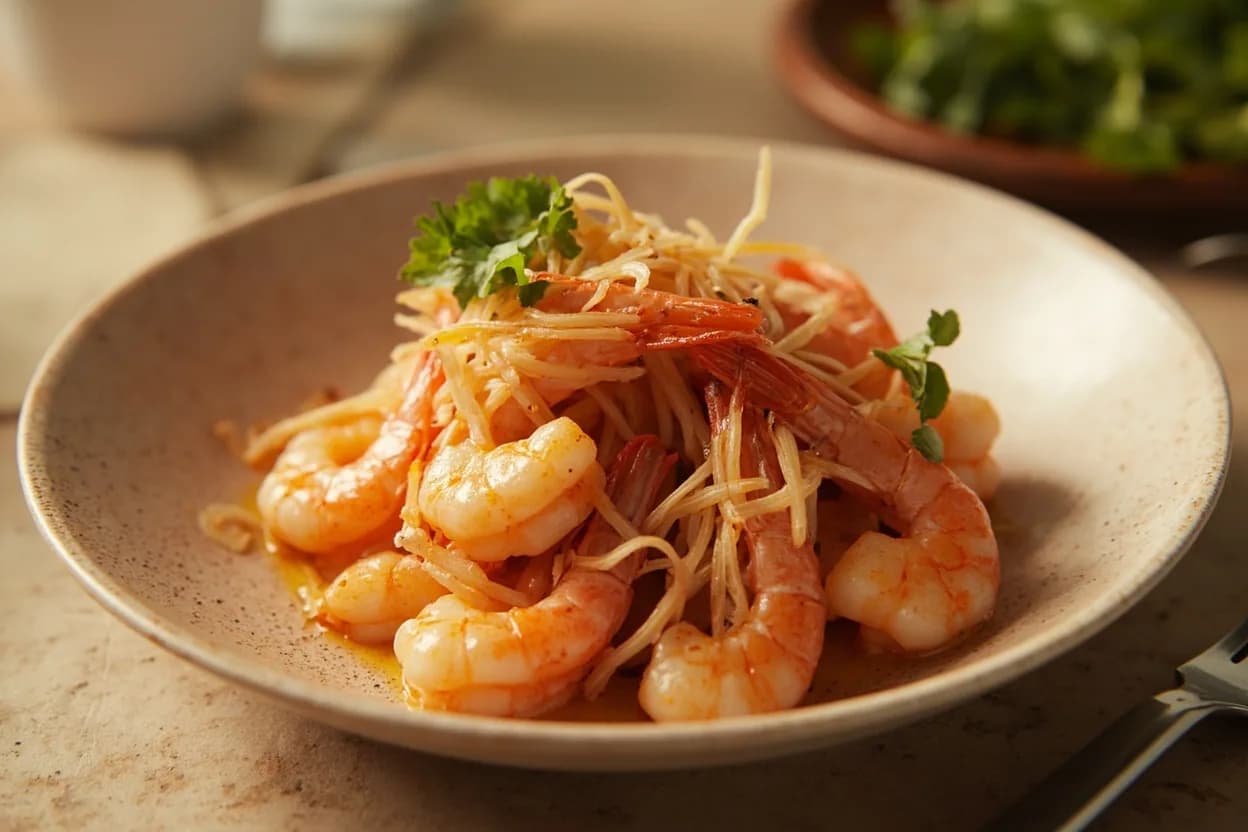
- At ideal doneness: flesh is fully opaque white with a pink blush at the tail and orange-pink carapace (if shell-on)
- Shape is a relaxed C — the tail curves toward the head but a gap remains between them
- At overcooked: bright coral-orange color with no white translucency, and the tail presses tightly against the head (O-shape)
- Properly done shrimp has a slight spring when gently pressed; overcooked shrimp feels dense and rubbery
- Aroma shifts from briny-raw to sweet, clean cooked seafood
How to check
- Watch the shape: remove from heat the moment the shrimp reaches a C — it will carry over to the perfect stage off heat
- Cut a larger shrimp at its thickest part and inspect the center — it should be barely opaque and white, not translucent grey
- For batched shrimp in a pan or wok, remove each individual piece as it reaches C-shape rather than removing all at once
- Use an instant-read thermometer inserted laterally through the thickest section, targeting 50–55°C (122–131°F) for a moist result
Food safety
Carryover & resting
Shrimp carries over heat rapidly because of their small mass. Remove from direct heat when still in a C — even the residual heat of a hot pan or sauce will carry the center to full doneness within 30–60 seconds. This is especially important when finishing shrimp in a sauce: add them last and pull the pan off heat the moment they curl.
The science behind it
- Astaxanthin
The carotenoid pigment bound in grey crustacyanin that turns pink-orange when heat denatures the binding protein
- Actin and myosin denaturation
Sequential protein changes that drive the grey-to-white color change and progressive curl
Residual heat continues cooking shrimp after leaving the heat source; always pull early
- Vibrio parahaemolyticus
A bacterial pathogen associated with raw and undercooked shrimp; primary food-safety concern
- Shellfish: USDA Temperature Guidelines
63°C (145°F) internal temperature is the standard safety threshold for cooked shrimp
Appears in
References
- 1.The Food Lab — J. Kenji López-Alt
- 2.On Food and Cooking — Harold McGee
- 3.FDA Seafood HACCP: Fish and Fishery Products Hazards and Controls Guidance, 4th Edition
- 4.Salt, Fat, Acid, Heat — Samin Nosrat
Confidence: high
Notes
Shell-on vs. peeled
Shrimp cooked shell-on retain moisture better because the shell acts as a barrier, slowing heat penetration and reducing moisture loss. Shell-on shrimp can tolerate slightly higher temperatures before becoming rubbery. Peeled shrimp cook faster and dry out more quickly — reduce cooking time by 20–30% and watch the curl even more carefully.
Size matters
A colossal U/10 shrimp (10 per pound) will take 3–4 minutes to cook through over medium-high heat; a small 51/60 count shrimp is done in under 90 seconds at the same heat. Always cook shrimp of similar size together, and if mixing sizes in a dish (e.g., a paella), add larger ones first. Cooking time scales with cross-sectional area, not weight.