Fish & Seafood Doneness
Shellfish: Mussel & Clam Shell-Opening Point
Also: bivalve gape, shell gape, clam opening, mussel opening
The moment bivalve shells spring open as their adductor muscle denatures and releases — the primary visual cue for doneness in mussels and clams.
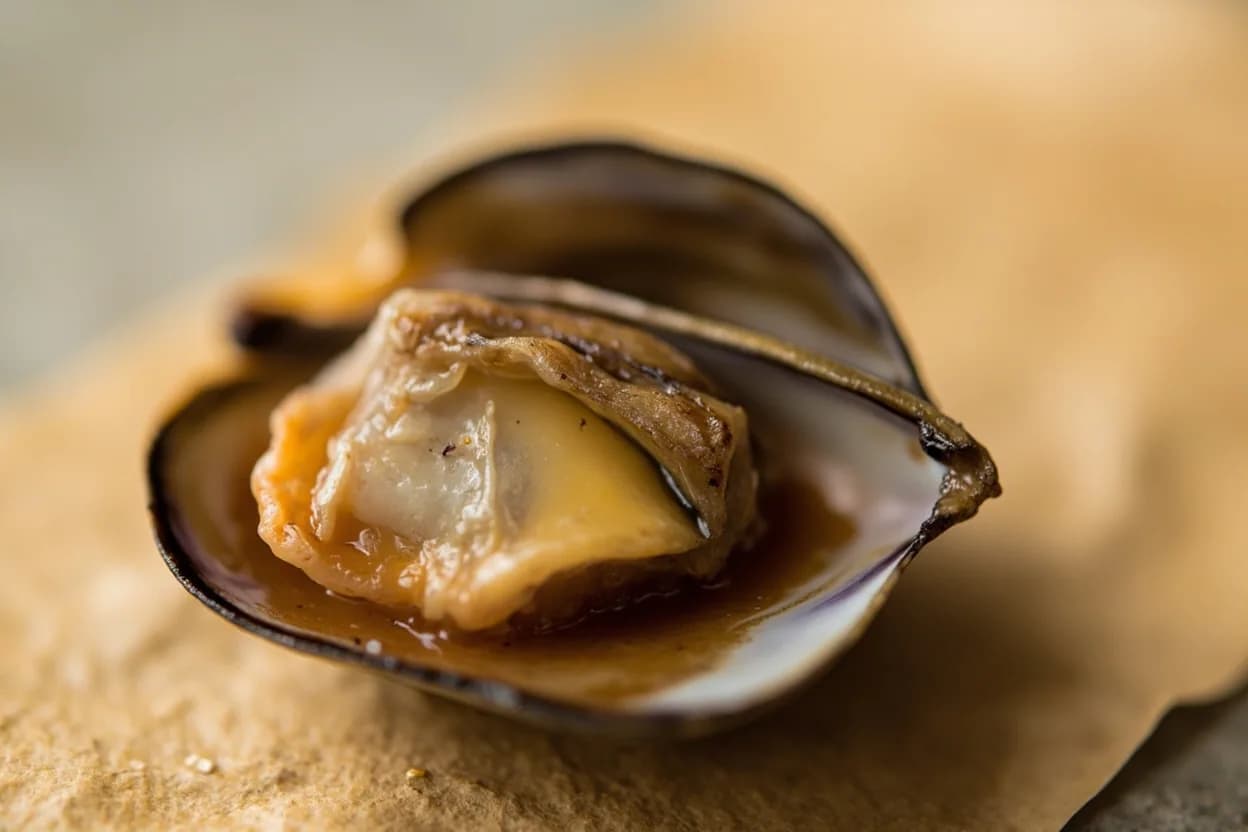
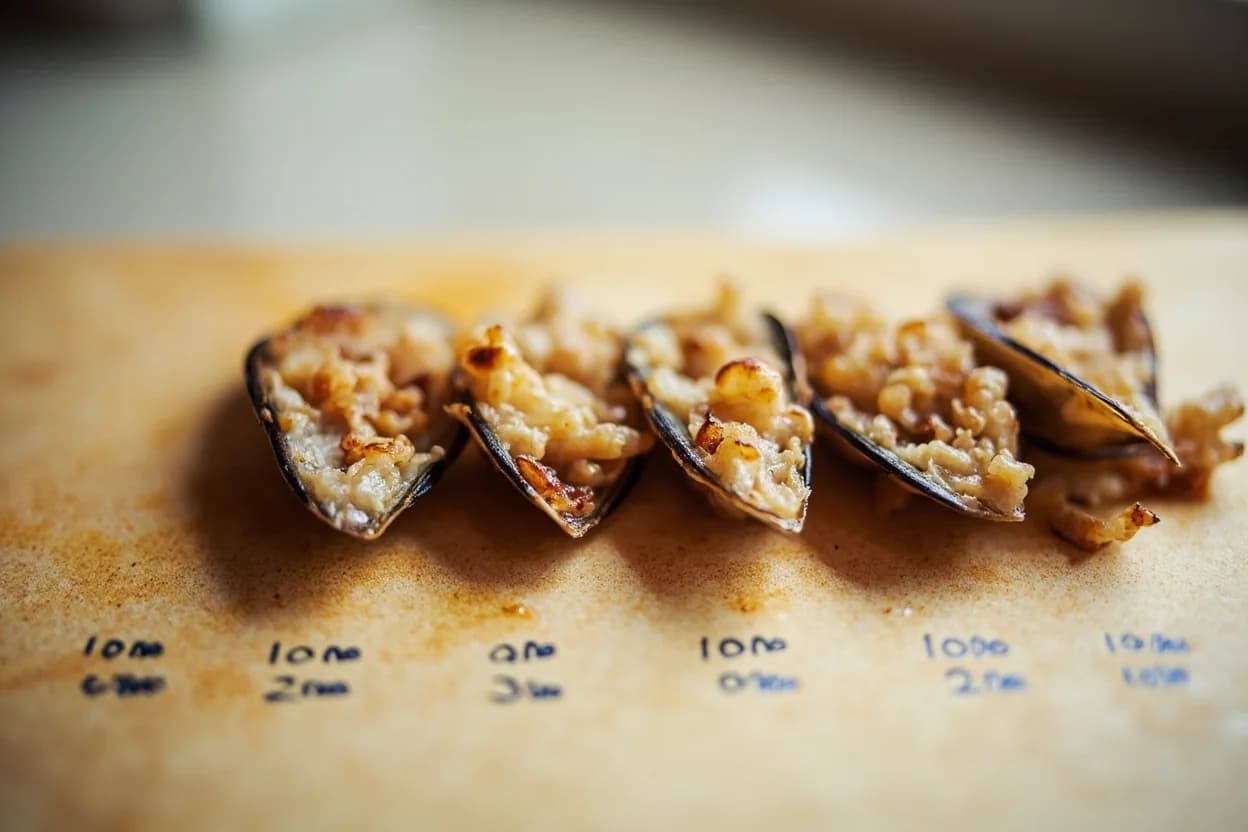
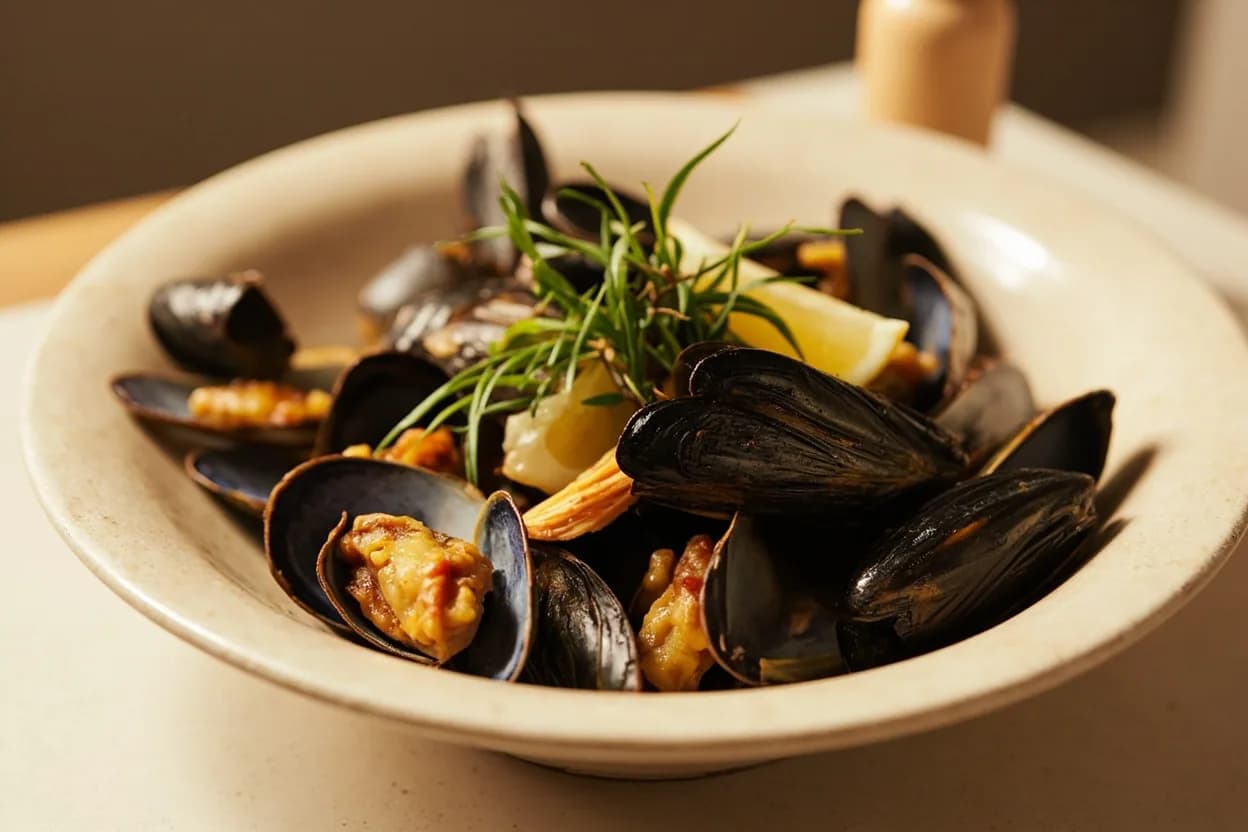
Mussels and clams are held shut by one or two powerful adductor muscles composed of heat-sensitive proteins. As internal temperature climbs through 63–70°C (145–158°F), those proteins denature and lose contractile force, allowing the shell valves to gape open under their own spring tension. The opening point is not a single temperature but a narrow band: thin-shelled mussels typically gape by 63–65°C, while thicker-shelled hard-shell clams (quahogs, littlenecks) often need 68–70°C. Any shell that remains fully closed after adequate steam time should be discarded — not because it is 'angry,' but because the adductor may already be dead and locked, meaning the shell cannot open despite full cooking.
In photos
What happens
Adductor muscle myosin and actin denature beginning around 60°C, reducing the force holding the valves shut. The periostracum (outer shell membrane) and hinge ligament provide an outward spring force that exceeds the weakened muscle pull, causing the shell to gape. Simultaneously, the bivalve's mantle tissue (the frill around the edge) turns from translucent grey to an opaque ivory-orange as its proteins set. The liquor — a mix of seawater retained inside and juices released during cooking — begins to evaporate rapidly above 70°C, so prolonged heat after opening leads to shrunken, rubbery meat.
What to look for
- Shell valves open at least 1–2 cm with no muscular resistance when nudged
- Mantle frill transitions from translucent and glassy to opaque and plump
- Interior liquor shifts from clear to milky-white
- Steam escaping from the pot carries a briny, sweet oceanic aroma
- Mussel foot (if visible) loses its bright orange-pink tint and becomes paler
How to check
- Watch the pot lid: open at the first sign of widespread shell gaping, usually 3–5 minutes for mussels in a covered pan over high heat
- Lift one shell and probe the hinge gently — a done bivalve offers no resistance; a closed one snaps back firmly
- If using a probe thermometer, insert through the gap and target the adductor muscle: 63°C minimum for mussels, 68°C for hard-shell clams
- Discard any specimen that is still fully clamped shut after the batch has been removed from heat and rested 1 minute
Food safety
Carryover & resting
Bivalves carry over only minimally (1–2°C) due to their small thermal mass. The more practical concern is over-cooking: once shells open, remove from heat immediately or transfer to a warm bowl — residual steam in a covered pot will continue cooking the meat and rapidly overcook it.
The science behind it
- Adductor muscle anatomy
The single or paired muscle whose denaturation triggers shell gape
- Bivalve liquor
The retained and released liquid that defines the sauce in moules marinières
- Steam-cooking dynamics
Indirect heat via steam reaches bivalves uniformly from all sides, enabling rapid, even cooking
- Vibrio parahaemolyticus
Heat-labile marine pathogen eliminated at 63°C — one reason minimum temperature matters
- Dead-on-arrival bivalve identification
Pre-gaping or failing-to-close shells signal dead specimens that must be discarded before cooking
Appears in
References
- 1.McGee, Harold. On Food and Cooking: The Science and Lore of the Kitchen. Scribner, 2004.
- 2.FDA Food Code 2022, §3-401.11 (Raw Animal Foods — Minimum Temperatures).
- 3.Seafood Network Information Center (SeafoodNIC), UC Davis: Bivalve Mollusk Safety Guidelines.
- 4.Davidson, Alan. The Oxford Companion to Food, 3rd ed. Oxford University Press, 2014.
Confidence: high
Notes
The 'discard closed shells' rule — nuanced
The common rule 'throw away any that don't open' is broadly correct but requires context. A mussel with a cracked or broken shell may gape even when unhealthy; conversely, an overcooked mussel in a very crowded pan can be physically pinned shut by neighboring shells. Professional kitchens typically pry open a stubborn but otherwise odor-free shell and inspect the meat — if it looks and smells normal, it may be safe to serve; if it smells putrid or the meat is discolored, discard it. For home cooks, the conservative rule (discard all closed) is appropriate.
Species variation
Blue mussels (Mytilus edulis) open readily and quickly, usually within 3–5 minutes of steaming. New Zealand green-lipped mussels (Perna canaliculus), larger and thicker-shelled, may need 7–9 minutes. Manila clams (Ruditapes philippinarum) open at around 65°C; quahogs and surf clams need sustained higher heat and often benefit from 68–70°C.