Starch & Specialty Doneness
Hominy Bloom (Pozole Flowering)
Also: pozole bloom, hominy flower, maíz pozolero floreado, dried hominy bloom
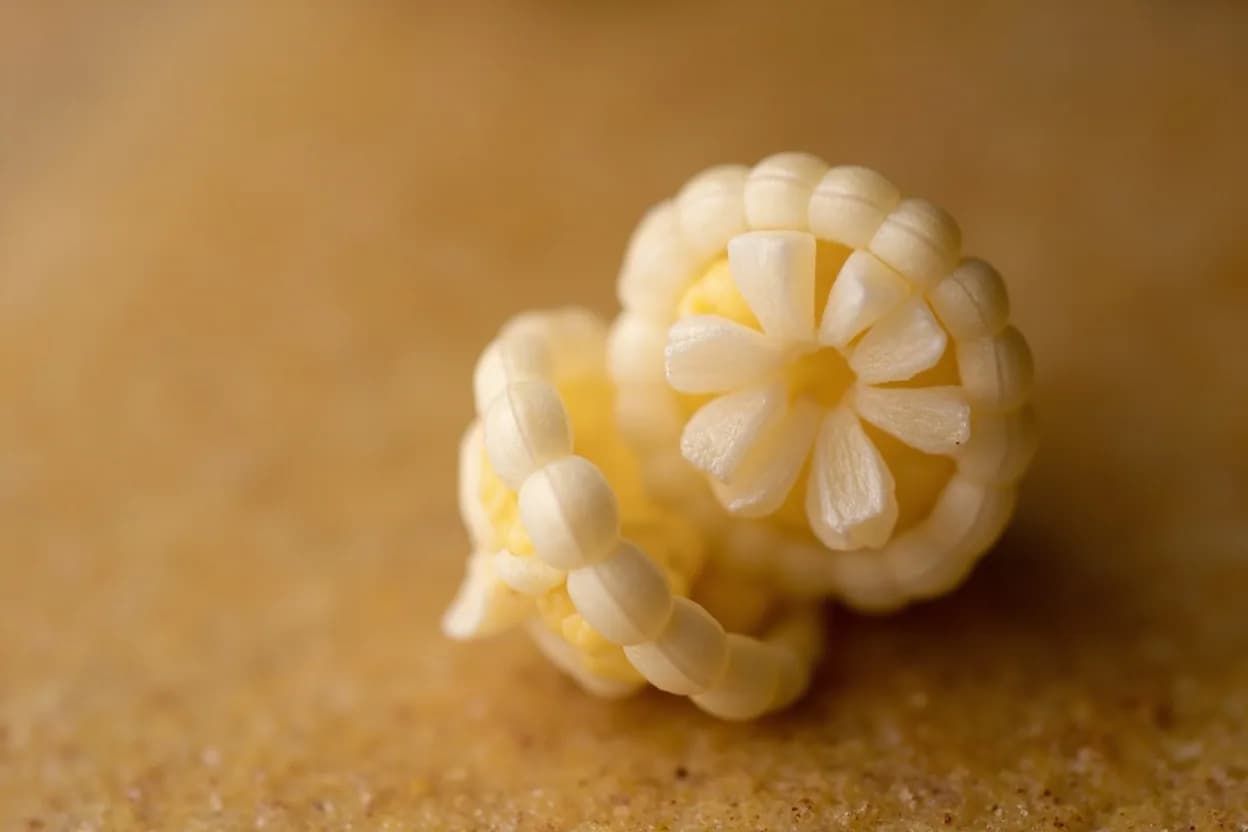
Nixtamalized hominy kernels split open at the crown and flower like a four-petaled blossom after extended simmering — the definitive doneness signal for pozole and hearty hominy broths.
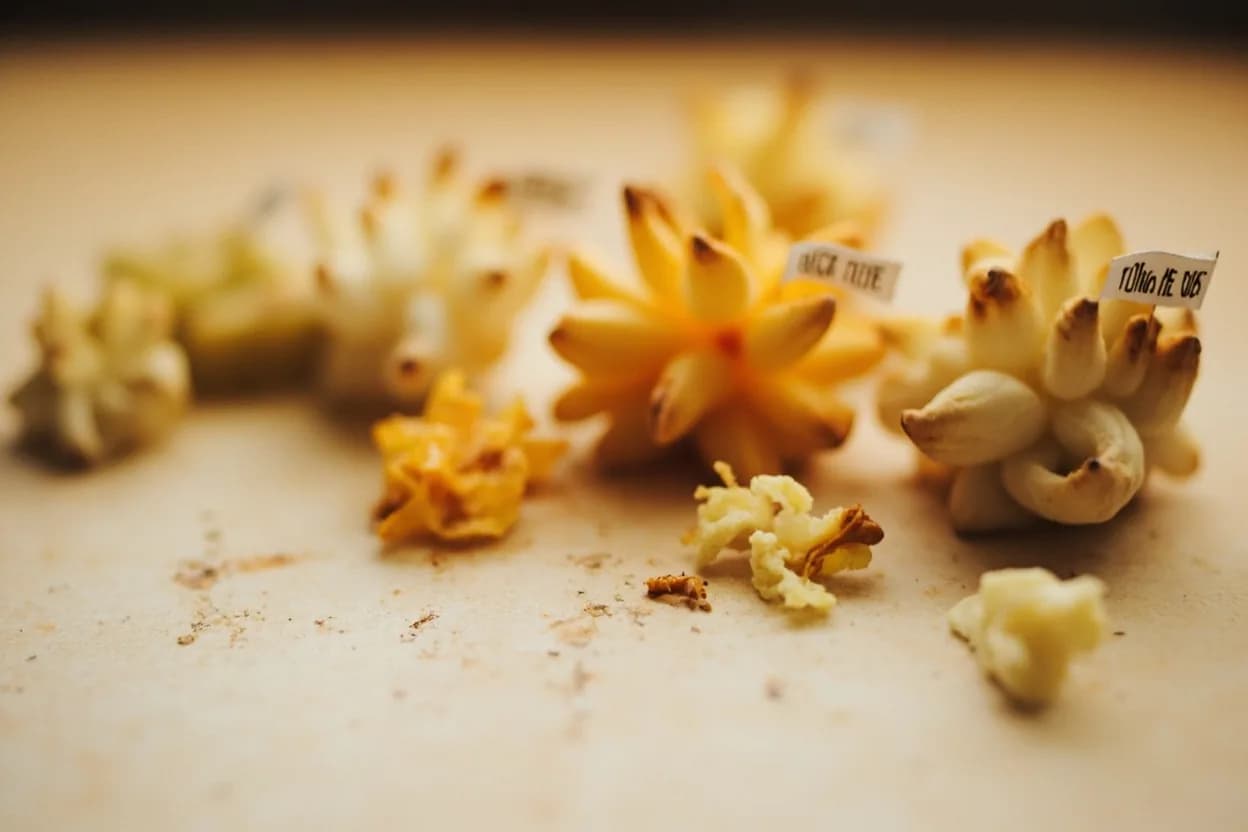
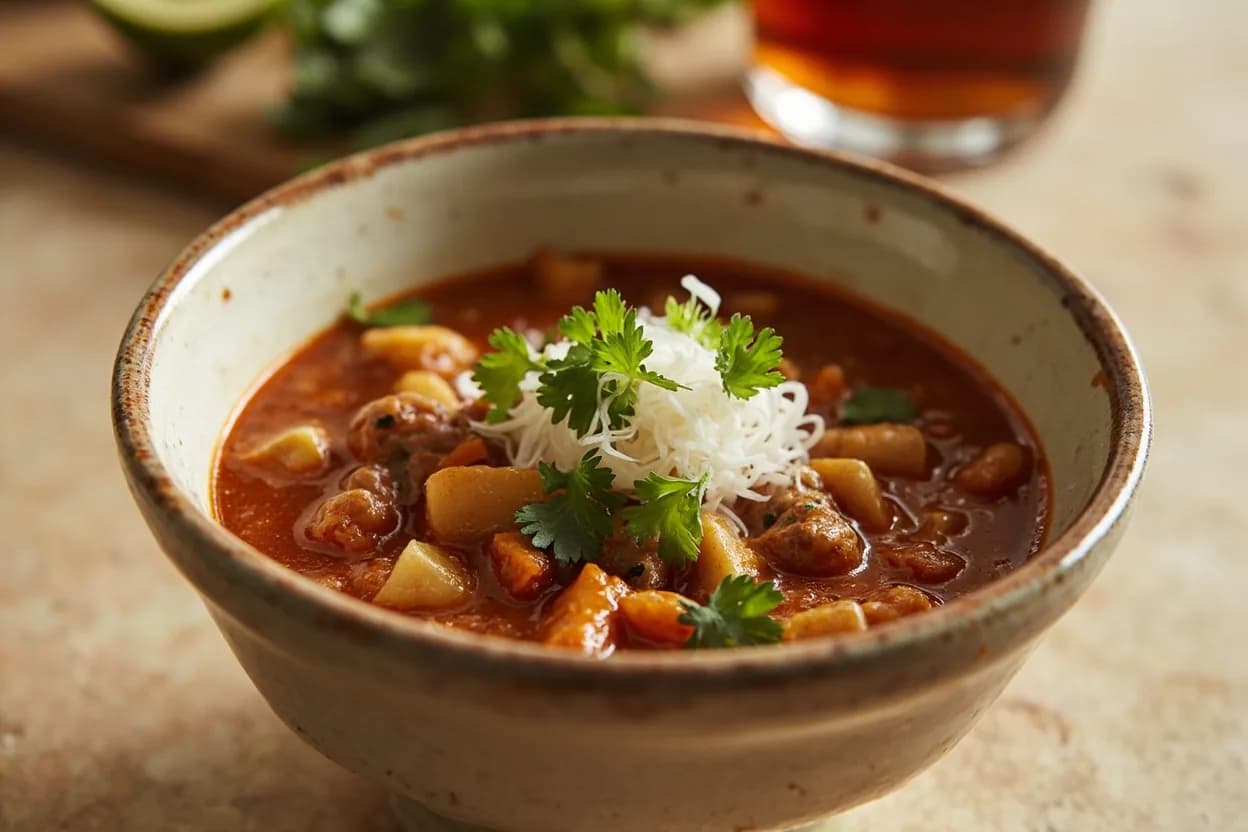
Hominy bloom, called floreado in Mexican cooking, describes the physical transformation of dried pozole-grade hominy (maíz cacahuazintle or similar large white corn) when fully cooked: the tip (pedicle) of each kernel ruptures, and the softened starch interior pushes out in four lobes, creating a shape that resembles a four-petaled flower. This visual cue — universally recognized across Mexican regional cuisines — indicates that the kernels have fully hydrated, their starch has gelatinized throughout, and the texture has become tender and yielding rather than chewy or resistant. It occurs after 2–4 hours of simmering depending on the corn's age and pre-soaking.
In photos
What happens
Dried hominy (corn that has been nixtamalized — soaked and cooked in an alkaline cal/lime solution — then dried) must be rehydrated and cooked to achieve full starch gelatinization. During extended simmering, water penetrates the pericarp and germ cap, and the starchy endosperm absorbs moisture and swells. The pedicle (the attachment scar at the top of the kernel) is structurally the weakest point. As internal hydrostatic pressure from swelling starch exceeds the tensile strength of the pericarp at this point, the tip bursts open. The starchy interior, now fully gelatinized and soft, extrudes in four lobes along the natural seam lines of the endosperm. The bloom is both an aesthetic and functional marker: kernels that have not yet bloomed still have a chewy, starchy core.
What to look for
- Each kernel visually opens at the tip into four distinct lobes, resembling a small flower or a popped kernel of corn
- Bloomed hominy feels completely tender throughout when pressed between two fingers — no hard starchy center
- The broth becomes lightly milky and thickened from released corn starch
- The corn smell shifts from raw or chalky to sweet, deeply corn-forward and slightly nutty
- Kernels that have bloomed bob upward in the pot as their density decreases
How to check
- Fish out a kernel and press it between your thumb and index finger — it should yield completely with no hard center
- Look for the characteristic four-lobe flower shape at the tip of the kernel; bloom should be visible on the majority of kernels
- Bite through a kernel — it should be uniformly soft and creamy throughout, never chewy or chalky in the center
- At full bloom, the broth will have visibly thickened and turned slightly opaque from dissolved starch
The science behind it
- Nixtamalization
The alkaline pre-treatment that softens the pericarp and enables the kernel to bloom during subsequent cooking
The molecular event that makes the interior swell and the pedicle rupture
- Dried Bean Doneness
Shares the same extended simmer-to-full-hydration logic; bloom is the corn equivalent of a bean's 'just yielding' stage
- Pozole Rojo / Verde / Blanco
All three regional pozole traditions use hominy bloom as their primary cook indicator
Appears in
References
- 1.Mexico: The Cookbook — Margarita Carrillo Arronte, Phaidon Press
- 2.Authentic Mexican: Regional Cooking from the Heart of Mexico — Rick Bayless, William Morrow
- 3.Mastering the Art of Plant-Based Cooking — Joe Yonan, Ten Speed Press
- 4.On Food and Cooking — Harold McGee, Scribner
Confidence: high
Notes
Canned vs. Dried Hominy
Canned hominy (Goya and similar brands) has already been fully cooked and bloomed by the manufacturer. When using canned hominy in pozole, the bloom is pre-achieved — simply add it to the broth in the final 20–30 minutes to heat through and absorb flavor. The bloom indicator is only relevant when cooking from dried.
Pre-Soaking and Cook Time
Soaking dried pozole corn overnight in cold water cuts simmer time from 3–4 hours down to roughly 2 hours and promotes more even blooming. Without soaking, the exterior can over-soften before the center hydrates. Some cooks add the corn to the broth from the start; others pre-cook it in plain water and add it to the seasoned broth only after bloom.
Not All Kernels Bloom Simultaneously
In a full pot of dried hominy, bloom is never perfectly uniform — expect 70–80% bloom as the practical done threshold. Kernels at the pot's bottom (closest to the heat source) often bloom 15–20 minutes ahead of those at the top. Stir occasionally and judge the overall batch, not individual outliers.