Smoking & Curing
Jamón Curing Stages
Also: jamón ibérico stages, Spanish ham aging, bodega reserva gran reserva, ham curing progression
Jamón progresses through salting, post-salting, drying, and cellar aging — a 14–48 month arc of enzyme-driven transformation that cannot be rushed.
Spanish jamón — both Serrano (white pig) and Ibérico (Iberian black pig) — is cured through a precisely staged process that mirrors the seasonal climate of the Spanish meseta: cold and damp in winter, hot and dry in summer, cool and humid in the cave cellar. Each stage has a distinct temperature range, humidity, and duration. The four canonical stages are salting (salazón), post-salting (asentamiento), drying (secadero), and cellar aging (bodega). Jamón Serrano Reserva requires ≥12 months total; Gran Reserva ≥15 months. Jamón Ibérico de Bellota (acorn-fed) is classified as Bodega (24+ months), Reserva (36+ months), or Gran Reserva (48+ months) under Consejo Regulador standards.
In photos
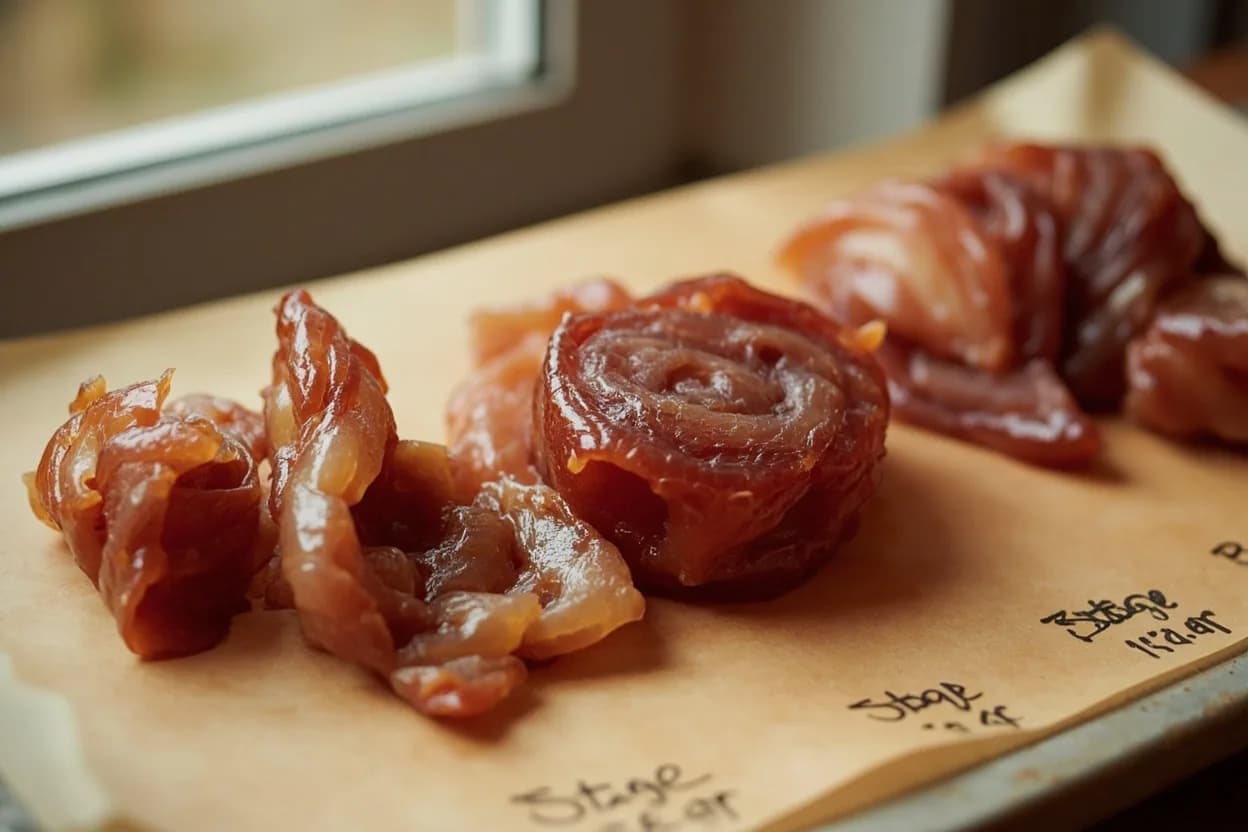
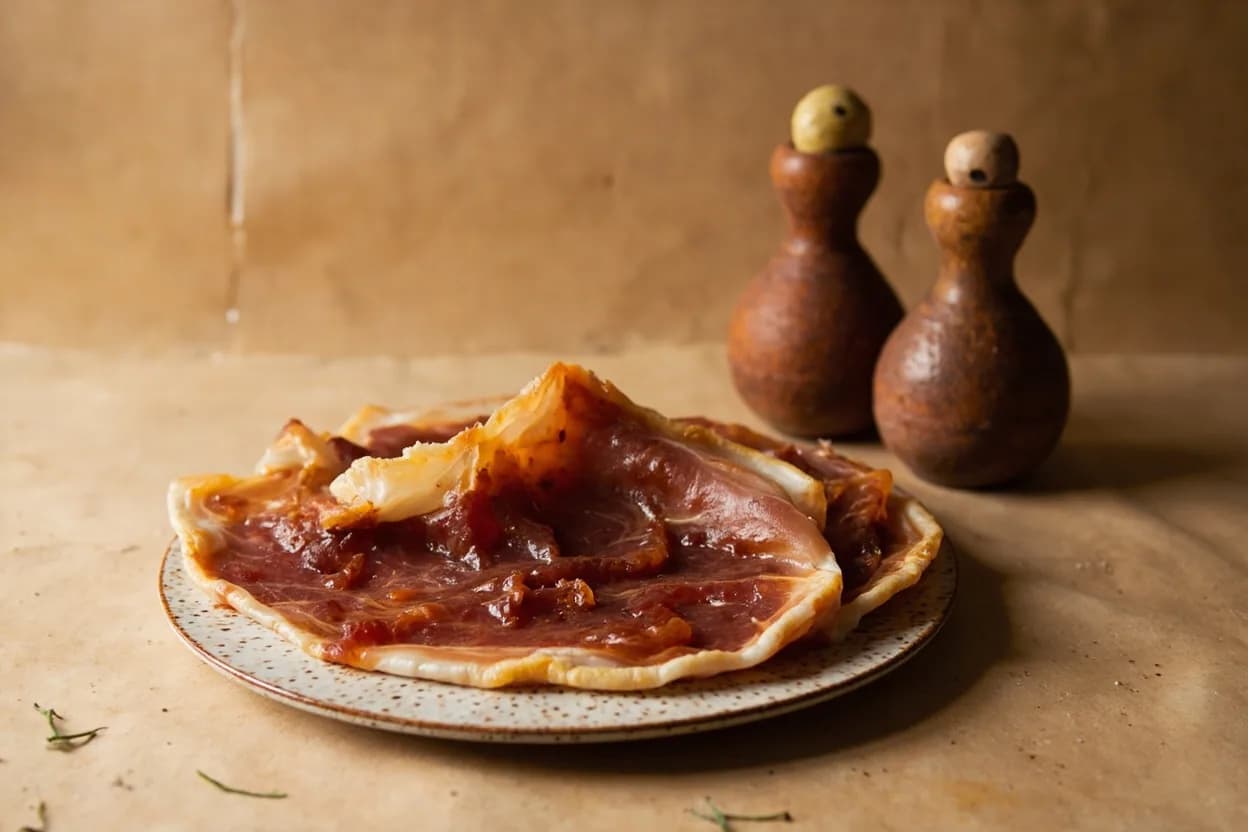
What happens
In salting (1–2 days per kilogram of ham weight), sea salt draws moisture from the muscle, reduces Aw, and initiates nitrate reduction via natural curing microflora. Post-salting (30–60 days at 3–6°C) allows salt to equilibrate from the surface inward — a critical redistribution phase. In the secadero (drying room), temperature rises through spring and summer (mimicking the meseta climate), accelerating enzymatic activity: endogenous proteases (cathepsins, calpains) break muscle proteins into free amino acids and small peptides that contribute to umami and sweetness; lipases hydrolyze oleic-acid-rich intramuscular fat into free fatty acids that oxidize into hundreds of aromatic compounds. The bodega phase (cave or cellar, 15–20°C, 60–80% RH) consolidates enzyme work at lower temperature, allowing the complex aroma matrix — including notes of acorn (bellota), truffle, hazelnut, and aged-cheese depth — to fully develop.
What to look for
- End of salting: surface is firm, salt-encrusted, and dark; deep red on probe but interior still bright pink
- End of post-salting: salt has evened out; pressing the meaty face reveals no spongy pockets of pure moisture — texture is uniformly dense
- Secadero mid-phase (summer peak): exterior is dry and beginning to mottle with white spots of beneficial Penicillium and Aspergillus mold
- Bodega entry: the ham has lost 30–40% of green weight; pressing the hip socket joint releases a characteristic bone-marrow and cured-meat aroma
- At maturity (Gran Reserva Ibérico): tapping the hip socket of a properly aged leg produces a hollow drumming sound; a cala (metal probe) inserted and withdrawn carries an intensely complex fragrance of nut, aged fat, and cured pork with no wet or sour off-note
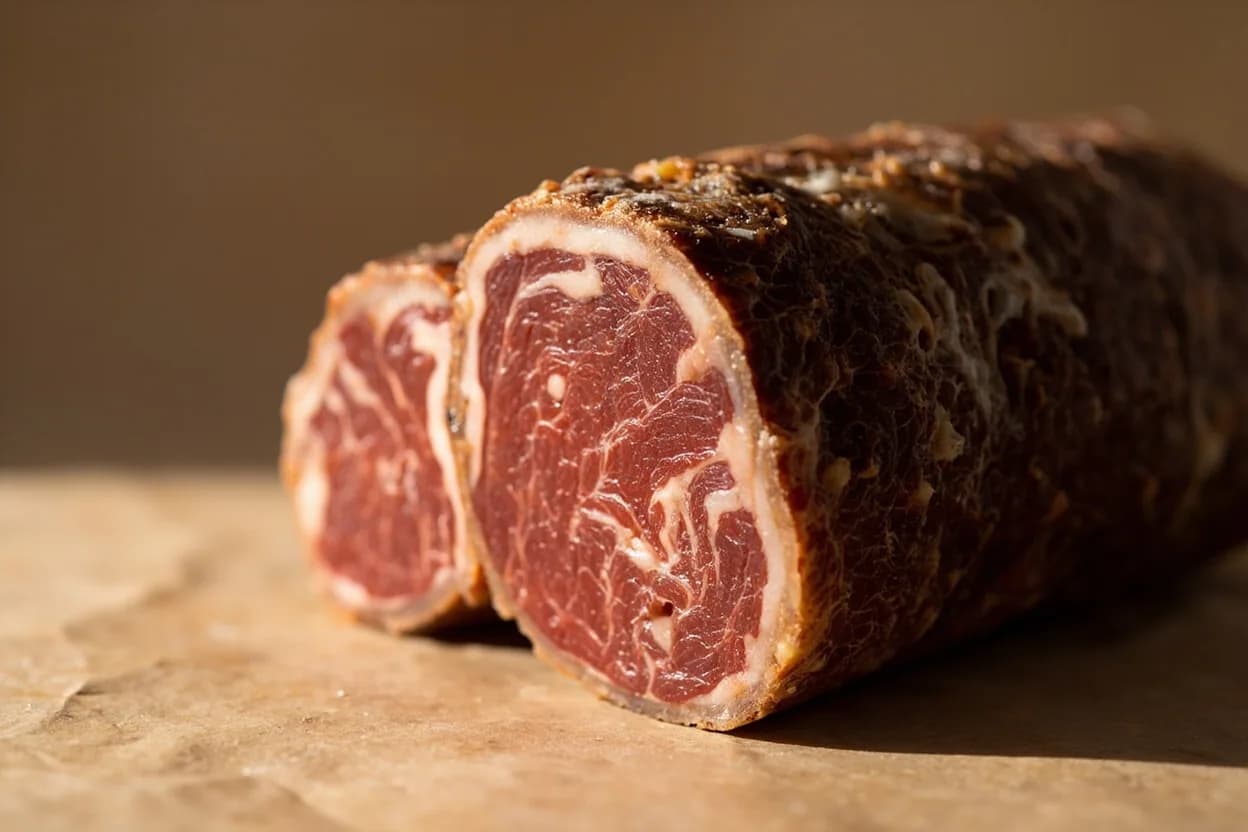
- Cross-section of bellota reveals marbled, opalescent fat with an ivory-to-golden tint — not white and opaque like commercial pork fat
How to check
- The cala (thin metal or bone probe) test: insert a thin needle of porous bone or metal into 3–4 anatomical points (hip, knee, shoulder); the aroma left on the probe at each site tells experienced jamón maestros where enzymatic maturation stands
- Weight loss tracking: weigh the ham at green weight before salting; at Gran Reserva standard, the finished leg should weigh 35–42% less than starting weight
- Visual mold inspection: beneficial white-gray surface mold is desirable; any black or green mold on the meat face (not just the rind) indicates humidity damage
- pH probe on a trim sample: properly cured ham ranges pH 5.5–5.9; higher pH may indicate salt penetration failure
- Texture probe: the thickest part of the maza (main muscle) should yield only slightly under sustained thumb pressure at bodega maturity — not hard as stone, not spongy
Food safety
The science behind it
Drops progressively through all four stages; ≤0.87 target in the maza at full maturity
Fat breakdown by lipases during the secadero releases free fatty acids that oxidize into bellota and nutty aromas
Endogenous proteases break muscle protein into free amino acids; drives umami depth and affects sliceability
- Beneficial Surface Mold
Penicillium and Aspergillus colonize the rind, regulating humidity, preventing case hardening, and contributing secondary metabolites
- Montanera Feeding
The bellota (acorn) finishing diet loads Iberian pig muscles with oleic acid that drives the distinctive flavor of Ibérico ham
- Cala Probe Technique
Centuries-old sensory QC method using a porous probe to sample volatile aromatics at anatomical points
Appears in
References
- 1.Charcuterie: The Craft of Salting, Smoking, and Curing — Michael Ruhlman & Brian Polcyn
- 2.Spain: The Cookbook — Simone Ortega & Inés Ortega
- 3.Denominación de Origen Protegida: Jamón de Jabugo Technical Specifications — Consejo Regulador
- 4.Food Chemistry — Belitz, Grosch & Schieberle
Confidence: high
Notes
The four stages in practice
Salting (1–2 days/kg, 0–5°C): hams stacked under salt. Post-salting / asentamiento (45–60 days, 3–6°C, 80–90% RH): salt equalizes. Secadero (6–12 months, temperature rises from 8°C in spring to 30°C+ in summer, 60–80% RH): active enzymatic work and moisture loss. Bodega / cave (12–36+ months, 15–20°C, 60–70% RH): final aroma consolidation. The total minimum for Ibérico Reserva is 36 months; Gran Reserva 48 months; some artisan producers age exceptional legs 5–7 years.
Why Ibérico fat is different
The Iberian pig's fat has a different fatty acid profile than commercial pork — high in oleic acid (like olive oil) owing to both genetics and the bellota diet. During the secadero, lipases hydrolyze this oleic-rich fat into free fatty acids, which then auto-oxidize into aldehydes and ketones with nutty, floral, and resinous notes. This biochemistry is impossible to reproduce in standard pigs regardless of curing duration — the raw material is determinative. Serrano and Ibérico de Cebo have similar process stages but fundamentally different flavor ceilings.