Preserves & Confits
Jam & Preserve Set Point
Also: gel point, jam set temperature, pectin set, 220°F set point
The 104–105°C (219–221°F) threshold at which dissolved pectin crosslinks into a gel network, setting jam or preserve to its final texture.
The set point of jam and preserves is the temperature at which a boiling sugar-fruit mixture containing sufficient pectin, acid, and sugar has concentrated enough for the pectin molecules to crosslink and form a three-dimensional gel. This occurs at 104–105°C (219–221°F) at sea level — approximately 4–5°C above the boiling point of water — corresponding to a sugar concentration of roughly 65–67°Bx (65–67 g dissolved solids per 100 g solution). At or above this point the gel will set as the preserve cools. Below it, the pectin remains dispersed and the preserve will be runny. Three conditions must coincide: adequate pectin (typically 0.5–1.5% of total weight), correct pH (2.8–3.5), and sufficient sugar (minimum 55–60% by weight to activate HM pectin).
In photos
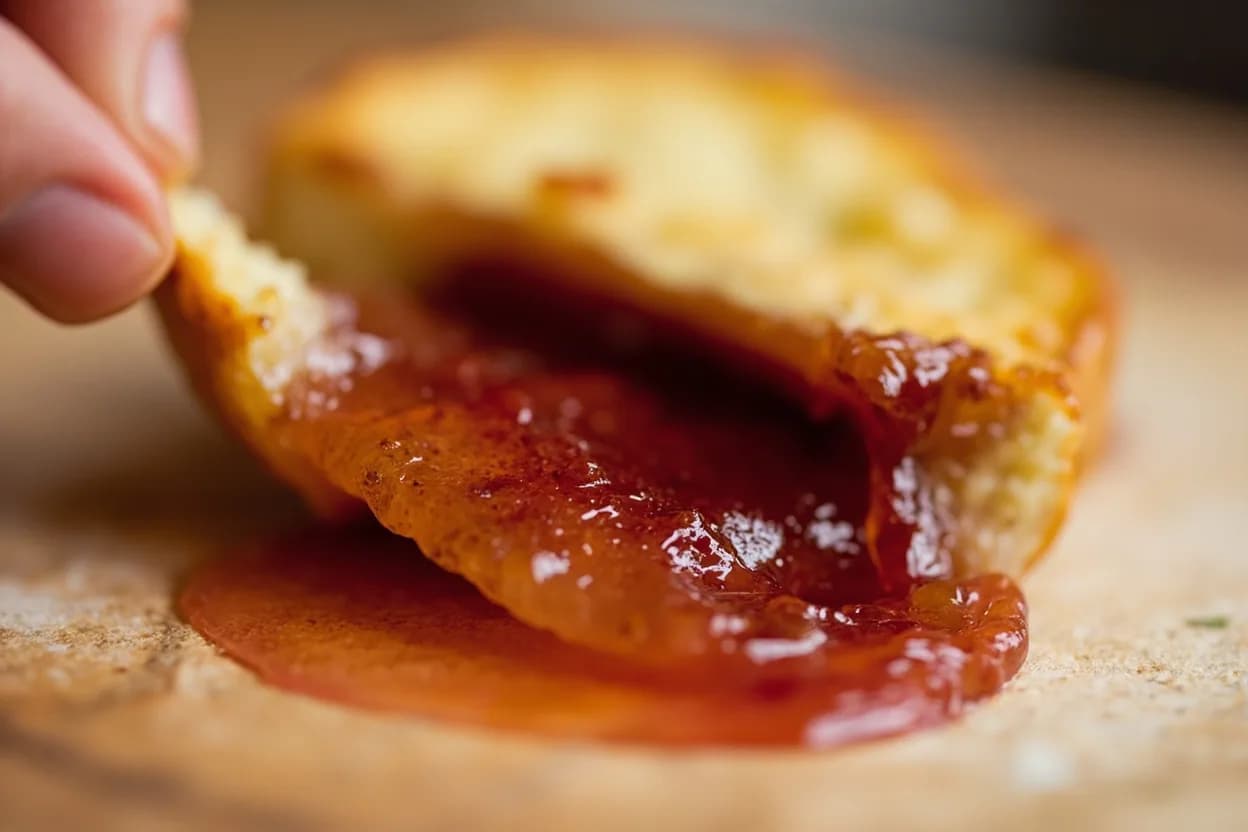
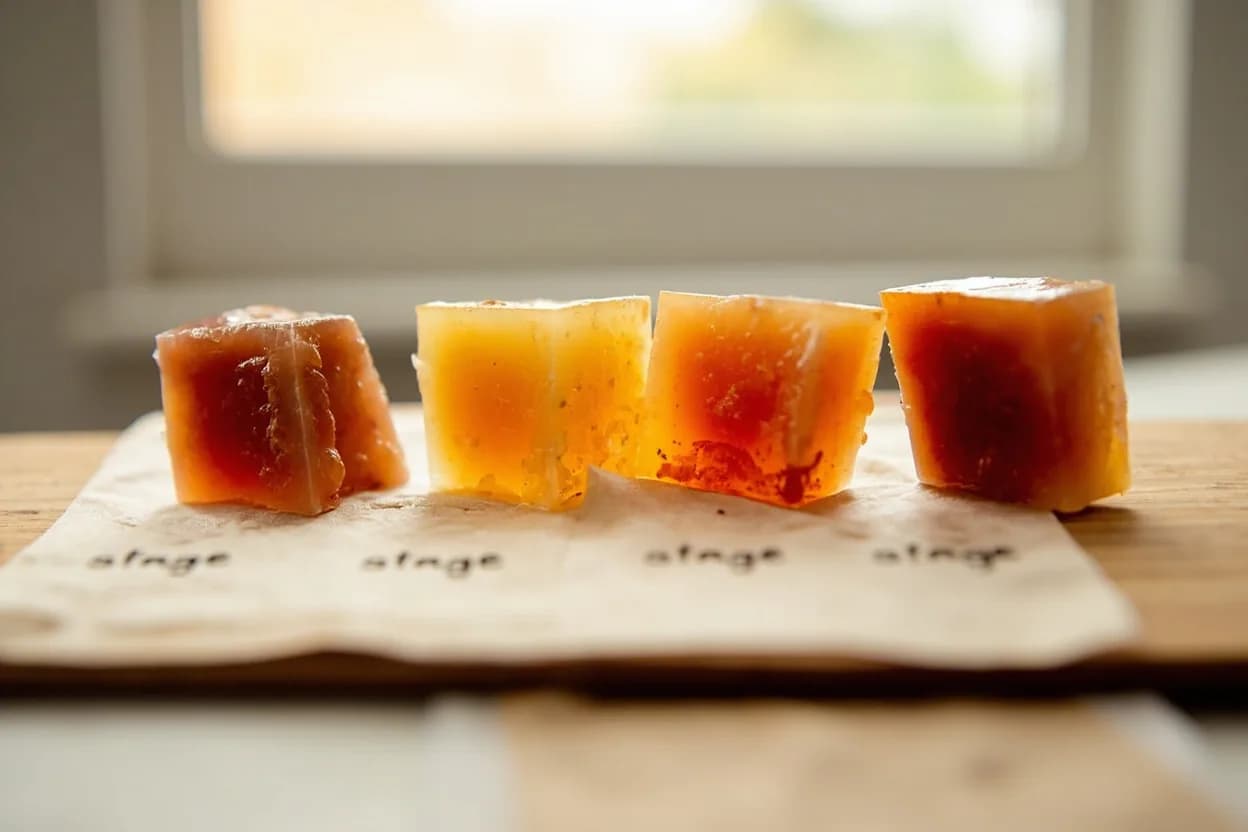
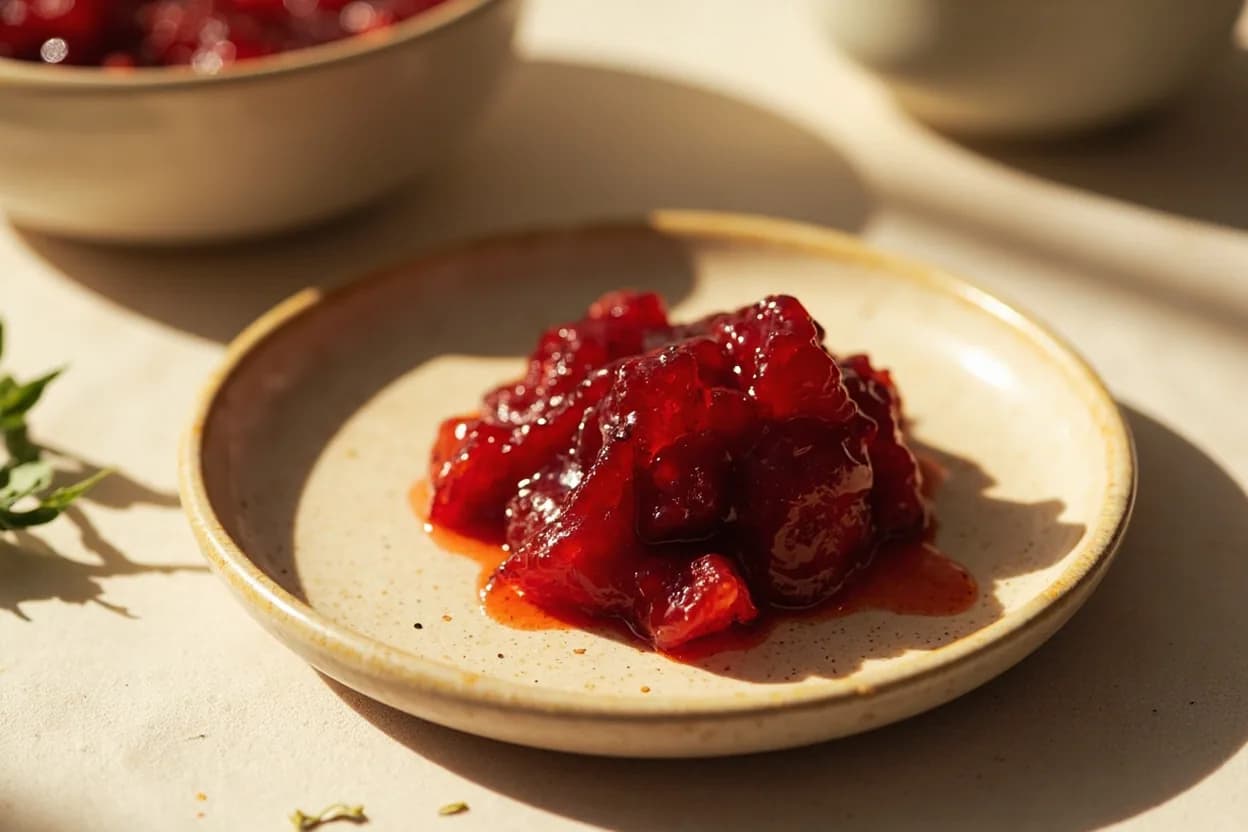
What happens
As the fruit-sugar mixture boils, water evaporates and sucrose concentration rises, elevating the boiling point above 100°C. High-methoxyl (HM) pectin chains — the dominant type in most fruits — require both low water activity (high sugar) and acid (protonated carboxyl groups) to lose their electrostatic repulsion and associate via hydrogen bonds and hydrophobic interactions, forming a gel matrix that traps water and dissolved solids. At 104–105°C the sugar concentration is high enough that the gel will set firmly on cooling. Continuing to boil beyond 106–107°C creates a stiff, over-set gel or, further still, a sugary candy texture; stopping below 103°C leaves too much water for stable pectin crosslinking.
What to look for
- Wrinkle test: spoon a small amount onto a chilled plate (kept in the freezer), leave 30 seconds; push with a finger — if the surface wrinkles and the jam doesn't flood back, it has set
- Flake/sheet test: dip a cool metal spoon into the boiling jam, hold horizontally and let it drip — two drops should merge and sheet off as one thick flap rather than dripping separately
- Cold-plate test gel should feel slightly resistant and hold an indent from a fingernail
- Color deepens and intensifies as concentration rises
- Bubbles change character from rapid, white, frothy boil to slower, clearer, more volcanic bubbles
How to check
- Clip a calibrated candy thermometer to the pan so the bulb is submerged in jam but not touching the bottom; target 104–105°C
- Chill a ceramic plate in the freezer for at least 15 minutes; spoon a teaspoon of jam onto it, return to freezer for 1 minute, then push with your finger — wrinkle = set
- Dip a cool metal spoon and observe how the last drops fall — a sheet or flap indicates correct set
- Refractometer: a reading of 65–67°Bx (after cooling a small sample) correlates with the set point
- For high-altitude canning: subtract 1°C per 300 m (approximately 1°F per 550 ft) from the target temperature
Food safety
The science behind it
- Pectin
The structural polymer responsible for gel formation; fruits vary widely in natural pectin content
- pH and Acid Balance
Acid must be in the range pH 2.8–3.5 for HM pectin to gel; low-acid fruits require added lemon juice or citric acid
- Brix
65–67°Bx at set point corresponds to the sugar concentration required for pectin gelation
- Water Activity
High sugar concentration lowers Aw below 0.85, contributing to microbiological stability
Same temperature target, but achieved with citrus-pith pectin and typically with a higher acid load
Appears in
References
- 1.On Food and Cooking — Harold McGee
- 2.The Blue Chair Jam Cookbook — Rachel Saunders
- 3.Complete Guide to Home Canning — USDA/National Center for Home Food Preservation
- 4.McGee on Food and Cooking — Harold McGee
- 5.Modernist Cuisine — Nathan Myhrvold et al.
Confidence: high
Notes
Why altitude matters
Water boils at lower temperatures at altitude, meaning the same boiling-point elevation (4–5°C above local water boiling point) occurs at a lower absolute temperature. At 1,500 m (5,000 ft), water boils at about 95°C; set point falls to roughly 99–100°C. Using a thermometer calibrated for sea-level targets at altitude will produce runny jam. Always determine local water boiling point first, then add 4–5°C for the set target, or use the wrinkle test as the definitive check regardless of altitude.
Commercial pectin vs. natural fruit pectin
Apples, quinces, citrus pith, gooseberries, and red currants are rich in natural pectin; strawberries, cherries, peaches, and figs are low-pectin fruits that require either added commercial pectin or a high-pectin fruit blend. Commercial HM pectin packets typically require less cooking time (reaching set quickly after a rolling boil) and permit lower sugar levels with LM pectin (activated by calcium instead of high sugar). The set-point temperature remains the same regardless of pectin source.