Technique-Specific Doneness
Jollof & Party Rice Bottom-Pot Crust
Also: party jollof crust, bottom pot jollof, socah, smoky jollof bottom, conk
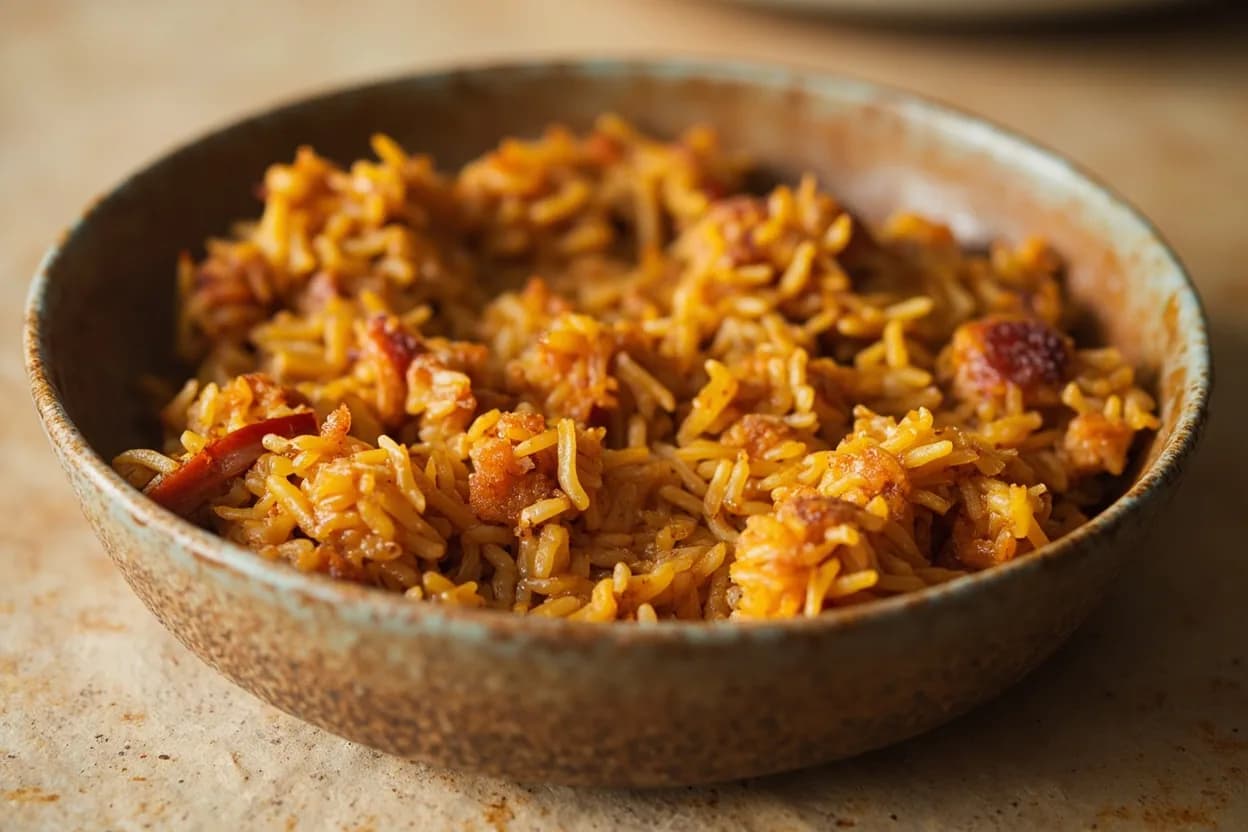
The intentionally scorched, smoky bottom crust of party jollof rice — the most prized portion, cooked over high flame until an audible crackle signals readiness.
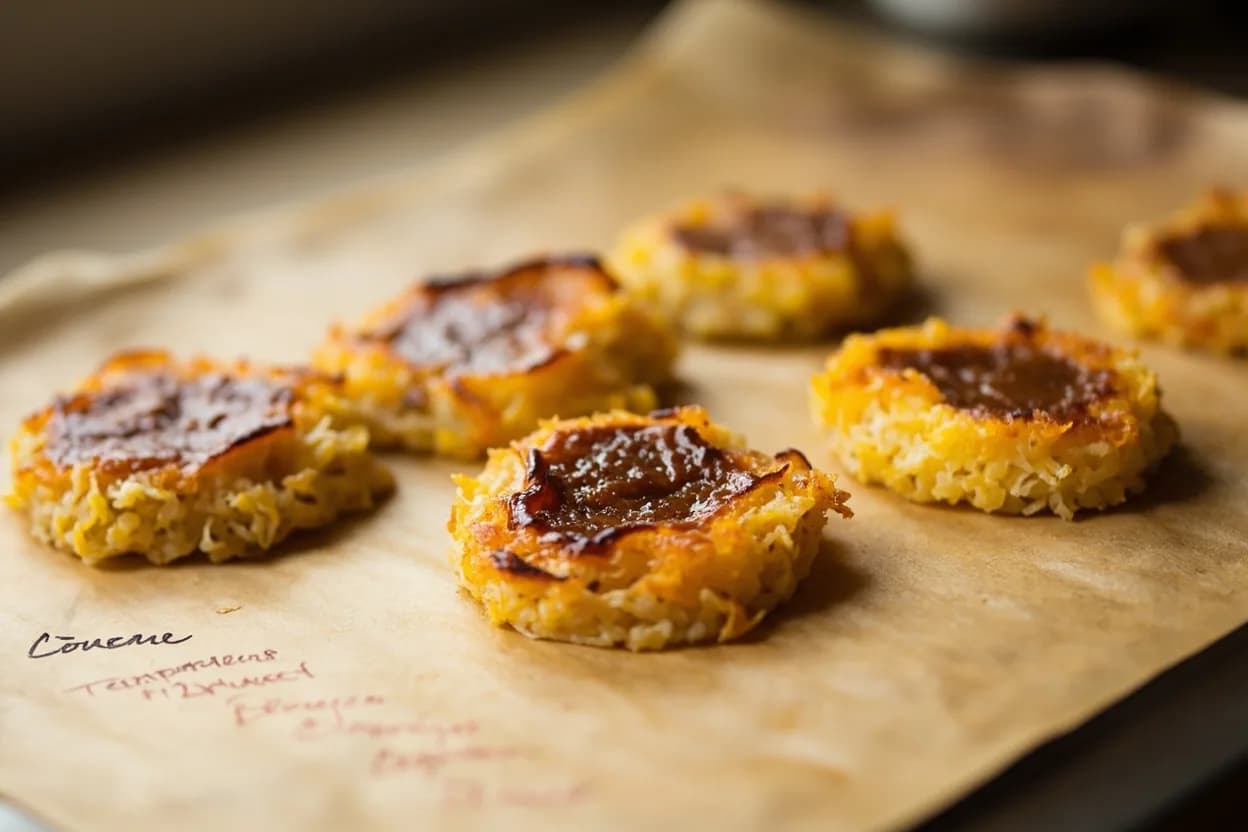
In West African jollof rice cookery — especially Nigerian and Ghanaian party jollof — the bottom-pot crust is not an accident but the culinary goal. 'Party jollof' is cooked over wood fire or very high gas flame, the last 10–20 minutes of cooking deliberately at high heat so the tomato-and-pepper-stained rice at the base scorches to a dark, smoky, crackling layer. The crust reaches contact temperatures well above 200°C (390°F) at the metal, producing intense Maillard and mild pyrolysis products that give 'party jollof' its signature smokiness, often compared to a wood-smoked flavor. In some regions this bottom layer is called 'conk' (Nigeria) or 'socah' (Ghana).
In photos

What happens
The tomato-and-onion stew base coating each grain is rich in reducing sugars and amino acids — ideal Maillard substrates. As the liquid steams off and heat intensifies at the base, the starch-tomato matrix first caramelizes (above 150°C), then undergoes controlled pyrolysis at the very bottom, producing furans, pyrazines, and carbonyl compounds responsible for the campfire-smoke flavor. The layer above insulates and steams evenly. The key is halting before acrid bitterness dominates; the crust should be dark but not uniformly black. An audible crackle (the moisture-depleted starch layer contracting and fracturing) is the primary cue to remove the pot.
What to look for
- Audible dry crackle or snap from the base of the pot — the definitive doneness cue
- Deep smoky aroma, reminiscent of wood fire, rising from the pot
- Steam from the lid vent slows significantly as bottom moisture is exhausted
- A dark orange-brown or reddish-black ring visible at the pot wall near the base
- Lifting the lid reveals dry, separated grains at the top with no pooled liquid
- Slight bitter-smoke scent acceptable; sharp acrid smell means remove immediately
How to check
- Listen for the characteristic dry crackle — absence of sizzle and presence of crack means the crust is set
- Slide a spatula along the pot wall to the base — if it hits resistance and lifts a dark chip, the crust has formed
- Scrape a small amount from the bottom with a metal spoon and taste: smoky-bitter-savory is correct, acrid is too far
- Visual check at pot wall: a dark band at the very bottom indicates crust formation
- Time guide: cover tightly on high heat (wood fire or max gas) for the last 10–20 minutes of a 40–60 minute cook
Food safety
The science behind it
- Socarrat
The analogous scorched rice crust of Spanish paella — culturally and technically parallel
Persian crispy rice bottom, also intentional but produced at lower temperatures for a golden rather than smoky-dark crust
Primary browning chemistry in the early stages of crust formation
- Pyrolysis
Controlled thermal decomposition of the starch-tomato matrix at >200°C produces the smoky flavor compounds
- Wood-fire cooking
Authentic party jollof is cooked over wood flame; the actual wood smoke also contributes to the flavor profile
Appears in
References
- 1.Ozoz Sokoh, 'Kitchen Butterfly' — extensive writing on party jollof and the party-rice phenomenon
- 2.Zoe Adjonyoh, 'Zoe's Ghana Kitchen'
- 3.Ngo Thi Tu Lan et al., 'Acrylamide in heat-processed foods', Food Chemistry — on safety of scorched starch
Confidence: high
Notes
Wood fire versus gas
Purists insist that authentic party jollof must be cooked over wood fire in large iron pots. The wood smoke permeates the rice from above as well as below, producing a flavor impossible to replicate on a domestic gas ring. The 'party jollof is better' meme across West Africa is largely a proxy for this wood-fire effect.
Lid seal
Party jollof is finished tightly covered — often with foil under the lid — to trap steam and cook the upper grains through while the base scorches. Lifting the lid prematurely releases essential steam and unbalances the cook.