Technique-Specific Doneness
Khoya Reduction Stage
Also: mawa stage, khoa, khoya done, milk solid reduction
Milk reduced 70–80% to a pale, fudge-like solid mass — the base of Indian mithai and a precise textural and color milestone.
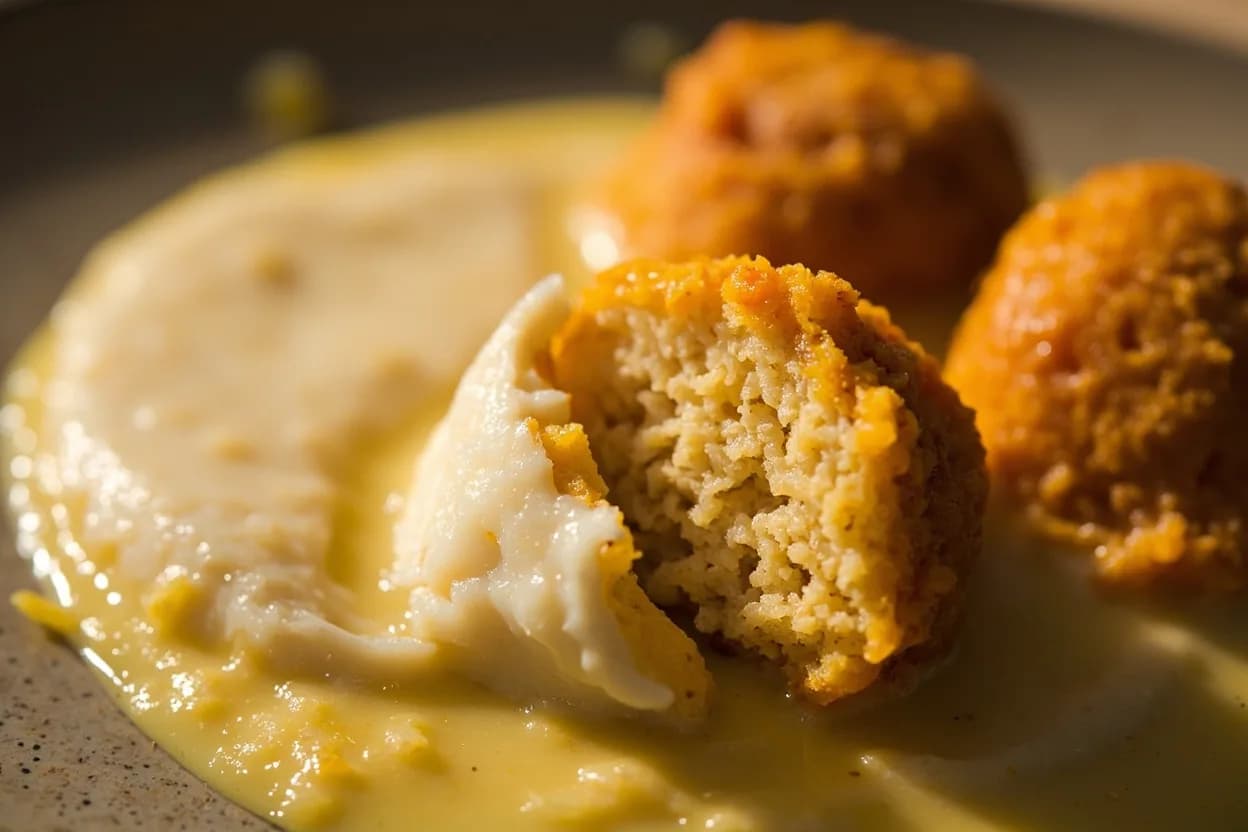
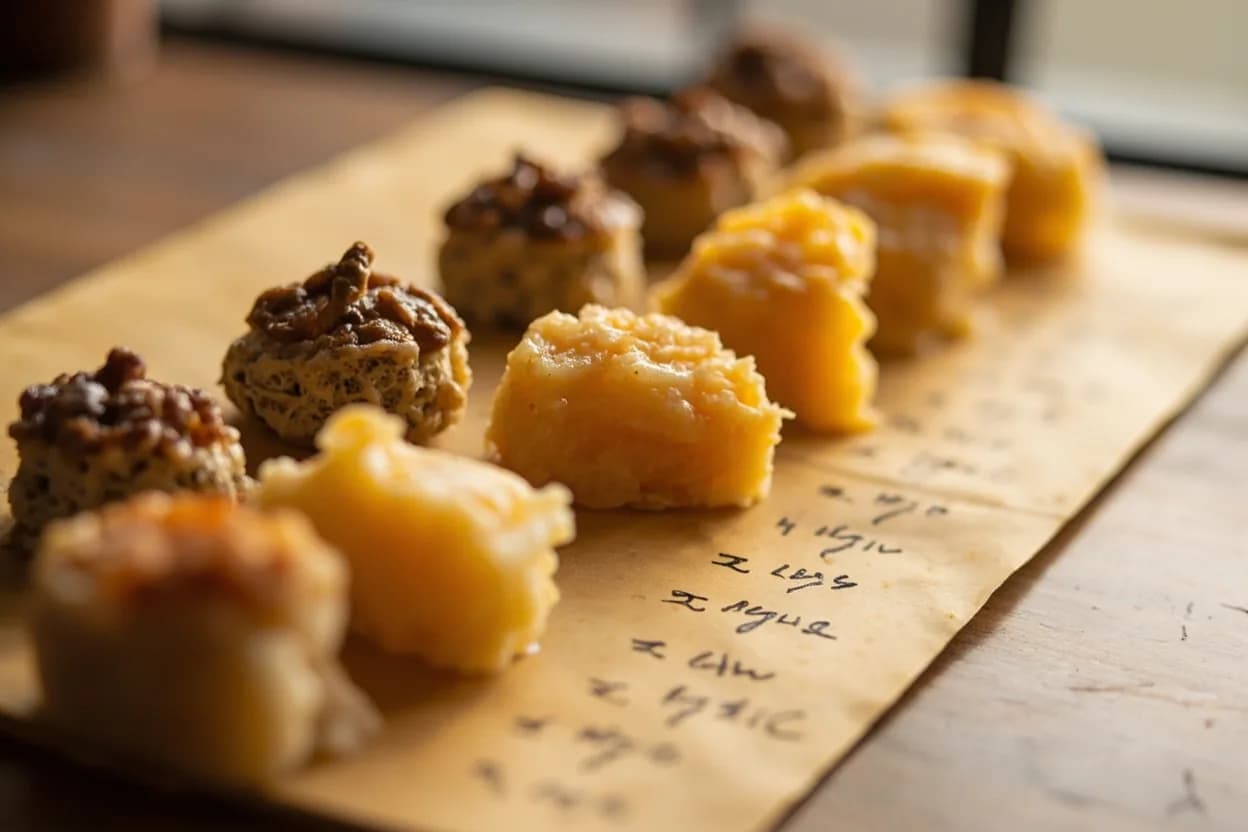
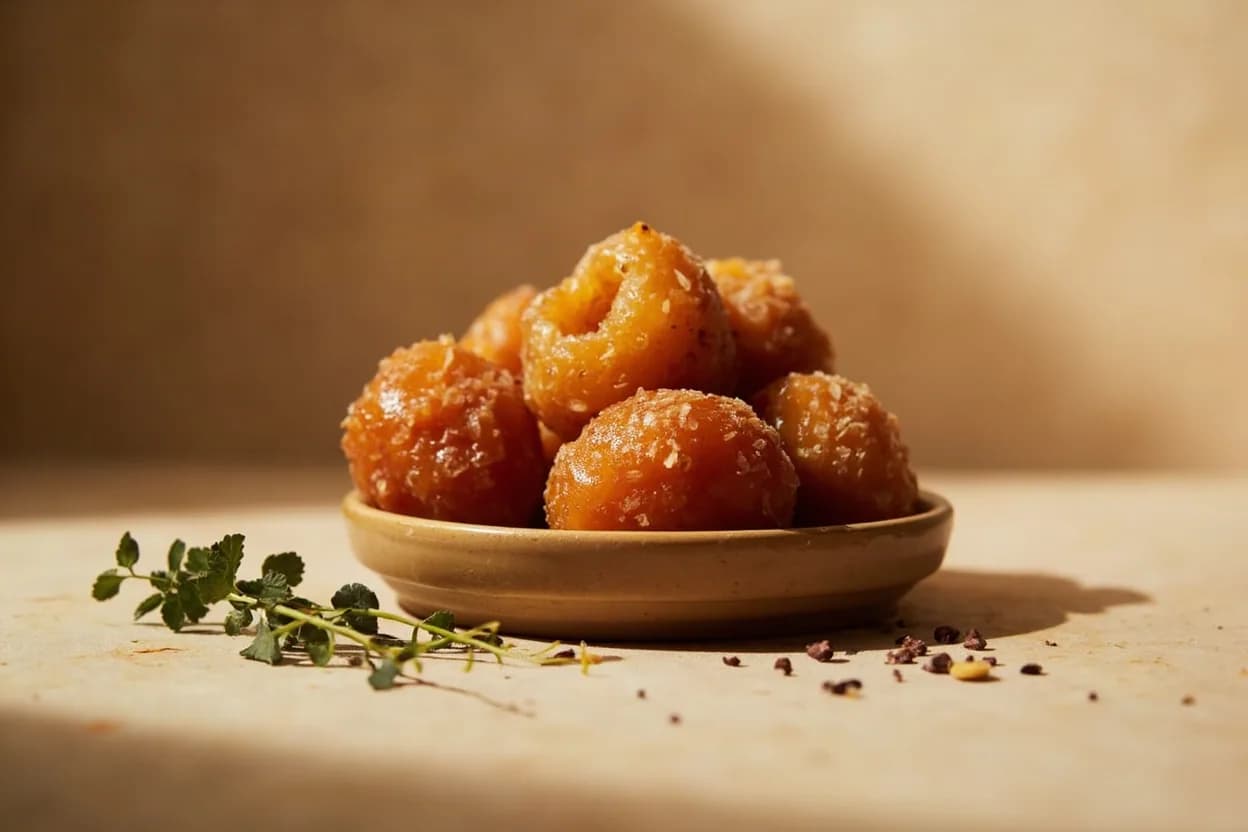
Khoya (also mawa or khoa) is the result of simmering whole milk in a wide, heavy pan, stirring constantly, until approximately 70–80% of the water has evaporated, leaving behind a concentrated mass of milk fat, casein proteins, lactose, and whey proteins. The process takes 1.5–3 hours depending on volume and heat. There are three recognized doneness stages: batti (firm, pliable, used for peda and barfi), chikna (soft, glossy, used for gulab jamun dough), and daanedaar (granular, slightly sandy texture, used for certain karahi preparations). The batti stage — the most commonly referenced 'khoya set point' in confectionery — is reached when the mass holds a clean ball, does not stick to the pan, and color is ivory to pale gold.
In photos
What happens
As water evaporates, the boiling point of the concentrate gradually rises above 100°C. Lactose concentration increases toward saturation, contributing sweetness and eventual crystallization potential. Maillard reactions between lactose and milk proteins (primarily whey proteins and lysine-containing caseins) develop ivory-to-beige color and produce caramel-like, fudgy aromatic compounds. Milk fat globules coalesce and become visible as a slightly greasy sheen. At batti stage, the lactose-casein matrix is firm enough to hold shape under pressure. Continued cooking produces daanedaar (sandy, crystallized lactose) or burns the sugars to brown if unattended.
What to look for
- Mass pulls cleanly away from the pan sides and base, leaving no smear — batti stage indicator
- Color progresses from white to cream to pale ivory-gold; deeper gold indicates overcooking toward daanedaar
- Texture changes from thick porridge → soft putty → firm dough that can be pressed into a ball
- A distinctly caramelized, condensed-milk aroma with no raw-milk smell
- Visible fat sheen on the surface as globules consolidate
- Volume reduced to roughly one-fifth of starting volume (1 liter milk → ~200g khoya)
How to check
- Take a small piece and press between thumb and forefinger — batti should feel like cool modeling clay, neither sticky nor crumbly
- Roll a teaspoon of the mass into a ball: if it holds shape without cracking or smearing, batti stage is reached
- Run a spatula across the pan base — a clean line that holds for several seconds indicates done
- Weight check: batti-stage khoya is approximately 20% of starting milk weight
- Thermometer in the mass reads 100–102°C (212–216°F) as residual moisture is nearly exhausted
The science behind it
Analogous milk reduction from Latin America, though sweetened from the start and carried further to a caramel
Industrial equivalent — pre-sweetened; khoya is unsweetened and taken further in water reduction
Lactose-casein browning produces khoya's color and caramel flavor notes
Excessive reduction produces daanedaar stage — intentional crystallization exploited in certain sweets
- Rabri
A related milk reduction taken to a thick creamy consistency but not to solid stage
Appears in
References
- 1.Tarla Dalal, 'Mithai' — stage definitions and troubleshooting
- 2.K.T. Achaya, 'Indian Food: A Historical Companion' — cultural and technical background of khoya
- 3.P.R. Vora et al., 'Khoa — an indigenous milk product', Indian Dairyman — technical specification of batti/chikna/daanedaar
Confidence: high
Notes
Constant stirring is non-negotiable
Unattended khoya scorches rapidly at the base once the mass thickens. A wide, heavy-bottomed pan (preferably stainless or iron, not non-stick at high heat) with a flat-bottomed spatula is standard. The stirring motion must reach the bottom corners of the pan continuously for the final 20 minutes.
Full-fat milk is required
Skim or reduced-fat milk lacks the butterfat necessary to produce the characteristic texture and sheen of proper khoya. Buffalo milk (higher fat than cow milk in the subcontinent) produces the richest, most workable khoya; cow's whole milk is an acceptable substitute.