Preserves & Confits
Marmalade Set Point
Also: citrus gel point, marmalade gel temperature, flake test point
Marmalade reaches its gel point at 104–105°C (219–221°F), the same target as jam, but its abundant citrus-pith pectin and high acid load create a firmer, more complex set verified by the cold-spoon flake test.
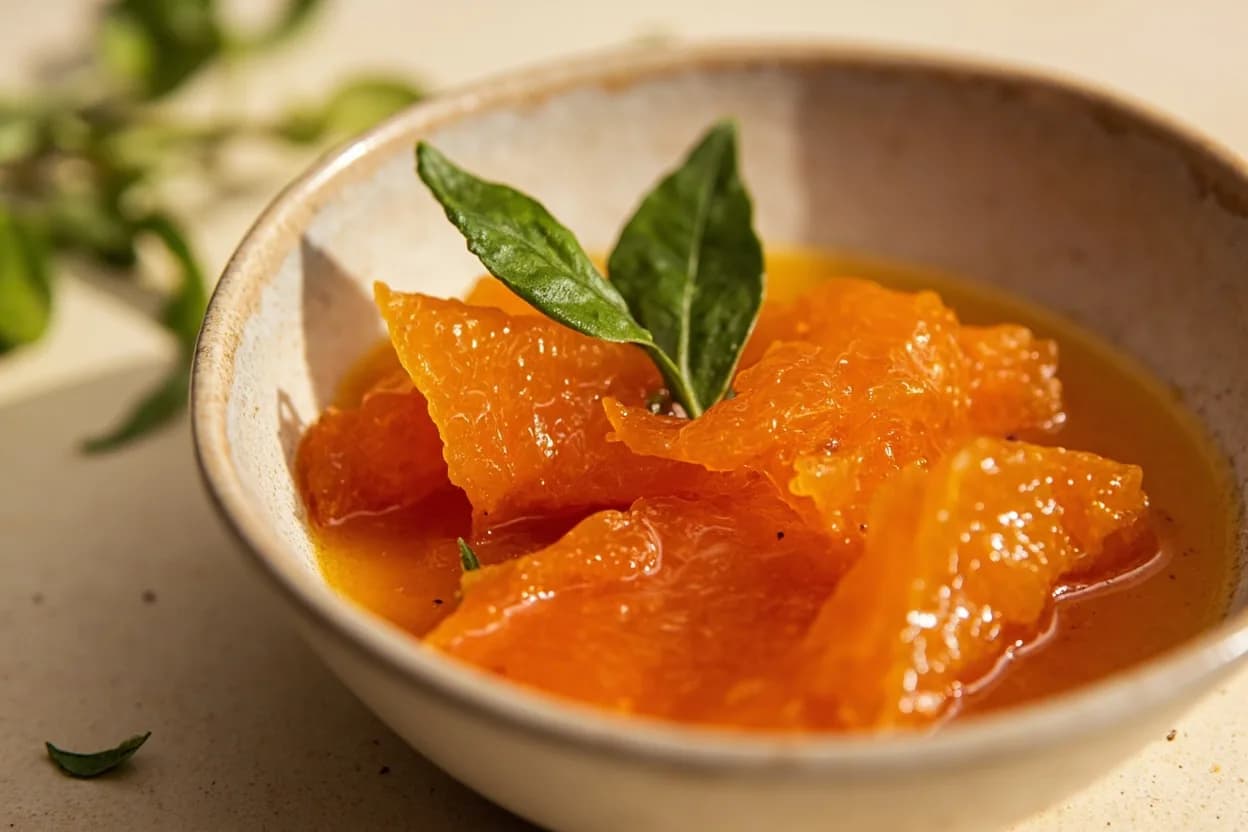
Marmalade set point is the temperature — 104–105°C (219–221°F) at sea level — at which the citrus-derived pectin and sugar concentration in the boiling mixture are sufficient for the gel to form on cooling. While numerically identical to the jam set point, marmalade presents a different technical context: whole-fruit citrus preserves (Seville orange, lemon, bergamot, kumquat, grapefruit) release exceptional quantities of pectin from the pith and pips, which are often tied in a muslin bag and boiled with the fruit. This pectin abundance, combined with the naturally high acid content of citrus juice, means marmalade sets briskly once temperature is reached, and can quickly over-set if inattentive. The diagnostic check — the flake test on a cold spoon — is favored over the wrinkle test because marmalade's texture shows the gel forming as a slow, clean sheet rather than a skin.
In photos
What happens
Citrus pith is rich in HM pectin (protopectin is released and solubilized during the long initial cook of the peel). Citrus juice has a naturally low pH (Seville orange juice ≈ pH 2.8–3.2), sitting squarely in the ideal range for HM pectin gelation. As the marmalade boils beyond 100°C, water evaporates, sugar concentration rises to 65–67°Bx, the boiling point climbs, and the pectin chains — already abundant and primed by acid — crosslink rapidly once temperature is reached. The peel's natural limonoids, flavonoids (naringenin, hesperidin), and volatile esters survive partially into the finished marmalade, contributing the characteristic bitter-aromatic complexity. Overcooking drives off volatile aromatics and causes over-set or a crystalline, candied texture.
What to look for
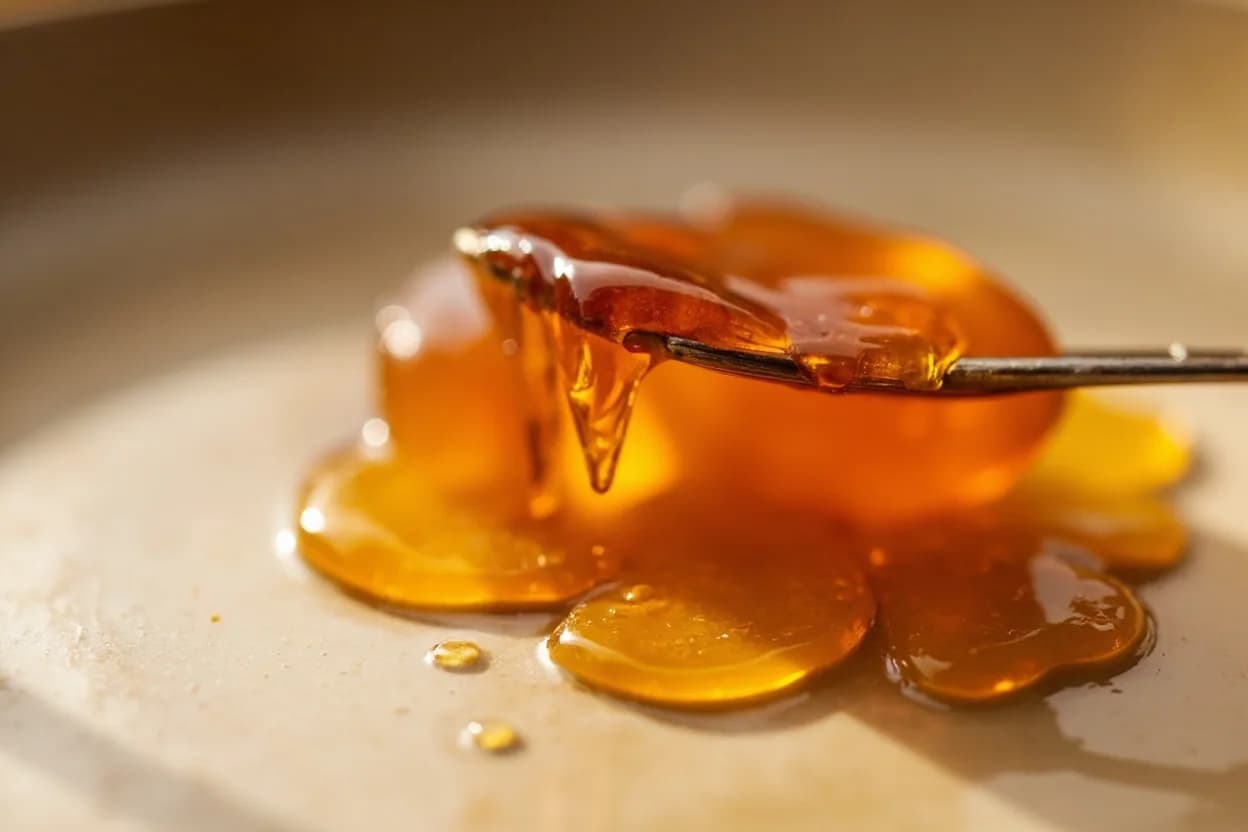
- Flake test on a cold metal spoon: dip a cool spoon in the boiling marmalade, hold horizontally and tilt — two drops should merge and fall as a single slow, thick flake or sheet that holds its shape briefly before dropping
- Wrinkle test on a cold plate: a small amount placed on a chilled plate will wrinkle and hold an indent rather than flooding when pushed
- Color shifts from pale amber to rich, translucent orange-gold as concentration rises
- Bubbles become viscous and slow, rising heavily from the bottom of the pan
- The smell shifts from fresh citrus to a deeper, slightly caramelized orange aroma
How to check
- Clip a calibrated candy or jam thermometer so the probe tip is submerged in the marmalade and clear of the pan bottom; target 104–105°C
- Cold-spoon flake test: keep a metal spoon in ice water; dip, hold level, tip — look for a single sheet or clean flake rather than two separate drips
- Wrinkle/plate test: chill a ceramic saucer in the freezer; spoon a teaspoon of marmalade onto it, wait 60 seconds, push with a finger — wrinkling without flooding back indicates set
- Refractometer on a small cooled sample: 65–67°Bx confirms sufficient sugar concentration for stable gel
- Altitude adjustment: lower target temperature by 1°C per 300 m of altitude above sea level
Food safety
Carryover & resting
Unlike meat, marmalade does not 'rest,' but it continues to set as it cools. Do not judge final texture while hot — a marmalade that seems slightly loose at 104°C may firm correctly once cooled to room temperature (20–22°C). Over-set marmalade can sometimes be rescued by reheating gently with a small splash of water and reprocessing into jars.
The science behind it
Numerically identical temperature target; marmalade's higher natural pectin and acid load mean it sets more readily
- HM Pectin
High-methoxyl pectin from citrus pith; requires low pH and high sugar to gel
- Brix
65–67°Bx confirms the sugar concentration required for gel stability
- Flake Test
The preferred empirical test for marmalade because the gel forms as a visible sheet on a cool spoon
- Limonoids and Flavonoids
Bitter compounds in citrus pith that survive cooking and define marmalade's characteristic flavor
Appears in
References
- 1.Marmalade: Sweet and Savory Spreads for a Sophisticated Taste — Elizabeth Field
- 2.The Blue Chair Jam Cookbook — Rachel Saunders
- 3.On Food and Cooking — Harold McGee
- 4.Complete Guide to Home Canning — USDA/National Center for Home Food Preservation
- 5.Preserving the Japanese Way — Nancy Singleton Hachisu
Confidence: high
Notes
The two-stage cook
Traditional marmalade production has two distinct phases: the initial long, gentle simmer of the fruit (and pith bag) to soften peel, extract pectin, and fully hydrate the peel strands (often 1–2 hours); and the second rapid, fierce boil to concentrate sugar and reach set point (typically 10–20 minutes). Confusing these phases — boiling hard from the start — produces tough peel and inadequate pectin extraction. The pith bag is removed before the second stage and the extracted pectin-rich liquid squeezed back in.
Seville oranges vs. sweet oranges
Classic British marmalade uses Seville (bitter) oranges, available only in January–February, prized for their intensely aromatic zest, bitter pith, and naturally low sugar content, which allows a higher fruit-to-sugar ratio. Sweet navel or Valencia oranges have lower pectin, less acid, and higher natural sugar — they require adjusted recipes (more lemon juice for acid, a higher proportion of pith) to achieve an equivalent set and flavor. Many modern marmalades blend Seville and sweet citrus for accessibility year-round.