Technique-Specific Doneness
Maillard Reaction Temperature Window
Also: Maillard browning, non-enzymatic browning, browning reaction, crust formation temperature
The Maillard reaction begins noticeably above 140°C on a dry food surface and reaches optimal browning at 150–180°C, but moisture, pH, and sugar composition can raise or lower the effective threshold significantly.
The Maillard reaction is a cascade of chemical reactions between free amino acids (or amino groups on proteins) and reducing sugars when exposed to heat. Named after French chemist Louis-Camille Maillard who described it in 1912, it is responsible for the brown colour and complex aroma of seared meat, toasted bread, roasted coffee, and hundreds of other cooked foods. It is distinct from caramelization (pure sugar degradation) though both may occur simultaneously. The reaction does not have a single on/off temperature: it proceeds slowly at room temperature (as in the aging of foods), accelerates above 100°C once free water has been driven off the surface, and becomes rapid and visually apparent above 140°C. The practical window for deliberate browning is 150–180°C at the food surface.
In photos
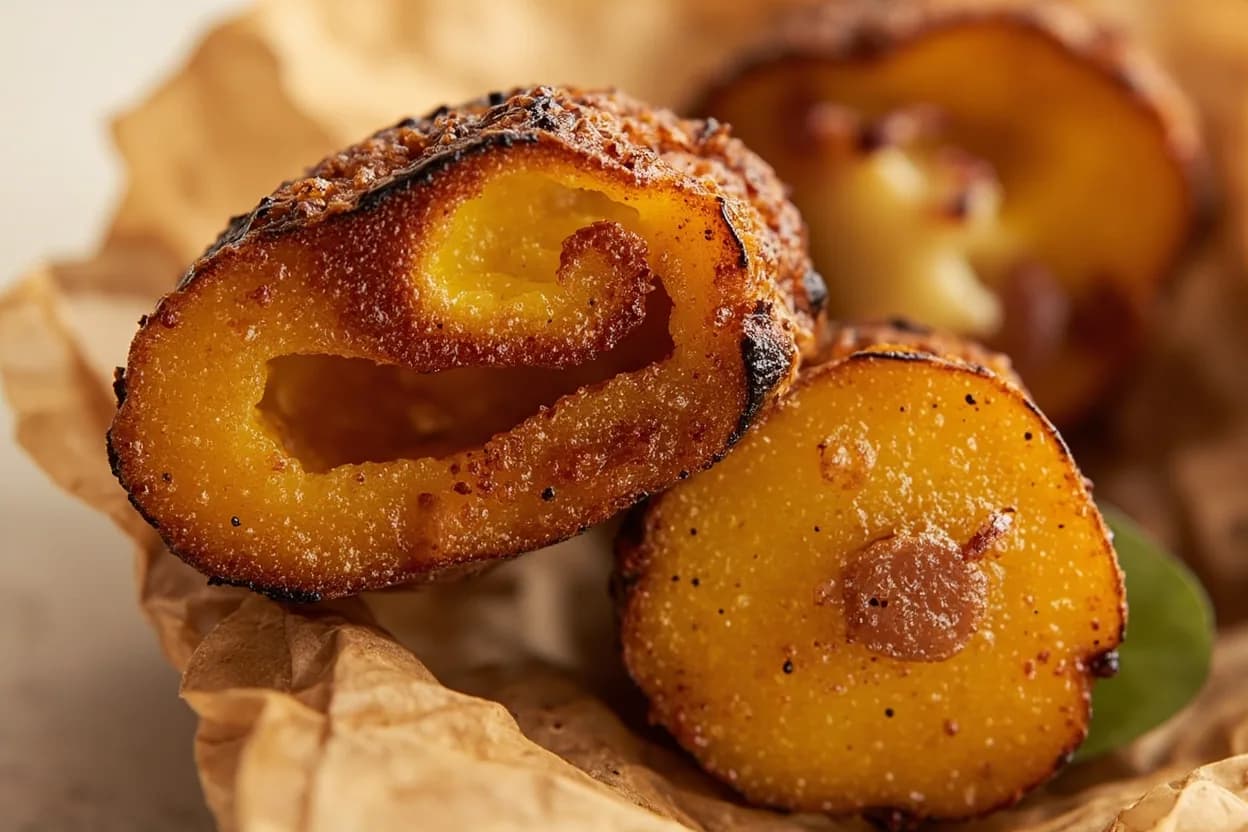
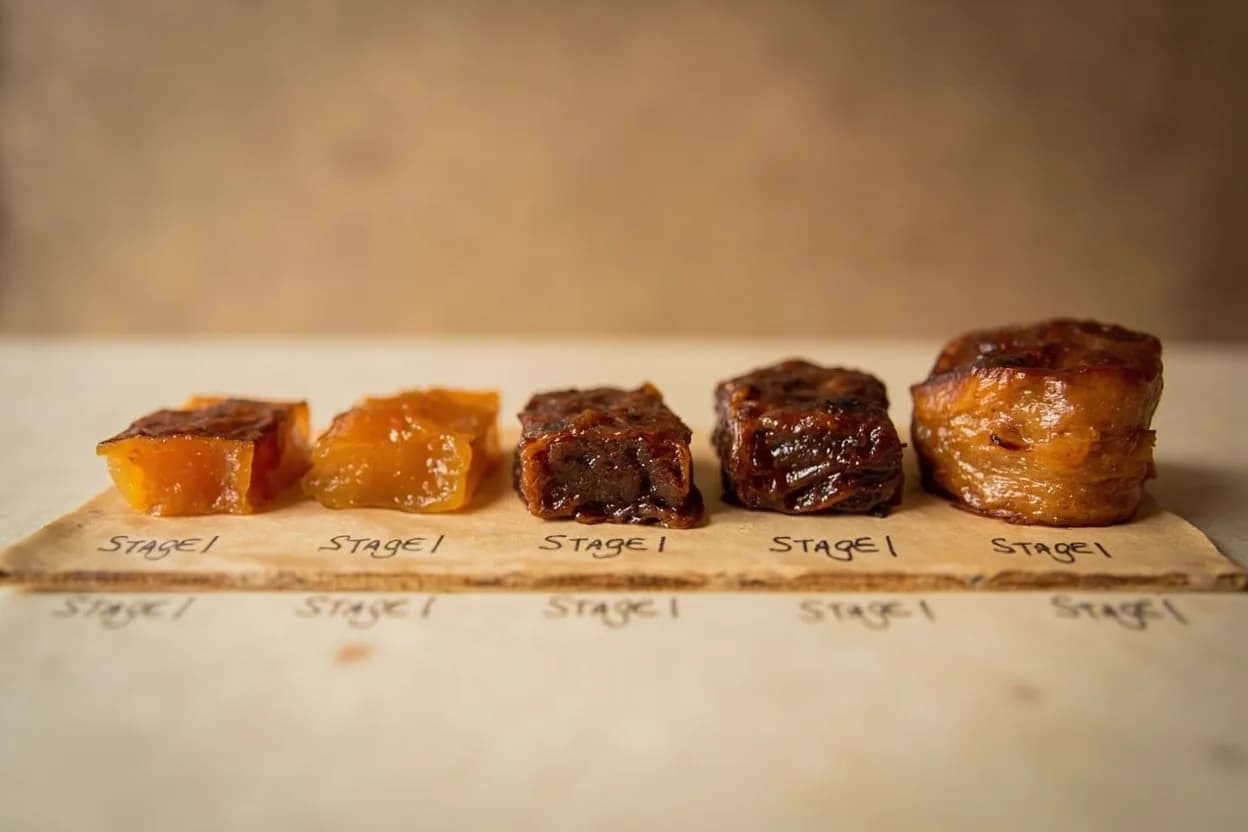
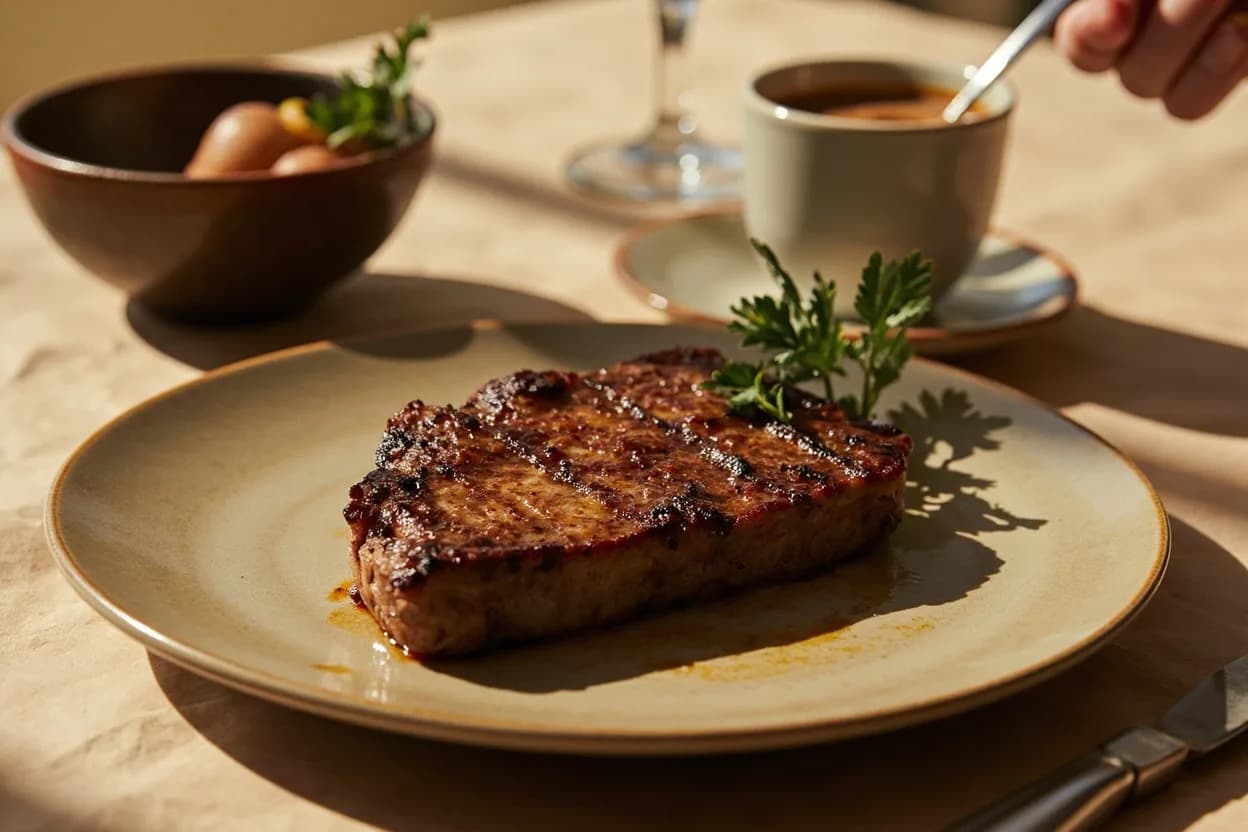
What happens
At the food surface, free water must first evaporate before the surface temperature can exceed 100°C. Once the surface is sufficiently dry, amino groups (from lysine, proline, and other amino acids) react with carbonyl groups of reducing sugars (glucose, fructose, lactose) in the Amadori rearrangement, initiating a branching chain of reactions that produces hundreds of volatile heterocyclic compounds — pyrazines, furans, thiophenes, oxazoles — responsible for roasted, nutty, caramel, and meaty aromas. Colour develops as melanoidin polymers form. Above 180°C, acrolein and other pyrolytic products dominate, turning flavour bitter and acrid. Lower pH (acidic environments) and higher alkalinity both shift the window: a baking soda wash on pretzels raises pH and dramatically accelerates browning at lower temperatures.
What to look for
- Surface colour transitions from pale/raw to golden-yellow, then amber, then deep brown as reaction intensity increases
- Distinctly toasted, nutty, roasted aroma develops; sharp raw smell disappears
- Crust formation on meat or bread is audibly crisp when pressed
- At overtemperature: acrid, bitter smoke and blackening at edges
- Steam ceasing from the food surface is a sign moisture has left and browning is imminent
How to check
- Infrared thermometer aimed at the food surface (not the pan) confirms surface temperature is above 150°C
- Visual colour comparison: golden = light Maillard; deep amber = strong Maillard; black = pyrolysis
- Tactile crust test on meat: surface should feel firm and dry, not wet or yielding
- Pan temperature before adding food: a drop of water should skitter and evaporate in under 2 seconds (Leidenfrost point, ~180°C)
- For bread: internal temperature is irrelevant to crust colour — monitor surface visually and by smell
The science behind it
Parallel browning reaction involving only sugars; begins at higher temperatures (~160°C for sucrose in isolation)
- Maillard inhibition by moisture
Free water caps surface temperature at 100°C, preventing Maillard onset — drying, searing after patting dry, or high-temp oil are workarounds
- pH and browning acceleration
Alkaline surfaces (baking soda, lye wash) lower the activation energy, enabling Maillard browning at lower temperatures or faster rates
- Reducing sugars
Glucose, fructose, and lactose are reactive; sucrose must first hydrolyze (invert) before participating
- Melanoidins
High-molecular-weight brown polymers that are the end-product colour of Maillard reactions
- Acrylamide formation
Carcinogenic compound formed in starchy foods above ~120°C via Maillard pathway; food-safety concern in chips, fries, and dark toast
Appears in
References
- 1.On Food and Cooking — Harold McGee (Scribner, 2004)
- 2.Modernist Cuisine, Vol. 2 — Myhrvold, Young, Bilet (The Cooking Lab, 2011)
- 3.The Maillard Reaction in Food and Medicine — J. O'Brien, H. E. Nursten, M. J. Crabbe, J. M. Ames (Royal Society of Chemistry, 1998)
- 4.The Food Lab — J. Kenji López-Alt (W. W. Norton, 2015)
Confidence: high
Notes
Why wet food won't brown
Water's heat capacity and the energy required for its phase change (2,260 kJ/kg) keep a moist food surface at exactly 100°C until essentially all free surface water has evaporated. This is why patting proteins dry, using high-smoke-point oil, and using a screaming-hot pan are all essential to initiating Maillard browning quickly. Crowding a pan lowers the pan temperature and traps released moisture, effectively steaming rather than searing the food.
The alkaline shortcut
A dilute baking soda solution (0.5–1% by weight) applied to the surface of meats, pretzels, or vegetables before cooking raises surface pH from around 6 to 8 or above. At higher pH, the Amadori rearrangement proceeds faster and at lower temperatures, which is why baking-soda-treated chicken wings or pretzels brown dramatically faster and darker than untreated ones — and why Chinese restaurant velveted meats (often treated with baking soda) take on colour so rapidly in a wok.