Fish & Seafood Doneness
Lobster Tail: Curl & Internal Temperature
Also: lobster tail doneness, lobster tail curl, cooked lobster temperature
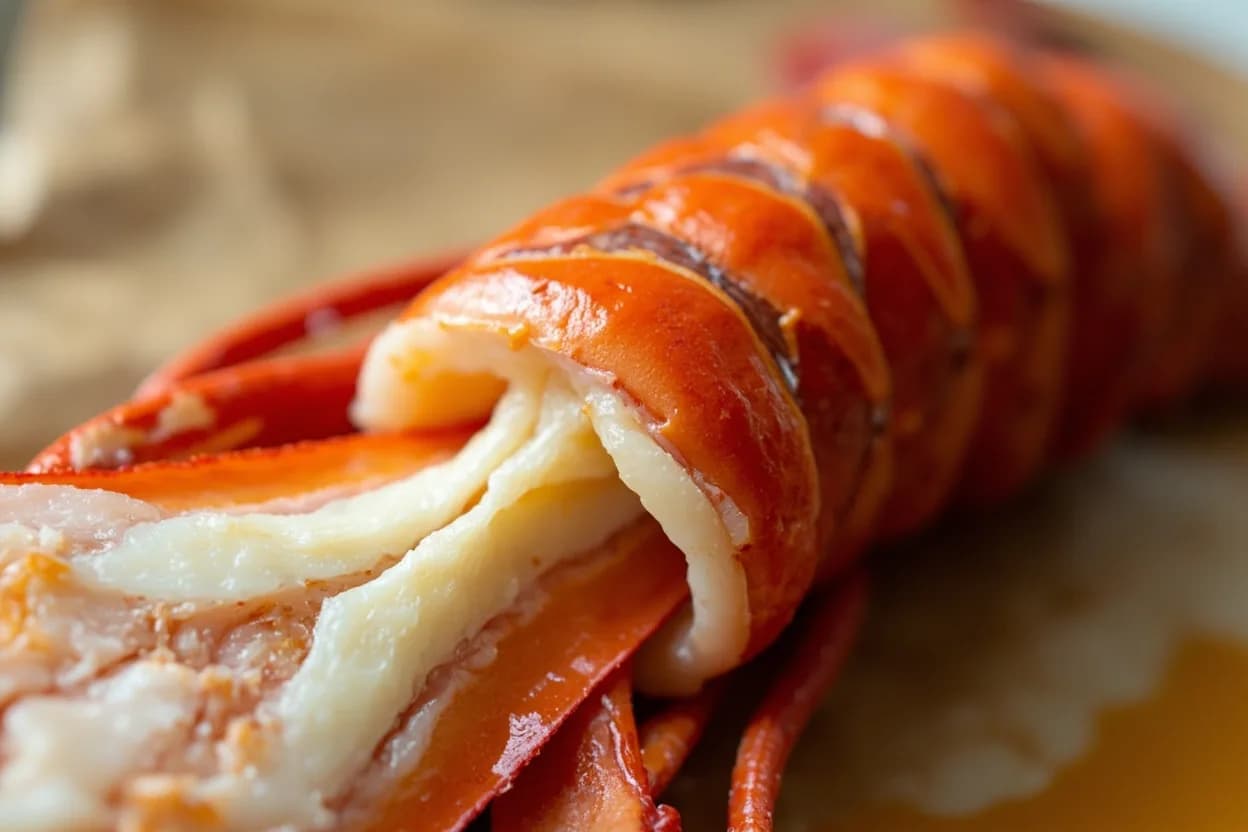
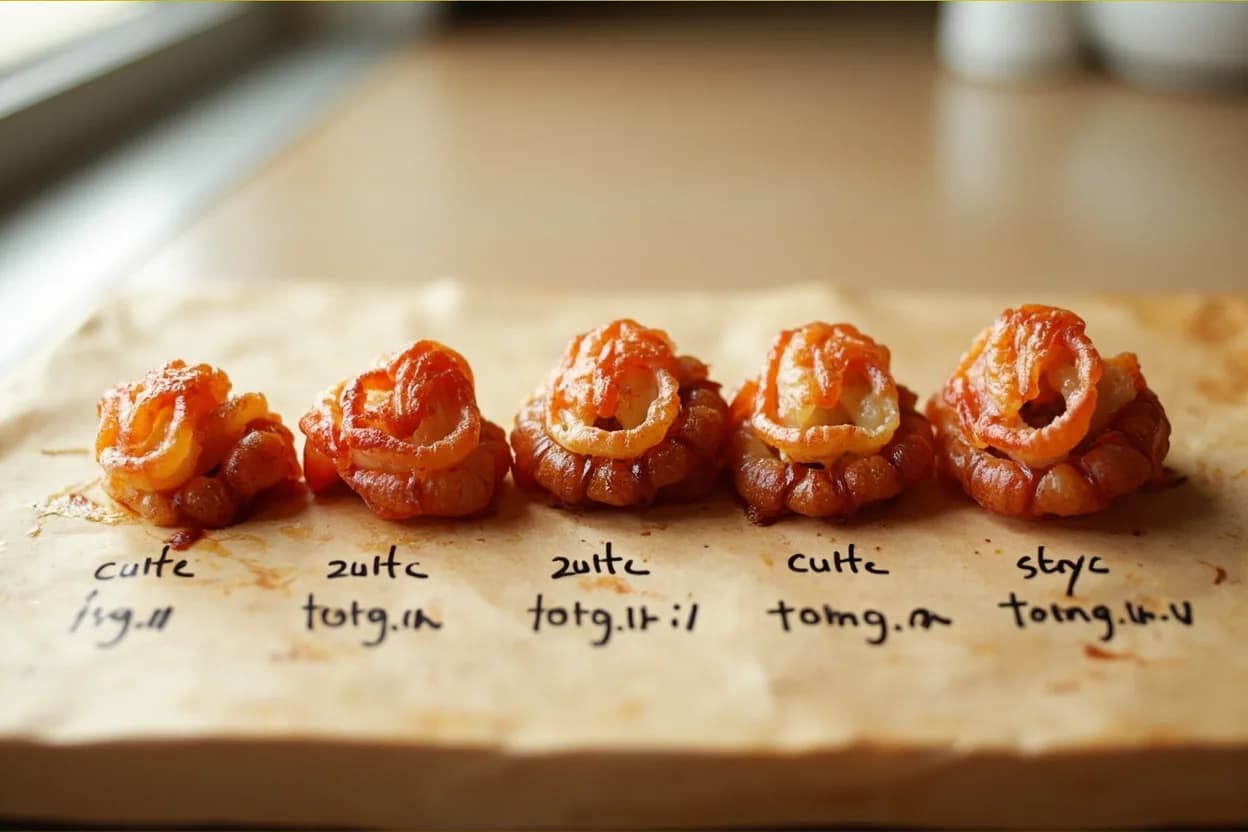
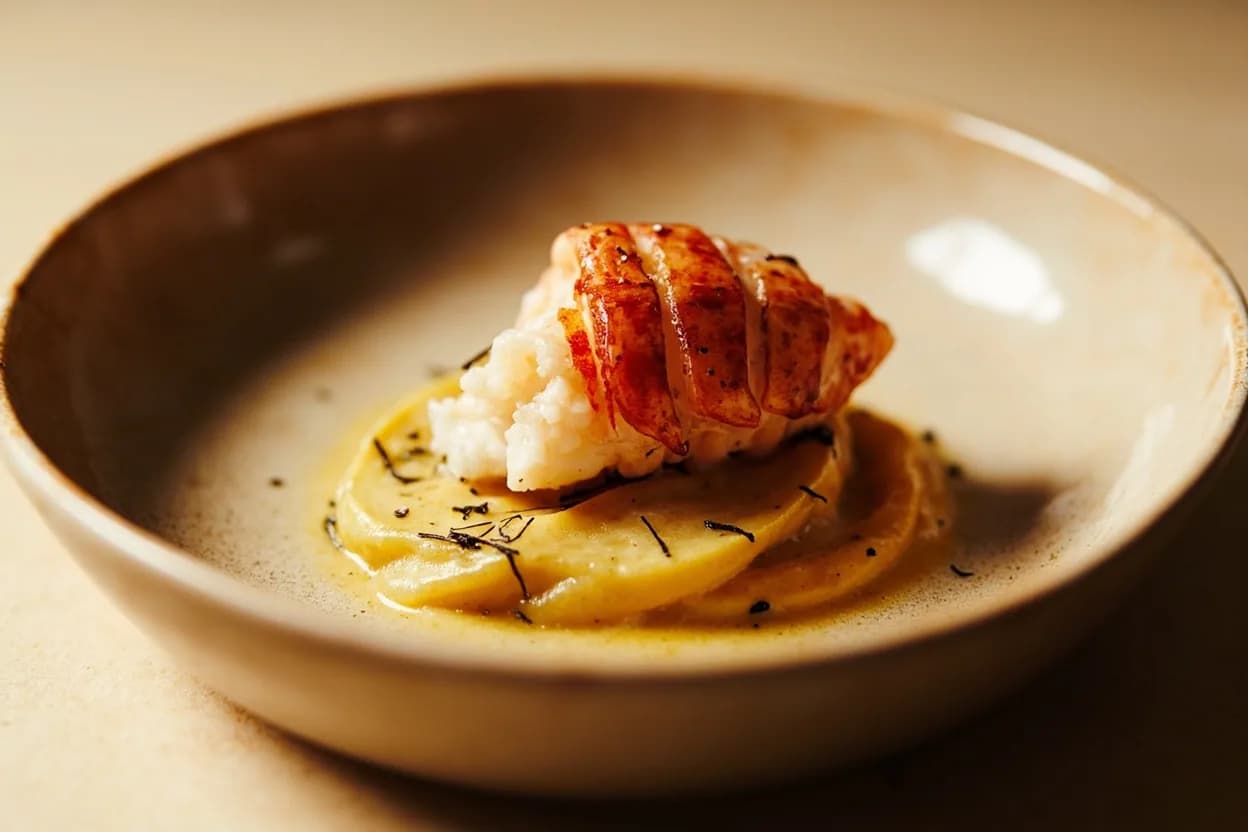
A lobster tail is done when the meat reaches 60–63°C internally and the translucent raw flesh has turned pearlescent white — signaled visually by the tail curling under the body.
The lobster tail contains the abdominal flexor muscles, which the animal uses to execute its powerful escape-flip. These large, segmented muscle bundles run parallel to the length of the tail and are held in a curved posture by the exoskeleton. When heat denatures the muscle proteins (primarily myosin and tropomyosin), they contract longitudinally along the ventral (underside) face faster than the dorsal face, causing the tail to curl inward toward the carapace. The meat simultaneously transitions from a translucent, glassy blue-grey to an opaque pearlescent white. The target internal temperature, measured at the thickest point of the abdominal muscle, is 60–63°C (140–145°F). This is just at the edge of food-safety compliance and yields the best texture — tender and juicy rather than the fibrous, dry result of overcooking to 74°C+.
In photos
What happens
Lobster myosin begins to denature around 55°C, causing initial firming. By 60°C the muscle's sarcomere structure contracts, expelling moisture and turning the protein matrix opaque — a phase transition visually identical to the whitening of egg white. The rapid ventral contraction pulls the tail into its characteristic curl. Above 65°C, connective tissue and collagen in the tail joints begin to break down, but the muscle itself begins to over-contract and toughen; at 74°C+ the tail is dry and fibrous. The shell simultaneously shifts from blue-grey to brilliant red via astaxanthin liberation above 40°C (the pigment was protein-bound in the living animal). The hepatopancreas (tomalley) in the body, if present, transitions from grey-green to yellow at around 60–65°C.
What to look for
- Tail curls under, pulling the fan-tail toward the carapace — the most reliable visual cue
- Meat color changes from translucent blue-grey to opaque pearlescent white
- Cut surface of the tail shows no translucent center when halved lengthwise
- Flesh pulls slightly away from the shell at the edges
- Aroma shifts from raw oceanic to a rich, sweet, buttery shellfish scent
How to check
- Insert a thin probe thermometer through the underside of the tail into the thickest muscle mass; target 60–63°C
- Cut the tail lengthwise and inspect the center: no translucent grey core should remain
- Press the thickest point gently — done meat springs back firmly but is not rock-hard
- For split tails under the broiler, pull when the surface is lightly caramelized and the meat just barely releases from the shell along the edges
Food safety
Carryover & resting
Lobster tails carry over 2–3°C during a brief rest (30–60 seconds). If removing from a broiler or grill at 60°C, the tail center will reach the food-safe 63°C during rest. For boiled or steamed tails, plunge into ice water immediately after reaching target temperature to halt carryover and prevent overcooking.
The science behind it
- Astaxanthin liberation
The protein-bound carotenoid responsible for the blue-grey→red color shift in all cooked crustaceans
- Crustacean muscle fiber structure
Large, parallel muscle bundles in lobster tails denature quickly and unevenly, making precise temperature control critical
- Sous vide lobster tail
Water bath at 60°C for 30–45 minutes achieves the exact doneness window with perfect consistency
- Tomalley doneness
The hepatopancreas turns from grey-green to yellow at 60–65°C, offering a secondary internal cue
- Cold-water vs. warm-water lobster
Cold-water tails (Homarus americanus) are meatier and denser than warm-water rock lobster (Panulirus spp.) and require slightly longer cooking times
Appears in
References
- 1.McGee, Harold. On Food and Cooking: The Science and Lore of the Kitchen. Scribner, 2004.
- 2.USDA FSIS. Safe Minimum Internal Temperatures. USDA Food Safety and Inspection Service, 2023.
- 3.Myhrvold, Nathan, et al. Modernist Cuisine: The Art and Science of Cooking. The Cooking Lab, 2011.
- 4.Davidson, Alan. The Oxford Companion to Food, 3rd ed. Oxford University Press, 2014.
Confidence: high
Notes
The curl is reliable but asymmetric
The curl is a reliable signal that heat has reached the muscle, but it is driven by differential contraction between ventral and dorsal muscle groups — meaning a tail can curl on the outside while still having a raw center if heat was applied only from one direction (e.g., a very hot grill with no cover). Always confirm with a probe for any tail over 180g.
Frozen vs. fresh tails
Frozen lobster tails often have the tail scored or butterflied before freezing, which changes the curl behavior — the tail fans open rather than curling under. In this case, rely on the color change and probe temperature rather than the curl as the primary doneness indicator.