Starch & Specialty Doneness
Masa Readiness (Float Test)
Also: masa float test, masa ready, masa hydration test, prueba del agua
A small ball of masa floats in cold water when fat is properly aerated and incorporated — the definitive readiness check before assembling tamales.
The masa float test (Spanish: prueba del agua, 'water test') is a tactile and buoyancy-based readiness indicator used to confirm that tamale masa has been beaten sufficiently to aerate the fat and achieve proper hydration balance. A small ball — roughly the size of a marble — is pinched from the dough and dropped into a glass of cold water. If it floats, the masa has trapped enough air from beating to produce light, tender tamales. If it sinks, further beating is required. This test has no temperature target; it is a physical structure test, not a thermal one.
In photos
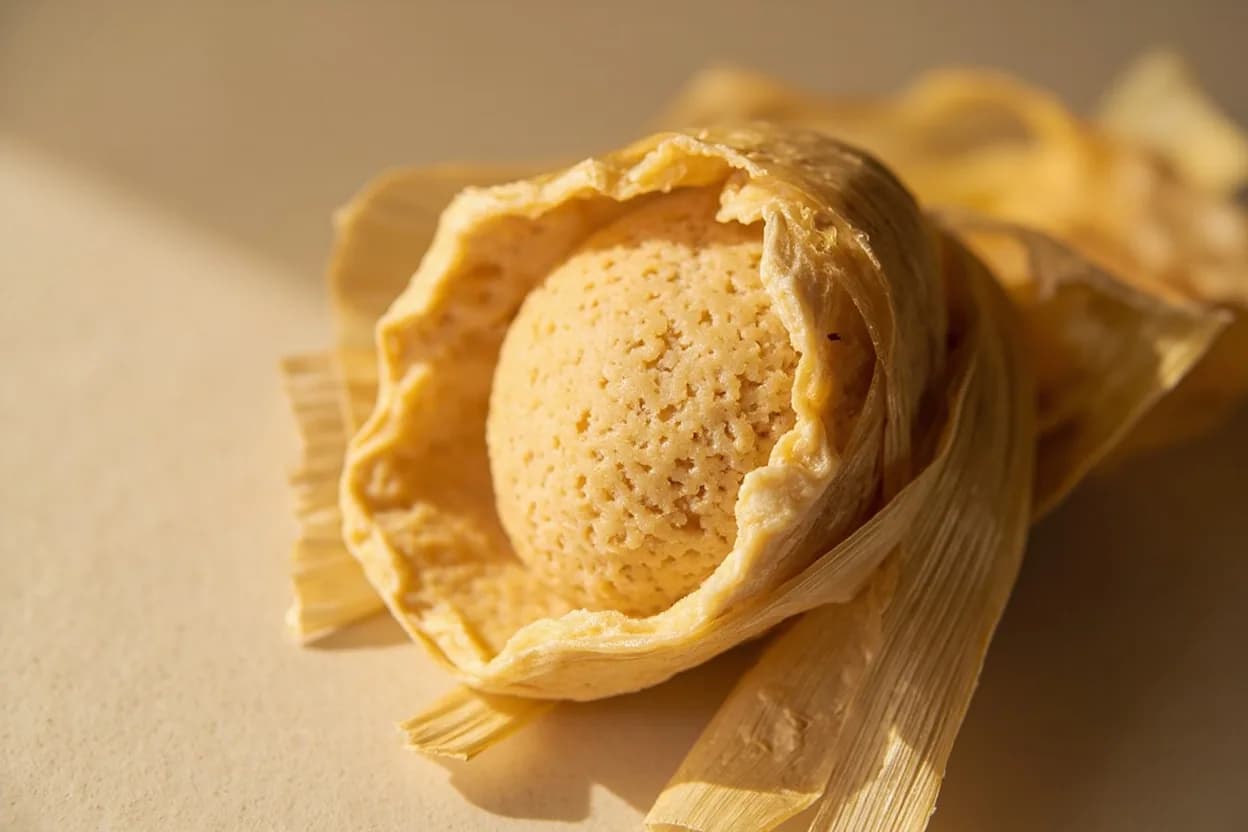
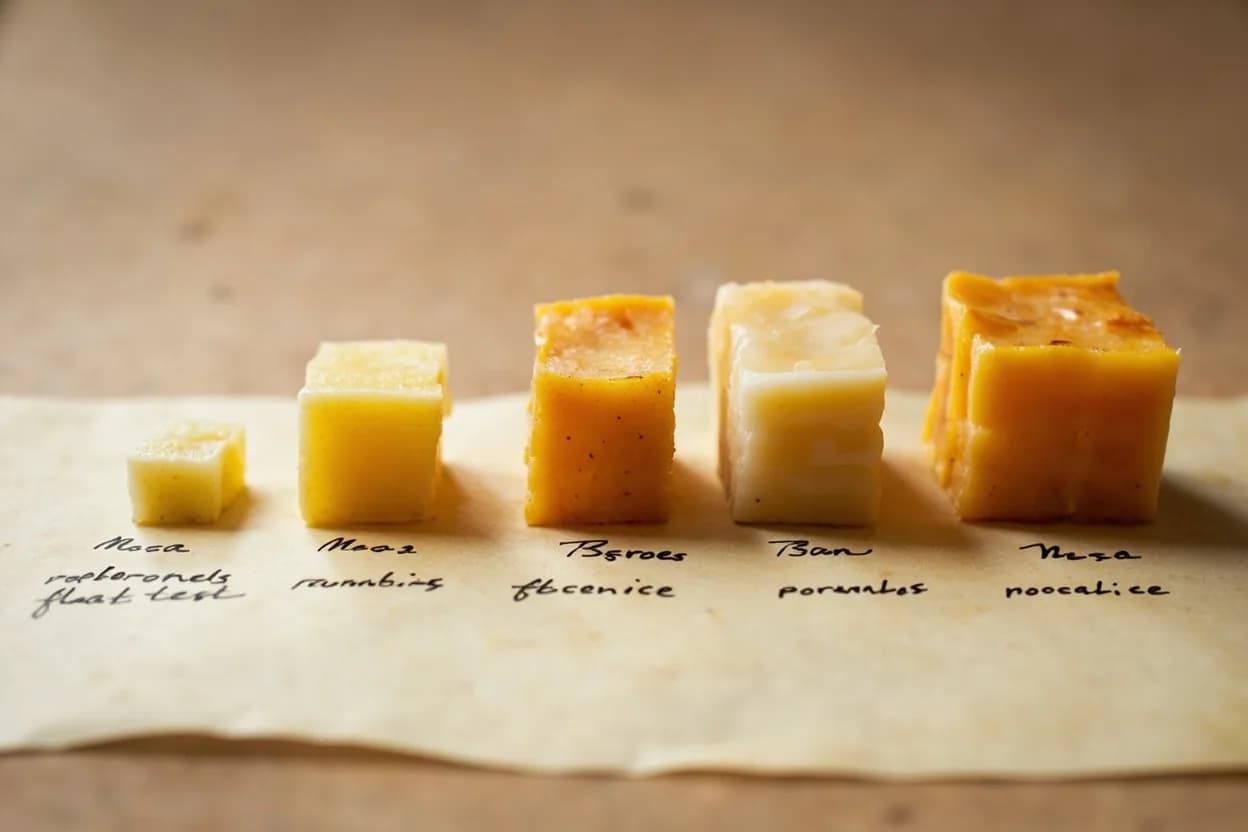
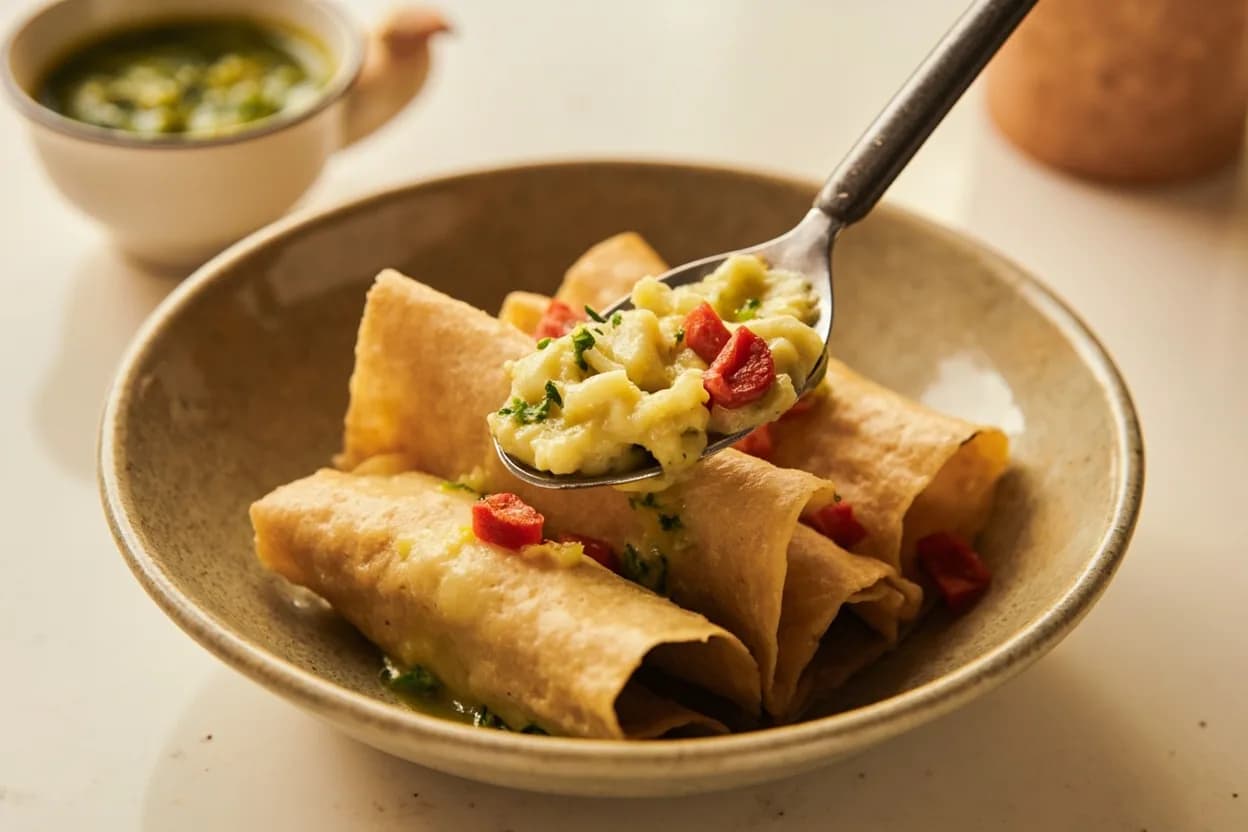
What happens
When lard or vegetable shortening is beaten into masa harina or fresh masa, the mechanical action incorporates air bubbles into the fat matrix surrounding starch granules. This is the same principle as creaming butter and sugar in baking. Adequately aerated fat has a lower bulk density than water, so a ball of well-beaten masa — where fat is evenly distributed in a continuous network — contains enough trapped air to achieve positive buoyancy. Under-beaten masa has dense, un-aerated fat and compact starch, giving it a density greater than water. The float test makes this invisible structural difference visible and testable in seconds.
What to look for
- Masa that is ready feels light, almost fluffy, and slightly sticky — not dense or clay-like
- When spread on a corn husk, ready masa holds its position without sliding off
- A pinched ball of ready masa holds its shape cleanly without cracking at the edges
- The masa has a pale, almost glossy appearance from fully emulsified fat
- Spreading ready masa produces a smooth, even layer with no visible grainy texture
How to check
- Fill a glass or bowl with cold water
- Pinch off a marble-sized ball of masa (about 1 teaspoon) and roll it smooth between your palms
- Drop it gently into the water — if it floats within a few seconds, masa is ready; if it sinks, beat the masa for another 2–3 minutes and retest
- Repeat the test from multiple areas of the batch to check consistency
- Also spread a small amount on a corn husk — it should spread smoothly and not stick to wet fingers
The science behind it
The downstream doneness marker this test prepares for — masa that floats will steam to a light, clean-releasing tamale
- Fat Aeration
The mechanical process (creaming) that introduces the air bubbles the float test detects
- Masa Harina Hydration
Masa must be properly hydrated before fat is beaten in; too dry produces a masa that floats but cracks when spread
Fat evenly coating starch granules is necessary for the continuous aerated network the float test validates
Appears in
References
- 1.Nopalito: A Mexican Kitchen — Gonzalo Guzmán, Ten Speed Press
- 2.Mexico: The Cookbook — Margarita Carrillo Arronte, Phaidon Press
- 3.My Mexico City Kitchen — Gabriela Cámara, Lorena Jones Books
- 4.The Tortilla Book — Diana Kennedy, Harper & Row
Confidence: high
Notes
Fresh Masa vs. Masa Harina
The float test applies to both fresh-ground masa (from a tortillería) and masa prepared from masa harina (Maseca or similar). Fresh masa typically requires less beating time because it already contains some fat and moisture from the nixtamalization process. Masa harina–based doughs are often stiffer and require more aggressive beating — usually 10–15 minutes with a stand mixer — before passing the float test.
What to Do When It Keeps Sinking
If masa repeatedly fails the float test despite extended beating, the problem is usually insufficient fat or insufficient liquid. Add a tablespoon of warm broth or water at a time, beat vigorously, and retest. Do not add more fat indiscriminately — overly fatty masa will float but produce greasy, heavy tamales. The correct ratio is typically 1 part fat to 3–4 parts masa by weight.