Starch & Specialty Doneness
Tamale Steam Set Point
Also: tamale done, masa set, tamale internal temp
Masa is fully cooked and separates cleanly from the corn husk at approximately 74°C (165°F) internal temperature.
The tamale steam set point is the internal temperature and textural condition at which masa dough has fully gelatinized, absorbed sufficient steam moisture, and developed enough structural integrity to peel cleanly away from its corn husk (or banana leaf) wrapper without tearing or sticking. At roughly 74°C (165°F), the masa transitions from a raw, gummy paste to a firm yet tender cooked dough.
In photos
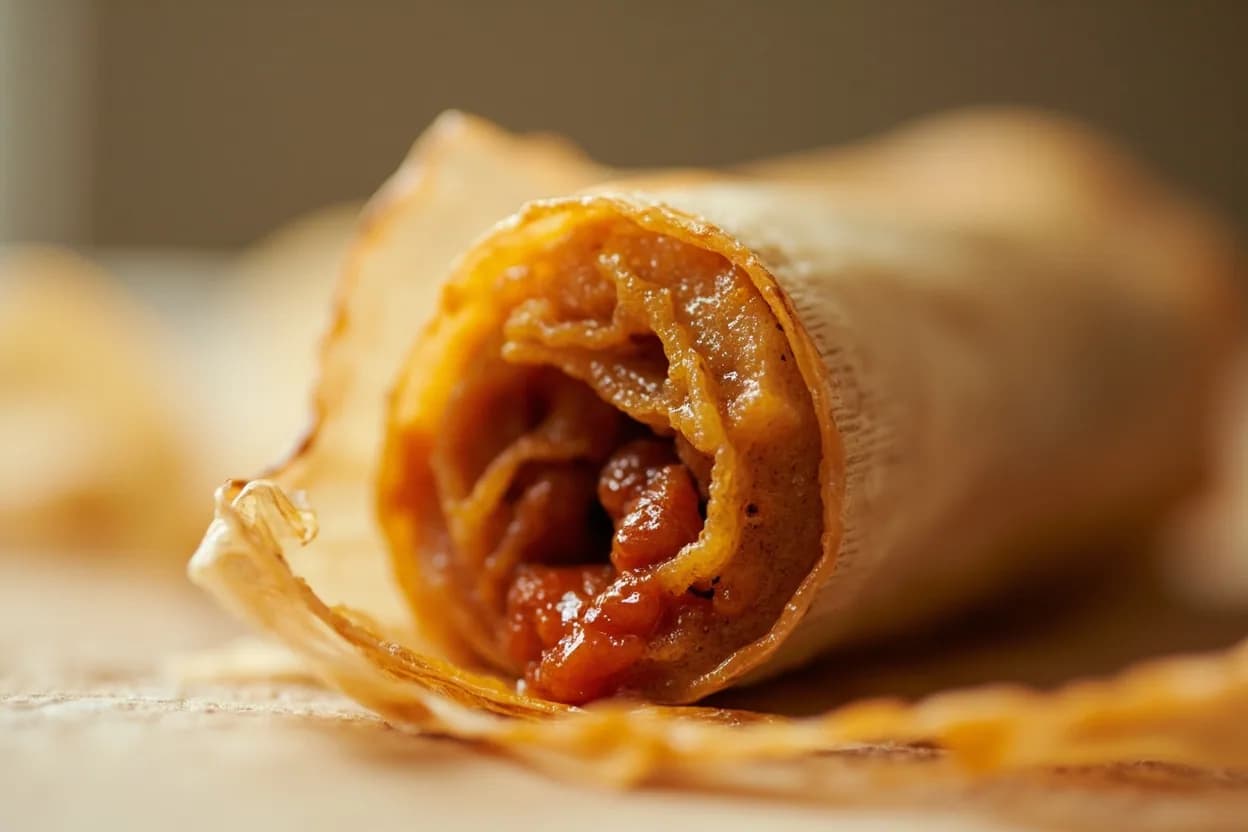
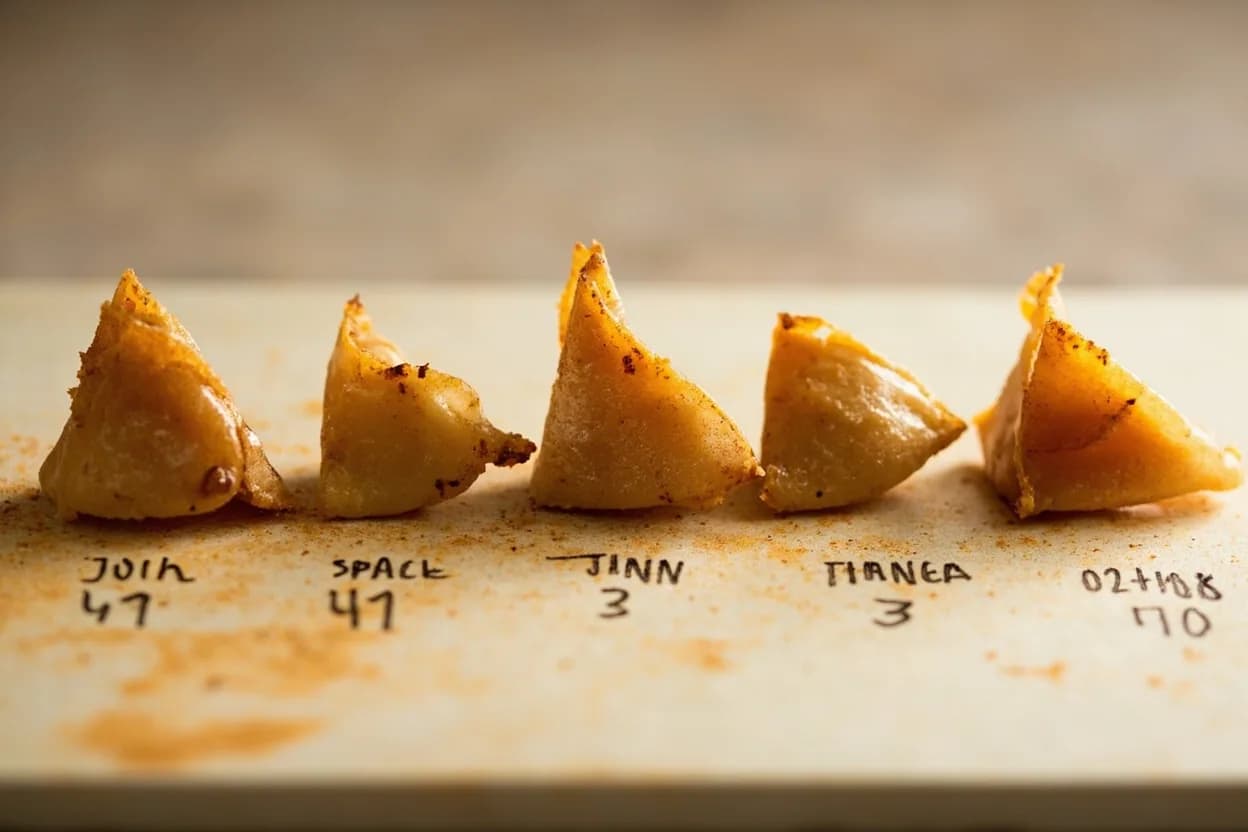
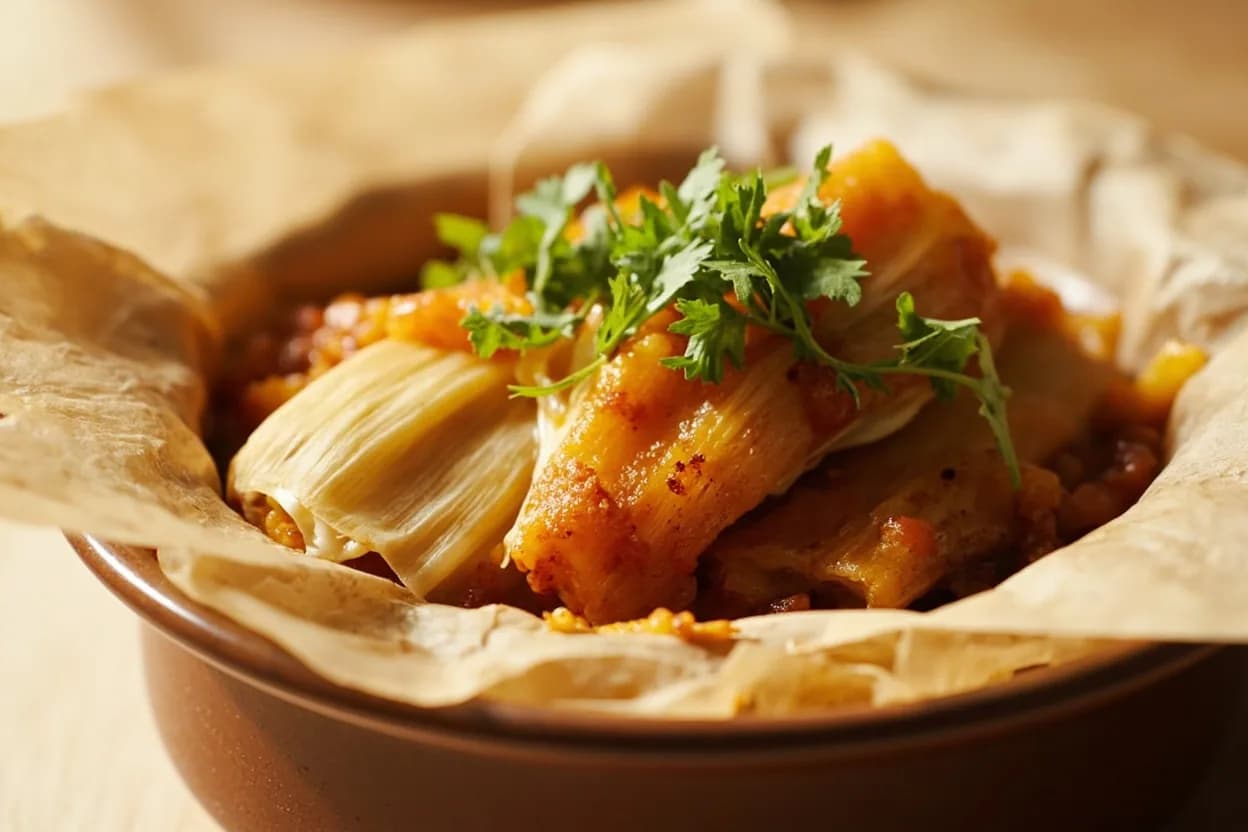
What happens
Between 60–74°C, the starch granules in masa (ground nixtamalized corn) fully gelatinize, absorbing water and swelling irreversibly. Fat (lard or vegetable shortening) that was emulsified into the masa during beating solidifies around the starch network as the tamale cools slightly, creating the characteristic fluffy-yet-cohesive crumb. Proteins in the masa coagulate, and the structure firms enough that it no longer adheres to the husk fibers. The husk itself acts as a steam-permeable mold and natural release agent — when the masa is properly set, it contracts slightly away from the husk.
What to look for
- Masa pulls away cleanly from the corn husk with no wet, sticky residue left behind
- The outer surface feels firm and slightly dry to the touch, not doughy or tacky
- The tamale holds its cylindrical shape when unwrapped and does not sag or collapse
- Interior crumb is light and porous, not gluey or dense when cut
- Steam that escapes when a tamale is opened smells of cooked corn, not raw masa
How to check
- Peel back the top edge of the corn husk on one tamale — if the masa releases cleanly without sticking, the batch is done
- Insert an instant-read thermometer into the center of the thickest tamale; target 74°C (165°F)
- Remove one tamale from the pot, unwrap fully, and press gently — it should spring back slightly and not dent permanently
- Allow a test tamale to rest 5 minutes after removing; if it firms up further and holds shape cleanly, the rest are ready
Food safety
Carryover & resting
Tamales carry over and continue firming during a 5–10 minute rest in the covered pot after heat is off. Under-steamed tamales often correct with this additional rest. Do not unwrap immediately; resting allows the masa structure to set fully and moisture to redistribute.
The science behind it
- Masa Readiness Float Test
Precedes steaming — verifies fat incorporation and hydration before tamales are assembled
The physical transformation driving masa from raw to set
- Husk-Release Test
The canonical visual-tactile doneness indicator for tamales across Mesoamerican cuisines
- Steam Cooking Doneness
Tamale steam set shares the same thermal logic as other steamed starch-based foods
Appears in
References
- 1.The Food Lab — J. Kenji López-Alt, W. W. Norton & Company
- 2.Nopalito: A Mexican Kitchen — Gonzalo Guzmán, Ten Speed Press
- 3.My Mexico City Kitchen — Gabriela Cámara, Lorena Jones Books
- 4.On Food and Cooking — Harold McGee, Scribner
Confidence: high
Notes
Regional Wrappers and Their Effect on Timing
Corn husks and banana leaves conduct and trap steam differently. Corn husks are more porous, allowing some evaporative loss, while banana leaves create a tighter seal that can accelerate cooking. Oaxacan tamales wrapped in banana leaves typically reach the set point 10–15 minutes faster than husk-wrapped versions of the same size.
The Pot Setup Matters
Traditional tamale steamers position tamales upright with the open end up, which keeps filling from migrating and ensures even steam circulation. Overcrowding inhibits steam flow and produces uneven doneness — the inner tamales may lag 10–15 minutes behind the outer layer.