Poultry Doneness
Tandoori Chicken Pull-Away-Bone Temperature
Also: tandoori chicken doneness, tandoor chicken temperature, murgh tandoori doneness
Pull at 82°C/180°F deep at the bone — charred skin, cooked-through thigh, and marinade-set crust are the combined doneness signal in a 480°C tandoor.
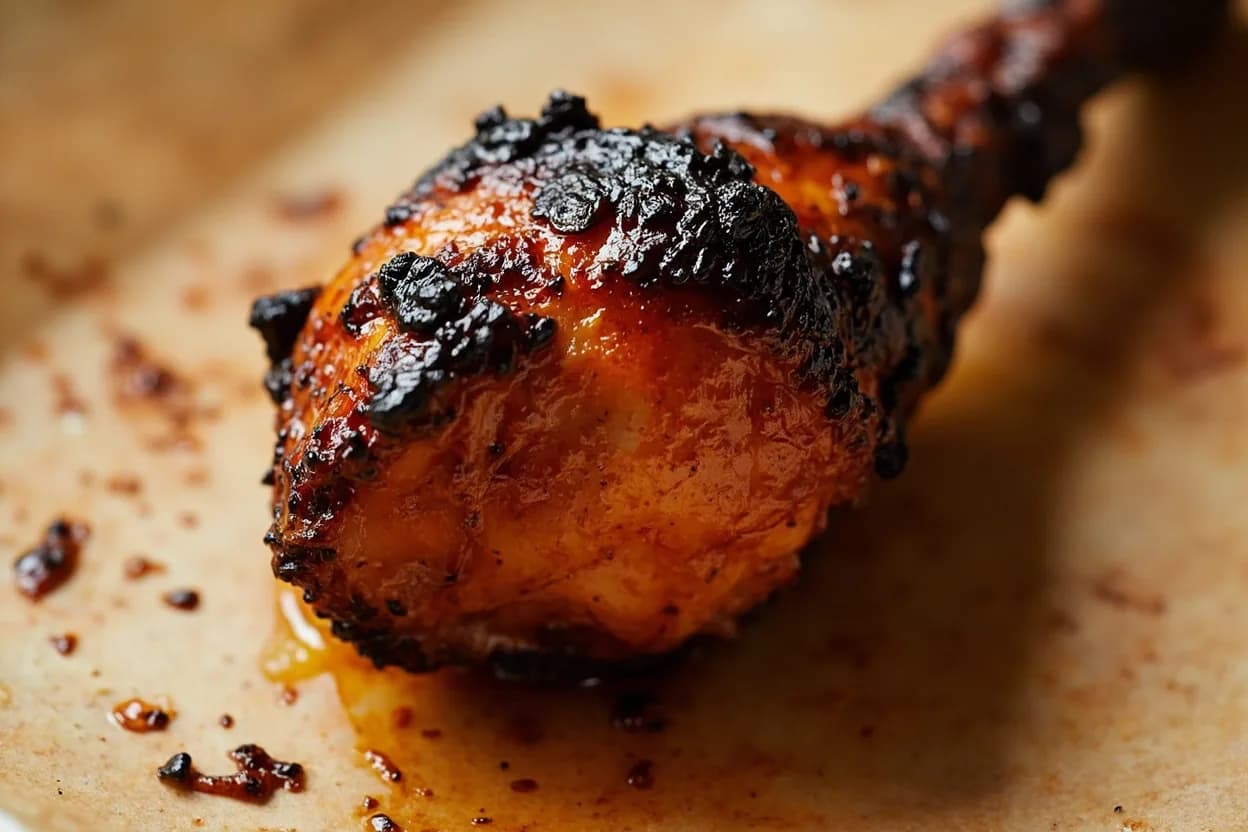
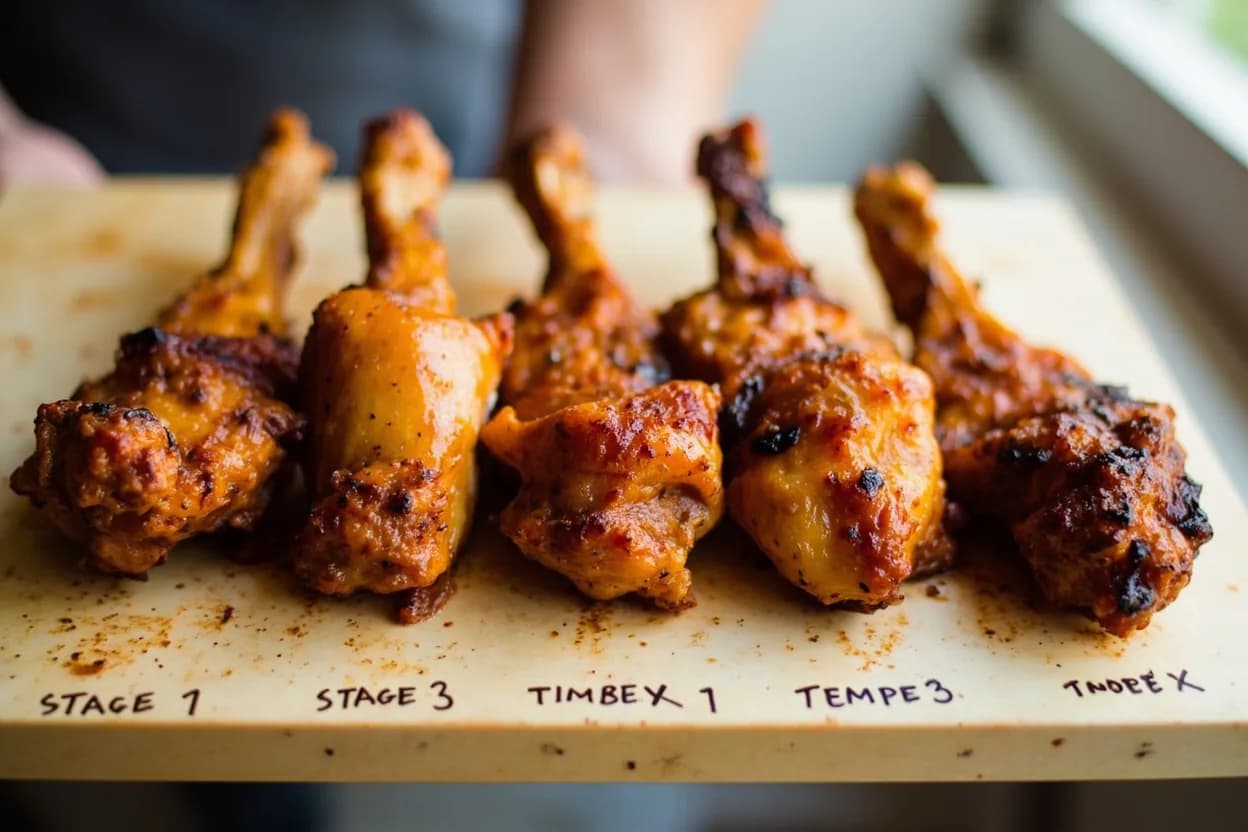
Tandoori chicken reaches its traditional ideal when the internal temperature at the bone measures 82°C (180°F), indicated by the flesh visibly pulling away from the drumstick and thigh bones. The intense dry heat of a clay tandoor (typically 400–500°C / 750–930°F) chars the marinated exterior and desiccates the surface in 12–18 minutes, while conducting sufficient heat to the bone to achieve thorough cooking. At 82°C the collagen around the bone joint has partially hydrolyzed, the myoglobin has fully denatured (no red color at the joint), and the flesh separates cleanly from the bone surface when pulled.
In photos

What happens
The tandoor's radiant heat (from the clay walls pre-heated for 45–60 minutes) combined with convective heat from the burning charcoal or gas below creates an intensely rapid cooking environment. The yogurt-and-spice marinade sets quickly into a protective crust that seals the surface within the first few minutes, moderating moisture loss. Internally, myosin begins denaturing at 50°C; by 65–70°C actin contracts and the breast near the bone is fully set. Reaching 82°C at the deepest marrow-adjacent point ensures that the thickest part of the thigh — the last area to reach temperature — is safely cooked with the myoglobin fully denatured (no pink). The bone-pull effect occurs because periosteal connective tissue softens above 70–75°C.
What to look for
- The flesh visibly contracts and pulls away from the drumstick bone by 5–8mm, creating a clean gap
- Exterior is deeply charred with black blisters on raised marinade points, orange-red between charred spots
- Juices at the thigh-body joint run clear with no pink tinge when the joint is pulled apart
- The yogurt crust is dry and set — not wet or sticky — and has developed a smoky char aroma
- The leg joint moves freely and the thigh can be pulled away from the body without resistance
How to check
- Insert a thin instant-read thermometer parallel to the femur bone, pressing the tip as close to the bone as possible at the thickest point of the thigh
- Target 82°C (180°F) at bone-adjacent flesh; the breast meat will be 75–78°C at this point
- Visually inspect the joint: pull the drumstick gently — clean bone separation without tearing means done
- Pierce the thigh at its thickest point; juices should run golden-clear, not pink or red
Food safety
Carryover & resting
Tandoori chicken carries over 3–5°C once removed from the tandoor skewer and rested on a plate. The rapid surface desiccation means the exterior acts as a thermal barrier, slowing carry-over to the interior. Rest 3–5 minutes before service — this also allows the juices to redistribute after the intense heat shock.
The science behind it
- Tandoor clay-oven heat dynamics
Radiant heat from pre-heated clay walls (400–500°C) creates rapid exterior char while convective heat finishes the interior
- Yogurt marinade crust formation
Proteins and lactic acid in the marinade set rapidly, creating a protective crust that moderates moisture loss
- Bone-pull test
Periosteal connective tissue softening above 70°C causes the classic visual cue of flesh receding from bone
- Maillard reaction in high-heat poultry
The intense tandoor char is Maillard + partial pyrolysis, producing the smoky complexity distinct from oven roasting
Appears in
References
- 1.Indian Cooking — Madhur Jaffrey
- 2.The Spice Merchant's Daughter — Christina Arokiasamy
- 3.Tandoor: The Great Indian Barbecue — Monish Gujral
- 4.On Food and Cooking: The Science and Lore of the Kitchen — Harold McGee
- 5.FSSAI Food Safety Guidelines for Meat and Poultry — Food Safety and Standards Authority of India
Confidence: high
Notes
The 480°C paradox
A proper tandoor wall temperature of 400–500°C makes it impossible to cook chicken slowly — yet the geometry of the technique (skewered vertically, marinade coat insulating the surface) means the window between perfect and overcooked is about 2–3 minutes. Commercial tandoor cooks develop an almost tactile sense of timing, reading the char color and listening to the sizzle of the marinade. Home oven versions cannot replicate this — the closest approximation is a broiler at maximum heat with the chicken on a wire rack close to the element.
Why 82°C and not 74°C
The higher target compensates for measurement variability in bone-adjacent tissue and ensures the joint — where blood vessels concentrate — is fully cooked. Traditional tandoori preparation also uses bone-in pieces with deep incisions to allow heat penetration; these cuts create channels for heat to reach the bone faster than in an intact leg. The joint gap (bone-pull) is a reliable proxy that does not require a thermometer and has been used by tandoor cooks for centuries.