Lamb Doneness
Kofta: Cooked-Through Internal Check
Also: kofta done temp, kebab internal temperature, ground lamb safe temp
Ground lamb and beef kofta must reach 71°C (160°F) throughout for food safety, while retaining a juicy, spiced core.
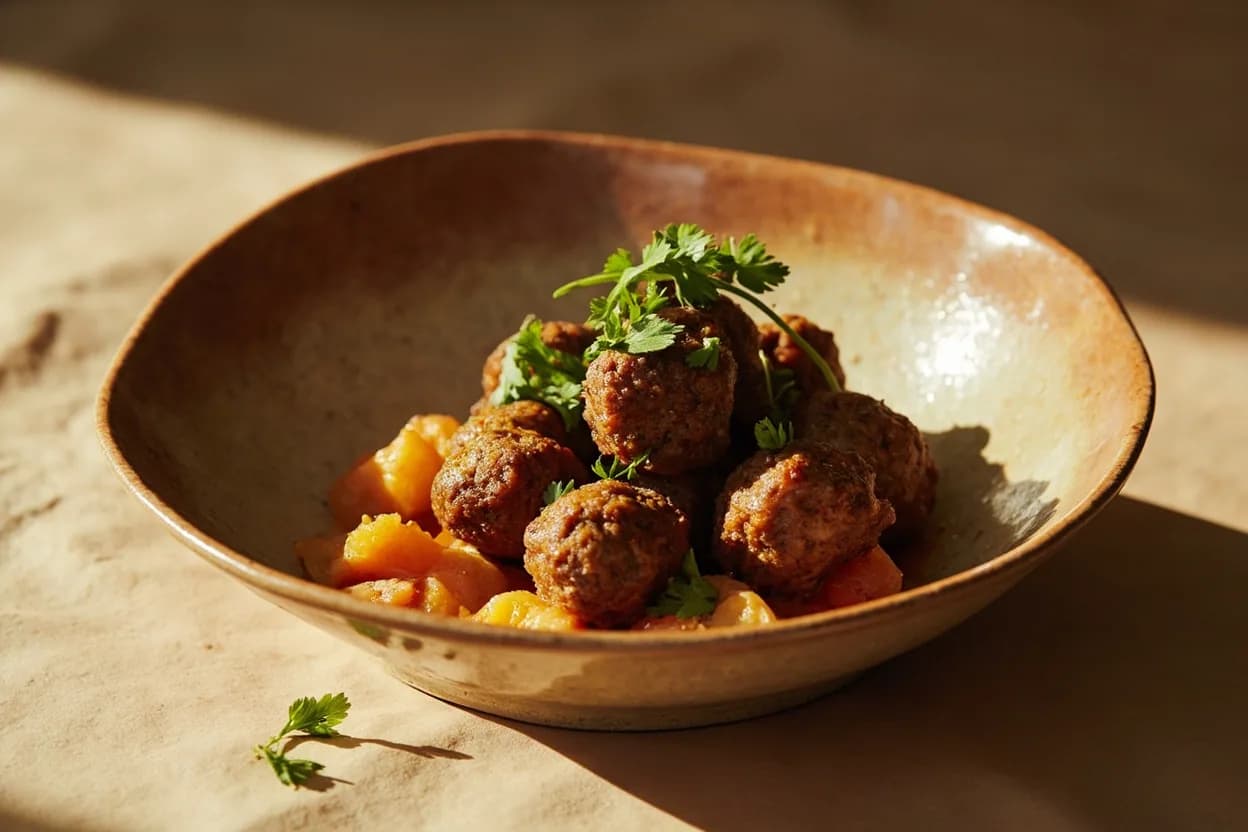
Kofta are seasoned ground-meat preparations — typically lamb, beef, or a blend — shaped onto skewers or formed into cylinders and grilled over direct heat. Because the meat is ground, pathogens that would normally reside only on the surface are distributed throughout the mass, requiring a full cooked-through internal temperature of 71°C (160°F) to ensure safety. Unlike whole-muscle cuts, there is no USDA allowance for a lower pull temperature or a rest-based equivalent for ground meat.
In photos
What happens
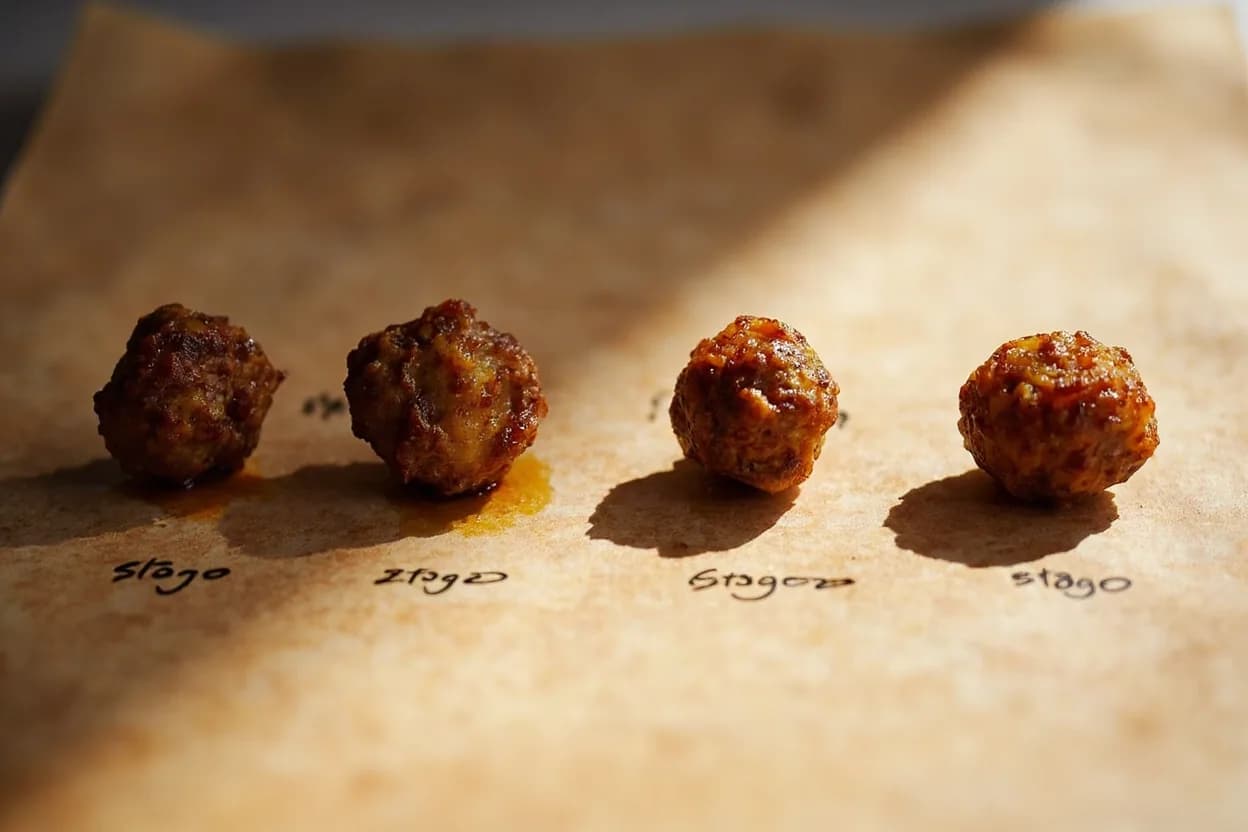
At 71°C, myosin and actin proteins in the ground meat have fully denatured and the moisture-holding capacity of the muscle fibers drops sharply. Fat from the tail or chuck renders into the meat matrix, keeping texture moist despite full doneness. Spices such as cumin, coriander, and allspice bloom into the released fat. The Maillard reaction on the exterior produces the characteristic char and crust while the interior finishes cooking. Because the meat is compact and seasoned with binding agents (onion pulp, egg), heat distribution is relatively even throughout the cylinder.
What to look for
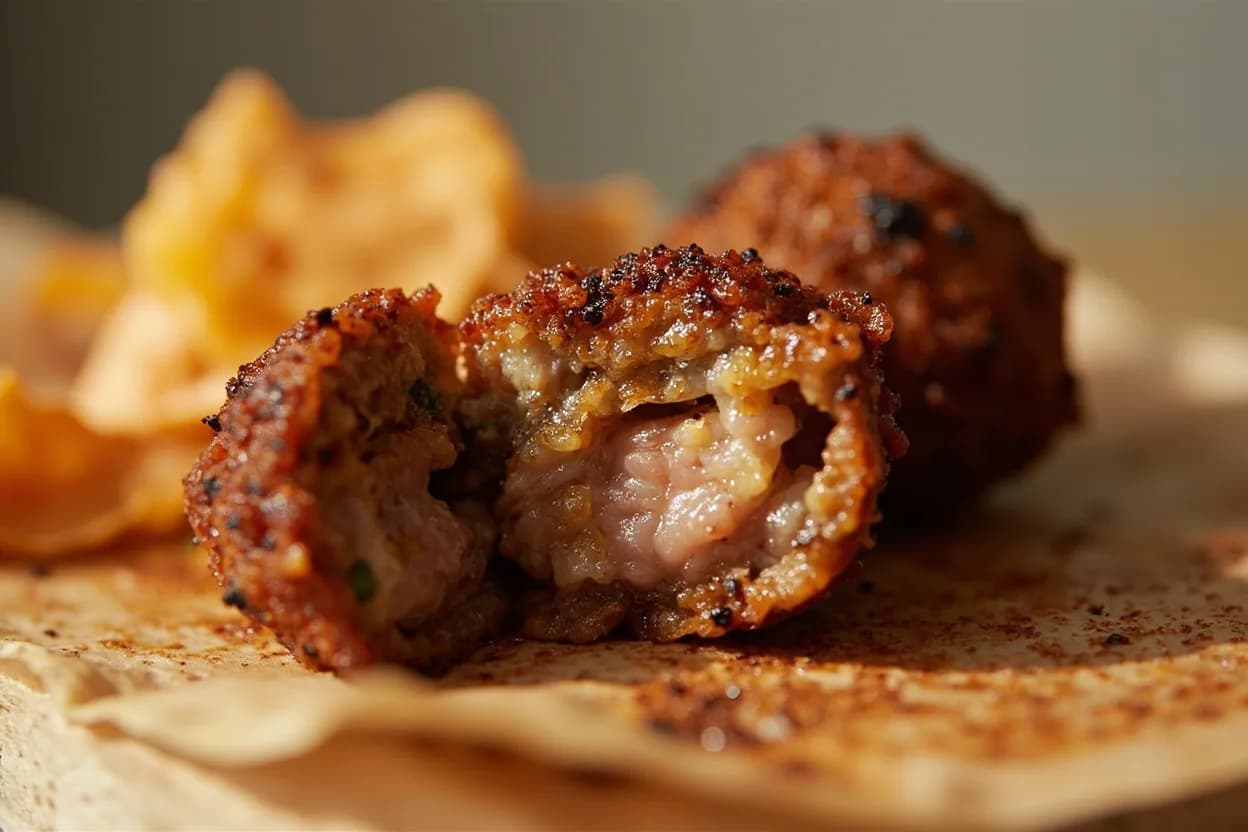
- No pink or translucent zones visible when skewer is removed and meat is cut crosswise
- Juices running clear or faintly golden, not pink or red
- Firm but yielding texture when pressed — not squishy (underdone) or dry and crumbling (overdone)
- Surface char with visible grill marks and some caramelized spice crust
- Interior steam rises steadily when cut open
How to check
- Insert a thin instant-read thermometer (e.g., Thermapen) into the thickest end of the kofta cylinder, parallel to the skewer, ensuring the probe tip is at the geometric center
- For skewered kofta, slide one piece to the end of the skewer and probe from the exposed end
- If using a dual-probe setup, confirm both ends of a long kofta register 71°C
- Cut the largest piece crosswise and inspect for uniform color if no thermometer is available — a completely gray-brown interior with clear juices is the visual backup test
Food safety
The science behind it
- Ground Meat Safe Temperature
71°C/160°F applies identically to ground beef, pork, veal, and lamb
Surface browning at high grill temperatures that produces kofta's char while interior reaches 71°C
- Carryover Cooking
Kofta removed from the grill at 68°C may reach 71°C with a brief rest, but for safety, verify at 71°C before serving
Appears in
References
- 1.USDA FSIS Safe Minimum Internal Temperatures Chart
- 2.On Food and Cooking — Harold McGee
- 3.Zaitoun: Recipes from the Palestinian Kitchen — Yasmin Khan
Confidence: high
Notes
Freshly ground vs. pre-ground
In many Middle Eastern butcher shops, kofta is ground from whole muscles to order and immediately formed — a practice that reduces but does not eliminate pathogen risk. The 71°C standard applies regardless, and competent grillers achieve it routinely without drying the meat, thanks to high-fat lamb shoulder and tail fat in the blend.
Charcoal vs. gas
Traditional kofta is cooked over live charcoal at very high surface heat (600°C+), which achieves a deep exterior crust in 8–12 minutes while the interior climbs steadily. Gas grills running lower surface temperatures may require longer cook times to reach 71°C without burning the outside; reduce heat and use a thermometer.