Fermentation & Culturing Temperatures
Kombucha First Fermentation Target pH
Also: kombucha F1 pH, kombucha first ferment endpoint, kombucha brewing pH target
Kombucha first fermentation is complete when pH reaches 2.5–3.5 after 7–14 days, balancing tartness with enough residual sweetness for a successful second ferment.
The first fermentation of kombucha (F1) is the primary aerobic/anaerobic brewing stage in which a SCOBY (symbiotic culture of bacteria and yeast) transforms sweetened tea into a lightly acidic, effervescent beverage. The endpoint is a pH of 2.5–3.5 — most brewers target 3.0–3.5 for a balanced sweet-tart profile, while a pH below 3.0 signals higher acidity preferred for a more vinegary result or for using the kombucha as a starter (pH 2.5–3.0 is ideal starter strength). The duration is typically 7–14 days at 22–26°C, with vessel size, SCOBY health, and ambient temperature all affecting timeline.
In photos

What happens
The SCOBY yeast layer (Brettanomyces, Zygosaccharomyces, and others) hydrolyzes sucrose into glucose and fructose, then ferments fructose to ethanol and CO₂. Acetic acid bacteria (AAB — primarily Gluconobacter and Acetobacter) oxidize the ethanol to acetic acid and also produce gluconic acid directly from glucose. Lactic acid bacteria contribute lactic acid, adding complexity. The pellicle (SCOBY mat) floats and acts as a semi-permeable barrier, facilitating the aerobic AAB layer at its surface while the liquid below becomes progressively anaerobic. As pH drops, the brew becomes increasingly hostile to spoilage organisms, making kombucha self-preserving at its finished acidity.
What to look for
- Brew tastes tart but not vinegar-sharp, with residual sweetness at pH 3.0–3.5
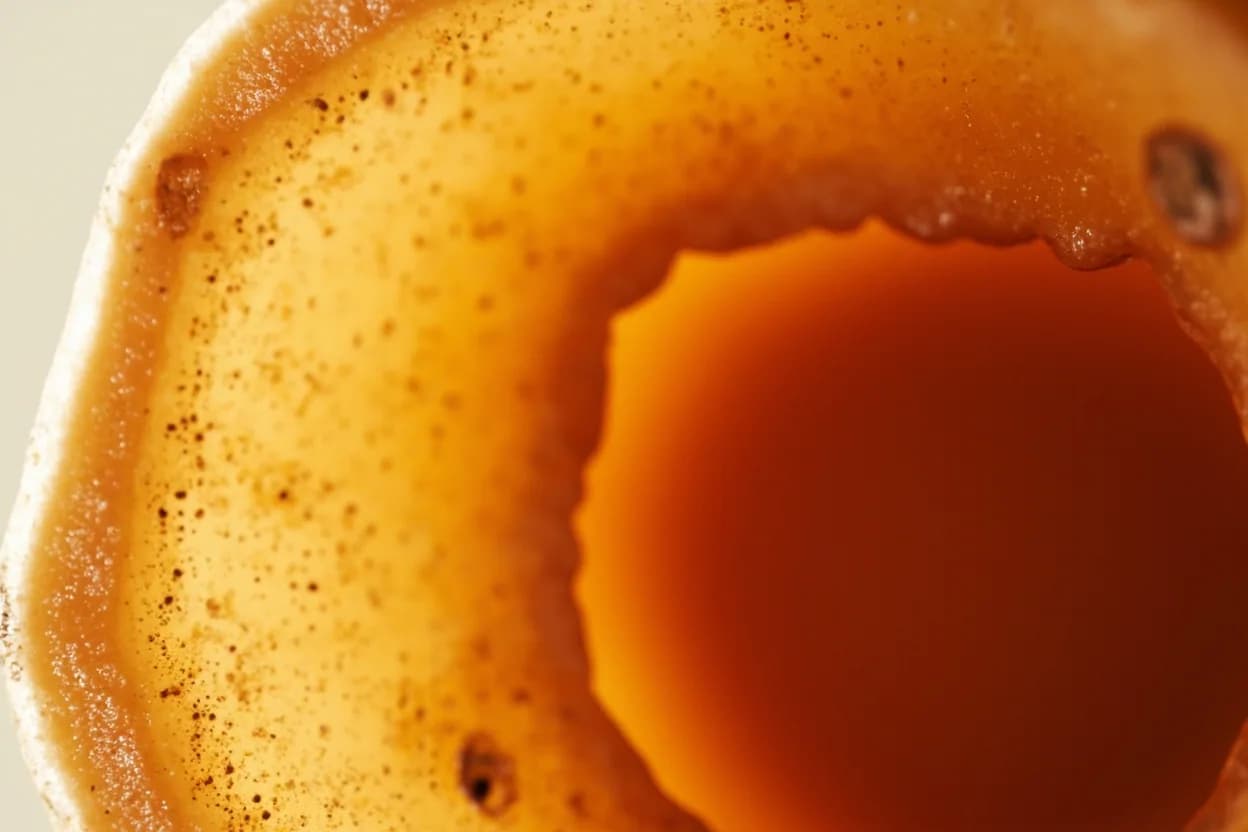
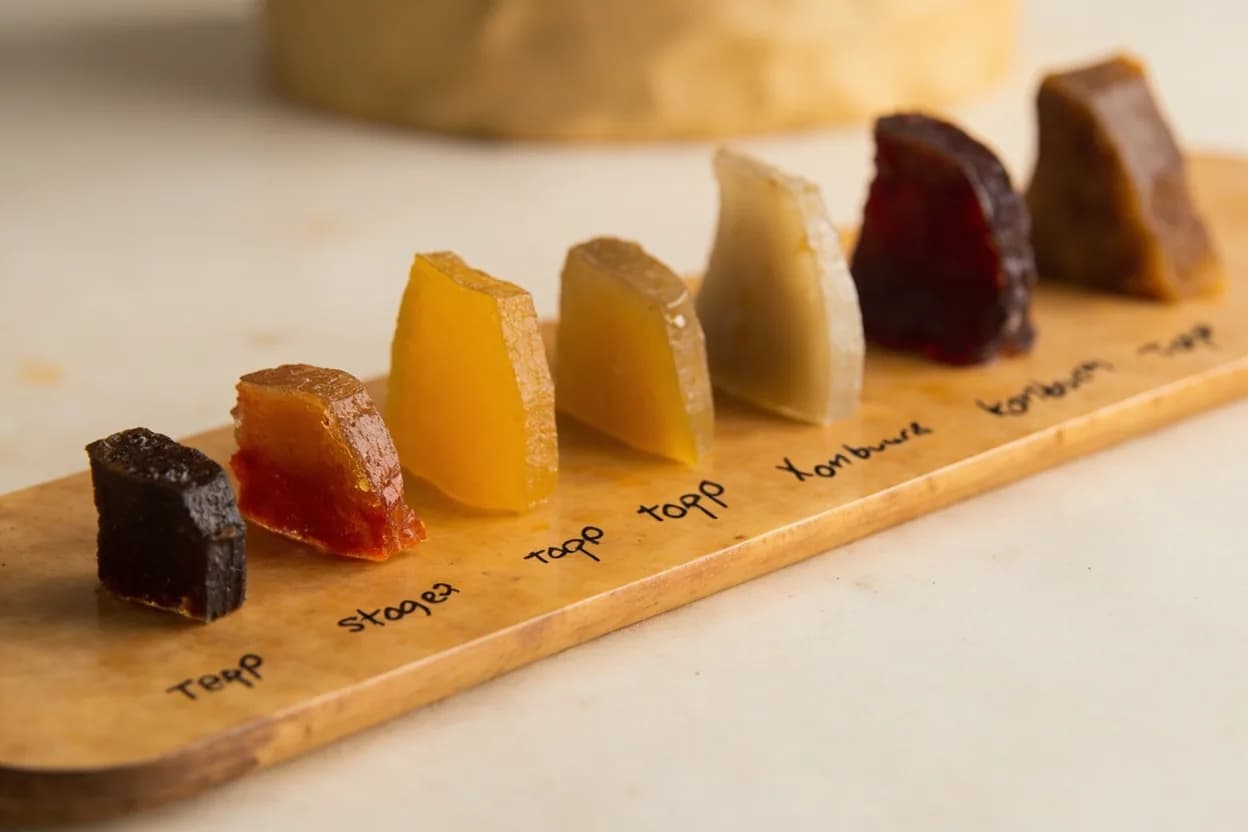
- A new SCOBY pellicle has formed on the surface — thin or thick depending on SCOBY age
- Light natural effervescence when tasted (more pronounced after F2)
- Color has lightened from the original tea shade as tannins are consumed
- Aroma is pleasantly yeasty and acidic — like a mild cider-vinegar blend
- No mold (fuzzy, raised, colored growths — distinct from the smooth, brown SCOBY)
How to check
- Dip a narrow-range pH strip (2.0–5.0) into the brew away from the SCOBY — match color immediately
- Use a calibrated pH meter (calibrate with pH 4.0 and 7.0 buffer) for readings to ±0.05 pH
- Taste daily from day 7: sweet tea → sweet-tart → tart signals approach to target
- Measure daily once you detect obvious tartness to avoid over-fermentation
Food safety
The science behind it
- SCOBY health
A thick, off-white to tan pellicle indicates active culture; thin pellicles may signal a weak starter or cold fermentation temperature
- Starter liquid ratio
Using 10–15% acidic starter (pH 2.5–3.0) from a previous batch acidifies the new batch immediately, protecting against mold during the first 48 hours
- Second fermentation (F2)
Bottling with residual sugar or fruit triggers carbonation in sealed bottles over 2–4 days at room temperature
- Ethanol content
F1 produces 0.5–1.5% ABV typically; F2 can raise this to 3%+ in extended bottle conditioning
- Acetobacter activity
Higher oxygen exposure accelerates acetic acid production — wider vessels ferment faster but can over-acidify if not monitored
Appears in
References
- 1.The Big Book of Kombucha — Hannah Crum & Alex LaGory (2016)
- 2.Noma Guide to Fermentation — René Redzepi & David Zilber (2018)
- 3.Wild Fermentation — Sandor Ellix Katz (2003)
- 4.Microbiology of Fermented Foods, Vol. 1 — Brian J.B. Wood (ed., 1998)
Confidence: high
Notes
The pH floor for second ferment
If F1 ends too acidic (below pH 2.8), there is little residual sugar left to fuel carbonation in F2. Brewers targeting heavy effervescence often stop F1 at pH 3.0–3.2 and add a measured amount of sugar (3–5g per 250ml) at bottling, rather than relying on residual fermentables alone.
Temperature and timeline
At 22–24°C, most batches reach pH 3.0–3.5 in 7–10 days. At 18°C, the same process may take 14–21 days. Temperatures above 29°C can accelerate AAB activity disproportionately, pushing pH below 3.0 before yeast has fully developed the flavor profile — producing an astringent, one-dimensionally acidic result.