Legume Doneness
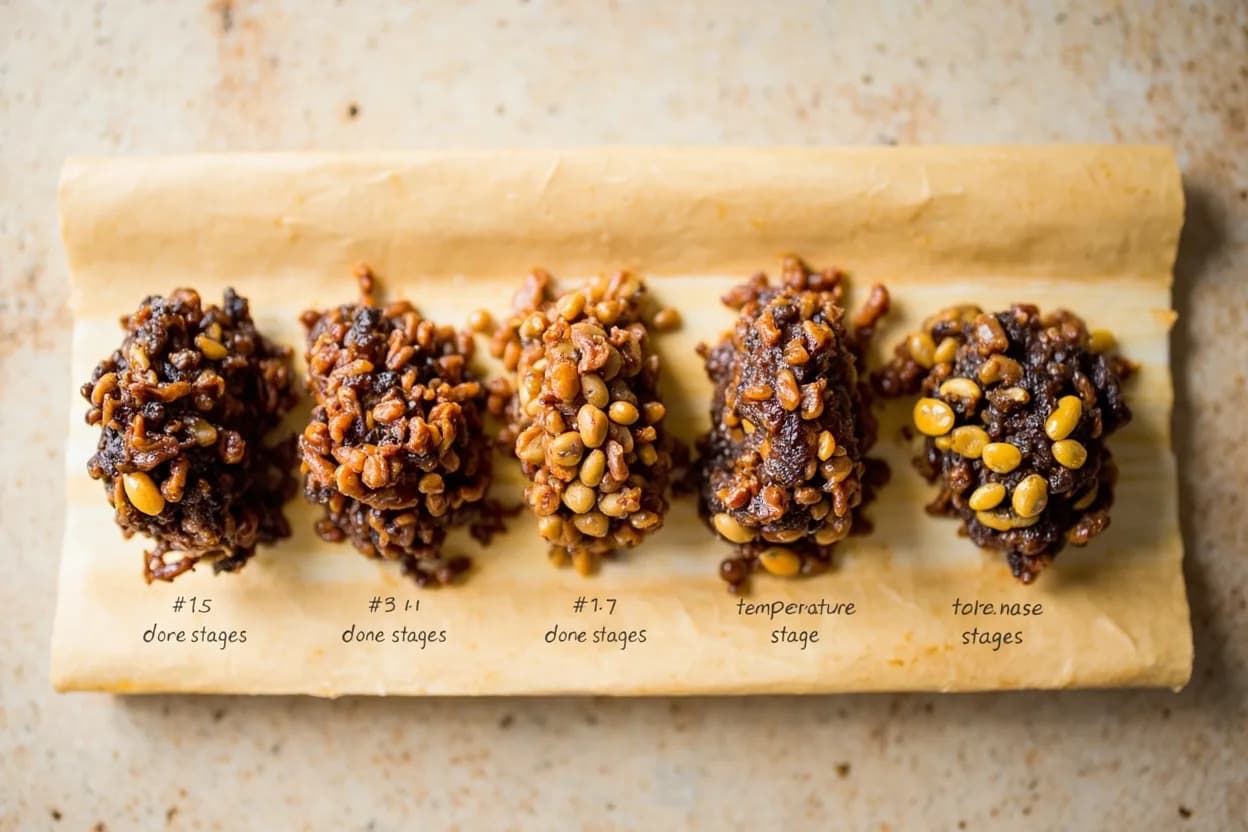
Lentil Doneness Stages
Also: lentil al dente, lentil for salad, lentil for dal, lentil collapse stage, lens culinaris doneness
Lentils pass through two distinct doneness stages — firm-tender for salads (12–15 min) and fully collapsed for stews and dal (20–30 min) — and no single cook time suits both.
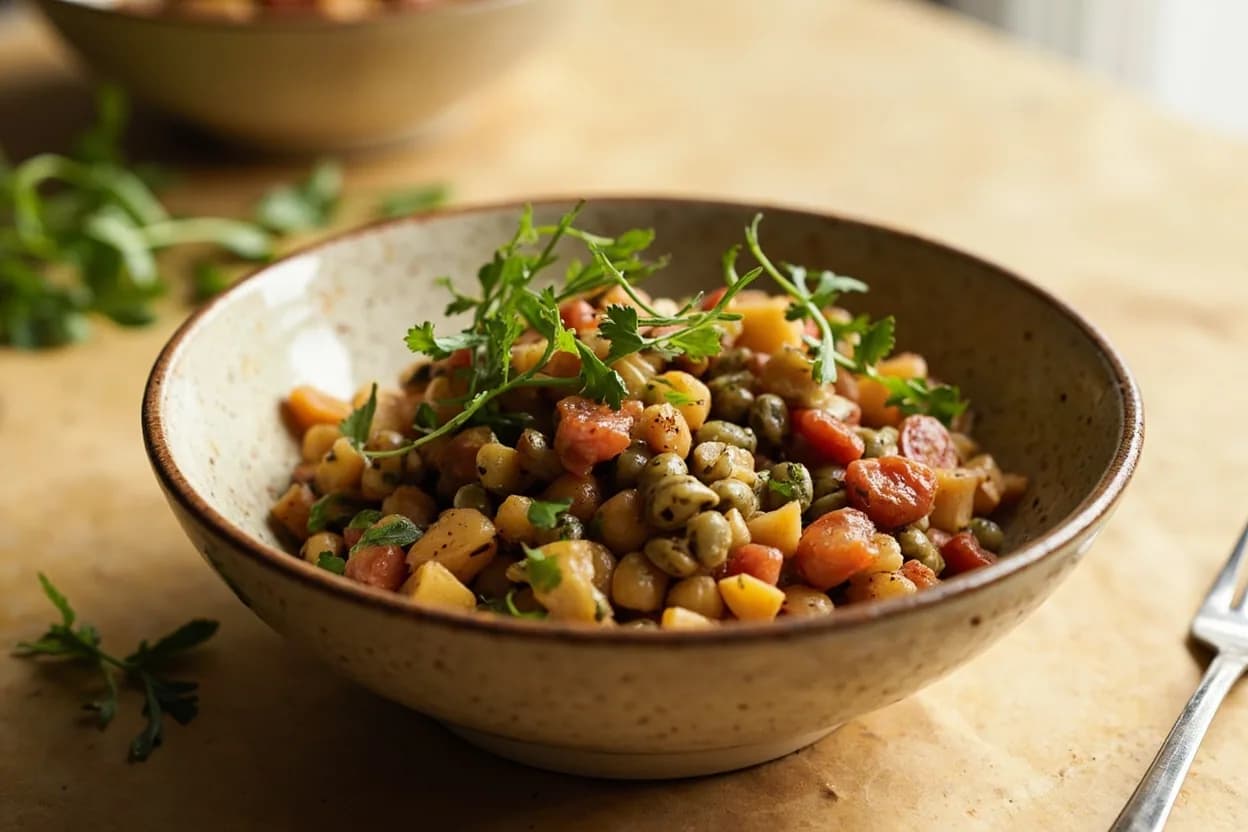
Lentils (Lens culinaris) are small, flat legumes that cook faster than any other dried pulse because they require no soaking and lack the tough seed coat of chickpeas or kidney beans. Unlike most legumes, lentils traverse a wide spectrum of textures within a short cooking window. Stage 1 (al dente, salad-ready): the lentil holds its disc shape, is fully cooked through with no raw, chalky core, but offers a slight, pleasant bite. Stage 2 (collapsed, dal/soup-ready): the lentil has lost structural integrity, split along its suture or burst its skin, and dissolves into a creamy mass on the tongue. Stage determines use: salads and grain bowls require Stage 1; dals, soups, and purees require Stage 2.
In photos

What happens
Lentils begin absorbing water as soon as they enter the simmering liquid, hydrating pectin in the cell walls and triggering starch gelatinization in the cotyledon. In Stage 1, the pectin network retains enough structural integrity to hold cell-to-cell adhesion — the lentil looks intact and bites with spring. Continued heat and hydration dissolves the middle lamella (pectin cement between cells), causing cells to detach. In Stage 2, cell walls physically rupture, releasing gelatinized starch and disrupted protein into the surrounding liquid, which thickens. Red and yellow lentils reach Stage 2 faster because dehulling removes the protective seed coat that slows water penetration in green and French Puy lentils.
What to look for
- Stage 1 (salad): lentil holds its lens shape when scooped; offers a slight but definite resistance when bitten; no chalky white core visible in cross-section
- Stage 1 (salad): skin is intact and smooth, not split; lentil does not mush when stirred
- Stage 2 (dal): lentils have visibly swollen and many have burst their skins or split along their seam
- Stage 2 (dal): a spoon dragged across the pot creates a thick, creamy smear rather than displacing discrete grains
- Stage 2 (dal): pressing a lentil between thumb and forefinger produces an effortless, uniform paste — no hard core
- Split red lentils at Stage 2: liquid turns uniformly opaque orange-gold; no identifiable grain shape remains
How to check
- Bite test (Stage 1): bite a single lentil — it should yield completely with a brief, springy resistance, uniform throughout, no chalky crunch
- Squeeze test (Stage 1): gently press a lentil between fingers — it should deform without crumbling; still holds together
- Squeeze test (Stage 2): press a lentil between fingers — it immediately collapses to smooth paste with no resistance
- Stir drag (Stage 2): draw a spoon through the pot; the lentils should leave a thick, creamy coating on the spoon, not splash like soup
- Taste test: eat 2–3 lentils and chew slowly — no starchy, raw, or beany flavor at any stage
Food safety
The science behind it
- French Puy Lentils (Lentilles du Puy)
AOP-certified, slate-green, small lentil with firm skin; holds Stage 1 texture longer than other varieties — ideal for salads and warm dishes
- Red Masoor Dal
Dehulled red lentils; no seed coat means they skip Stage 1 entirely and go directly to Stage 2 collapse in 8–12 minutes
- Black Beluga Lentils
Named for caviar resemblance; firm skin holds Stage 1 texture well; intense earthy flavor with a rich, almost chewy bite
- Dal Tadka
Indian dish built around Stage 2 collapse of toor (pigeon pea) or masoor dal, finished with a bloomed-spice tarka
- Lectin Deactivation
Heat denatures lectins in legumes; lentils require less time than kidney beans, but full cooking to Stage 1 is still necessary
- Acid and Doneness
Adding tomatoes, lemon juice, or vinegar to the cooking water before lentils reach Stage 1 can lock their texture by strengthening pectin bonds
Appears in
References
- 1.On Food and Cooking — Harold McGee (Scribner, 2004)
- 2.Jerusalem — Yotam Ottolenghi & Sami Tamimi (Ten Speed Press, 2012)
- 3.An Invitation to Indian Cooking — Madhur Jaffrey (Knopf, 1973)
- 4.The Complete Legume Cookbook — America's Test Kitchen (2023)
Confidence: high
Notes
The acid trap
Adding acidic ingredients — tomatoes, tamarind, wine, vinegar — before lentils reach Stage 1 will lock them in a firmer state by reinforcing the pectin matrix. This is useful when you want firm lentils that will survive long simmering in a tomato-based sauce, but frustrating when you intend a creamy dal. Always bring lentils to Stage 2 first in plain water or broth, then add acidic elements to season and finish.
Variety determines target stage
Puy, Castelluccio, and beluga lentils are high-pectin varieties whose skins are robust enough to hold Stage 1 for several minutes of additional cooking — excellent for salads and room-temperature dishes. Red and yellow lentils lack the seed coat entirely, making Stage 1 nearly impossible to hit before the lentil collapses; they belong in dals, soups, and purees. Common brown lentils sit in the middle: they can hold Stage 1 if watched carefully, but are forgiving at Stage 2.