Cheese & Dairy Doneness
Mesophilic Culture Incubation Temperature
Also: mesophilic starter temperature, ambient cheese culture range, mesophilic LAB incubation
The 20–25°C (68–77°F) ambient temperature range in which mesophilic lactic acid bacteria work optimally, governing acidification and flavor development in cheddar, brie, camembert, and most soft and semi-hard cheeses.
Mesophilic ('moderate-loving') cultures are the dominant starter organisms in the world's most diverse family of cheeses — cheddar, gouda, brie, camembert, colby, havarti, and the majority of fresh soft cheeses. Their principal organisms — Lactococcus lactis subsp. cremoris and lactis, sometimes Leuconostoc mesenteroides — have optimal growth between 20–30°C with peak activity nearer 25–30°C. However, their incubation and aging range of 20–25°C (68–77°F) reflects the ambient cave or cellar conditions in which these cheeses ripen. During this incubation window, mesophilic bacteria continue acidification after pressing, begin proteolysis that breaks down curd proteins into flavor compounds, and create the chemical environment in which secondary ripening cultures (Penicillium camemberti, Brevibacterium linens) subsequently develop.
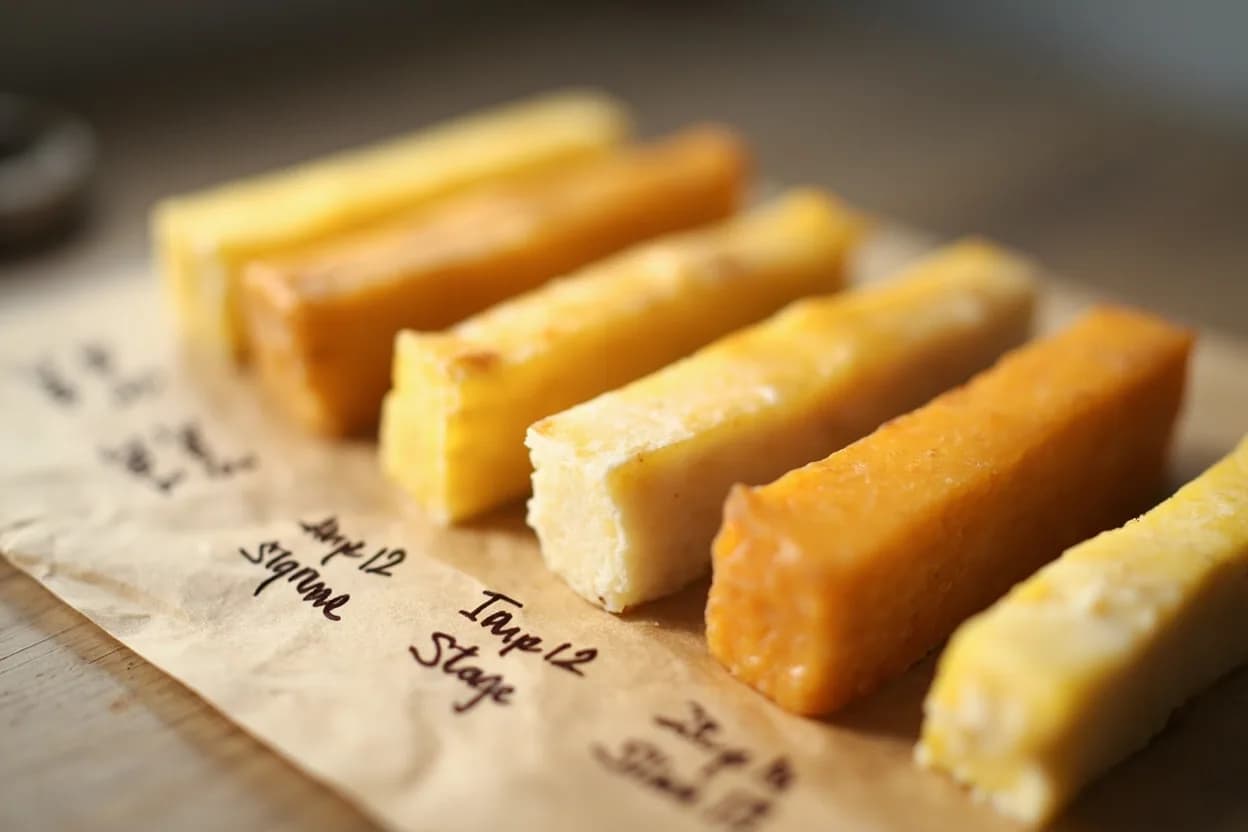
In photos


What happens
Mesophilic LAB convert lactose to lactic acid, dropping pH from ~6.7 at inoculation to 5.0–5.3 in fresh cheeses or driving further to 4.6 in cheddar over days. This acidification expels whey from the curd, determines the final moisture content and texture, and creates the pH environment in which rennet continues working during pressing. Proteolytic enzymes from the starter bacteria cleave caseins into peptides and free amino acids — the biochemical foundation of aged cheese flavor. Lipolytic side activity releases short-chain fatty acids that contribute buttery and pungent notes. At temperatures above 38–40°C, mesophilic organisms die rapidly; this is why curd cooking above 38°C (as in Parmigiano or Emmental) eliminates them entirely and requires thermophilic cultures instead.
What to look for
- During initial ripening at 28–30°C, milk thickens subtly and a clean lactic aroma develops over 30–60 minutes
- During ambient aging at 20–25°C, brie and camembert surfaces show Penicillium camemberti white bloom appearing within 5–10 days
- Cheddar in bandage at cave temperature (12–15°C, below this range) acidifies slowly over weeks; accelerated at 20°C
- pH meter shows progressive drop from 6.7 toward 5.2–5.0 over 12–24 hours in fresh soft cheeses at ambient temperature
How to check
- For ambient-temperature cheeses (brie, camembert): use a room or cave thermometer to confirm aging environment sits at 10–14°C for most of aging, with the 20–25°C range applying only to the initial 24-hour acidification phase
- For cultured buttermilk or crème fraîche: incubate at 20–22°C (room temperature) and check after 12–16 hours for clean sour aroma and thickened texture
- Monitor pH with a calibrated meter during the ripening stage — mesophilic cultures should drop pH by 0.1–0.3 units per hour at 28–30°C
- For cheddar: pH 5.2–5.4 at pressing is the target, achievable at 28–32°C with standard mesophilic cultures over 90–120 minutes of ripening
Food safety
The science behind it
The hotter 40–45°C range for mozzarella and hard Italian cheeses using different bacterial species
The 30–35°C initial inoculation window that applies to both mesophilic and thermophilic cultures
- Affinage (Cheese Aging)
Mesophilic bacteria continue working at 10–14°C cave temperatures during long aging, but more slowly
- Penicillium camemberti
The secondary white-rind mold in brie/camembert that requires mesophilic pre-acidification to establish itself
- Cheddar Cheddaring Process
The stacking and turning of curd blocks at 32–35°C that continues mesophilic acidification to the target pH before milling
Appears in
References
- 1.Mastering Artisan Cheesemaking — Gianaclis Caldwell (Chelsea Green, 2012)
- 2.The Farmstead Creamery Advisor — Gianaclis Caldwell (Chelsea Green, 2010)
- 3.Cheese and Fermented Milk Foods — Frank V. Kosikowski, Vikram V. Mistry (F.V. Kosikowski LLC, 1997)
- 4.Microbiology of Cheese — R.K. Robinson, ed. (Elsevier Applied Science, 1995)
Confidence: high
Notes
Mesophilic vs. thermophilic: the dividing line in cheese styles
The choice between mesophilic and thermophilic cultures is not merely technical — it defines entire cheese families. Mesophilic cheeses tend to be cooked below 40°C, have higher moisture, and age more slowly with complex buttery, grassy, and tangy flavor profiles. Thermophilic cheeses are cooked hotter, have lower moisture, and develop sharper, nuttier, or more crystalline characters. Many cheeses (Raclette, Fontina, some Swiss styles) use blended cultures, benefiting from both metabolic pathways.
Room-temperature ferments at home
Home cheesemakers and fermenters can use stable room temperature (20–22°C in a temperate climate) for crème fraîche, cultured butter, fromage blanc, and many soft fresh cheeses without specialized equipment. The longer acidification time at this temperature (12–24 hours versus 1–2 hours at 30°C) is compensated by the convenience of truly unattended fermentation. Fluctuations of a few degrees at these lower temperatures have less dramatic consequences than they would at thermophilic culture temperatures.