Pork Doneness
Pork Char Siu Internal Temperature & Caramelization
Also: char siu doneness, Chinese BBQ pork temperature, 叉烧温度, honey roast pork glaze stage
Char siu is done at 71–77°C (160–170°F) internal, but the defining moment is when its honey-soy-hoisin glaze caramelizes to a lacquered, slightly charred finish under high heat.
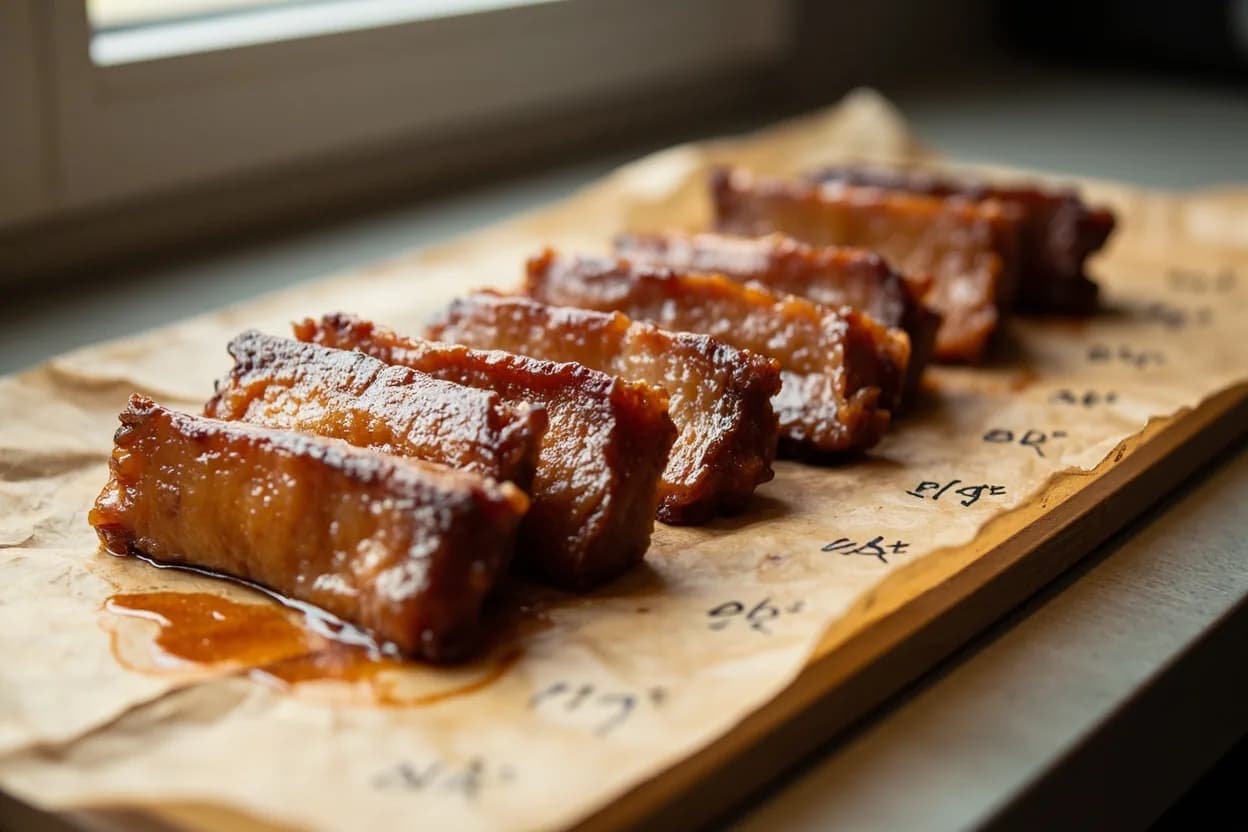
Char siu (叉烧, Cantonese: 'fork-roasted') is a Cantonese BBQ technique applied most often to pork shoulder, neck, or loin strips marinated in a complex sweet-savory glaze (hoisin, honey, soy sauce, Shaoxing wine, five-spice, red fermented tofu for color). The meat's internal doneness target — 71–77°C (160–170°F) — ensures it is fully cooked and retains moisture, but the defining quality of char siu is the lacquer: the glaze must caramelize to a glossy, slightly sticky, deeply colored surface at the oven-facing exterior. This surface caramelization (and in authentic preparations, a small degree of charring at the edges — 'char' literally names this quality) requires a brief blast of high heat, 220–230°C (425–445°F), usually in the final 5–8 minutes of roasting with repeated basting.
In photos

What happens
At 71–77°C internal, the pork proteins are fully denatured, the meat has firmed slightly but retains moisture (especially in the marbled neck/shoulder cuts traditionally used), and the marinade that penetrated the muscle fibers during the overnight soak has diffused inward. At the surface, the honey and sugar components of the glaze (sucrose, fructose from honey) begin caramelizing above 160°C — degrading into hundreds of flavor compounds including diacetyl (buttery), furanones (caramel-sweet), and aldehydes (nutty). The proteins in hoisin and soy sauce simultaneously undergo Maillard reactions with reducing sugars, producing deep mahogany pigments and umami-amplifying compounds. The red color of authentic char siu comes from red fermented tofu (南乳, nánrǔ) or red yeast rice, not from natural meat color — this pigment intensifies and crisps during the final high-heat phase.
What to look for
- The glaze surface is uniformly lacquered — glossy when wet from basting, matte-shiny when set, with slight tackiness when touched
- Edges and raised surfaces show light charring (dark brown to black tips) — the hallmark 'char' the name references
- The meat surface has contracted slightly from the marinade's salt, pulling the strips into a slight curve
- Color is deep mahogany-red, not pink (raw) or brown-gray (overcooked); red-tinted glaze from fermented tofu remains vivid
- Basting liquid applied to the hot surface sizzles, bubbles, and sets within 30–60 seconds at correct temperature
How to check
- Probe the thickest strip at its center with an instant-read thermometer — target 71–77°C (160–170°F); do not probe through the glaze surface as glaze reads higher
- Visual check: the glaze should be set and tacky, not liquid-wet or raw-looking
- Slice test: cut the thickest strip transversely — interior should show uniform light pink to pale beige with no raw red center; juices run clear
- Touch test: the strips should feel firm but yielding, like a firm handshake, not rubbery or soft and squishy
- Final baste and blast: at 71°C internal, switch oven to maximum heat (220–230°C) or broil; baste twice at 2-minute intervals and watch for the glaze to set and edge-char to develop
Food safety
Carryover & resting
Char siu strips are thin (3–5 cm thick), so carryover is modest: 3–5°F after resting 5 minutes. Pull at 68–71°C (155–160°F) if using a high-heat final blast, which will push internal temp to 71–75°C by the time the glaze sets. Rest on a rack — not a flat surface — so the glaze does not pool and stick.
The science behind it
Drives the deep color and umami notes in the hoisin and soy components of the glaze
- Sugar caramelization
Honey and sucrose in the glaze caramelize above 160°C, producing the characteristic lacquered finish
- Red fermented tofu (南乳)
The traditional colorant in authentic char siu glaze; provides earthy umami as well as the red hue
- Overnight marination
Osmotic diffusion of the sweet-salty marinade into muscle fibers drives the distinctive flavor penetration
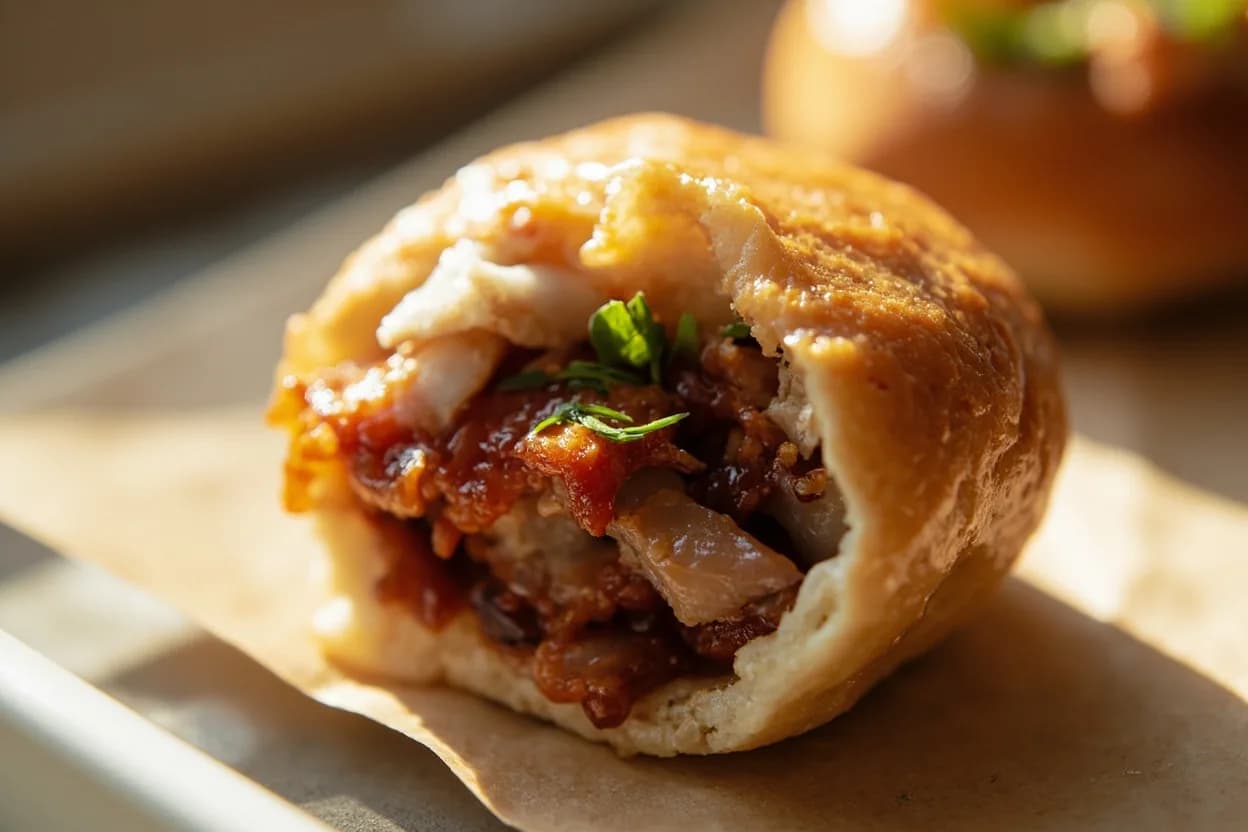
The iconic steamed or baked bun filled with diced char siu — requires the pork to be fully cooked and glazed first
Appears in
References
- 1.The Woks of Life: Recipes to Know and Love from a Chinese American Family — Leung Family (Clarkson Potter, 2022)
- 2.Complete Chinese Cookbook — Ken Hom (BBC Books, 2011)
- 3.On Food and Cooking: The Science and Lore of the Kitchen — Harold McGee (Scribner, 2004)
Confidence: high
Notes
Cut selection and the moisture equation
Traditional Cantonese char siu uses pork neck (梅頭, méitóu) or shoulder butt for their intramuscular fat, which keeps the meat moist at 71–77°C. Restaurant versions often use loin for a leaner, more uniform appearance, but loin is less forgiving — it dries out quickly above 74°C and cannot carry the same high-heat glaze cycle. Home cooks should favor pork neck or shoulder strips 3–4 cm thick for best results.
The basting cycle is non-negotiable
Commercial char siu ovens rotate the meat over live charcoal while continuously basting every few minutes, building up 8–12 layers of glaze. Home oven versions should baste at least 3–4 times during the final high-heat phase. Each layer dries and sets before the next is applied, building depth of color and the characteristic 'lacquer' texture. A single basting coat cannot replicate this layering.