Pork Doneness
Pork Ribs: Probe-Tender & Bend Test
Also: ribs done temp, pork ribs 203°F, bend test ribs, toothpick test ribs, bone pull-back ribs
Pork ribs are done when a probe slides in with zero resistance (195–203°F / 90–95°C) and the rack bends sharply downward when lifted from the center — internal temperature is secondary to texture here.
Pork ribs — spare ribs, baby back ribs, and St. Louis-cut ribs — are collagen-rich rib sections that require extended low-and-slow cooking to convert tough collagen into gelatin. Unlike whole-muscle pork that is technically safe at 63°C (145°F), ribs are unpleasant to eat at that temperature: the meat is safe but rubbery, the connective tissue has not yet melted, and the bones do not release cleanly. True rib doneness is a texture event occurring between 90–95°C (195–203°F) when collagen fully converts to gelatin, fat renders through the meat, and the flesh contracts away from the bone ends. The probe-tender test and the bend test are the two reliable indicators; bone pull-back is a supporting visual cue, not a primary check.
In photos

What happens
Between 70–90°C, collagen in the intercostal muscle and silverskin begins hydrolyzing into gelatin at an accelerating rate. This conversion is time-dependent as well as temperature-dependent — ribs cooked at 107°C (225°F) for 5–6 hours allow adequate time for collagen conversion; ribs cooked at 135°C (275°F) for 3–4 hours achieve similar results with a drier, firmer bark. At 90–95°C, the gelatin has fully solubilized and redistributed through the meat, creating the characteristic glossy, pull-apart texture. Intramuscular fat has rendered and basted the fibers from within. The muscle fibers themselves have contracted and pulled back from the exposed bone ends — the source of the 'bone pull-back' cue. Overcooking beyond 95°C rapidly desiccates the meat as gelatin and fat continue to render out.
What to look for
- Probe (thermometer spike, cake tester, or bamboo skewer) slides through the meat between two bones with zero resistance — 'like warm butter'
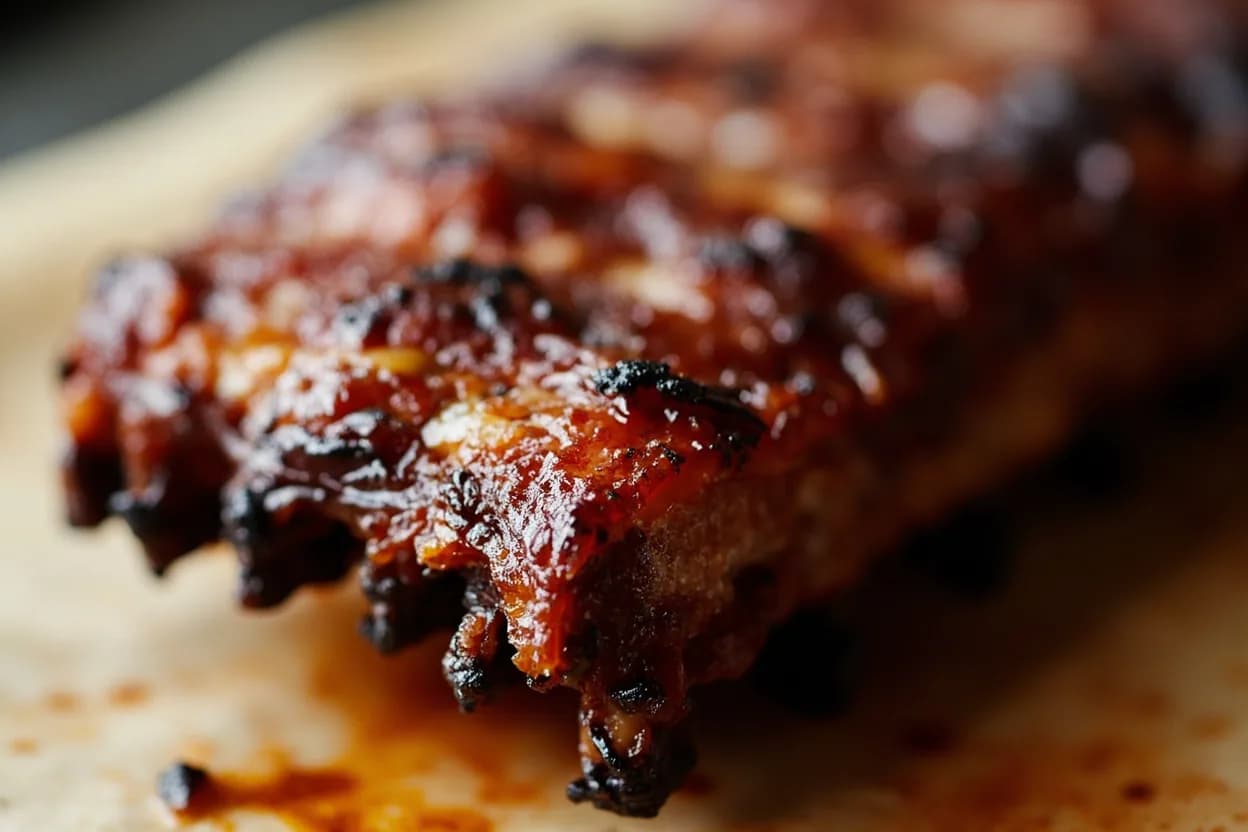
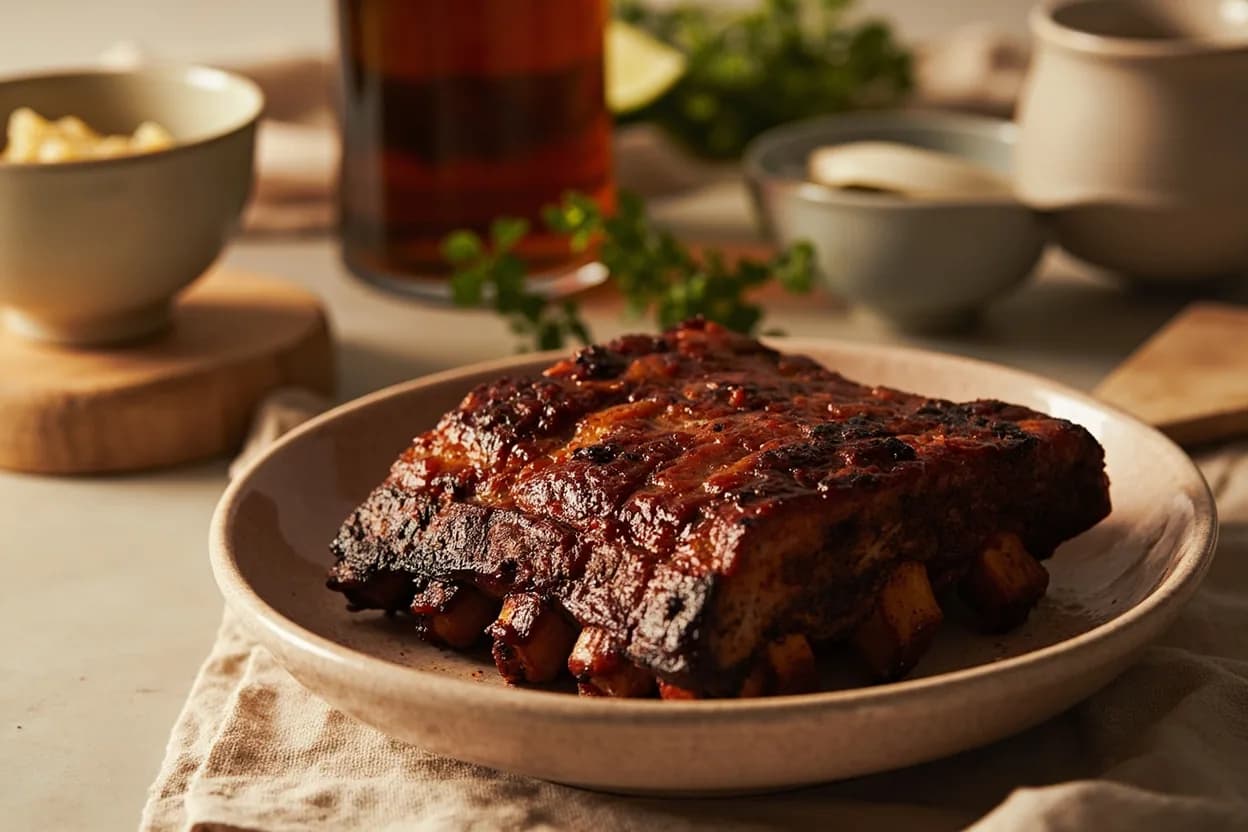
- Rack bends sharply (45–90 degrees) when lifted from one end with tongs, and the surface shows hairline cracks in the bark
- Bone ends protrude 6–12mm from the meat — the 'pull-back' indicator (note: some pitmasters over-rely on this; it can appear before the meat is probe-tender on thick spare ribs)
- Bark is set, deep mahogany to black-red, and does not smear when touched
- Meat jiggles with a slight wobble when the rack is shaken — similar to set gelatin
How to check
- Probe test (primary): press a thermometer spike, metal skewer, or bamboo toothpick between two adjacent ribs into the thickest portion of the loin meat; it should insert and withdraw with no resistance — if you feel any drag or the meat 'grabs' the probe, cook longer
- Bend test (primary): pick up the rack from one end with tongs and observe — ribs ready to pull will sag downward 45–90 degrees; a rack that holds mostly flat is underdone
- Temperature check (supporting): probe the thickest section of meat (not touching bone) with an instant-read thermometer; target 90–95°C (195–203°F); use this to confirm when the above tactile tests are passed
- Bone pull-back (supporting visual only): look for 6mm or more of bone exposed at the thin ends of the rack; this is a necessary but not sufficient indicator — always confirm with probe test
Food safety
Carryover & resting
Ribs carry over 2–4°C after removal from the smoker. If probing at 93°C (200°F), the rack will finish at approximately 95–97°C during the standard 15-minute rest. Rest loosely tented in foil (or unwrapped for crisp bark) on a cutting board for at least 10–15 minutes before slicing to allow gelatin to re-set and juices to redistribute.
The science behind it
- Collagen to Gelatin Conversion
The fundamental transformation that makes ribs tender; requires sustained heat (above 70°C) over time
- Stall (Evaporative Plateau)
Ribs typically pass through a temperature stall at 65–72°C where evaporative cooling halts temperature rise for 1–3 hours on a smoker
Wrapping ribs in foil (butcher paper for brisket) to push through the stall and accelerate collagen conversion
- Bark Formation
The mahogany crust formed by Maillard reaction + pellicle + smoke particulates; sets in the 70–85°C range during the extended cook
Appears in
References
- 1.Meathead: The Science of Great Barbecue and Grilling — Meathead Goldwyn
- 2.Franklin Barbecue: A Meat-Smoking Manifesto — Aaron Franklin & Jordan Mackay
- 3.On Food and Cooking — Harold McGee
- 4.USDA FSIS Safe Minimum Internal Temperature Chart
Confidence: high
Notes
Bone pull-back: the most over-cited indicator
Competition and backyard pitmasters commonly cite 'bone pull-back of ¼ inch' as the primary doneness indicator. In reality, pull-back is caused by muscle contraction beginning around 60°C and can appear on spare ribs that are not yet probe-tender. On baby back ribs, which are leaner, pull-back may barely occur at all even when the meat is perfectly done. The probe test and bend test are far more reliable — use pull-back only to trigger attention, then confirm with the probe.
3-2-1 method and probe-tender relationship
The popular 3-2-1 method (3 hours smoke unwrapped, 2 hours wrapped in foil with liquid, 1 hour unwrapped to set bark) is a timed framework, not a doneness protocol. Ribs may emerge from the 2-hour wrapped phase probe-tender; they may need the full 6 hours plus. Always verify with the probe and bend tests regardless of elapsed cook time — variables like meat thickness, smoker temperature drift, and starting temperature affect timing significantly.