Pork Doneness
Pork Shoulder: Pulled Pork Shred-Ready Temperature
Also: pulled pork temperature, pork butt done temp, shredding temperature, Boston butt pull temp
Pork shoulder is shred-ready between 195–205°F (90–96°C), when collagen has fully liquefied and the meat pulls apart effortlessly.
Pulled pork is achieved not at a safe-minimum temperature but at a much higher internal threshold where prolonged heat converts the dense collagen in the shoulder's connective tissue — particularly type I and type III collagen — into gelatin. Below 195°F (90°C) the muscle fibers are cooked through but the connective web remains intact, making the meat chewy and resistant to shredding. At 195–205°F (90–96°C), held over time, collagen yields completely, fat pockets render into the meat, and the entire mass relaxes into tender, moist strands that separate with minimal mechanical force.
In photos
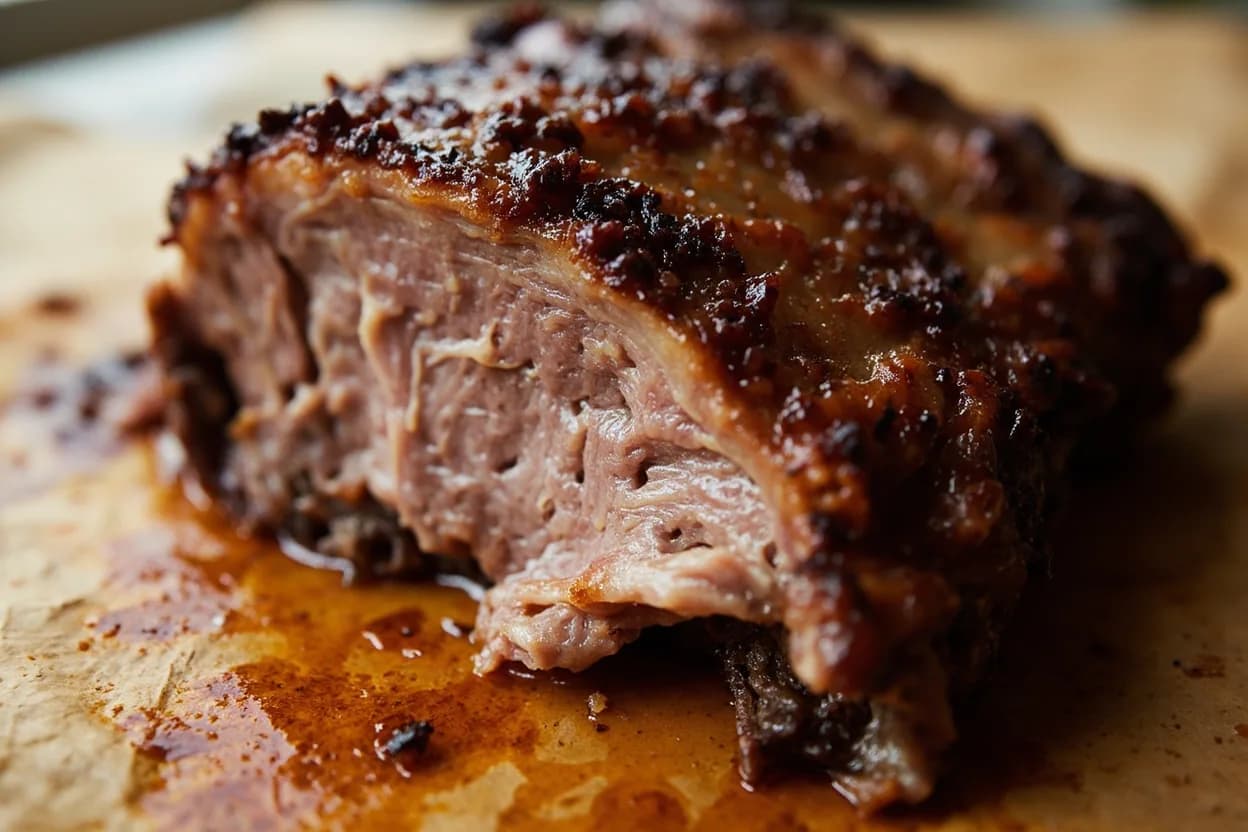
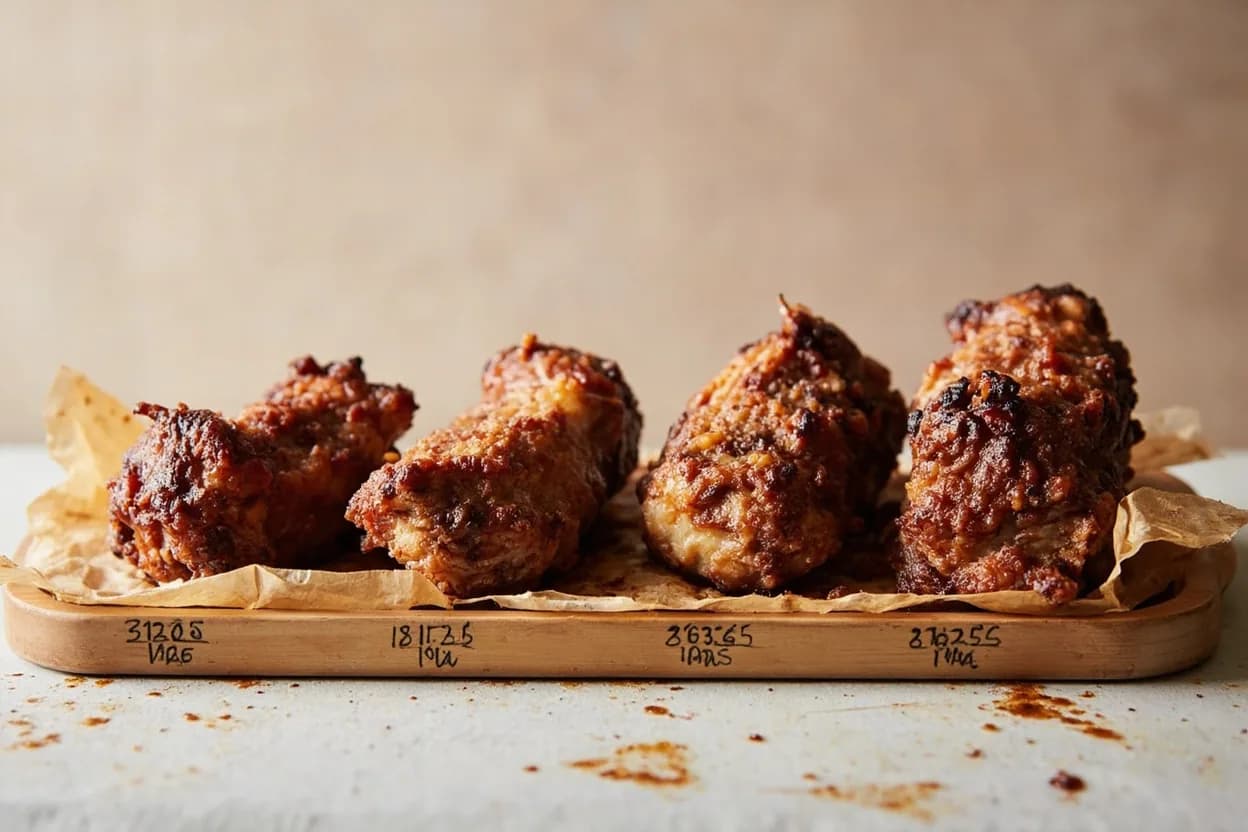
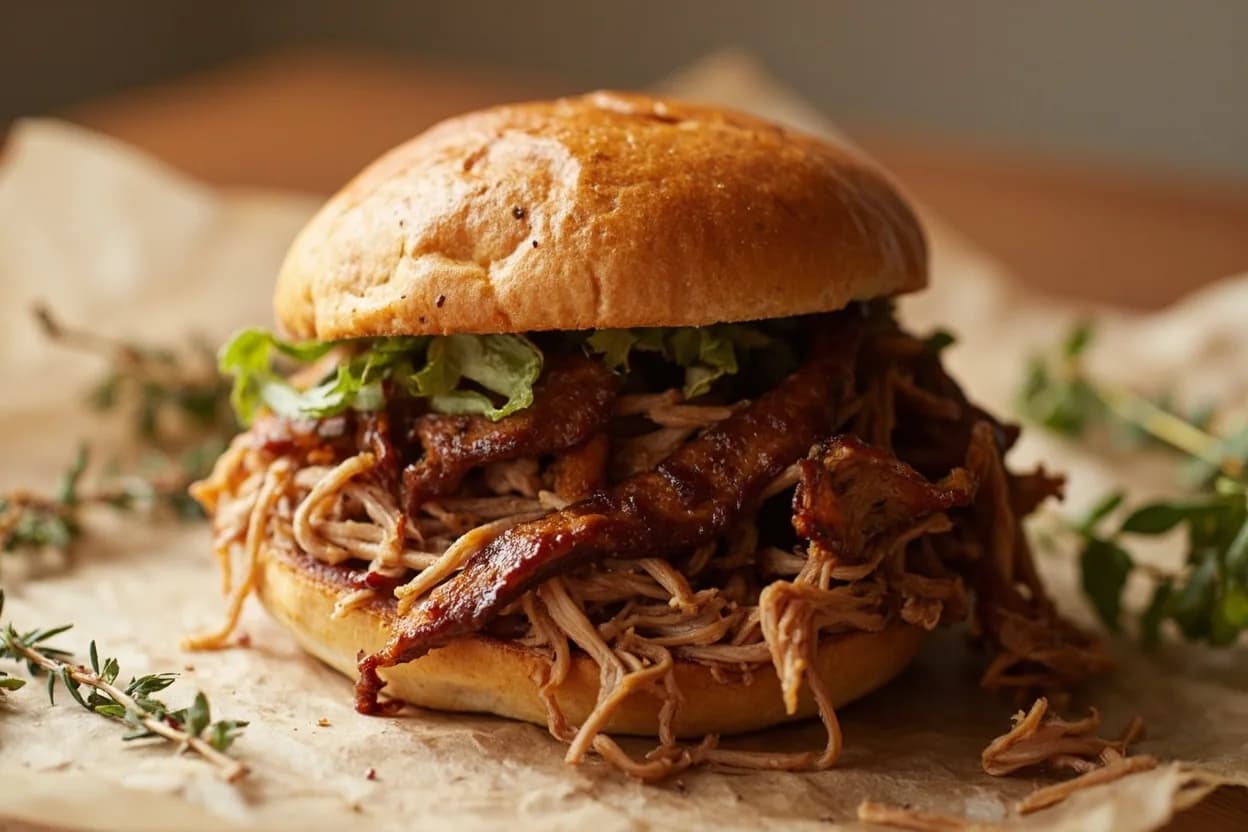
What happens
Above 160°F (71°C) collagen begins hydrolyzing into gelatin, but the reaction is time-dependent. At 195–205°F the rate accelerates dramatically: triple-helix collagen structures denature into random coils, then absorb water and swell into gelatin. Intramuscular fat (the copious marbling of the picnic and Boston butt cuts) melts into surrounding muscle fibers, lubricating them and carrying fat-soluble flavor compounds. Muscle proteins, which contracted tightly during the 140–160°F stage, begin to relax as the actin-myosin matrix softens further. The result is a meat structure that is simultaneously moist (gelatin holds moisture) and structurally loose enough to pull into long fibers with two forks.
What to look for
- A probe or skewer slides into the thickest part of the shoulder with zero resistance — sometimes called the 'butter test'
- The blade bone (scapula) wiggles freely and can be pulled out cleanly with a gentle tug
- The outer bark (crust) is firm, mahogany-dark, and does not weep liquid when pressed
- When lifted with tongs, the shoulder begins to sag and split under its own weight
- The stall — the plateau around 150–165°F where evaporative cooling slows the cook — has long since passed
How to check
- Insert an instant-read thermometer into the thickest part of the shoulder, avoiding the bone; target 195–205°F
- Probe multiple spots — the deepest muscle (money muscle) and the thicker butt section may read differently
- Perform the probe-drag test: slowly pull the thermometer probe back through the meat; no resistance confirms full collagen conversion
- Grip the blade bone and wiggle — it should twist and lift free
- Allow resting before shredding and re-probe after rest; carryover can push temp another 2–5°F
Food safety
Carryover & resting
Pork shoulder carries over 5–10°F after removal from heat due to its large thermal mass. Pull it from the smoker or oven at 195–200°F if targeting 200–205°F finish. Rest wrapped in butcher paper or foil in a cooler for 30–60 minutes; this also allows gelatin to re-set slightly, making the meat cohesive rather than mushy when shredded.
The science behind it
The chemical transformation driving the entire pulled pork process
- The stall (evaporative plateau)
The 150–165°F plateau caused by evaporative cooling that precedes shred-ready doneness in smoked meats
Fat pockets in the Boston butt liquefy and baste the meat from within at these temperatures
Wrapping in foil or butcher paper to accelerate through the stall and reach shred-ready temp faster
- Bark formation
The Maillard-driven crust on the exterior that forms during the low-temperature smoking phase
Appears in
References
- 1.Meathead: The Science of Great Barbecue and Grilling — Blonder & Goldman
- 2.The Food Lab — J. Kenji López-Alt (W. W. Norton, 2015)
- 3.USDA FSIS Pork from Farm to Table — USDA Food Safety and Inspection Service
Confidence: high
Notes
The 200°F sweet spot
Many pitmasters settle on 203°F as the ideal pull temperature — borrowed from brisket protocol. At exactly 203°F (95°C) the collagen conversion is complete, the fat is fully rendered, and the meat has not yet begun to dry out from prolonged heat. The 10-degree window (195–205°F) gives flexibility: leaner shoulders benefit from stopping at 195°F while heavily marbled butts can push to 205°F without drying.
Cut matters
Boston butt (upper shoulder, more marbled) typically shreds more easily and is more forgiving of temperature variance. Picnic shoulder (lower, with skin) can require slightly higher temps to fully render the skin and subcutaneous fat layer. If cooking the whole shoulder (butt + picnic together), target the deepest part and expect the picnic section to lag slightly.