Fish & Seafood Doneness
Sashimi-Grade Fish: Raw Safety Standards
Also: sushi-grade fish, sashimi-grade, parasite-free fish, flash-frozen fish standards, FDA freezing protocol for raw fish
Fish intended for raw consumption must be frozen to destroy parasites: −20°C (−4°F) for 7 days or −35°C (−31°F) for 15 hours, with specific species exclusions and no equivalent bacterial guarantee.
Sashimi-grade (or sushi-grade) is an informal industry term indicating fish has undergone a validated freezing protocol sufficient to destroy parasites — primarily nematodes (Anisakis), tapeworm larvae (Diphyllobothrium), and roundworms — before raw service. There is no legal or USDA-certified 'sashimi-grade' label in the United States; the term describes compliance with the FDA Food Code parasite destruction requirements. The two accepted protocols are: (1) −20°C (−4°F) or below for a minimum of 7 days; or (2) −35°C (−31°F) or below until solid, then held at −35°C for 15 hours. Some commercial operations use blast freezers that achieve −35°C in minutes. Freezing does not address bacterial contamination — it only destroys parasites.
In photos
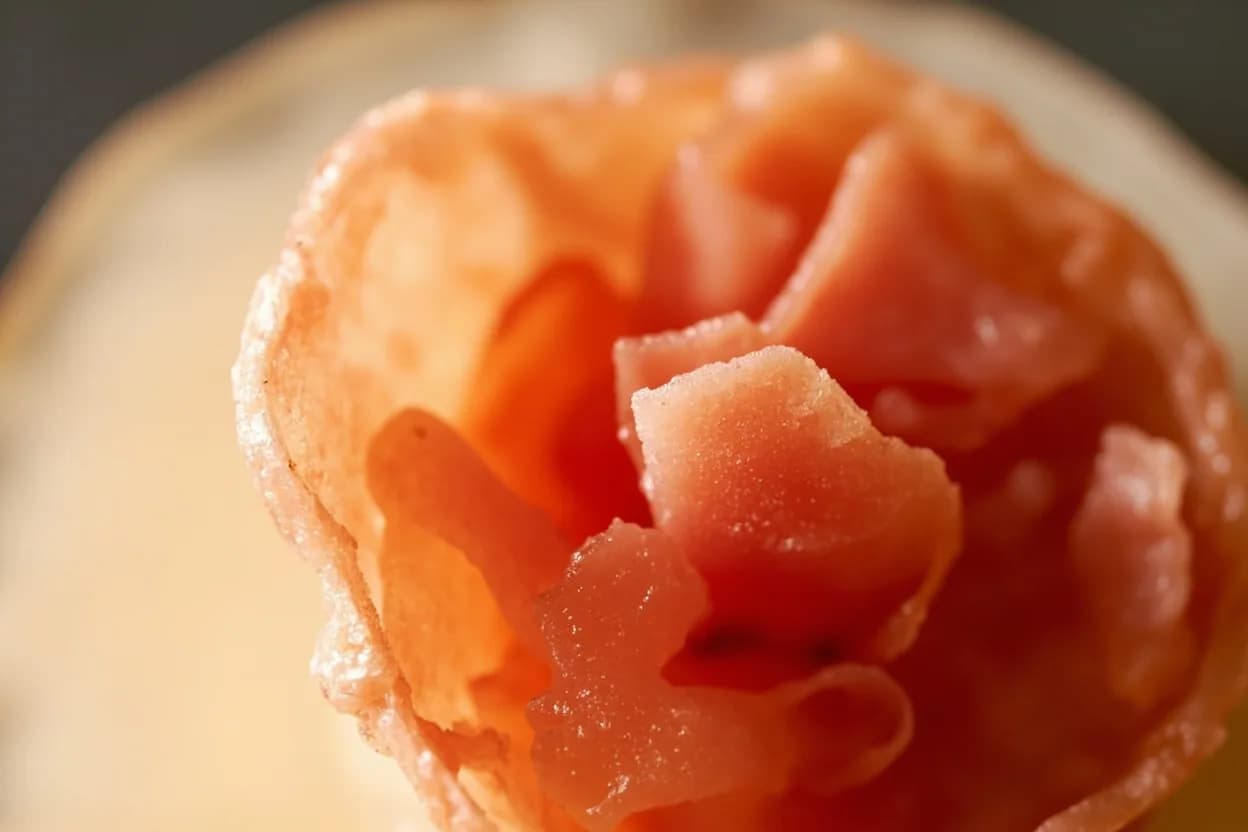
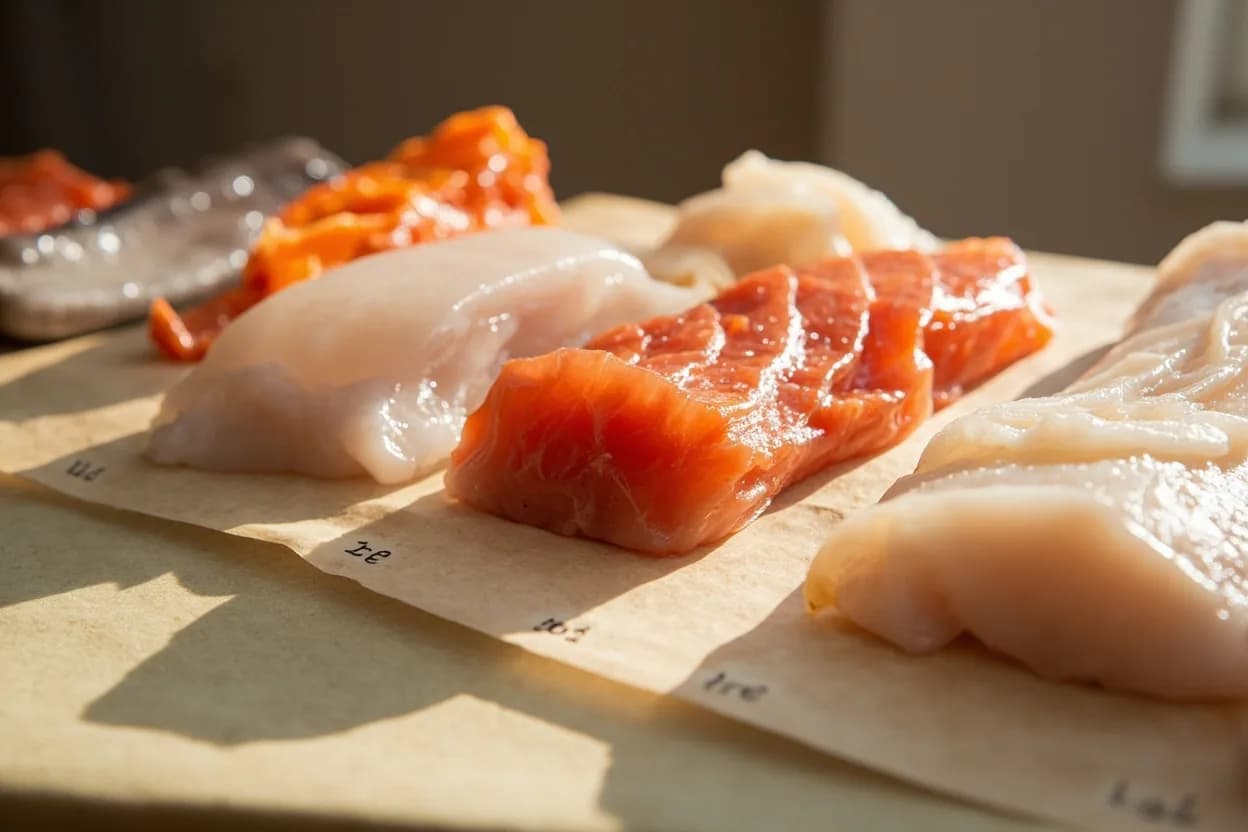

What happens
Parasitic organisms in fish muscle are killed by sustained deep freezing: ice crystal formation ruptures cell membranes in parasite tissue, and extended exposure at ultra-low temperatures ensures lethal exposure even in the thickest portions of a loin. −20°C for 7 days is effective for most parasites; the shorter −35°C protocol relies on faster and deeper penetration to achieve equivalent kill. Neither protocol eliminates bacteria such as Salmonella, Listeria, or Vibrio — bacterial risk in raw fish is controlled through refrigeration, rapid handling, and freshness, not freezing.
What to look for
- No reliable visual or sensory cue can confirm freezing protocol compliance — documentation from the supplier is the only verification
- High-quality sashimi-grade fish should smell clean and oceanic, not fishy or ammoniated
- Flesh should be firm, bright, and translucent with vivid species-typical color — not dull, brown-edged, or soft
- Tuna should be ruby to deep red with no browning; salmon should be vivid orange-pink; white fish should be glistening white or pearlescent
How to check
- Request and review supplier documentation confirming the fish was frozen to FDA parasite destruction standards
- For professional kitchens, maintain a documented cold-chain log from supplier to service
- Ask the fishmonger explicitly if the fish has been frozen to sashimi-grade standards — reputable suppliers can confirm
- Inspect freshness cues: clear eyes (on whole fish), tight scales, vivid color, and a clean sea smell
Food safety
The science behind it
- Anisakis (herring worm)
The most common parasite risk in saltwater fish; destroyed by FDA-validated freezing protocols
- Diphyllobothrium (fish tapeworm)
Primarily a risk in freshwater and anadromous species; also destroyed by validated freezing
- Cold-chain integrity
Maintaining continuous low-temperature handling from catch to service is prerequisite to raw safety
A preparation that requires sashimi-grade fish because only the exterior surface is cooked to lethal temperature
- Vibrio parahaemolyticus
A bacterial pathogen associated with raw shellfish and fish; not killed by freezing — controlled by chilling and freshness
Appears in
References
- 1.FDA Food Code 2022, Section 3-402 — Parasite Destruction
- 2.FDA Fish and Fishery Products Hazards and Controls Guidance, 4th Edition
- 3.On Food and Cooking — Harold McGee
- 4.The Sushi Economy — Sasha Issenberg
- 5.Modernist Cuisine: The Art and Science of Cooking — Nathan Myhrvold et al.
Confidence: high
Notes
Ceviche does not kill parasites
A persistent myth holds that the acidity of lime or lemon juice in ceviche destroys parasites. It does not. Acid denatures proteins (changing the texture and color of fish to appear 'cooked') but does not achieve the cell-level destruction of freezing or heat. Fish used in ceviche must be frozen to sashimi-grade standards if it is to be considered safe from parasites.
Home freezer limitations
Most home refrigerator-freezers hold between −15°C and −18°C (0–5°F), which does not reliably achieve −20°C throughout the fish mass. The FDA recommends that home cooks purchasing fish to serve raw use commercially frozen product (blast-frozen at −35°C) rather than relying on home freezer protocols, which cannot be verified to reach the required temperatures uniformly.
'Sashimi-grade' is not a legal certification
In the United States (and most other countries), there is no government body that certifies fish as 'sashimi-grade.' The term is a vendor claim. Always ask suppliers about their specific freezing protocol and documentation rather than relying on the label alone.