Fish & Seafood Doneness
Tuna: Seared Rare Center
Also: tataki doneness, sushi-grade sear, rare tuna sear, tuna tataki, scarred tuna
Tuna seared rare has a mahogany crust just 2–4 mm deep while the center stays ruby-red and raw at 43°C (110°F) or below — a sashimi-quality interior with Maillard-developed exterior.
Seared rare tuna (sometimes called tataki-style) is cooked in a ripping-hot pan or on a screaming grill for 30–60 seconds per side, enough to develop a deeply colored Maillard crust on the outer few millimetres while the center remains functionally raw. The interior target is 43°C (110°F) or lower. At this temperature the myosin proteins have only begun to firm, the flesh is still ruby or deep pink, and the texture is sashimi-like: silky, dense, and yielding. This technique is standard in Japanese tataki preparations and contemporary Western fine-dining with high-quality tuna.
In photos
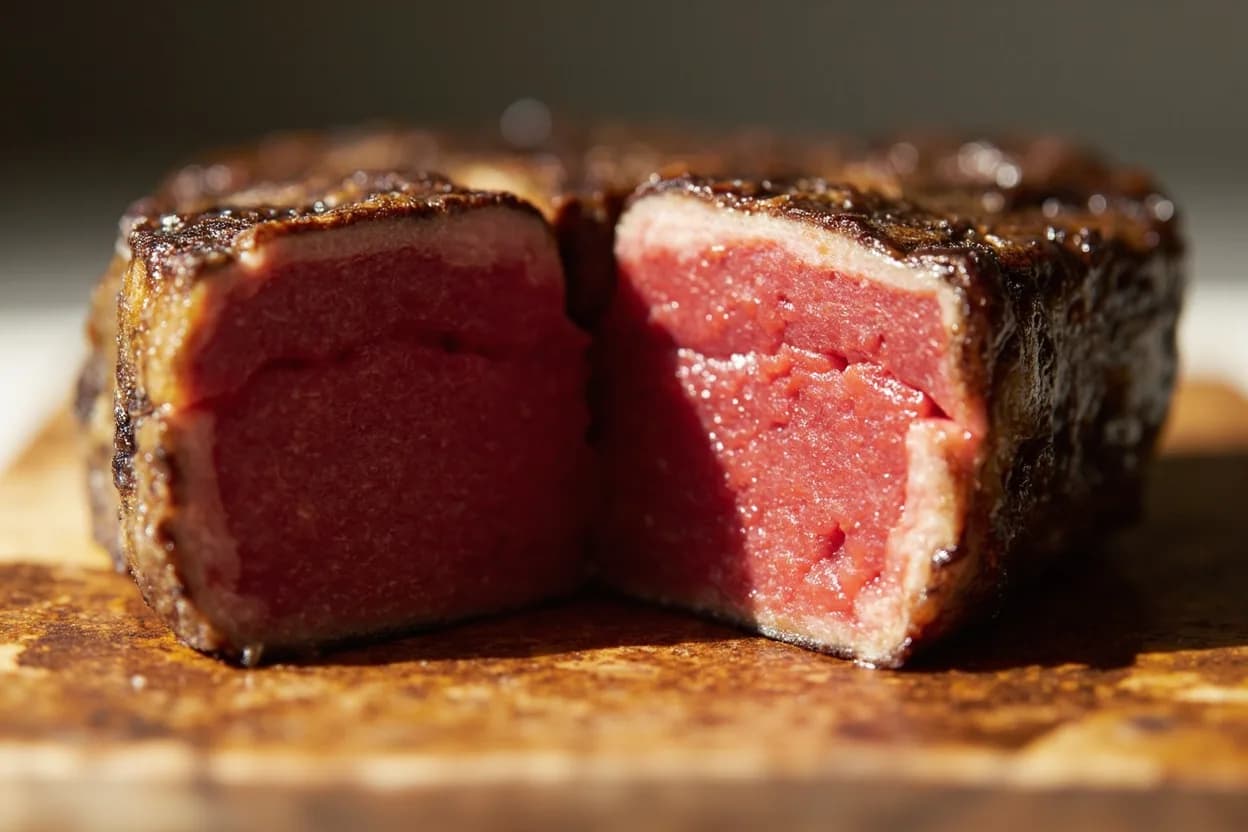
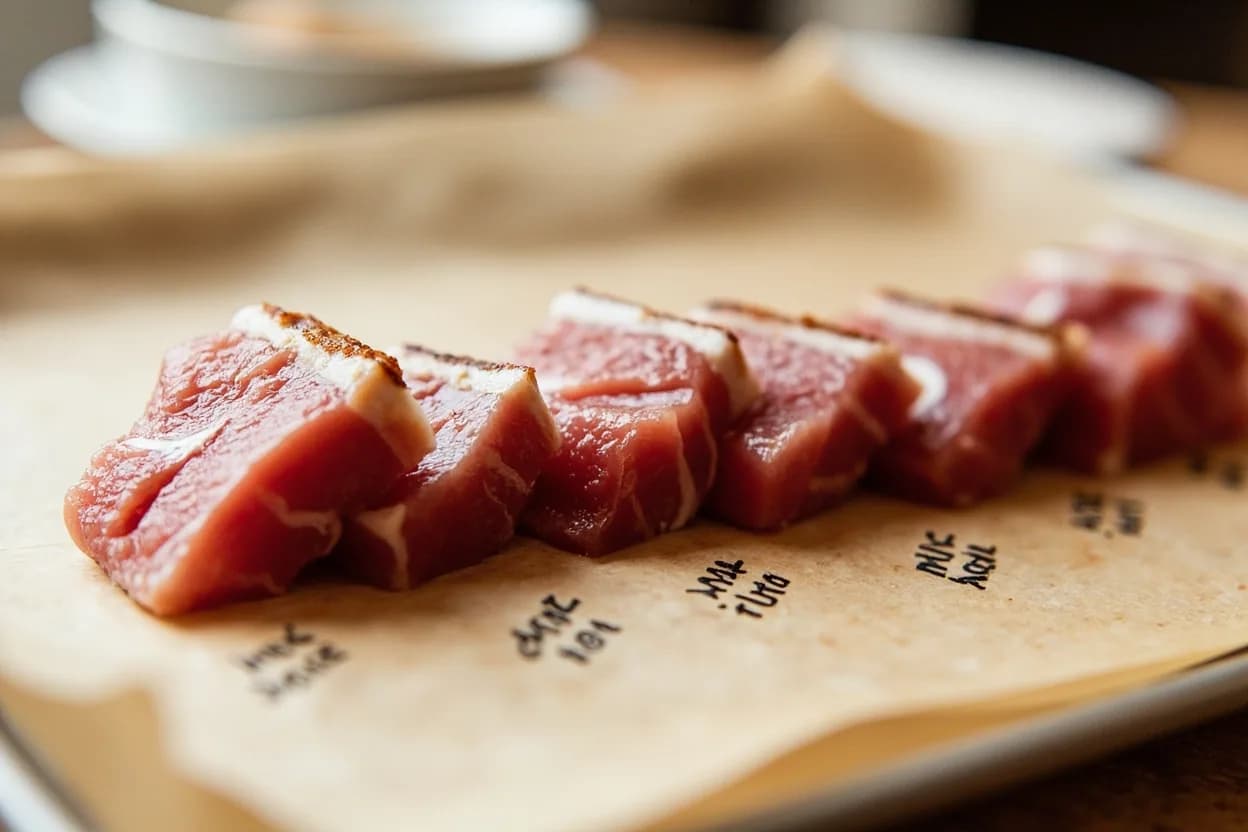
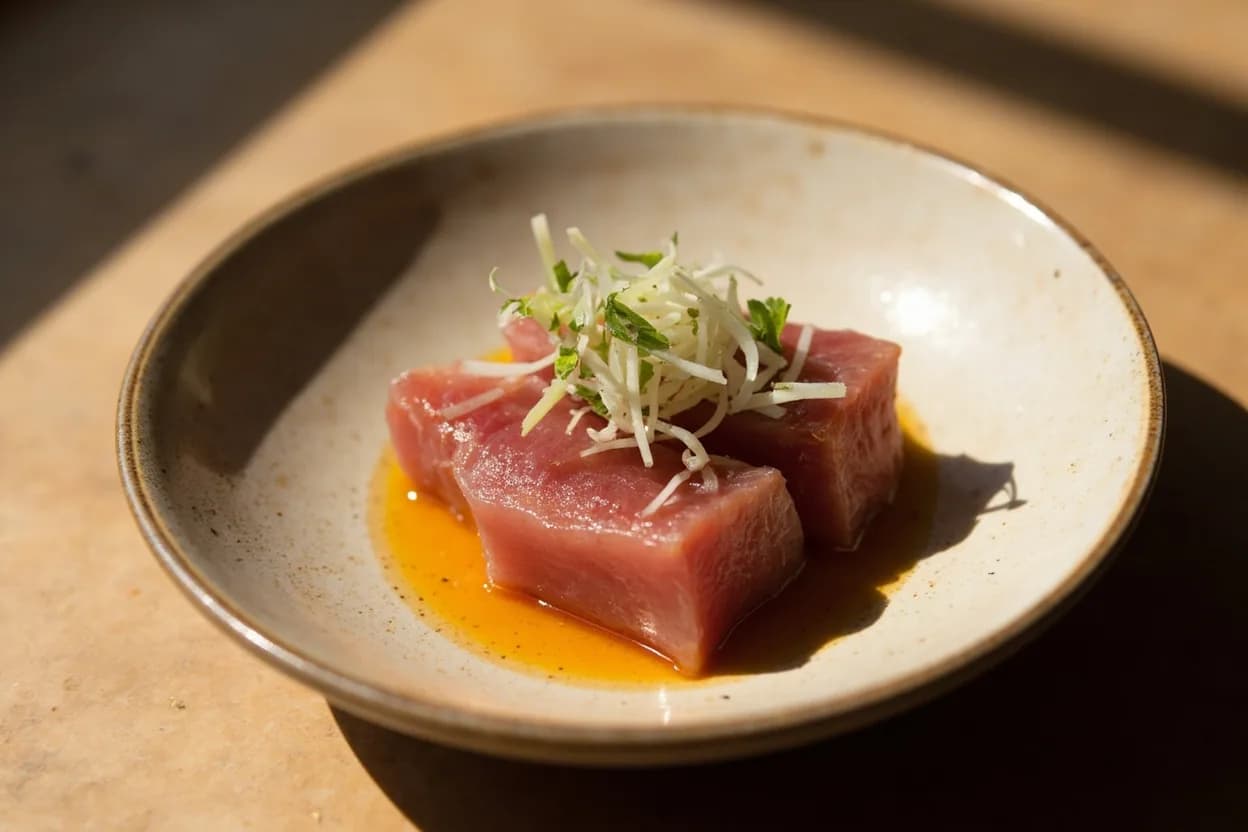
What happens
The exterior flash-sears above 150°C, triggering Maillard browning and producing complex flavor compounds including pyrazines and furans. Beneath the crust, within the 2–4 mm band, myosin begins denaturing (starting ~40°C), creating a slightly firmer, pinkish-grey transitional zone. The core never rises above 43°C, leaving myosin largely intact, flesh deep red, and texture raw. The contrast between caramelized exterior and cool, silky interior is the point of the preparation.
What to look for
- Exterior displays a deep mahogany or charred brown crust with visible grill marks or pan sear
- Sliced cross-section shows a thin grey-pink ring (3–5 mm) transitioning abruptly to ruby red at center
- Center is cool or barely warm to the touch when pressed
- Flesh yields under a knife without resistance — no bounce or rubbery texture
- Aroma is of seared, caramelized seafood on the exterior; briny and clean in the center
- Interior color holds deep red-ruby even when sliced, not washing to pale pink
How to check
- Press the center with your finger — it should feel soft and give fully, similar to the flesh between your thumb and index finger when the hand is relaxed
- Slice the loin on a bias and inspect the cross-section: the raw core should occupy at least 60–70% of the diameter
- Use an instant-read thermometer inserted horizontally into the center of the thickest section; target 38–43°C (100–110°F)
- Time-based: a 2.5 cm thick tuna steak in a 260°C+ pan needs approximately 45 seconds per side, no more
Food safety
The science behind it
- Sashimi-grade freezing protocol
The required parasite-destruction step before serving tuna raw or rare
The browning chemistry above ~140°C that creates the crust flavor contrast with the raw center
- Tataki
Japanese technique of briefly searing fish or meat over high heat and serving rare — the origin of this doneness standard
- Myosin denaturation
Begins at ~40°C; keeping the center below 43°C preserves the raw-sashimi texture
- Tuna: Well-Done (FDA standard)
The opposing doneness point at 63°C (145°F), required for safety in public food service in many jurisdictions
Appears in
References
- 1.The Food Lab — J. Kenji López-Alt
- 2.On Food and Cooking — Harold McGee
- 3.FDA Fish and Fishery Products Hazards and Controls Guidance, 4th Edition
- 4.Nobu: The Cookbook — Nobu Matsuhisa
- 5.Japanese Farm Food — Nancy Singleton Hachisu
Confidence: high
Notes
Pan temperature is everything
A ripping-hot cast iron or carbon steel pan (260°C / 500°F+) is essential. An inadequately heated pan steams the exterior rather than searing it, pushing heat deeper into the loin before a crust can form, turning the center grey-pink rather than ruby. Pat the tuna completely dry, press it hard to maximize contact, and use a high smoke-point oil (avocado, refined grape seed, or clarified butter).
Bigeye vs. Bluefin vs. Yellowfin
Bluefin (hon-maguro) and bigeye tuna have higher fat content, which makes the seared rare center especially luxurious — fat stays fluid and adds richness even at near-raw temperatures. Yellowfin (ahi) is leaner and still excellent seared rare but will dry out faster if even slightly overcooked. Skipjack (katsuo) is traditional for tataki in Japan and is served rare with garlic chips and ponzu.