Fermentation & Culturing Temperatures
Sourdough Starter Peak Activity Window
Also: starter at peak, levain peak, sourdough peak dome, starter ready to use
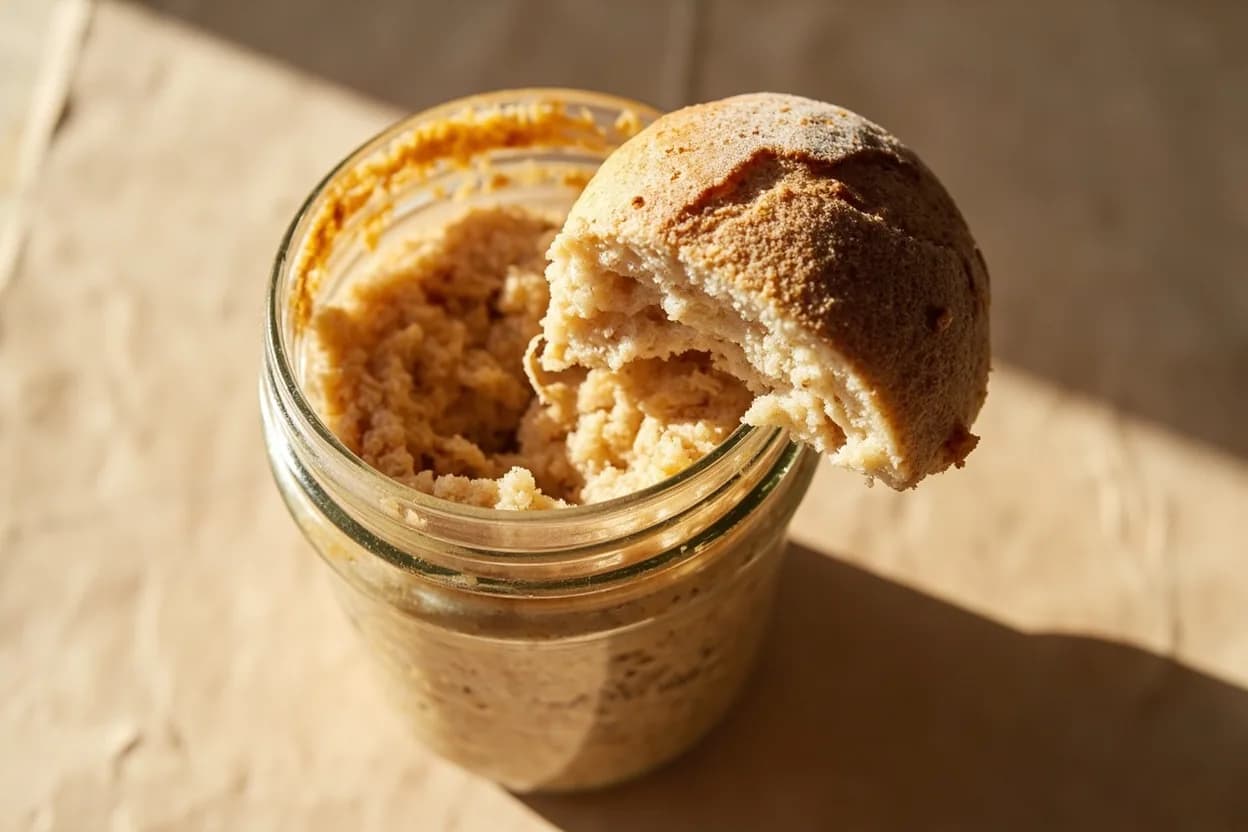
A sourdough starter is at peak — ready to leaven bread — when it has doubled in volume, domes at the top, and shows a web-like interior, typically 8–12 hours after feeding at 24°C.
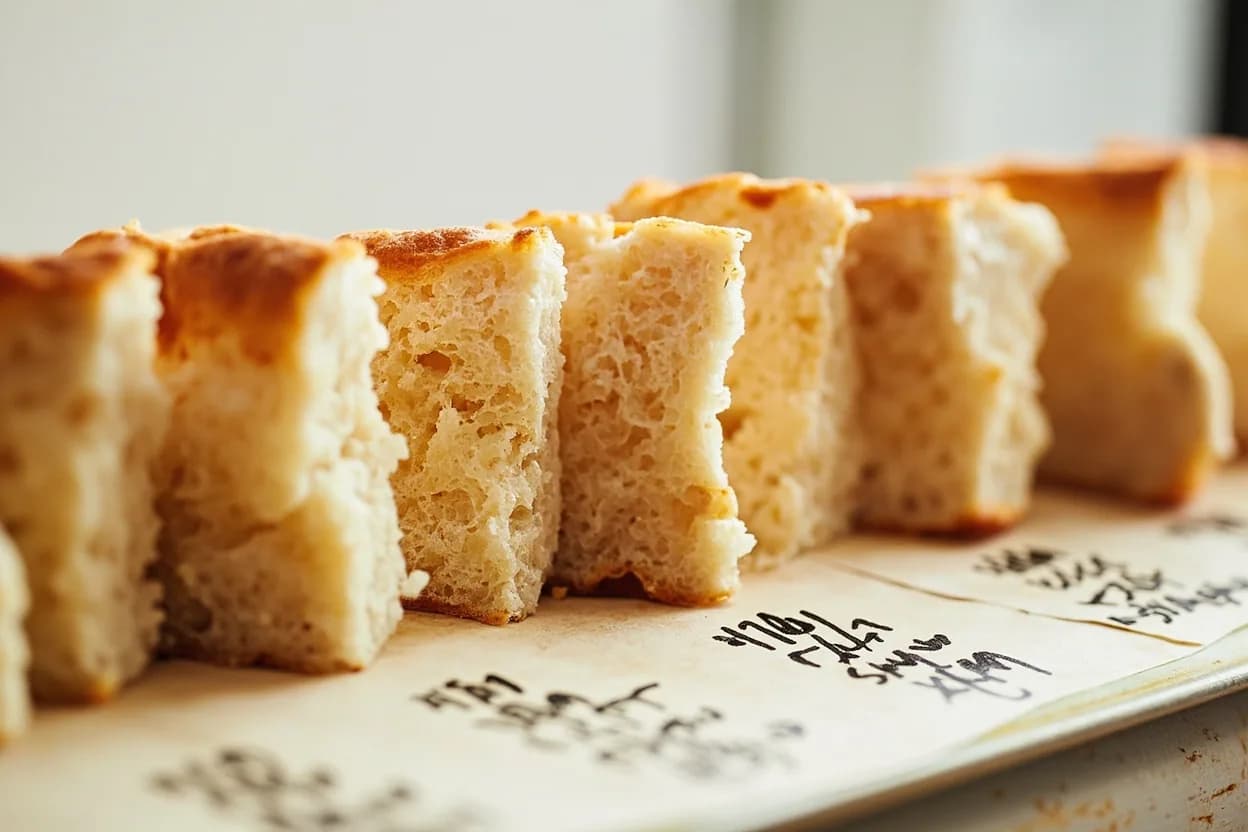
Peak activity is the optimal window during which a sourdough starter (a live culture of wild yeasts and lactic acid bacteria in flour and water) has maximum leavening power and flavor complexity. At peak, the culture has doubled or more in volume, the surface domes upward, and the interior, if disturbed, reveals a honeycomb of gas bubbles and gluten strands. This window lasts 1–3 hours before the culture begins to collapse as sugars deplete. Bakers match their dough mixing schedule to this window — adding starter at peak ensures strong fermentation, oven spring, and well-developed acidity. Temperature is the primary lever: at 24°C, peak typically arrives in 8–12 hours; at 18°C, 16–24 hours; at 28°C, 5–7 hours.
In photos
What happens
After feeding (adding fresh flour and water), wild yeasts (predominantly Kazachstania humilis, formerly Candida humilis) and heterofermentative LAB (primarily Lactobacillus sanfranciscensis/Fructilactobacillus sanfranciscensis) consume simple sugars produced by amylase enzymes breaking down starch. Yeast fermentation produces CO₂ gas trapped in gluten networks, causing volume expansion. LAB produce lactic and acetic acid in parallel — lactic acid dominates in warm, wet environments; acetic acid builds in cooler, stiffer doughs. At peak, the sugar-to-enzyme activity balance is at its maximum and the culture is at its highest yeast cell count. After peak, sugar depletion causes yeast activity to fall and acid accumulation begins to inhibit the culture.
What to look for
- Volume has doubled or tripled from the post-feed line marked on the jar
- Top surface domes upward (convex) rather than flat or concave
- Interior shows open, web-like bubble structure when jar is tilted
- Aroma is yeasty, mildly sour, and slightly alcoholic — not sharp or predominantly vinegary
- A spoonful dropped into water floats (the float test: CO₂ buoyancy confirms active yeast)
- Starter pulls away cleanly from jar walls as it reaches peak
How to check
- Mark the jar with a rubber band or tape immediately after feeding to track rise
- Check at 8 hours if feeding at 24°C — look for doubled volume and domed top
- Perform the float test: drop a small spoonful into a glass of water — floating confirms readiness
- Observe bubble density in the body of the starter — a dense, uniform bubble structure signals peak
- Taste a small amount: should be pleasantly tangy, not sharply sour or alcoholic-bitter
The science behind it
- Hydration ratio
A 100% hydration starter (equal weights flour and water) peaks visibly and reliably; stiffer starters (60–80% hydration) peak with less dramatic volume rise but stronger acidity
- Flour type
Whole wheat and rye flour contain more wild yeast and enzyme activity — starters fed with them peak faster and more dramatically than white-flour-only starters
Dough incorporating starter at peak undergoes bulk fermentation over 4–6 hours at 24°C; timing both correctly is the central skill of sourdough baking
- Levain vs. starter
A levain is a separate pre-ferment built from starter and used fresh at peak; the mother starter is maintained separately and not necessarily used at peak
- Hooch formation
Grey-brown liquid (ethanol + water) on a neglected starter signals it has long passed peak and is starving — pour it off and feed
Appears in
References
- 1.Tartine Bread — Chad Robertson (2010)
- 2.The Rye Baker — Stanley Ginsberg (2016)
- 3.Modernist Bread — Nathan Myhrvold & Francisco Migoya (2017)
- 4.Sourdough — Sarah Owens (2015)
- 5.Microbiology of Sourdough — Michael Gänzle, Chapter in Handbook on Sourdough Biotechnology (2013)
Confidence: high
Notes
The window is short
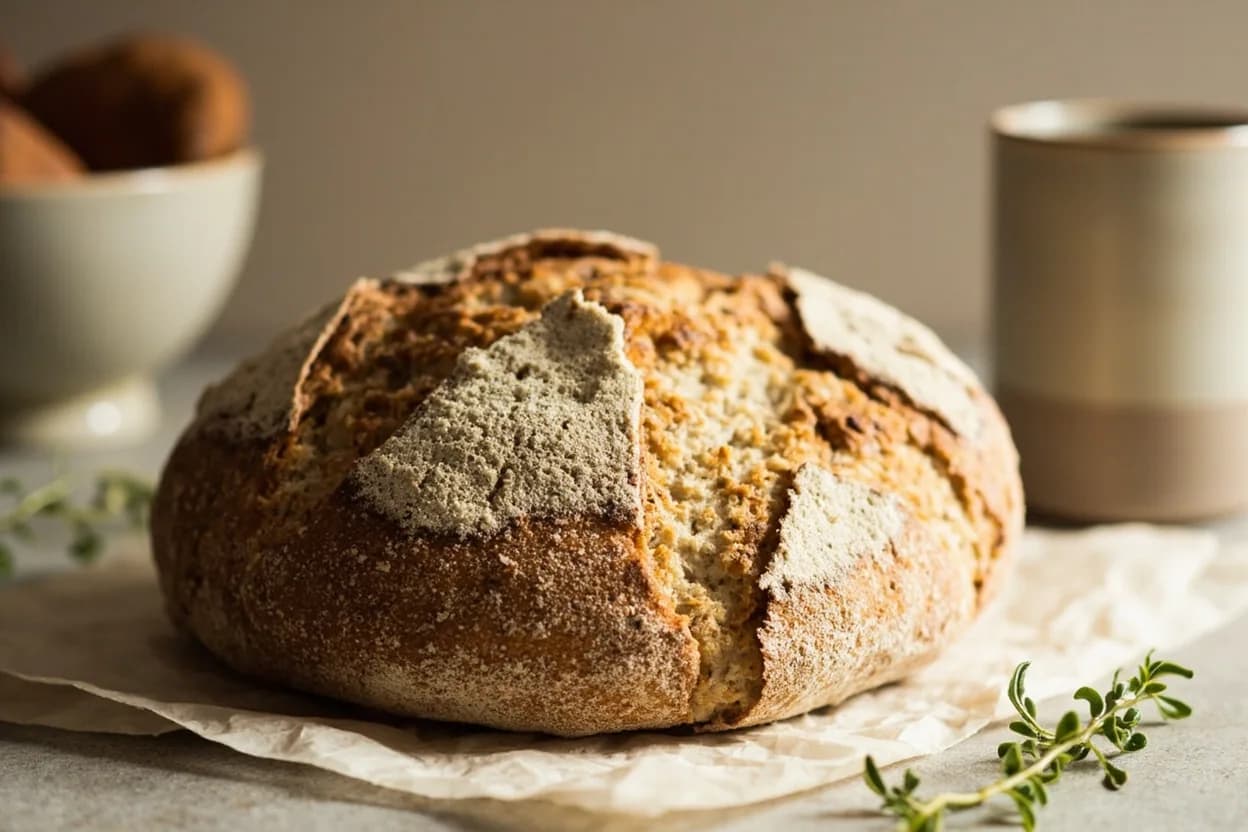
Peak lasts roughly 1–3 hours at 24°C before collapse. Most bakers using room-temperature fermentation mix dough at or just before peak, knowing bulk fermentation adds additional development time. If a starter is consistently used past peak (already collapsing), the resulting bread will have adequate sour flavor but poor oven spring — the spent yeast cannot generate enough CO₂ to create a dramatic rise.
Refrigerator maintenance vs. daily feeding
A starter stored in the refrigerator (4–5°C) can be refreshed weekly — it will not peak until brought to room temperature and fed. Bakers who bake daily maintain a room-temperature starter and feed it once or twice daily timed to baking schedule. Both approaches are valid; refrigerator storage simply extends the dormancy period between peaks.