Pasta & Grain Doneness
Sticky Rice Steam Set Point
Also: glutinous rice done, sweet rice steamed, khao niao done, mochigome set point
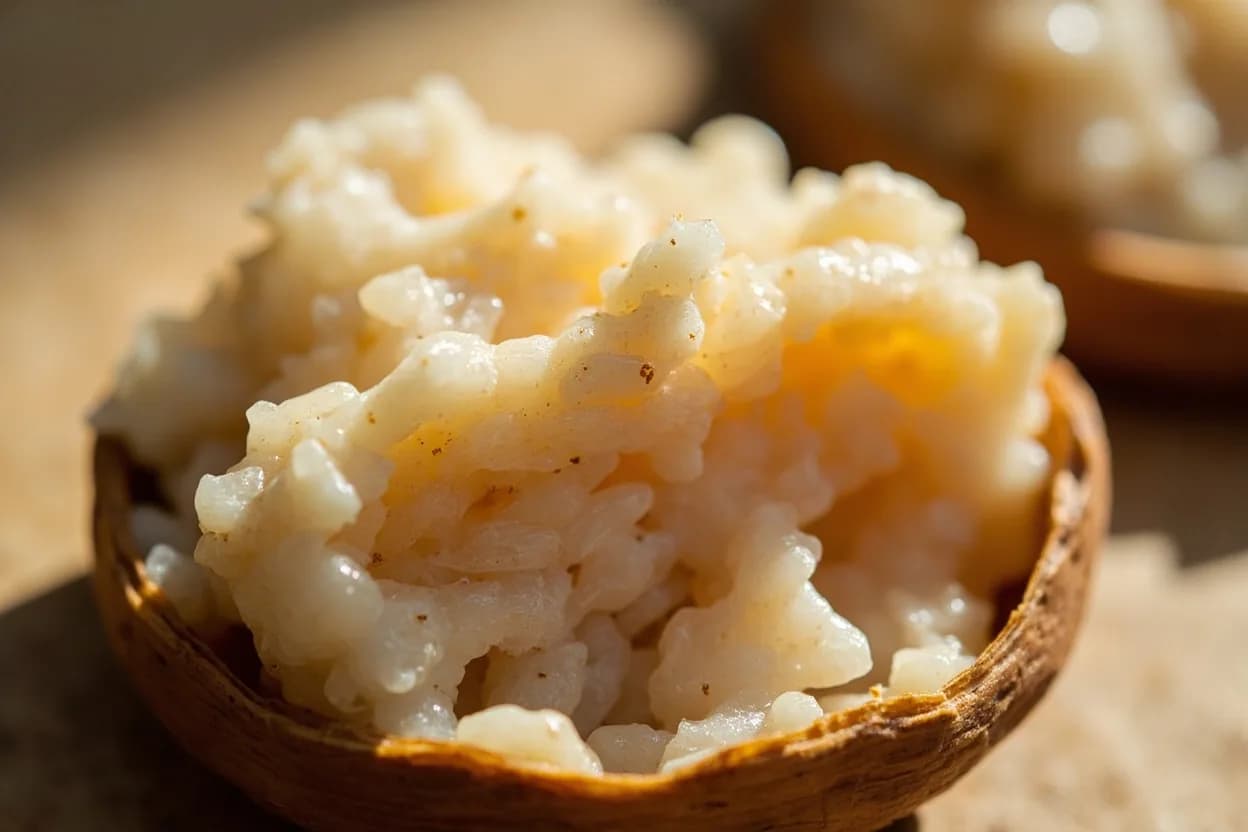
Glutinous rice is done when every grain has turned fully translucent and cohesive, yielding a tender, chewy chew without mushiness — typically after 20–30 minutes over boiling water.
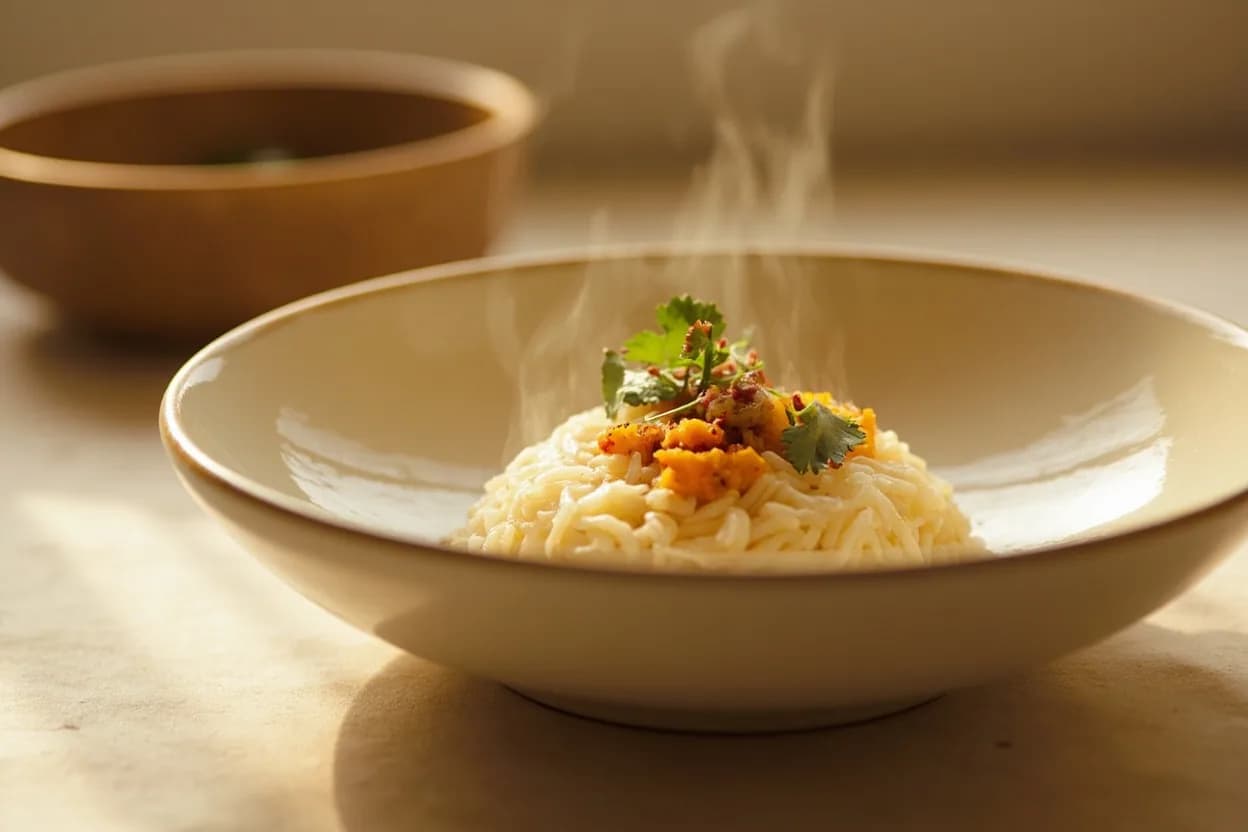
The steam set point for glutinous (sticky) rice is the threshold at which soaked glutinous rice grains, steamed over boiling water in a bamboo basket, clay pot insert, or cheesecloth-lined steamer, have fully transitioned from opaque white to translucent and have developed their characteristic cohesive, chewy texture. At this point, the waxy starch (almost entirely amylopectin) has fully gelatinized and the grains cling together, but each grain still has structural integrity and does not dissolve into porridge. The set point is reached at 20–30 minutes of active steaming, depending on soaking duration and grain variety.
In photos

What happens
Glutinous rice contains nearly 100% amylopectin (waxy starch) and virtually no amylose, unlike regular long-grain rice. When steamed, amylopectin gelatinizes at a slightly lower temperature range (around 63–75°C) than amylose-rich starches, but the process takes longer in a steamer because heat transfer through steam is less aggressive than boiling water. As gelatinization progresses from the outer layer inward, grains change from chalky-opaque white to translucent. Simultaneously, the amylopectin chains on grain surfaces become sticky and inter-grain adhesion builds. Full doneness is reached when the core of each grain has gelatinized — indicated by complete translucency. Over-steaming causes the starch network to over-hydrate and break down, producing a gluey, collapsing texture rather than the cohesive-chewy ideal.
What to look for
- Every grain is fully translucent — no white, chalky, or opaque spots remaining
- Grains clump cohesively when pressed but don't dissolve or smear
- The mass lifts cleanly from the basket and holds its shape briefly when turned out
- Biting a grain reveals uniform, soft-chewy texture all the way through with no hard or floury center
- Surface of the mass is slightly glossy, not dull or wet
- Steam rising from the basket smells clean and faintly sweet — not raw or starchy
How to check
- Pinch a few grains between your fingers: they should press into a cohesive mass, not crumble or feel hard
- Inspect a cross-section of a single grain under good light — translucency must extend to the core
- Flip the rice in the basket halfway through steaming to ensure even heat penetration from top and bottom
- For thick batches: use a wooden skewer to probe the center of the rice mass — the grains there should be as soft and translucent as the outer grains
Carryover & resting
Unlike boiled rice, steamed glutinous rice does not carry over significantly once off the heat, as steam dissipates quickly. However, if left in a tightly covered pot or wrapped in banana leaves immediately after steaming, residual steam can continue to hydrate slightly underdone spots. Do not leave it over heat after the set point is reached — it will over-gelatinize rapidly.
The science behind it
- Amylopectin
The dominant (nearly 100%) starch in glutinous rice; its branched structure is responsible for the cohesive, sticky texture
The process that transforms raw starch to cooked; must be complete to the grain center for the set point to be reached
- Soaking glutinous rice
Pre-soaking (4–12 hours) is essential for even steam penetration; unsoaked glutinous rice steams unevenly and may never fully cook at center
- Mochigome
Japanese short-grain glutinous rice; the base for mochi, sekihan, and rice cakes
- Khao niao
Thai long-grain glutinous rice; served as the staple starch in northern and northeastern Thai cuisine
- Bamboo steamer basket
Traditional vessel for glutinous rice in Southeast Asia; allows even steam circulation and moisture absorption into the bamboo
Appears in
References
- 1.On Food and Cooking — Harold McGee
- 2.Hot, Sour, Salty, Sweet — Jeffrey Alford and Naomi Duguid
- 3.Simple Thai Food — Leela Punyaratabandhu
- 4.The Food of China — E.N. Anderson
- 5.Japanese Farm Food — Nancy Singleton Hachisu
Confidence: high
Notes
Soaking is non-negotiable
Glutinous rice must be soaked — typically 4 hours minimum, ideally overnight — before steaming. Unlike regular rice, it cannot be boiled in large quantities of water and achieve the right texture; the starch structure requires the slow, penetrating heat of steam acting on pre-hydrated grains. Skipping the soak results in grains that are soft on the outside but remain chalky and hard at the center even after extended steaming.
Flipping mid-steam
For batches deeper than 3–4 cm in the steamer basket, flipping the rice mass at the halfway point (around 12–15 minutes) ensures even doneness. The top layer exposed to steam cooks faster; the layer closest to the basket weave or perforations may cook faster still. Flipping redistributes the mass and brings undercooked interior rice to the outer, hotter zones.