Beef Doneness
Stir-Fry Beef: Velveting & Rare-Through Stage
Also: velveted beef doneness, stir-fry beef color cue, pass through oil beef
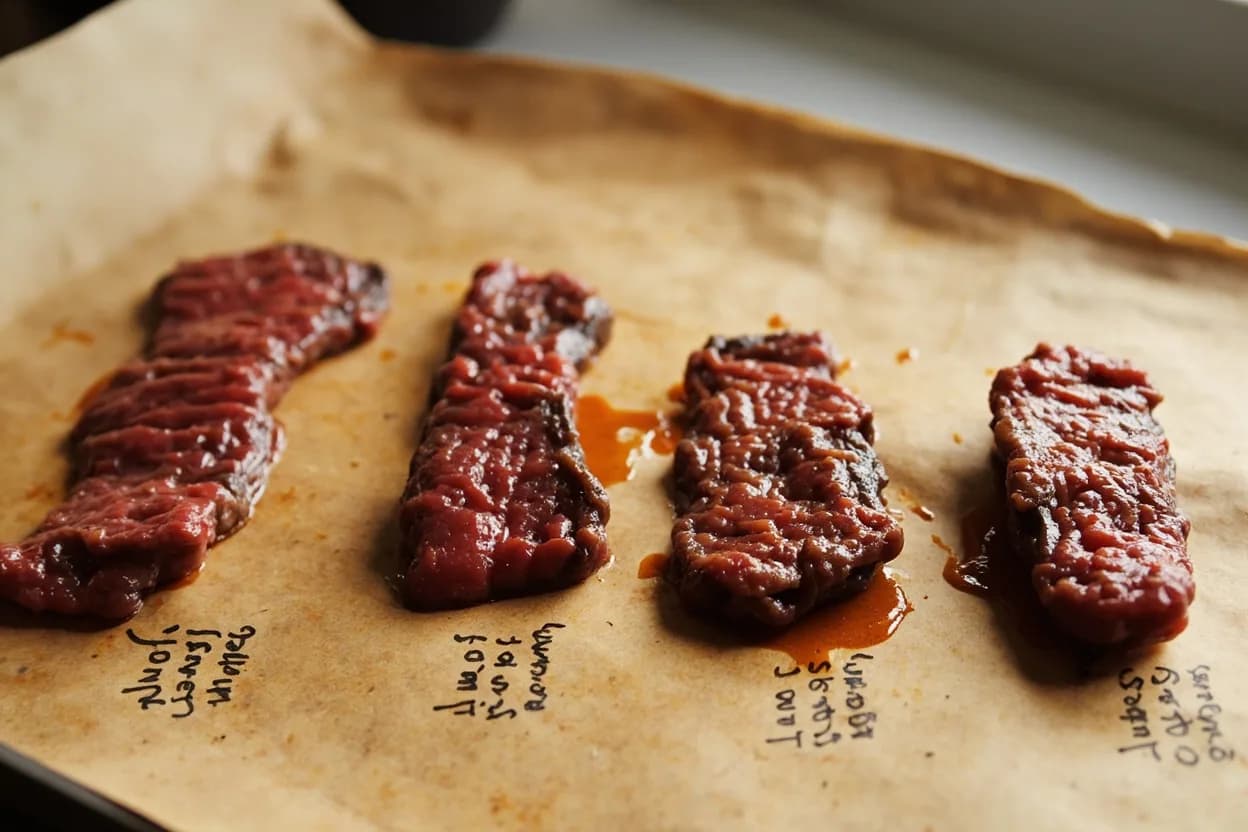
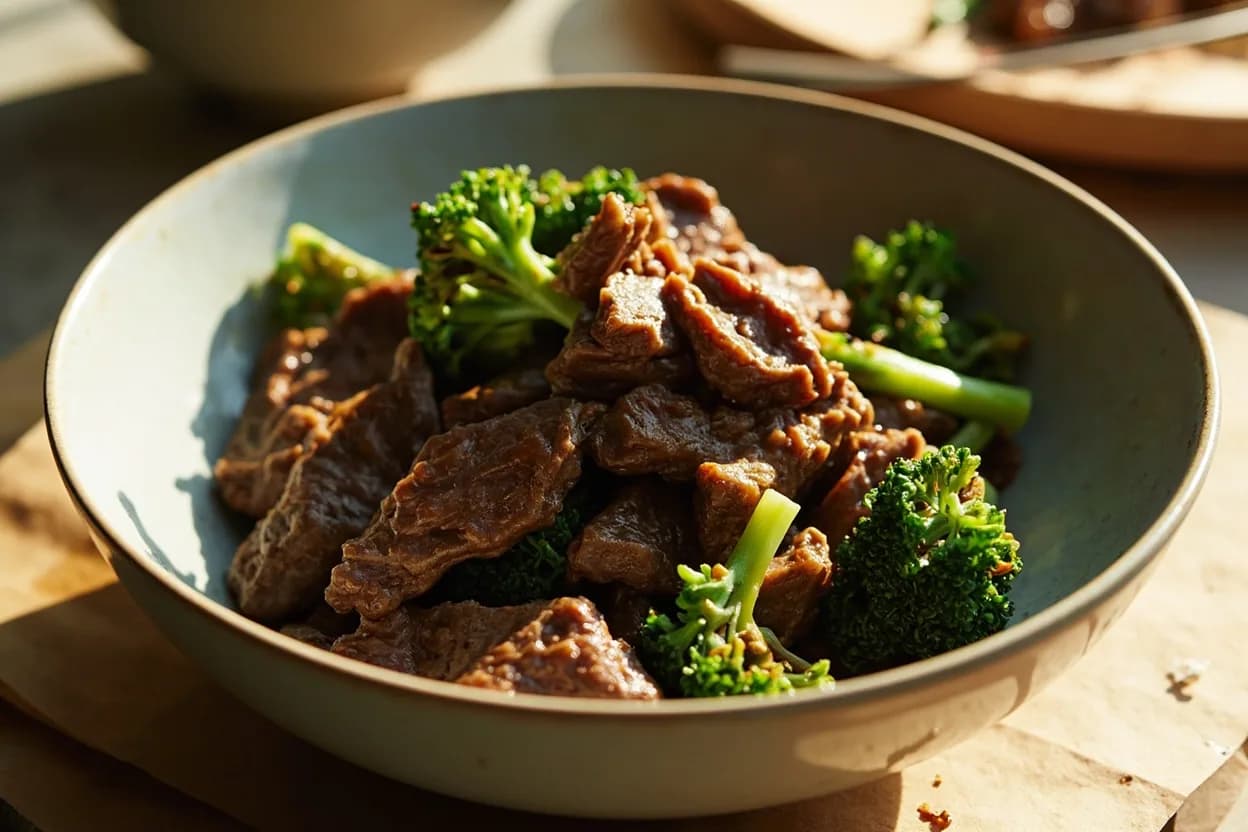
Velveted stir-fry beef is done when it turns from deep red to pale grey-pink with a slightly matte surface — still tender from the alkaline coating but fully cooked through.
In Chinese stir-fry technique, thin-sliced beef is velveted — marinated in a mixture of egg white, cornstarch, and often baking soda (sodium bicarbonate) or bicarbonate — before a pre-cook pass through hot oil (guò yóu, 过油) or blanching water. Baking soda raises the pH of the meat surface, which keeps the muscle proteins from contracting as aggressively at high heat, resulting in a silky, tender texture even when the beef is fully cooked through. The doneness cue is visual: beef transitions from deep red-pink to a uniform pale grey-pink or just-grey with a slightly matte, velvety surface sheen. This indicates the protein has set and the beef is cooked through but has not toughened from over-exposure to heat.
In photos

What happens
Baking soda (pH ~9) denatures myosin and actin at lower effective temperatures than untreated beef, reducing shrinkage and toughening. Cornstarch creates a protective coating that slows moisture evaporation. During the oil-pass or water-blanch, the beef reaches full doneness (65–70°C) in 30–60 seconds. The color shifts from vivid red to pale grey-pink: myoglobin has denatured and the protective starch coating gives the surface a matte, velvety appearance. In the final wok toss with sauce, the beef is already cooked — it merely absorbs flavor.
What to look for
- Color changes from deep red-pink to pale grey-pink or light grey throughout — no vivid red remains
- Surface has a matte, slightly velvety sheen rather than the glossy, wet look of raw beef
- Texture is silky and yielding when bitten — notably more tender than non-velveted stir-fry beef at the same doneness
- Slices have curled or contracted only slightly (minimal shrinkage compared to unvelveted beef)
- No visible blood or deep pink juices when a slice is cut
How to check
- Visual color check is primary: pale grey-pink throughout the slice, no red center visible when a thick piece is pinched open
- Texture check: a piece pressed between fingers feels set and firm but pliable — not squishy (raw) or rubbery-tight (overcooked)
- Timing: at 180–200°C oil or water, thin (3–4mm) slices are done in 30–45 seconds of oil-pass; thicker slices (5–6mm) need 45–75 seconds
- Remove immediately when color change is uniform — carryover in the wok toss will finish any residual cooking
Food safety
The science behind it
- Velveting (嫩肉 — nèn ròu)
The Chinese technique of alkaline-starch marinating that prevents protein toughening at high heat, enabling silky texture in stir-fried beef
- Baking soda tenderizing
Sodium bicarbonate raises meat pH, inhibiting myosin cross-linking and producing a more tender, silky texture at doneness
The high-heat Maillard flavor character of well-executed wok cooking; requires very high temperatures where the velveted beef finishes quickly
- Cornstarch coating
Protects beef surface moisture, contributes to sauce-clinging, and gives velveted beef its characteristic matte sheen
- Guò yóu (过油)
The oil-blanching pre-cook step in Chinese wok technique; sets the velveted beef before the final flavor toss
Appears in
References
- 1.The Wok: Recipes and Techniques — J. Kenji López-Alt (2022)
- 2.Land of Fish and Rice — Fuchsia Dunlop (2016)
- 3.Every Grain of Rice — Fuchsia Dunlop (2012)
- 4.On Food and Cooking — Harold McGee (2004)
Confidence: high
Notes
Baking soda vs. egg white velveting
Two main velveting styles exist: (1) baking soda velveting — 1/4 tsp per 250g beef, marinated 15–30 minutes, rinsed before cooking — is the Cantonese restaurant standard, producing the silkiest result; (2) egg white + cornstarch velveting (without baking soda) is gentler, common in home cooking and Northern Chinese recipes, producing a slightly less silky but equally protective coating. Both shift the doneness appearance to the characteristic pale grey-pink.
Water-blanch versus oil-pass
Restaurant kitchens typically pass beef through hot oil (guò yóu) at 175–190°C for speed and flavor; home cooks often substitute a water-blanch (bring to boil, 30–60 seconds) which is lower-fat and produces nearly identical tenderness, though with slightly less flavor complexity. The visual doneness cue — pale grey-pink, matte surface — is identical for both methods.
Cut and slice direction
Velveting is most effective on thin slices (3–5mm) cut across the grain from flank steak, skirt steak, flat iron, or sirloin. Slicing against the grain shortens muscle fibers and further reduces perceived toughness. Even with baking soda, thick chunks will not velvet uniformly and will appear grey outside while remaining pink in the center.