Sugar & Candy Stages
Sugar: Hard Crack Stage
Also: hard crack, brittle stage, lollipop stage, spun sugar stage
Cooked sugar at 149–154°C (300–310°F) that shatters into brittle, glass-like shards in cold water — the stage for lollipops, brittles, and pulled sugar showpieces.
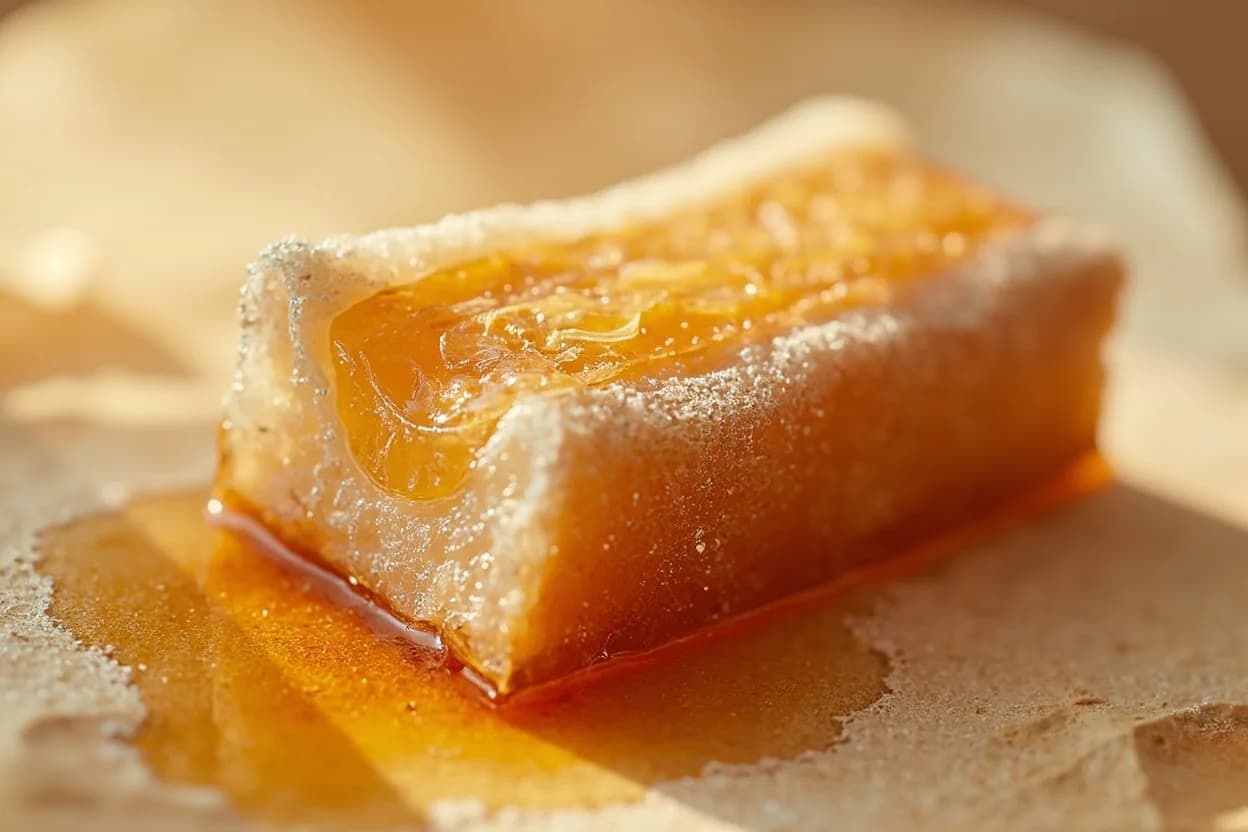
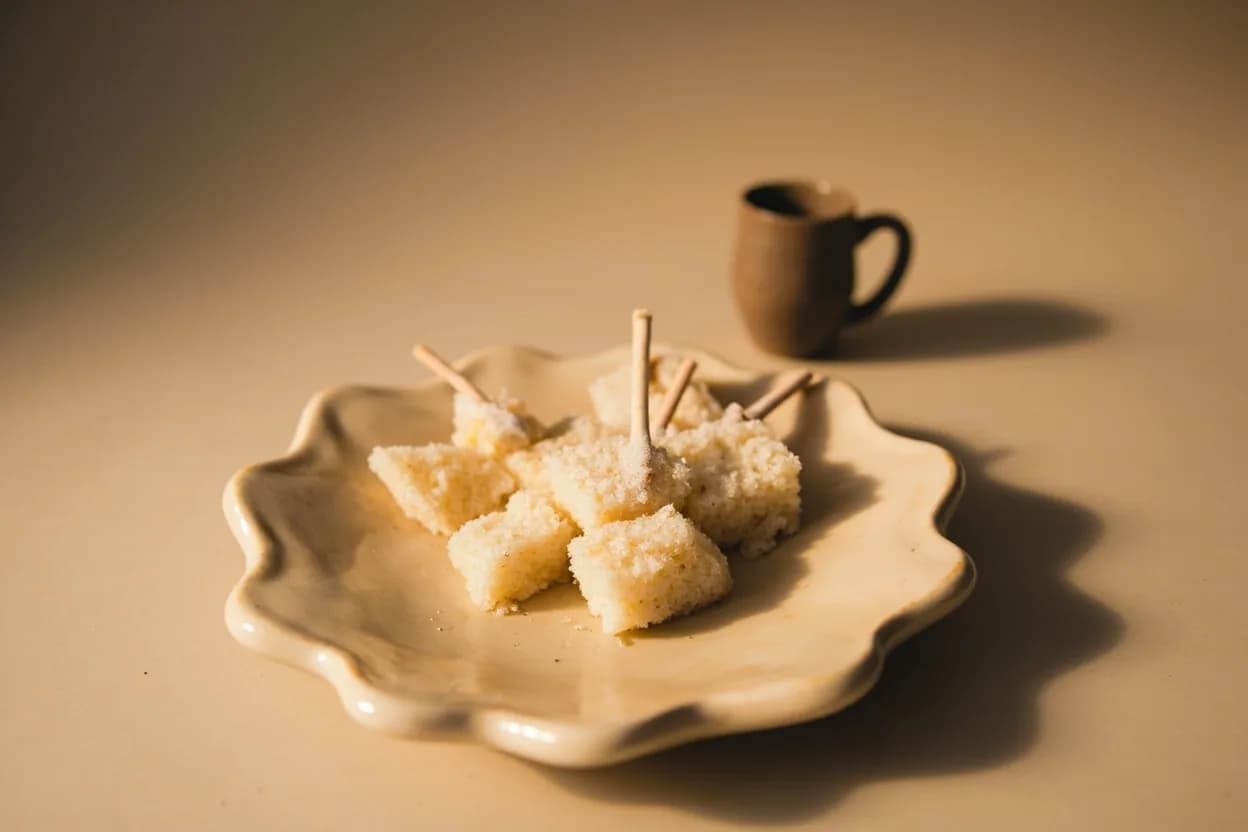
The hard crack stage is reached when a sugar syrup has been concentrated to approximately 97–99% sugar solids, with only traces of residual water. At 149–154°C (300–310°F) the syrup cools to a completely glassy, amorphous solid that snaps cleanly with a sharp crack when struck or bitten. This is the highest practical cooking stage before outright caramelization and burning take over. Confections made at hard crack are rigid, glass-clear (if kept clean), and dissolve sharply on the tongue without sticking.
In photos

What happens
At these extreme concentrations, essentially all free water has been driven off and the sucrose (along with any invert sugars or glucose) exists in a supersaturated, super-viscous liquid state. On rapid cooling, the molecules do not have time to organize into a crystal lattice; instead they freeze into an amorphous glassy solid. The glass transition temperature of this solid is above room temperature, so the candy remains rigid and non-sticky in normal conditions. Colour at this stage is very pale yellow to golden; above 155°C caramelization becomes rapid and the syrup begins to darken and develop bitter notes, eventually burning.
What to look for
- Threads dropped into ice water solidify instantly and shatter with a sharp crack — audible and felt — when bent or struck
- The cooled threads are completely rigid, non-sticky, and glassy; they feel like fine glass rods
- The hot syrup is very pale amber and deeply aromatic, releasing sweet, slightly toasty notes
- A drop on a cold surface spreads very little and sets to a crystal-clear hard disc within seconds
How to check
- A reliable digital candy thermometer is essential; the hard crack window is only 5°C wide and the syrup moves through it quickly
- Cold-water test: drop 1/2 tsp syrup into ice-cold water — it should harden instantly into threads that snap cleanly when bent, producing a distinct clicking sound
- Watch for the first hint of golden colour as a visual cue that you are approaching or within the range
- Remove from heat promptly: carryover cooking in a heavy pan can push the temperature 2–3°C past the target if you wait to check
Carryover & resting
Hard crack syrup in a heavy copper or stainless pan holds residual heat and can continue cooking 2–4°C past the target after the flame is off. For precise work, plunge the base of the pan briefly into cold water to arrest cooking the instant the target temperature is reached.
The science behind it
- Soft Crack Stage
The preceding stage (132–143°C); threads bend and stick — used for toffee and butterscotch
Begins to dominate rapidly above ~155°C, darkening the syrup and introducing bittersweet complexity
- Isomalt
Sugar substitute preferred for showpiece sugar work; lower hygroscopicity keeps the hard-crack glass clear longer in humid conditions
- Glucose Syrup
Essential in hard crack formulas to prevent graining; typically 10–20% of total sugars
- Glass Transition
The physical phenomenon that makes cooled hard-crack sugar rigid and amorphous rather than crystalline
Appears in
References
- 1.On Food and Cooking — Harold McGee (2nd ed., 2004)
- 2.Chocolates and Confections — Peter Greweling (2nd ed., 2012)
- 3.Sugar Work — Cyril Hitz (2009)
- 4.The Professional Pastry Chef — Bo Friberg (4th ed., 2002)
- 5.Modernist Cuisine at Home — Myhrvold & Bilet (2012)
Confidence: high
Notes
Showpiece Sugar Work
Pulled, blown, and cast sugar work all begin with a hard crack base. Pastry competitions feature elaborate sculptures — roses, ribbons, and hollow spheres — formed while the sugar is still hot and plastic (just above its glass transition), then cooled to glass-hard rigidity. Isomalt is nearly universal in modern competition work because it is far less hygroscopic than sucrose: a sucrose hard-crack piece begins weeping moisture in conditions above about 40–50% RH, while isomalt pieces survive considerably higher humidity without clouding or softening.
Safety
Boiling sugar at 150°C is one of the most dangerous preparations in a kitchen. It adheres instantly to skin, continues burning, and is far more damaging than boiling water. Professional confectioners wear long rubber gloves when working with hard crack sugar. A bowl of ice water kept nearby is essential — not just for the cold-water test but as an emergency measure. Pans should never be left unattended, and children must be kept clear of the workspace.
Brittles and Baking Soda
Peanut brittle and similar confections add a small amount of baking soda to the hard crack syrup at the last moment, just before pouring. The alkali reacts with residual acids to release CO₂ bubbles, aerating the glass and creating the characteristic porous, snappy texture that melts on the tongue. The reaction also drives rapid Maillard browning, giving brittle its golden colour. Timing is critical: too early and the gas escapes before spreading; too late and the candy sets before the bubbles distribute evenly.