Sugar & Candy Stages
Sugar: Soft Ball Stage
Also: soft ball, fondant stage, fudge stage
Cooked sugar at 113–116°C (235–240°F) that forms a soft, pliable ball when dropped into cold water.
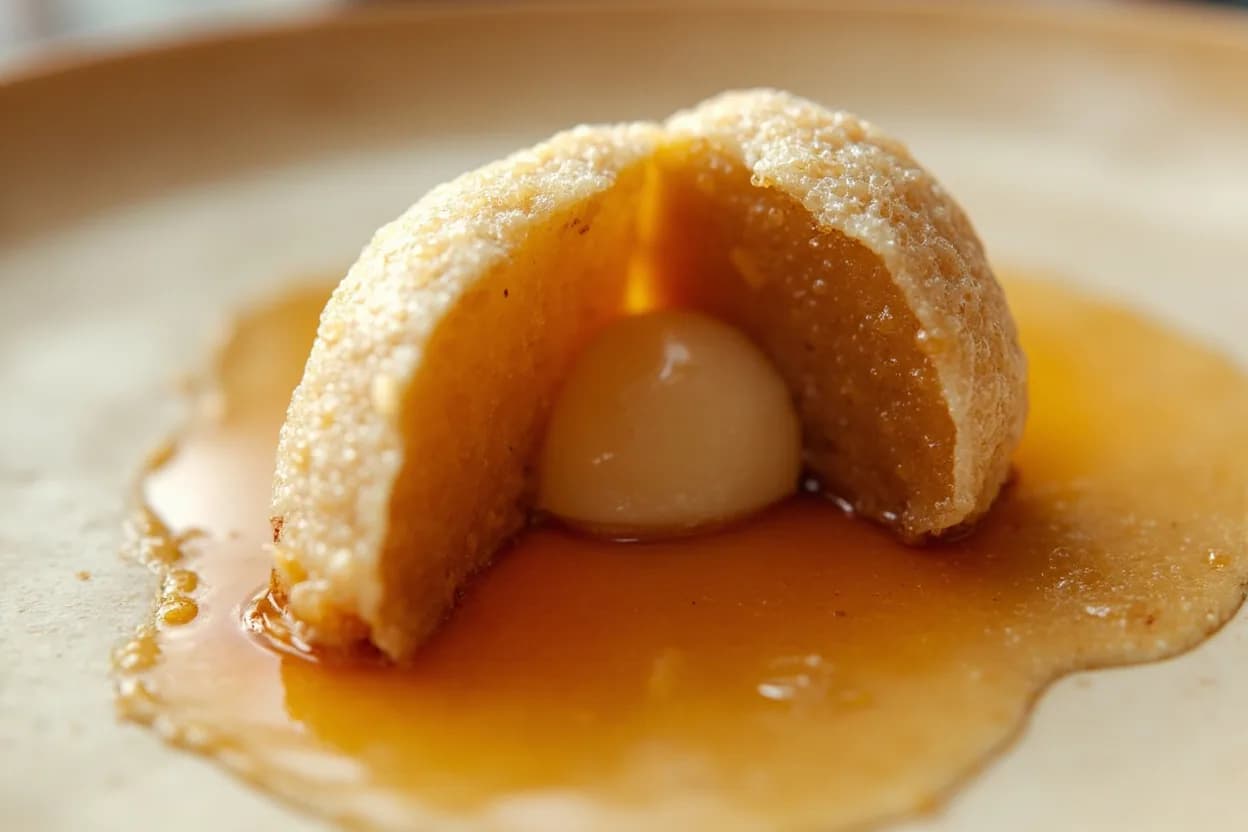
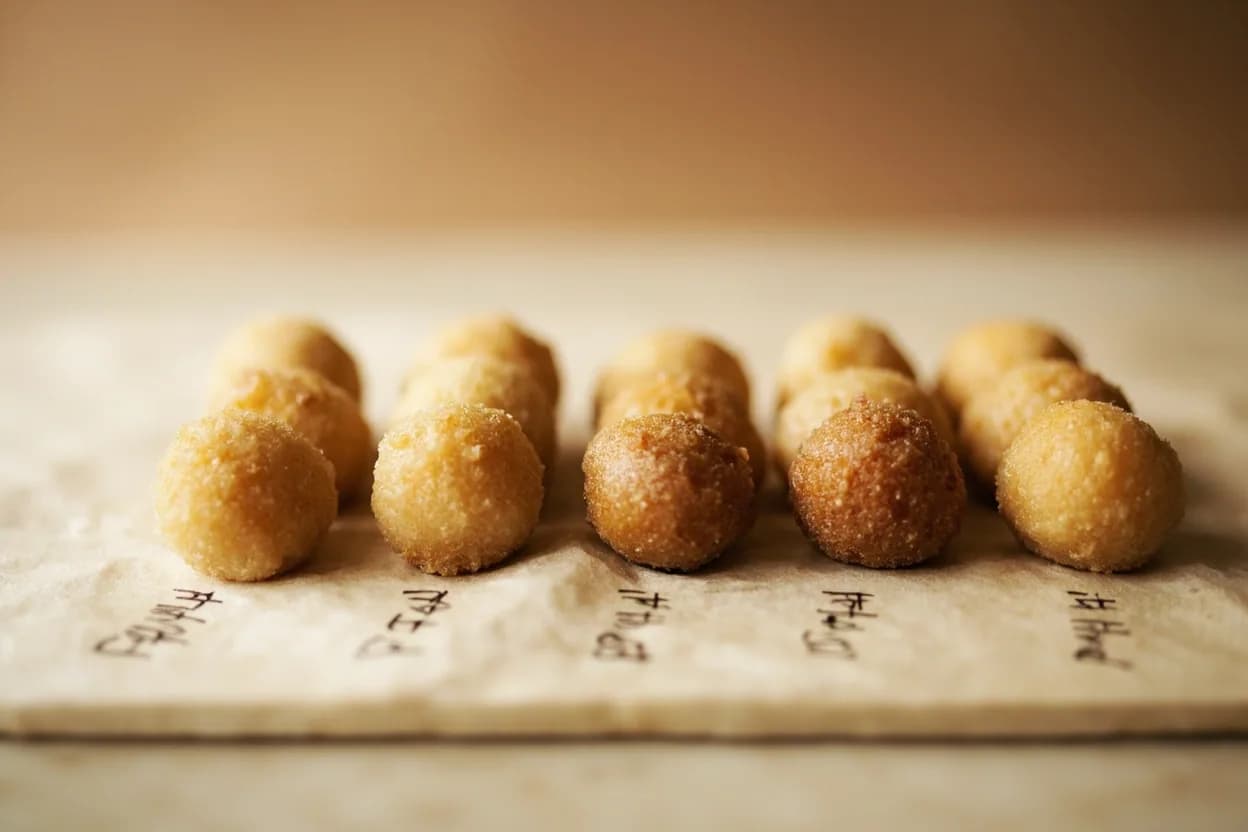
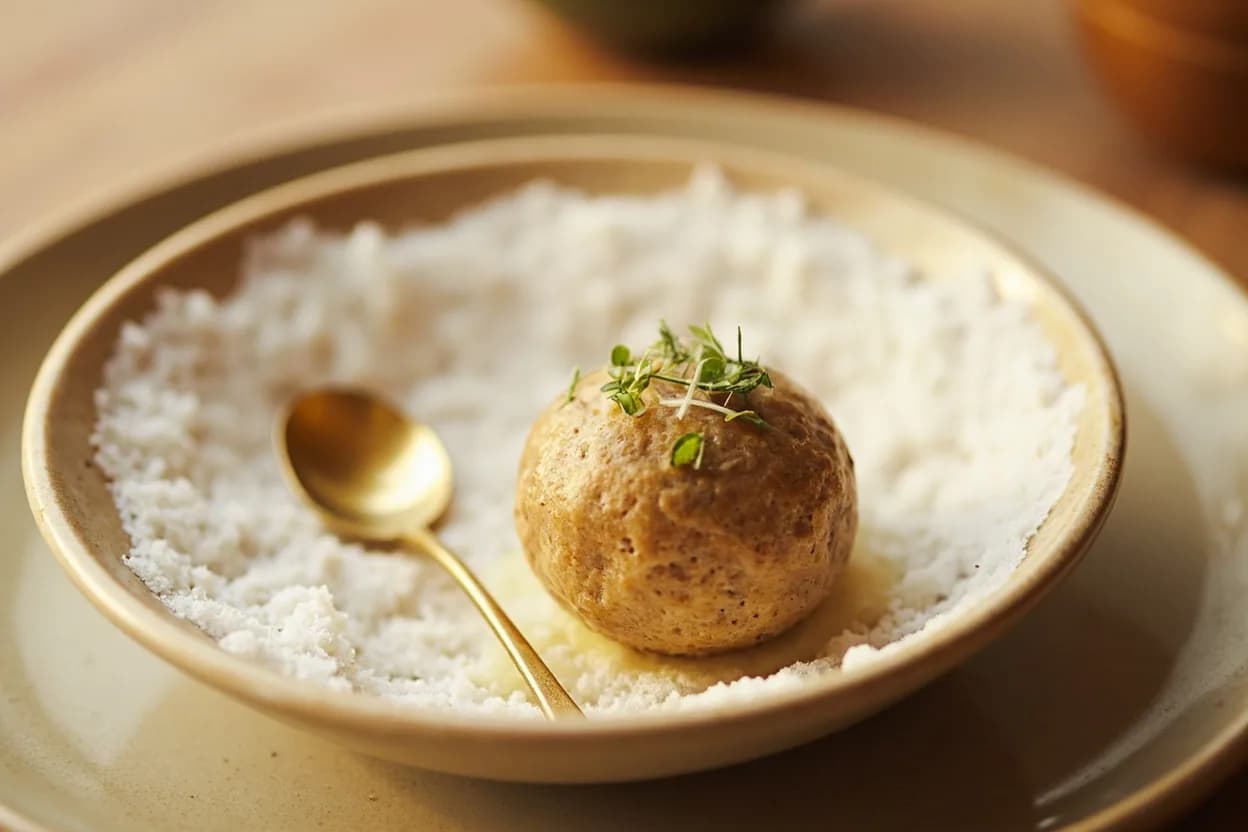
The soft ball stage is reached when a sugar syrup has concentrated to the point that a small amount dropped into ice-cold water can be gathered into a soft, pliable ball that flattens immediately when removed and pressed between the fingers. At this temperature, the syrup retains enough water (roughly 15–17%) to remain plastic and workable when cooled, making it the foundation for smooth, creamy confections.
In photos
What happens
As water evaporates, sucrose concentration rises and the boiling point climbs above 100°C. At 113–116°C the syrup is concentrated enough that the sugar molecules, when cooled, form a network of very fine crystals (in crystalline candies) or remain in an amorphous, plastic mass. The relatively high residual moisture keeps the structure soft and malleable. Adding an invert sugar (cream of tartar, corn syrup, or glucose) inhibits large crystal growth, producing the ultra-smooth texture of fondant; controlling or encouraging nucleation shifts the result toward fudge or praline.
What to look for
- Syrup dropped into ice water collects into a ball that you can pick up but that squashes flat with minimal pressure
- Bubbles on the surface become smaller, slower, and more uniform as water cooks off
- A small amount spread on a cold plate sets to a soft, pliable sheet rather than running or cracking
- The syrup falls from a spoon in a thin, unbroken ribbon that folds softly onto itself
How to check
- Use a calibrated candy thermometer clipped to the side of the pan, bulb submerged but not touching the bottom; read at eye level
- Cold-water test: drop 1/2 tsp syrup into a glass of ice-cold water, wait 10 seconds, then gather with your fingers — it should form a soft, squashable ball
- An instant-read digital thermometer gives faster, more reliable readings than a traditional glass candy thermometer
- Account for altitude: water boils ~0.5°C lower for every 150 m above sea level, so the target temperature drops proportionally
The science behind it
- Firm Ball Stage
The next stage (119–121°C), producing firmer, chewier candies such as caramels
- Invert Sugar
Glucose, fructose, or corn syrup added to inhibit crystallization and keep texture smooth
- Crystallization
Controlled nucleation of fine crystals is the defining technique in fondant and fudge
- Humidity
High ambient humidity slows evaporation and can prevent the syrup from ever reaching this stage cleanly
Appears in
References
- 1.On Food and Cooking — Harold McGee (2nd ed., 2004)
- 2.The Professional Pastry Chef — Bo Friberg (4th ed., 2002)
- 3.Chocolates and Confections — Peter Greweling (2nd ed., 2012)
- 4.How Baking Works — Paula Figoni (3rd ed., 2010)
Confidence: high
Notes
Crystalline vs. Non-Crystalline Candies
The soft ball stage is used for both crystalline candies (fudge, fondant, pralines) and certain non-crystalline ones. For crystalline candies the goal is an enormous number of microscopic crystals — achieved by letting the syrup cool undisturbed to about 40°C before beating vigorously to seed crystallization all at once. For non-crystalline soft centers, interfering agents like corn syrup or butter prevent any crystal network from forming.
Altitude Adjustment
Because water's boiling point decreases with altitude, the target temperature for every candy stage must be adjusted downward. A common rule of thumb: subtract 1°C (2°F) from every target for each 300 m (1,000 ft) above sea level. At 1,500 m (5,000 ft), the soft ball stage target becomes roughly 110–113°C.