Sugar & Candy Stages
Sugar Syrup Density for Pastry (Brix)
Also: °Brix, Brix scale, refractometer reading, syrup density, soluble solids content
The refractometer-measured Brix scale quantifies dissolved sugar concentration in syrups, enabling consistent, repeatable pastry production across soaking syrups, glazes, jams, and preserves.
Brix (°Bx) is a dimensionless unit equal to grams of sucrose per 100 g of solution, measured by how much a sugar solution bends (refracts) light. A refractometer — handheld optical or digital — reads the refractive index of a few drops of syrup and converts it to °Bx instantly. In professional pastry, Brix replaces temperature-based candy stages for cold or room-temperature applications (soaking syrups, mirror glazes, fruit purée standardization) and supplements thermometry for hot syrups where texture is calibrated in advance rather than judged at the stove. Common pastry targets: 16–18°Bx for light poaching syrups, 28–30°Bx for génoise soaking syrup, 55–65°Bx for dessert sauces and coulis, 65–67°Bx for jams at set point, and 70°Bx+ for candied fruit impregnation.
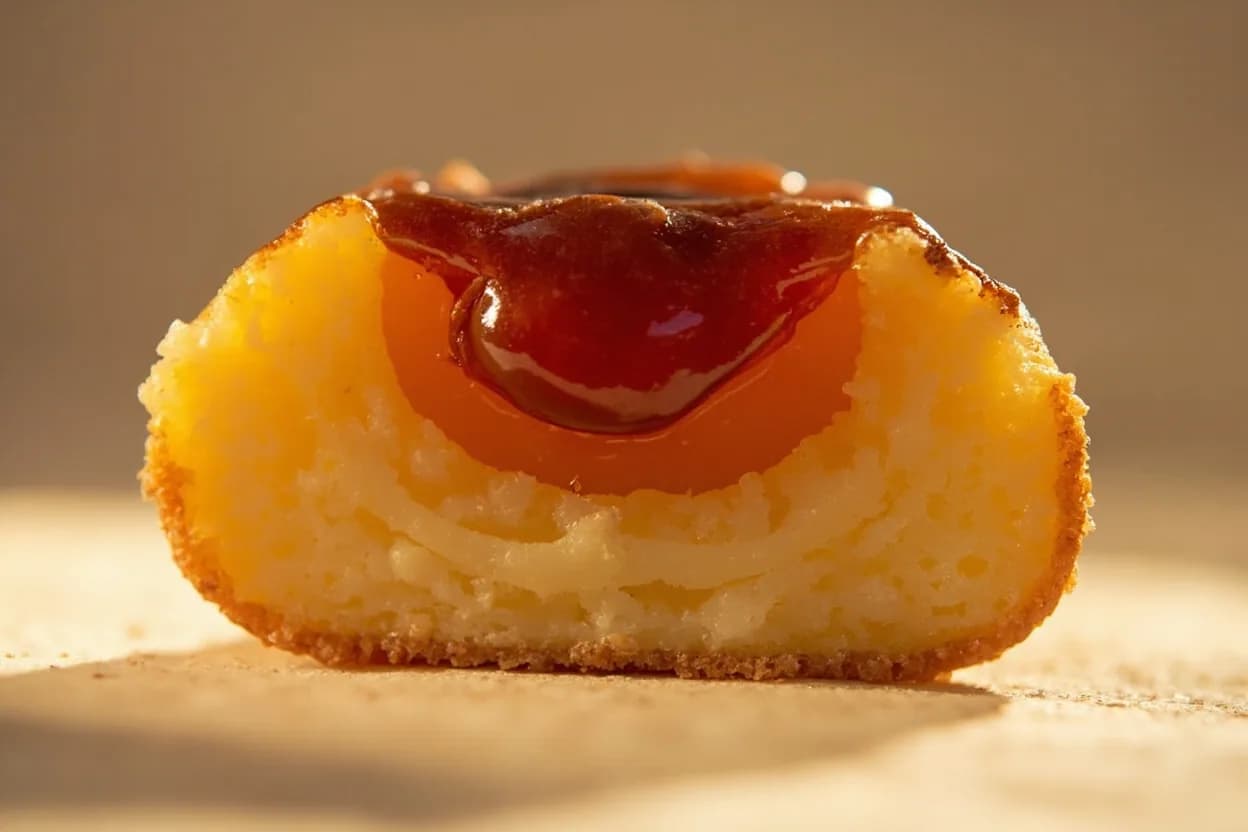
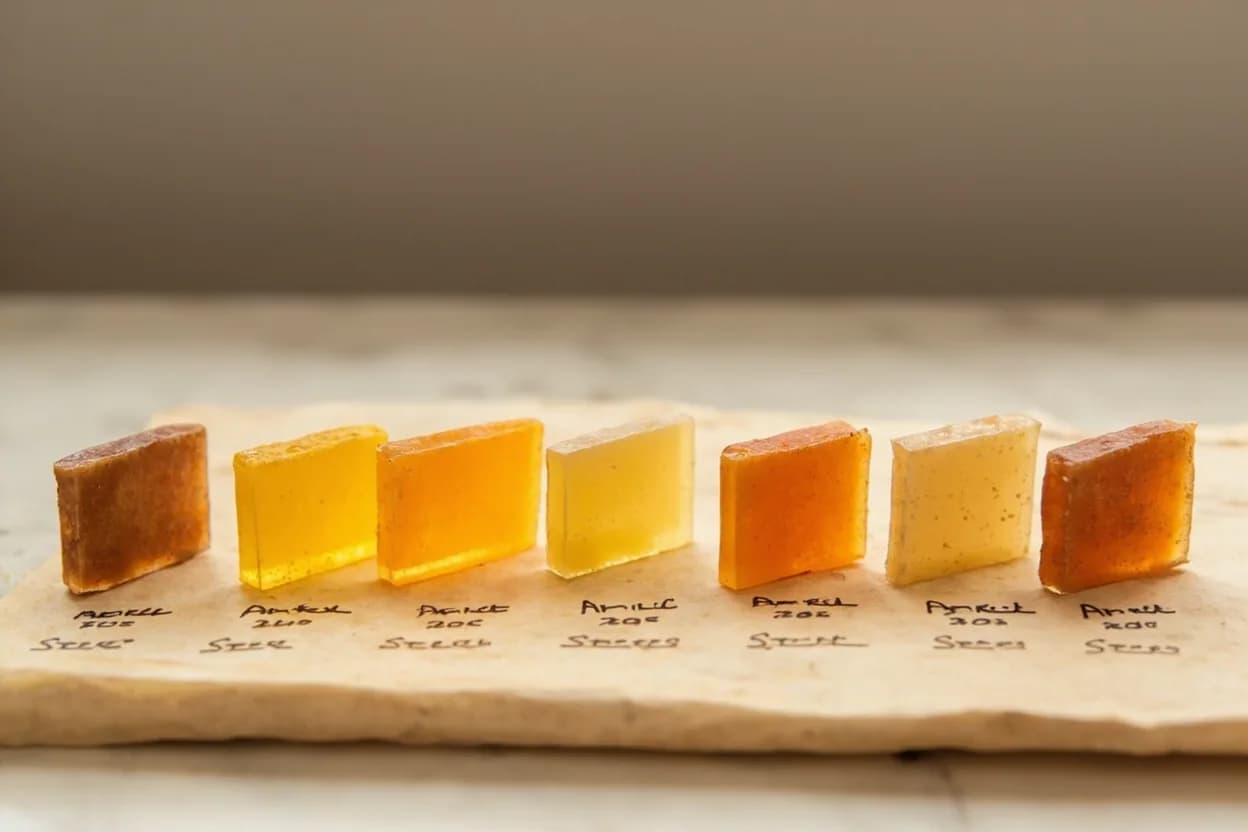
In photos

What happens
Dissolved sucrose and other soluble solids increase the refractive index of water in a predictable, concentration-dependent way. A refractometer measures this bending of light through a prism and translates the angle to °Bx. In jams and preserves, rising Brix is directly coupled to rising boiling point (65°Bx ≈ 104°C), so Brix and temperature converge at set point. For cold syrups, Brix is the only direct measure of concentration. At 65°Bx and above, water activity (Aw) drops below 0.85, inhibiting most microbial growth — the principle behind preserves. The measurement is less accurate in syrups with significant invert sugar, pectin, or alcohol, which also raise the refractive index; experienced pastry cooks correct for these interferents.
What to look for
- Light soaking syrup (28–30°Bx): slightly viscous, pours freely, tastes gently sweet
- Dessert sauce (55–65°Bx): coats a spoon lightly, visibly heavier than water
- Jam set zone (65–67°Bx): thick, slow-moving, glossy surface
- Candied fruit impregnation (70°Bx+): very viscous, pulls at the spoon, intensely sweet
- Mirror glaze (30–35°Bx when hot, thickens as gelatin sets on cooling): glossy and pourable at 35°C
How to check
- Handheld optical refractometer: place 2–3 drops on the prism, close cover, hold to light, read the shadow line on the scale — accurate to ±0.5°Bx
- Digital refractometer (e.g. ATAGO PAL-1): place a few drops, press the button, read directly — more accurate in strong light and easier to calibrate
- Calibrate with distilled water before each session (should read 0°Bx at 20°C)
- For hot syrups, let a small sample cool to 20°C before reading, or apply a temperature correction factor
- Hydrometer (saccharometer): floats in syrup, reads density — less precise, needs larger sample volume, useful for larger batch preserves
The science behind it
As Brix rises above 65, Aw falls below 0.85, suppressing microbial growth — the principle behind shelf-stable jams
- Boiling Point Elevation
Each 10°Bx rise raises the boiling point approximately 1.5°C; at 65°Bx this reaches the jam set temperature of 104°C
- Invert Sugar
Fructose and glucose raise the refractive index more than sucrose per gram; Brix readings on inverted syrups overstate sucrose equivalent
- Mirror Glaze
Modern entremets glazes are formulated to a target Brix for precise pourability and sheen
- Pectin Gel Formation
Pectin gels require ≥65°Bx and correct pH; Brix measurement confirms sugar level before the gel sets
Appears in
References
- 1.Modernist Cuisine — Nathan Myhrvold et al.
- 2.Professional Baking — Wayne Gisslen
- 3.The Art of the Chocolatier — Ewald Notter
- 4.On Food and Cooking — Harold McGee
- 5.ATAGO Refractometer Application Notes — ATAGO Co. Ltd.
Confidence: high
Notes
Brix vs. thermometric candy stages
Classic candy-stage thermometry (soft-ball, firm-ball, hard-crack) is a proxy for water concentration derived from boiling-point elevation. Brix measures water concentration directly, at any temperature, on any quantity of syrup. For cold applications — soaking syrups, glazes assembled at room temperature, or standardizing purchased fruit purées — thermometry gives no information at all, and Brix is the only rational tool. Modern pastry kitchens use both: Brix for initial standardization and quality control, thermometry for live cooking of hot sugar work.
Practical calibration
Refractometers drift with temperature. Most are calibrated at 20°C; readings taken at 25°C in a warm kitchen can overread by 0.3–0.5°Bx. Premium digital models apply automatic temperature compensation (ATC). For jam and preserve production, a ±1°Bx error at the gel point (65–67°Bx) can mean the difference between a clean set and a runny preserve, so calibration discipline is worth the 30 seconds it takes.