Technique-Specific Doneness
Tomato Sauce Reduction Stage
Also: passata cotta, sauce done, salsa ritirata, tomato sauce cooked down
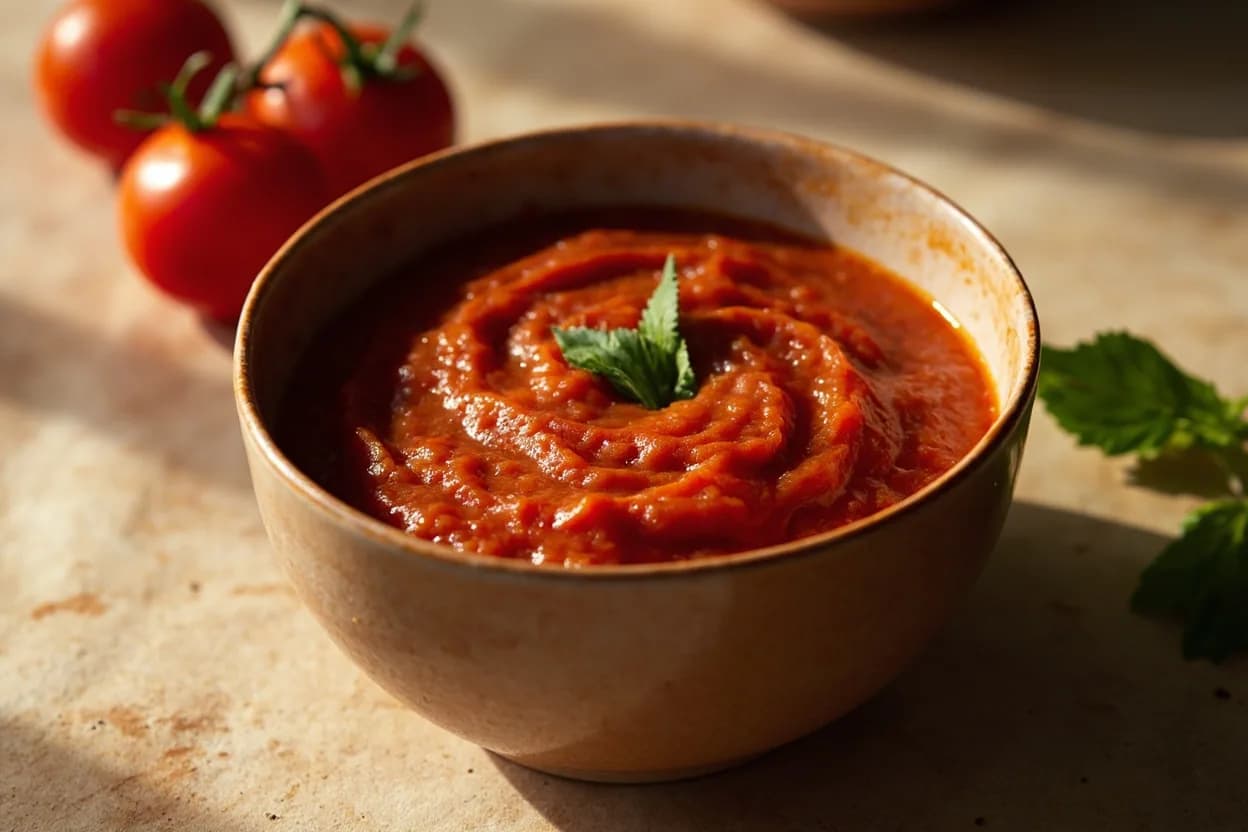
The point at which tomato sauce has shed excess water, deepened to brick-red, and pools of fat appear at the surface — indicating concentrated flavor and correct body.
A tomato sauce is fully reduced when three visual milestones converge: the color shifts from bright red to a deeper brick-red or burgundy tone, the texture thickens from watery to a sauce that holds a spoon-line, and small pools of oil or fat separate and float at the surface. This stage signals that the excess water content of the tomatoes has cooked off, the volatile acids have mellowed, and the sugars and glutamates have concentrated. Depending on the starting volume and heat, this takes 20–60 minutes of simmering. The internal temperature is simply at or near 100°C (212°F) throughout — doneness is entirely visual and aromatic, not thermal.
In photos

What happens
Fresh tomatoes are roughly 94% water. As that water evaporates, the remaining lycopene pigments become more concentrated and shift apparent hue from candy-red to deeper brick tones. Volatile acids (particularly acetic and formic) that contribute sharp, aggressive notes evaporate along with water, mellowing the sauce. Glutamates and aspartates concentrate, amplifying savory depth. The sugars (primarily glucose and fructose) concentrate toward a caramelization threshold; slight Maillard reactions occur at hotspots against the pan wall. Oil added to the sauce (olive oil in Italian traditions, vegetable oil in others) is initially emulsified but breaks out of suspension as the water phase depletes — the pooling fat is a reliable visual signal of sufficient reduction.
What to look for
- Color shift from bright tomato-red to a darker brick-red or orange-red
- Visible pools of orange-tinted oil floating at the surface (the 'oil separation' signal)
- Sauce holds a clear line drawn with a spoon across the pan bottom for 2–3 seconds
- Aroma shifts from sharp, raw-tomato and acidic to sweet, mellow, and roasted
- Bubbles change from rapid, watery boiling to slow, thick 'plopping' eruptions
- Sauce pulls slightly away from the sides of the pan as it contracts
How to check
- Spoon test: draw a spatula across the pan — if the line holds without flooding back for 2 seconds, body is correct
- Plate test: drop a spoonful on a cold plate and tilt — it should move slowly, not run freely
- Volume check: a well-reduced sauce will have lost 30–50% of its starting volume
- Oil-surface check: visible pools of fat at the surface are the clearest Italian culinary cue (called 'la salsa si è ritirata')
- Taste: the raw, acidic sharpness should be replaced by sweetness and depth; add final seasoning only at this point
The science behind it
- Evaporative concentration
The physical process removing water and concentrating flavor compounds
- Lycopene
The carotenoid pigment responsible for red color; concentrates and shifts hue as water evaporates
- Fat separation
Oil pooling at the surface is a reliable Italian cook's cue that the sauce water content is sufficiently reduced
- Soffritto
The aromatic base that begins Italian tomato sauce; its own caramelization feeds into the final flavor
Strained fresh tomato sauce; requires similar reduction before it becomes a usable cooking sauce
Appears in
References
- 1.Marcella Hazan, 'Essentials of Classic Italian Cooking' — tomato sauce technique and the fat-separation cue
- 2.Harold McGee, 'On Food and Cooking' — chemistry of tomato cooking and pigment concentration
- 3.Heston Blumenthal, 'The Fat Duck Cookbook' — water activity and flavor concentration in tomato reductions
Confidence: high
Notes
The fat-separation cue is universal
Across Italian, South Asian, and Middle Eastern traditions, the sight of fat pooling at the surface of a tomato-based sauce is recognized as the 'done' signal. In Indian cooking this is called 'masala pakna' or 'oil floating' and is required before adding protein — it ensures the tomato-onion base is fully cooked and the sauce will not taste raw. The chemistry is identical regardless of tradition.
Canned versus fresh
Canned San Marzano tomatoes are already partially reduced and processed, so they reach the target stage faster than fresh. A sauce made from fresh, in-season tomatoes requires longer reduction but produces a brighter, more complex result. Paste (concentrato) added mid-reduction accelerates deepening of color and body.