Vegetable Doneness
Vegetable Blanch Timing by Type
Also: blanching chart, blanch guide, vegetable parboil times
Reference timing for blanching common vegetables in rapidly boiling salted water before shocking in ice water.
Blanching is a brief, high-heat water bath followed immediately by an ice-water shock that halts cooking. Each vegetable type has a precise window: long enough to deactivate enzymes (which cause off-flavors and color loss during freezing or storage) and soften the cell wall slightly, short enough to preserve crunch, color, and nutrients. Timing varies by density, thickness, and sugar content.
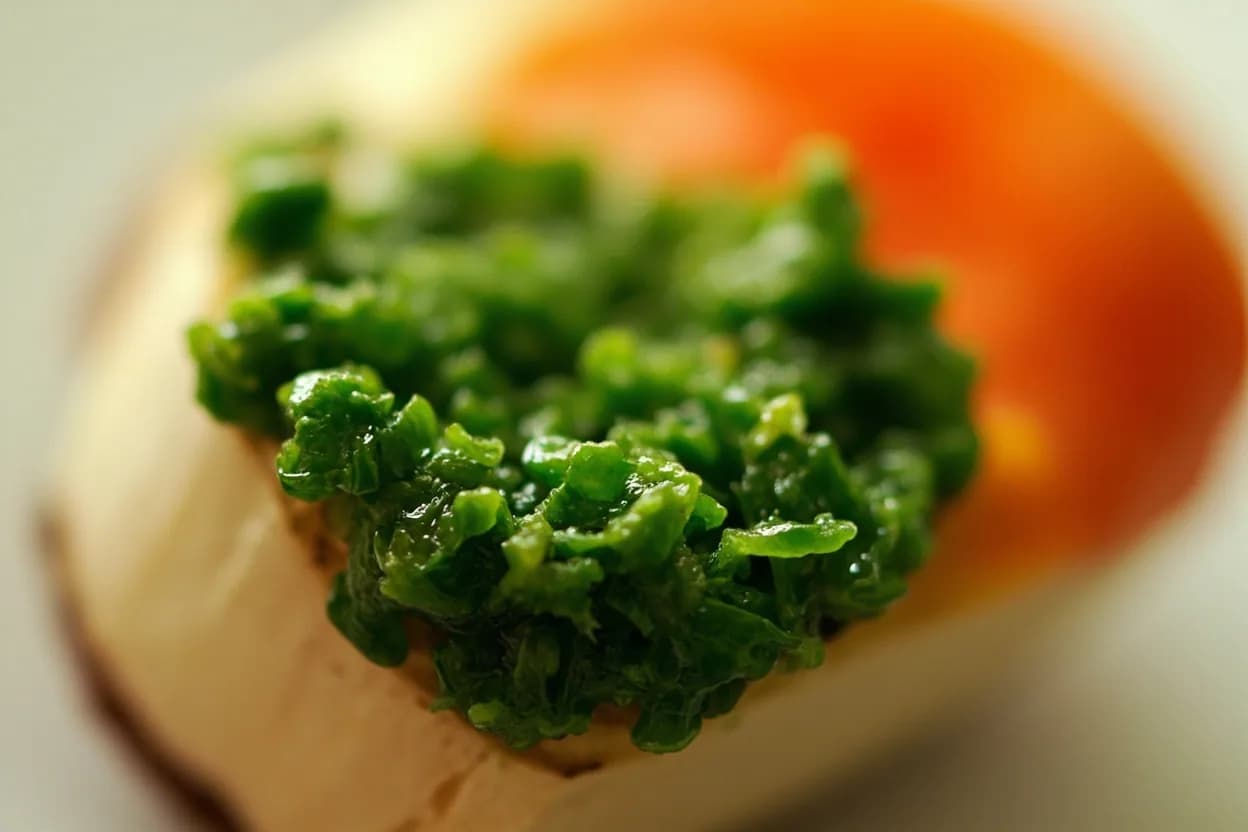
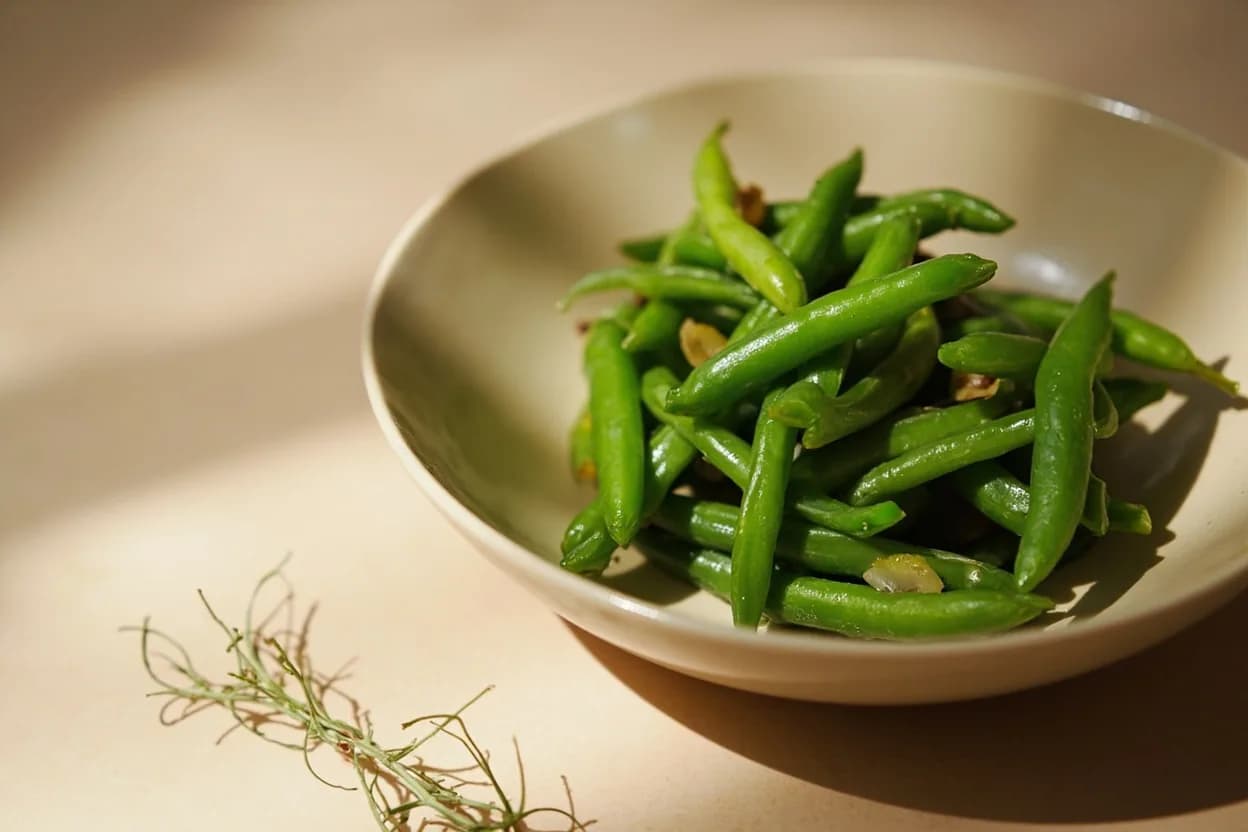
In photos
What happens
At a full rolling boil (100°C/212°F), chlorophyll in green vegetables converts from chlorophyll-a to a brighter pheophytin-free form briefly, making them vivid green — but extended heat destroys chlorophyll and turns vegetables drab. Enzymes (peroxidase, lipoxygenase) are denatured within 1–3 minutes depending on tissue density. Pectin in cell walls softens under heat; starch granules begin to hydrate. The ice bath drops surface temperature below 4°C within seconds, locking in the bright color and firm texture. Insufficient blanch leaves enzyme activity intact; over-blanching causes waterlogging and pigment loss.
What to look for
- Green vegetables turn a vivid, saturated emerald within the first 30–60 seconds
- Surface of tender vegetables (peas, spinach) becomes slightly translucent at the correct moment
- Dense vegetables (carrots, beets) show no visual cue — rely strictly on time
- Aroma shifts from raw/grassy to cooked-vegetal at the correct endpoint
- Texture should feel just yielding at the outer edge with firm interior when pressed between fingers after shocking
How to check
- Use a large pot with at least 4 litres of aggressively boiling salted water per 500 g of vegetables — crowding drops temperature and extends effective cook time
- Start timing only once the water returns to a full boil after adding vegetables
- Have a bowl of heavily iced water (ratio 1:1 ice-to-water by volume) ready beside the pot
- Transfer immediately with a spider or slotted spoon; shock for the same duration as the blanch
- Taste-test a piece after shocking — it should be bright, lightly cooked, and still snappy
- Per-type reference times (at sea level, cut to standard size): green beans (trimmed whole) 3 min; broccoli florets 2 min; asparagus (medium spears) 2–3 min; snow peas 1–2 min; sugar snap peas 2 min; fresh peas 1–2 min; spinach/chard leaves 30–45 sec; kale (destemmed) 2 min; Brussels sprouts (halved) 3–4 min; cauliflower florets 3 min; carrots (sliced 5 mm) 2–3 min; corn on the cob 4 min; edamame (in pods) 3–5 min; zucchini (sliced) 1–2 min; fennel (wedges) 3 min; beets (whole small) 45–60 min (simmer, not blanch)
Food safety
Carryover & resting
Even after ice-bath shocking, residual heat in dense vegetables (carrots, beets, thick broccoli stems) continues cooking the interior for 10–15 seconds. Spreading on a towel-lined tray immediately after the ice bath halts surface moisture buildup and prevents steam-carryover cooking.
The science behind it
- Ice-bath shocking
The essential second step that fixes color and halts enzyme activity after blanching
- Enzyme denaturation
The primary biochemical goal of blanching — destroying peroxidase and lipoxygenase that cause off-flavors
Absent in blanching; blanched vegetables must be dried before sautéing to trigger browning
- Salted blanching water
Season water aggressively (sea water salinity, ~1% by weight) to season the vegetable interior and maintain boil vigor
- Altitude adjustment
Above 1,500 m, water boils below 95°C; add 20–30% extra blanching time
Appears in
References
- 1.On Food and Cooking — Harold McGee (Scribner, 2004)
- 2.USDA Complete Guide to Home Canning (USDA NIFA, 2015)
- 3.The Food Lab — J. Kenji López-Alt (W.W. Norton, 2015)
- 4.Modernist Cuisine at Home — Myhrvold & Zucker (The Cooking Lab, 2012)
Confidence: high
Notes
Salt and size consistency
Heavily salted water (10–15 g per litre) seasons from the outside in during the brief blanch and also raises the boiling point fractionally, giving marginally more energy at the surface. More important is cutting uniformity: a 3 mm difference in broccoli stalk diameter can mean the difference between perfectly crisp and mushy florets. Cut everything to the same cross-section before blanching.
Batch size matters
Adding too many vegetables at once drops the water below a boil. Restaurant practice is to blanch in small batches — no more than 10% of the water weight — and maintain a rolling boil throughout. At home, blanch in two passes rather than overcrowding, or use the largest pot available.