Frying Temperatures
Wok Stir-Fry Oil Temperature
Also: wok hei temperature, wok fire heat, stir-fry heat, woh hei
230°C and above — the flash-high heat threshold that transforms stir-fried ingredients with char, smoke, and the elusive wok hei breath.
Wok stir-fry oil temperature refers to the extreme working heat maintained in a seasoned wok during Chinese high-fire cooking, typically beginning at 230°C (446°F) and reaching 300°C (572°F) or more over a commercial burner. At these temperatures, oil in the thin-gauge carbon-steel wok shimmers and begins to smoke almost instantly; food is tossed through superheated vapor and flame. The goal is wok hei (鑊氣, 'breath of the wok') — a complex scorched, smoky, slightly metallic character produced by rapid Maillard reactions, brief pyrolysis of residual fats, and partial char on exposed surfaces. Home stoves rarely exceed 230°C reliably, which is why restaurant stir-fries are difficult to replicate without a specialty burner.
In photos

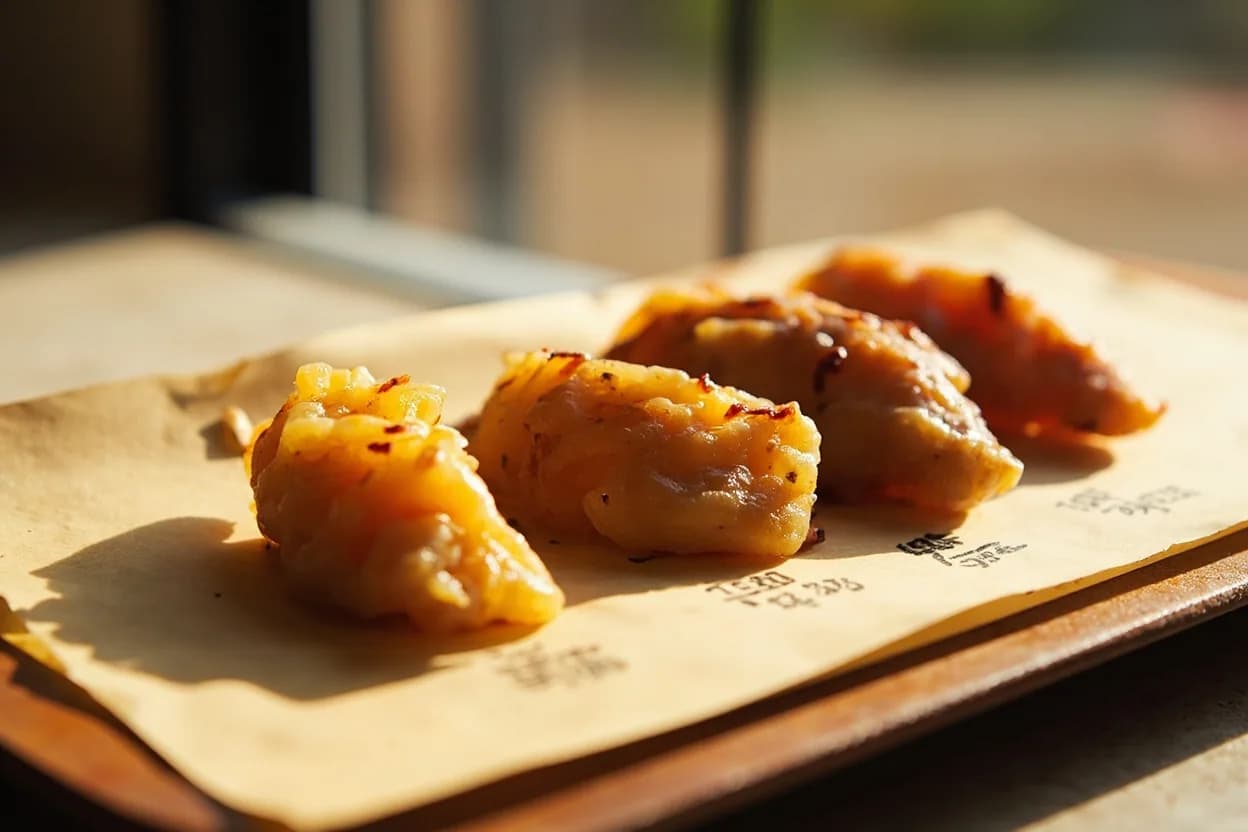
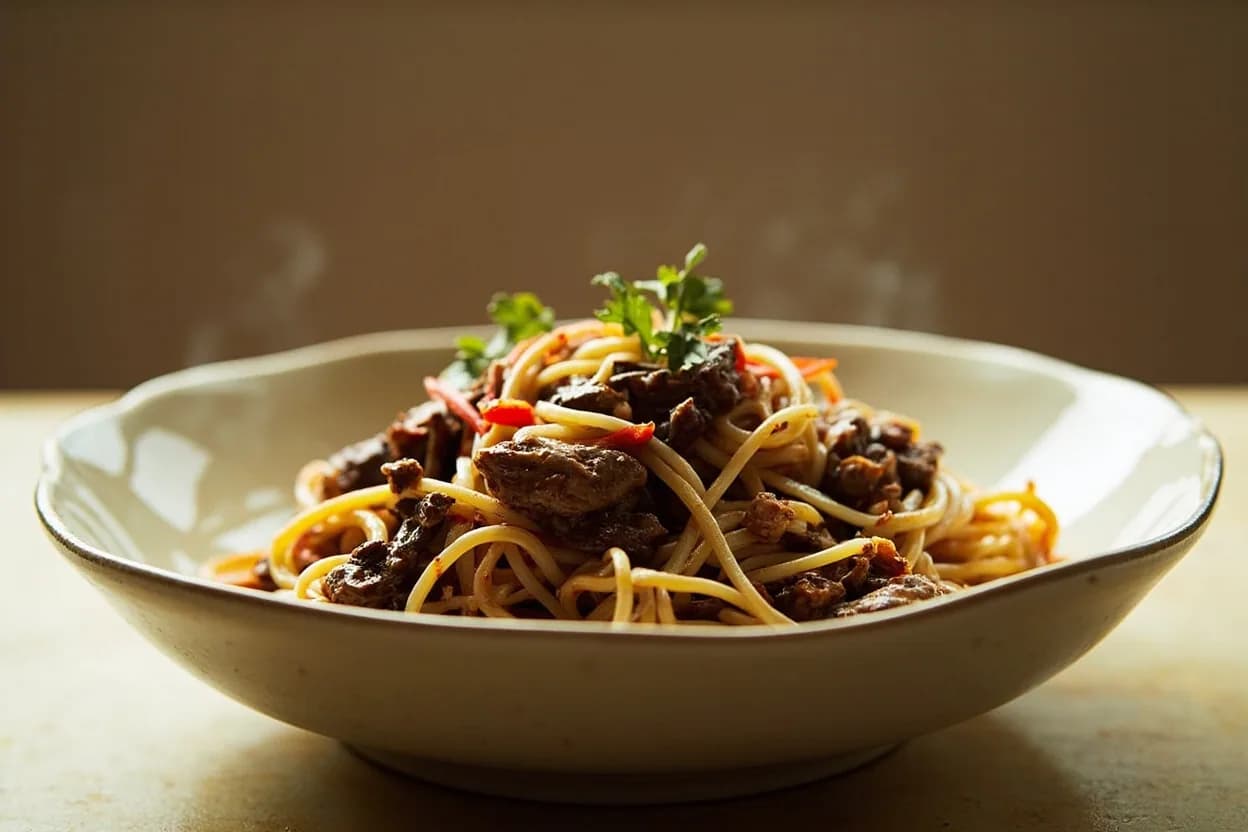
What happens
Above 230°C the Maillard reaction accelerates dramatically: surface proteins and sugars caramelize in seconds rather than minutes, producing hundreds of flavour compounds. Residual carbon deposits and polymerized fats in the wok's seasoning volatilize, contributing sulfur- and furan-based aromatics that define wok hei. Water expelled from vegetables evaporates almost instantaneously, preventing steaming and maintaining a dry, high-temperature contact surface. At 260°C+ a brief jet of flame (flambé effect) can ignite vapors above the wok, directly chars leaf edges, and is the hallmark of traditional wok tossing over a commercial 'hurricane burner' delivering 150,000+ BTU.
What to look for
- Oil shimmers with rapid, fine ripples and a faint haze before smoke appears
- A drop of water flicked in skitters and evaporates in under a second
- Aromatics (ginger, garlic) sizzle violently on contact with a loud crack
- Vegetables char at their edges and edges rather than stewing or sweating
- A distinctive smoky, slightly charred aroma with faint metallic undertone
- Flames may lick up over the wok's rim during tossing
How to check
- Infrared thermometer pointed at the dry wok surface — aim for 230–260°C before adding oil
- Water droplet test: flick a few drops; near-instant evaporation confirms stir-fry heat
- Oil shimmer: add a thin coat and look for rapid movement and faint smoke wisps
- Smoke point onset of the chosen oil signals the working minimum — refined high-smoke-point oils are preferred precisely to push past 230°C without excessive acrolein
Carryover & resting
Food continues to cook from residual wok heat after removal; underdone slightly in the wok and finish on the plate. Proteins in particular can reach safe internal temperature quickly from carry-forward energy.
The science behind it
High-smoke-point refined oils (avocado, rice bran, refined peanut) are chosen to endure 230°C+ without breaking down into acrolein.
The chemical engine behind char and colour; greatly accelerated above 200°C.
Related flash-heat technique used for aromatic blooming at 180–200°C.
- Deep-Fry Temperature
Typically 175–190°C — lower than wok hei heat; illustrates why wok hei cannot be achieved by simply deep-frying.
Appears in
References
- 1.The Food Lab — J. Kenji López-Alt (W. W. Norton, 2015)
- 2.The Wok: Recipes and Techniques — J. Kenji López-Alt (W. W. Norton, 2022)
- 3.Chinese Cooking Demystified — Steph and Chris (YouTube / Patreon, ongoing)
- 4.On Food and Cooking — Harold McGee (Scribner, 2004)
Confidence: high
Notes
Home stove limitation
Most domestic gas burners top out at 35,000–50,000 BTU; commercial wok ranges deliver 150,000–250,000 BTU. To compensate at home: use a carbon-steel wok (thin walls heat fast), pre-heat empty until just smoking, cook in small batches so moisture doesn't accumulate, and keep ingredients dry before they hit the pan.
Wok material matters
Cast iron retains heat but responds slowly; carbon steel heats and cools rapidly, matching the cook's tossing rhythm. The seasoned carbon-steel surface itself contributes volatile aromatic compounds at stir-fry temperatures — a new unseasoned wok will not deliver authentic wok hei.