Spices & Dried Aromatics
Alligator Pepper (Atare)
Also: atare, guinea pepper, mbongo spice, Aframomum melegueta subspecies, Aframomum daniellii, hepper pepper
West Africa's most sacred and pungent spice — a relative of cardamom whose seeds pack citrusy, floral heat and are central to Yoruba ceremony, Igbo tradition, and the cuisine of the Nigerian delta.
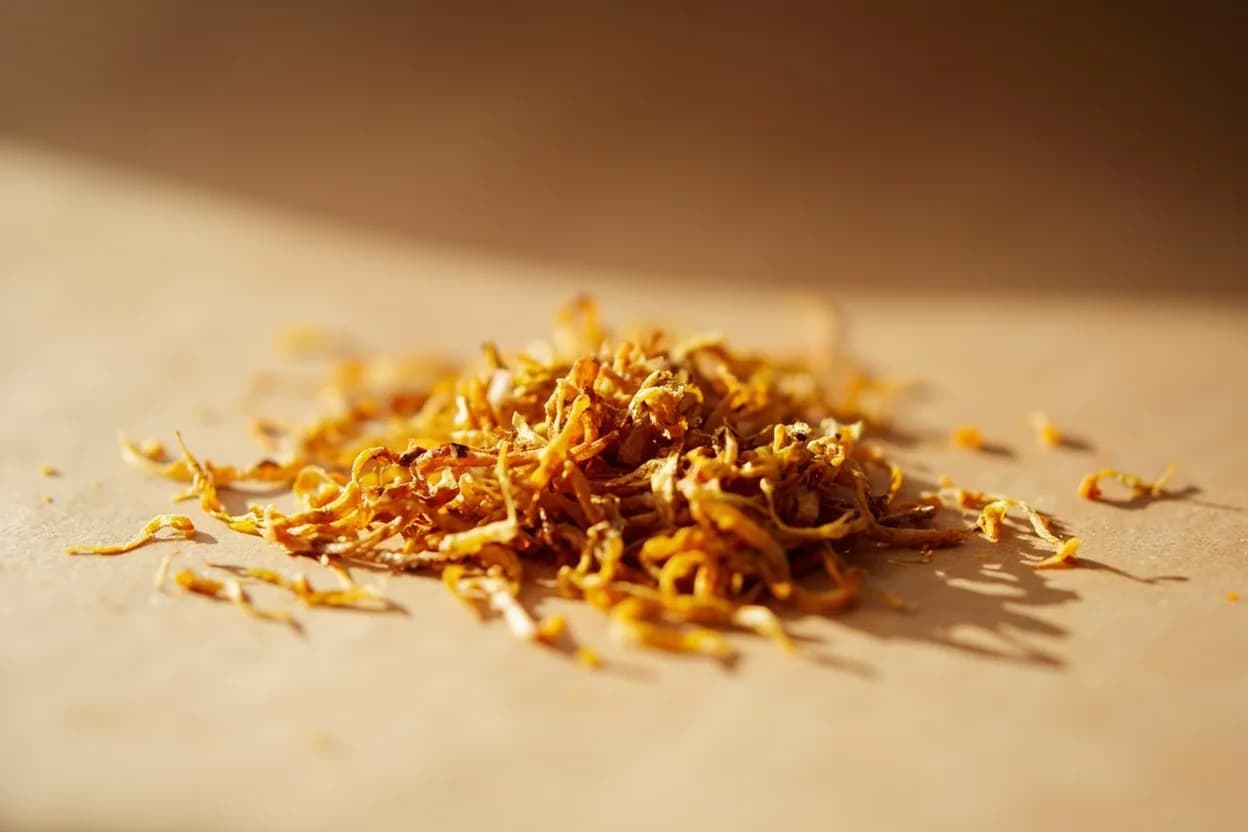
Alligator pepper (Aframomum daniellii or related Aframomum species) is a rhizomatous herb in the ginger family (Zingiberaceae) native to tropical West Africa. Do not confuse it with its close relative Aframomum melegueta (grains of paradise / foro) — while related, alligator pepper is a distinct species with a larger, more complex pod. The pod itself resembles a knobbly, scaled pod (hence 'alligator'); inside are numerous small, reddish-brown seeds packed together. The seeds are the spice. In Yoruba culture (Nigeria), atare has deep ritual significance: it is presented at naming ceremonies, weddings, and funerals, and its seeds are chewed to check the health of the spirit before eating. Culinarily, it appears in soups, stews, and spice blends across Nigeria, Cameroon, Ghana, and Liberia. Its flavor is complex: distinctly peppery heat from paradol and gingerols, layered with citrus-floral brightness from volatile terpenes, an underlying warmth that resembles cardamom, and a brisk, clean finish. It is simultaneously culinary ingredient, ritual object, and in some contexts a digestif and medicine.
In photos
Flavour profile
Classic pairings
- Palm oil stew (Yoruba obe ata)Nigerian / Yoruba
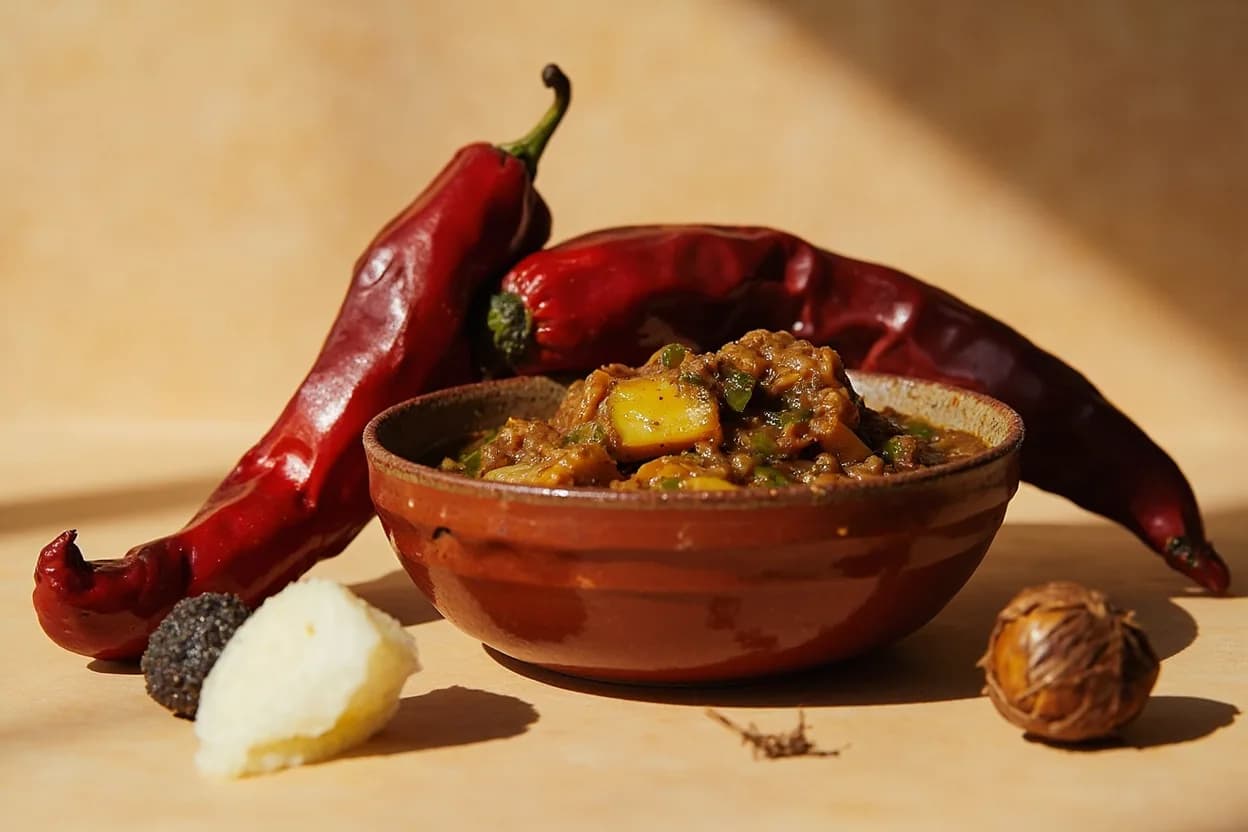
In obe ata (Yoruba pepper stew), atare contributes citrusy heat that cuts through the richness of palm oil and plays against the charred-tomato, onion, and scotch bonnet base; it is a signature aromatic that distinguishes Yoruba stew from its Ghanaian or Cameroonian counterparts.
- Pepper soup (Igbo ofe akwu variant)Nigerian / Igbo
Ground atare seeds appear in Igbo pepper soup spice blends alongside ehuru (calabash nutmeg) and uziza; the citrusy lift prevents the rich palm-nut broth from becoming one-dimensionally heavy.
- Fresh kola nutWest African ceremonial
In Yoruba, Igbo, and Akan ceremonial contexts, alligator pepper seeds and kola nut are presented together as a ritual greeting and blessing; the bitterness of kola and the citrus-spice of atare are consumed in sequence, each setting off the other.
- Nkwobi (spiced cow foot)Nigerian / Igbo
Atare is a key spice in this Igbo delicacy of boiled cow foot dressed with palm oil, utazi leaf, and a spice blend; its heat and citrus brightness cut through the gelatinous richness of the collagen.
- Fermented ogiri (castor seed ferment)Nigerian (pan-ethnic)
Atare and ogiri are both deeply earthy-pungent; combined in soups they create the umami-rich, complex flavor base that the West African cooking tradition uses in place of meat-based stocks.
- Catfish and freshwater fishNigerian / Delta
The clean citrus heat of atare is particularly effective at neutralizing the muddy, bottom-feeder notes of catfish and tilapia; it is a standard in fish pepper soups and braised fish preparations across the Niger Delta.
Adventurous pairings
- Gin (botanical spirits)
Atare's citrus-floral-pepper character aligns beautifully with juniper-forward spirits; a handful of seeds muddled into a gin cocktail, or steeped as a tincture, adds West African aromatic complexity without obscuring the base spirit.
- Dark honey (buckwheat or manuka)
The floral warmth of alligator pepper seeds dissolved in dark honey creates a complex condiment that works as a glaze for roasted poultry or a dipping sauce; the honey's sweetness tempers the heat while amplifying the floral registers.
- Grilled plantain (boli)
A spice dip of ground atare mixed with palm oil and salt is the traditional accompaniment for fire-grilled plantain (boli) in Nigeria; the fat carries the pepper's essential oils and the sweetness of the plantain anchors the heat.
- Bitter chocolate (above 85% cacao)
Like grains of paradise, alligator pepper's citrus-floral heat creates a stimulating counterpoint to dark chocolate bitterness; Zingiberaceae-family spices are increasingly used by craft chocolate makers seeking African-origin pairings for African-origin cacao.
- Melon seeds (egusi)
In egusi soup, atare's citrus heat provides the aromatic counterpoint to the fatty, slightly bitter melon seed paste; without a peppery aromatic element, egusi can taste flat and heavy.
Tread carefully
- Very delicate floral preparations (rose, jasmine tea, elderflower)avoid
While atare is itself somewhat floral, its peppery heat and eucalyptus edge clash with very delicate floral profiles; the pepper kills the softness that makes these flavors appealing.
- Tart, acidic fruit preparations (gooseberry, tart cranberry sauce)avoid
High acidity in already-sharp fruit preparations fights the citrus element in atare, producing an unpleasantly sharp, one-note result without any warm depth.
- Mild white dairy (ricotta, burrata, fresh mozzarella)avoid
The forward pepper heat of alligator pepper overwhelms the delicate milk-fat sweetness of fresh dairy; it belongs in bold, long-cooked savory preparations, not fresh dairy applications.
How to use it
- Crack pods to release seeds; use seeds whole in slow-cooked soups and stews, removing pod husk
- Toast seeds briefly in a dry pan before grinding to intensify the citrus-floral volatile compounds
- Grind fresh just before use — alligator pepper's essential oils are highly volatile and dissipate quickly once ground
- Use in combination with other Aframomum spices (grains of paradise, uziza) for layered West African pepper complexity
- Steep whole in palm oil over low heat for 10-15 minutes to create a spiced oil for finishing
- Chew a single seed after eating as a palate cleanser and digestif — traditional Yoruba and Igbo practice
Appears in
Related flavours
- Grains of paradise (foro / ataare)
Close Aframomum relative with overlapping pepper-floral character; the two are sometimes used interchangeably but alligator pepper has more citrus brightness
- Grains of Selim (hwentia / uda)
The most common co-spice in West African pepper soup blends; selim adds smoke and musk while atare contributes citrus-floral heat
- Calabash nutmeg (ehuru / African nutmeg)
Third pillar of Nigerian pepper soup trinity alongside uda and atare; adds warm nutmeg-fatty depth
- Cardamom
Botanical and flavor relative (both Zingiberaceae); cardamom's camphor-sweet profile overlaps with atare's warmth and makes it a possible substitution in non-West African cooking contexts
References
- 1.Jessica B. Harris, 'The Africa Cookbook: Tastes of a Continent' (1998)
- 2.Ozoz Sokoh (Kitchen Butterfly) — documented research on Nigerian spice traditions, Lagos, 2015-2023
- 3.Ngo Bum & Nde Achidi, 'Spices of the Cameroonian Forest Kitchen' (ethnobotany research, 2011)
- 4.Purseglove, Brown, Green & Robbins, 'Spices' Vol. 2 (1981) — botanical taxonomy of Aframomum
- 5.Andrew Dalby, 'Food in the Ancient World from A to Z' (2003)
Confidence: high
Notes
Ritual primacy
In Yoruba culture, alligator pepper (atare) holds a status unlike almost any other spice in any food culture — it is not merely a flavoring but a sacred object. At naming ceremonies (Ìmọ́ọ̀sí), the child's name is whispered in its ear alongside prayers, and atare seeds are placed in the child's mouth as a wish for a life of warmth and abundance. At funerals, it accompanies the deceased. At weddings, it is part of the bride price. This ritual centrality predates and exists entirely independently of its culinary applications, which are themselves extensive.
Aframomum taxonomy note
Multiple Aframomum species are sold under the name 'alligator pepper' in West African markets and diaspora stores. The most commonly cited species are A. daniellii (larger pods, Nigeria and Cameroon), A. citratum (more citrus-forward), and A. sceptrum. Grains of paradise (A. melegueta) are a distinct but related spice with similar but not identical flavor. When sourcing, buy whole pods from a West African grocery for the freshest seeds; pre-ground versions lose their citrus volatiles rapidly.