Fermented Vegetables & Pickles
Kimchi
Also: kimchee, gimchi, baechu kimchi, napa cabbage kimchi
Korea's national ferment — a living, sour-spicy-crunchy condiment that transforms everything it touches.
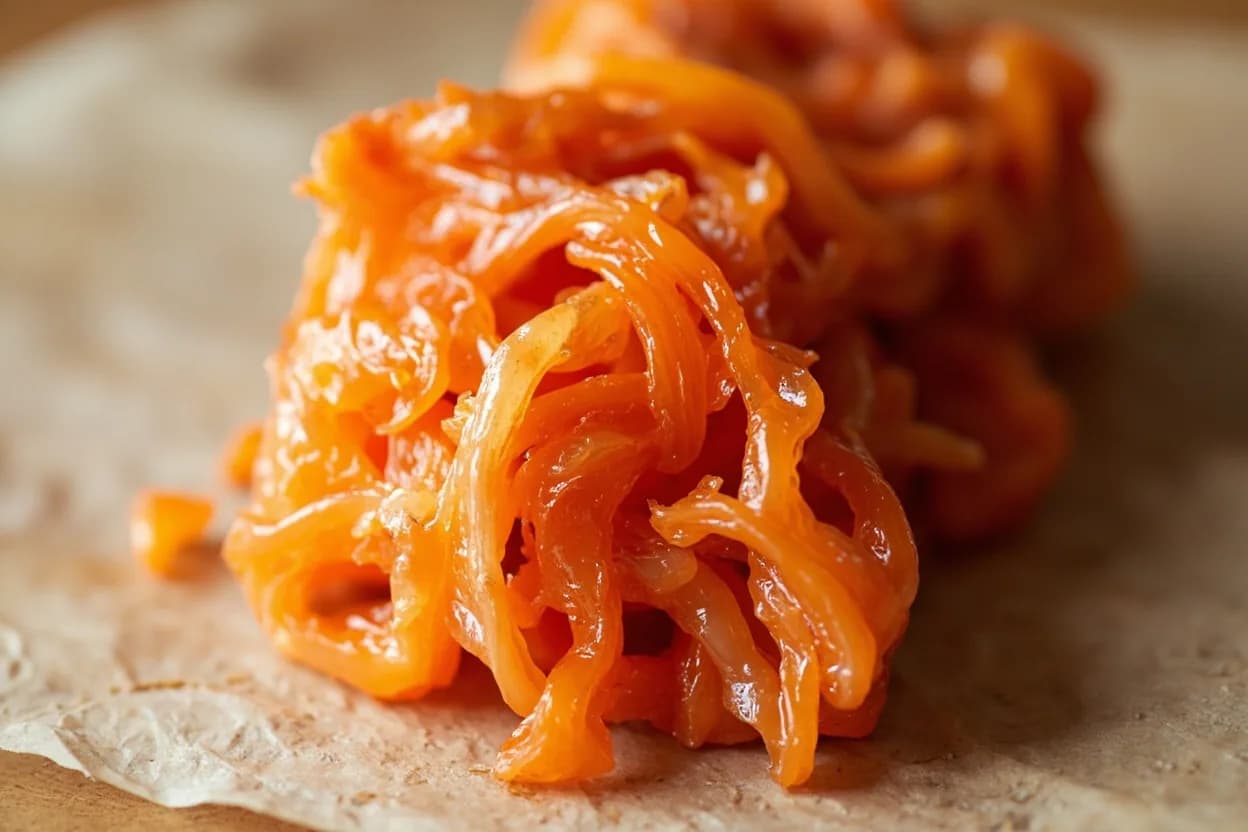
Kimchi is Korea's foundational fermented vegetable preparation, produced by lacto-fermentation of salted vegetables — most commonly napa cabbage (baechu kimchi) — packed with a paste of gochugaru (Korean red pepper flakes), garlic, ginger, fish sauce or saeujeot (salted shrimp), and scallions. Fermentation by Lactobacillus species generates lactic acid, which acidifies and preserves the kimchi while developing its characteristic sour tang. Fresh kimchi (geotjeori) is bright and spicy; aged kimchi (pungent, months-old) intensifies dramatically toward an almost funky, deeply sour complexity. The interplay of sour, spicy, salty, umami, and the satisfying crunch of partially fermented cabbage makes kimchi one of the world's most complex single condiments. Over 200 regional varieties exist, from kkakdugi (radish cubes) to oi sobagi (stuffed cucumber).
In photos

Flavour profile
Classic pairings
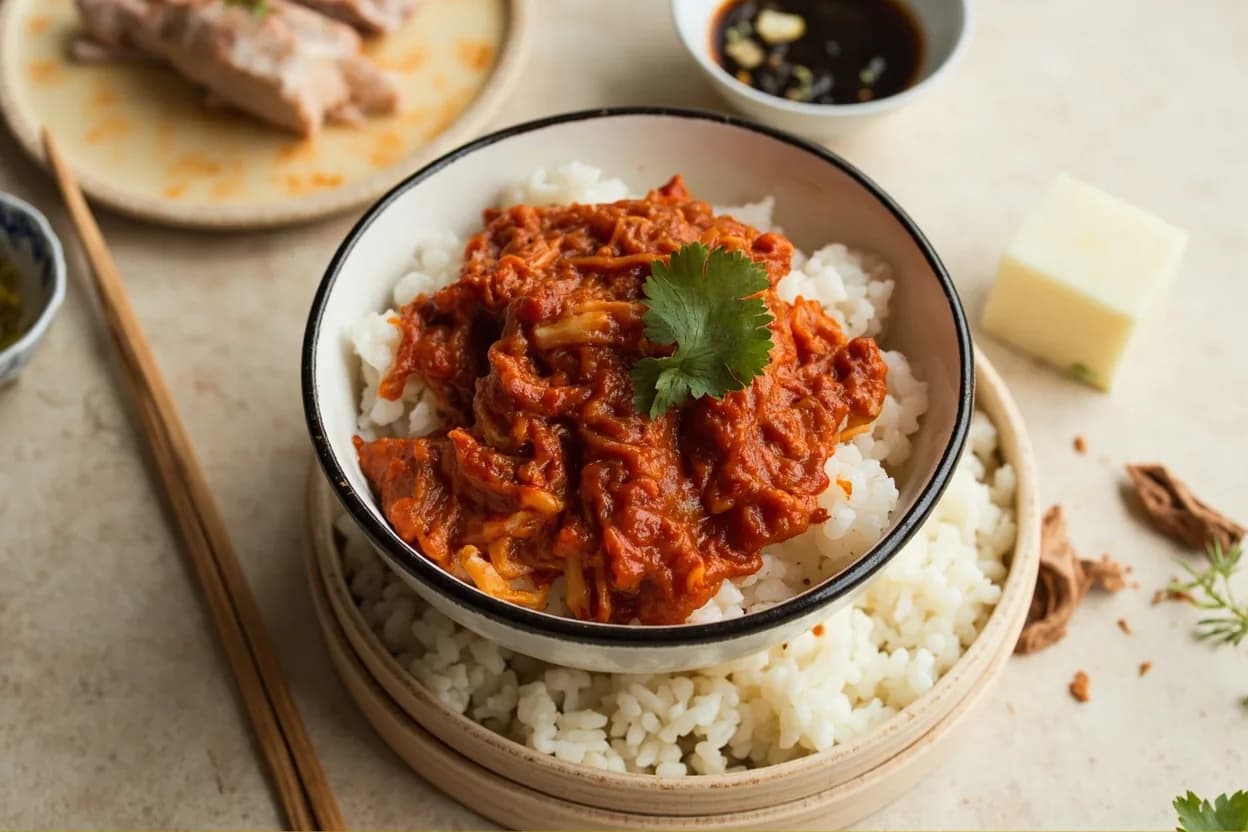
- Steamed white rice (bap)Korean
The simplest and most essential pairing — the neutral starch absorbs the bright acid and heat, and the brine doubles as sauce for plain rice.
- Pork belly (samgyeopsal)Korean
Kimchi's lactic acid cuts through pork fat with precision; grilled pork belly wrapped in lettuce with kimchi and sesame oil is one of Korea's defining flavor combinations.
- Tofu (dubu)Korean
Silken or soft tofu's mild creaminess amplifies kimchi's tang; sundubu jjigae (soft tofu stew) with aged kimchi is the canonical example.
- Ramen / ramyeon noodlesKorean
Kimchi added to spicy instant noodles is a Korean pantry staple; the acid brightens the starchy broth and the fermented depth amplifies the dried soup base.
- Sesame oilKorean
A few drops of toasted sesame oil drizzled over kimchi before serving rounds the fermented sharpness with a nutty buffer — standard finishing technique.
- Eggs (fried or scrambled)Korean
Eggs are the ideal richness buffer for kimchi's acid and heat — a fried egg over kimchi fried rice is practically a genre of its own.
- Pork shoulder / butt (long braise)Korean
Old kimchi (aged 3+ months) used as a braising medium for pork — kimchi jjim — is a classic: the acid tenderizes the meat while the pork fat rounds the fermented tang.
Adventurous pairings
- Grilled cheese sandwich
Kimchi inside a grilled cheese on sourdough is a modern-American fusion that works because the dairy fat mirrors the pork-fat pairings kimchi already loves; the acid keeps cheese from feeling heavy.
- Tacos (carnitas or fish)
Kimchi slaw on carnitas tacos replaces cabbage slaw with a fermented, spicy alternative — the gochugaru and cumin-braised pork share a red-chile kinship that makes this feel almost inevitable.
- Avocado
Kimchi's aggressive acid and heat against avocado's buttery creaminess is a near-perfect textural and flavor contrast — common in modern Korean-American brunch dishes and rice bowls.
- Butter pasta
Aged kimchi stir-fried in butter until the acid mellows and the sugars caramelize produces a deeply savory pasta sauce with unexpected elegance — umami from the brine, Maillard from the butter.
- Cheddar or aged Gouda
Fermented vegetables and aged cheese share lactic-fermentation compounds; the sharp funk of 2-year Gouda meets kimchi's sour-spicy tang on equal footing — a compelling cheese board element.
Tread carefully
- Delicate seafood (raw oysters, crudo)avoid
Kimchi's aggressive acid, heat, and garlic overwhelm the subtle ocean minerals of raw or lightly cured seafood — there is nothing left to taste of the original.
- Creamy vanilla dessertsavoid
The fermented brassica note does not pivot to dessert registers regardless of context — kimchi and vanilla custard or panna cotta clash without redemption.
- Very tannic red wines (Barolo, Amarone)avoid
High tannin amplifies kimchi's acidity and heat into harshness; the combination gives a metallic, astringent result. Off-dry whites, makgeolli, or lager are the pairings kimchi actually requests.
How to use it
- Use fresh kimchi (under 2 weeks) as a condiment or side — its bright, crunchy character is best uncooked.
- Use aged kimchi (2+ months, pungent, slightly fizzy) in cooked applications — kimchi jjigae, kimchi fried rice, kimchi pancakes (kimchijeon) — where the full sour depth has developed.
- The brine (kimchi juice) is itself a condiment and cooking liquid — use it to season braises, marinades, or as the acid in a vinaigrette.
- Chop and stir-fry kimchi in a dry or lightly oiled pan until the sugars caramelize (5–8 minutes) before adding other ingredients — this mellows acidity and concentrates the umami.
- Squeeze out excess liquid before using in pancakes or fritters to prevent a soggy batter.
- Allow kimchi to ferment at room temperature for 1–3 days after making, then refrigerate to slow further acidification while continuing slow development.
Appears in
Related flavours
- Gochugaru (Korean Red Pepper Flakes)
The defining spice of kimchi — understanding gochugaru's fruity, moderate heat is key to understanding why kimchi pairs differently than sriracha-hot foods.
- Doenjang (Korean Fermented Soybean Paste)
Korea's other foundational ferment; used in the same culinary system, pairs with many of the same ingredients, but contributes no heat and deeper soybean umami.
- Makgeolli (Korean Rice Wine)
The canonical beverage pairing for kimchi-based foods — milky, lightly effervescent, with enough residual sweetness to buffer acidity and heat.
References
- 1.Pettid, Michael J. — Korean Cuisine: An Illustrated History (Reaktion Books, 2008)
- 2.Kwak, Jenny — Dok Suni: Recipes from My Mother's Korean Kitchen (St. Martin's Press, 1998)
- 3.Lee, Cecilia Hae-Jin — Quick and Easy Korean Cooking (Chronicle Books, 2009)
- 4.Cho, Joohee — 'Microbiology and health benefits of kimchi' in Journal of Medicinal Food, 2021
Confidence: high
Notes
Vegan kimchi
Traditional baechu kimchi contains fish sauce or salted shrimp (saeujeot). Vegan kimchi substitutes these with soy sauce, miso, or blended seaweed for umami — the result lacks some fermented depth but is still excellent. When sourcing for guests, confirm the version.
Fermentation as cooking
In Korean cuisine, kimchi age is treated like wine vintage — different preparation stages serve different culinary purposes. A cook who understands kimchi thinks not in 'fresh vs. old' but in 'what application calls for what stage.' Fresh for texture, weeks-old for crunch-plus-sour, months-old for cooking, very old for jjigae where the depth is the entire point.