Fats, Pastes & Condiments
Rendered Duck Fat
Also: duck fat, graisse de canard, duck drippings
Gascony's liquid gold: a richly flavored, stable fat that turns roast potatoes into revelations and makes confit what it is.
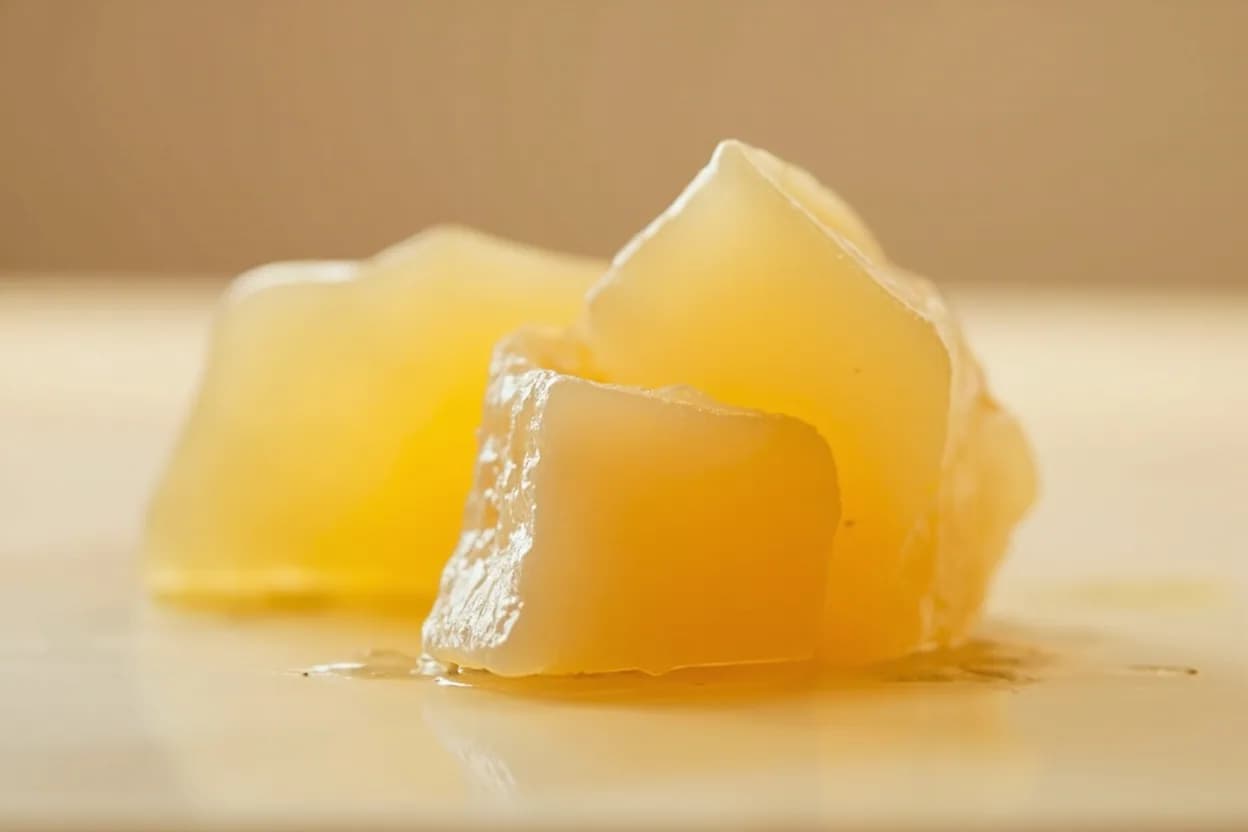
Rendered duck fat is the clarified subcutaneous and abdominal fat of the duck, obtained by slowly rendering (melting) the fat at low heat until all water evaporates and connective tissue is strained away. The result is a pale ivory to pale golden fat that is semi-solid at room temperature and liquid above approximately 27°C (80°F). Its flavor is distinctly savory and slightly gamey, with an underlying richness richer than chicken fat but less assertive than goose fat. Oleic acid dominates its fatty-acid profile (similar to olive oil), contributing both its characteristic creamy mouthfeel and its remarkable stability. In Gascon and Périgord cooking, duck fat is the default cooking medium; its combination of high smoke point (~375°F/190°C), rich flavor, and stability has made it coveted globally.
In photos
Flavour profile
Classic pairings
- Duck legs (confit de canard)French (Gascon)
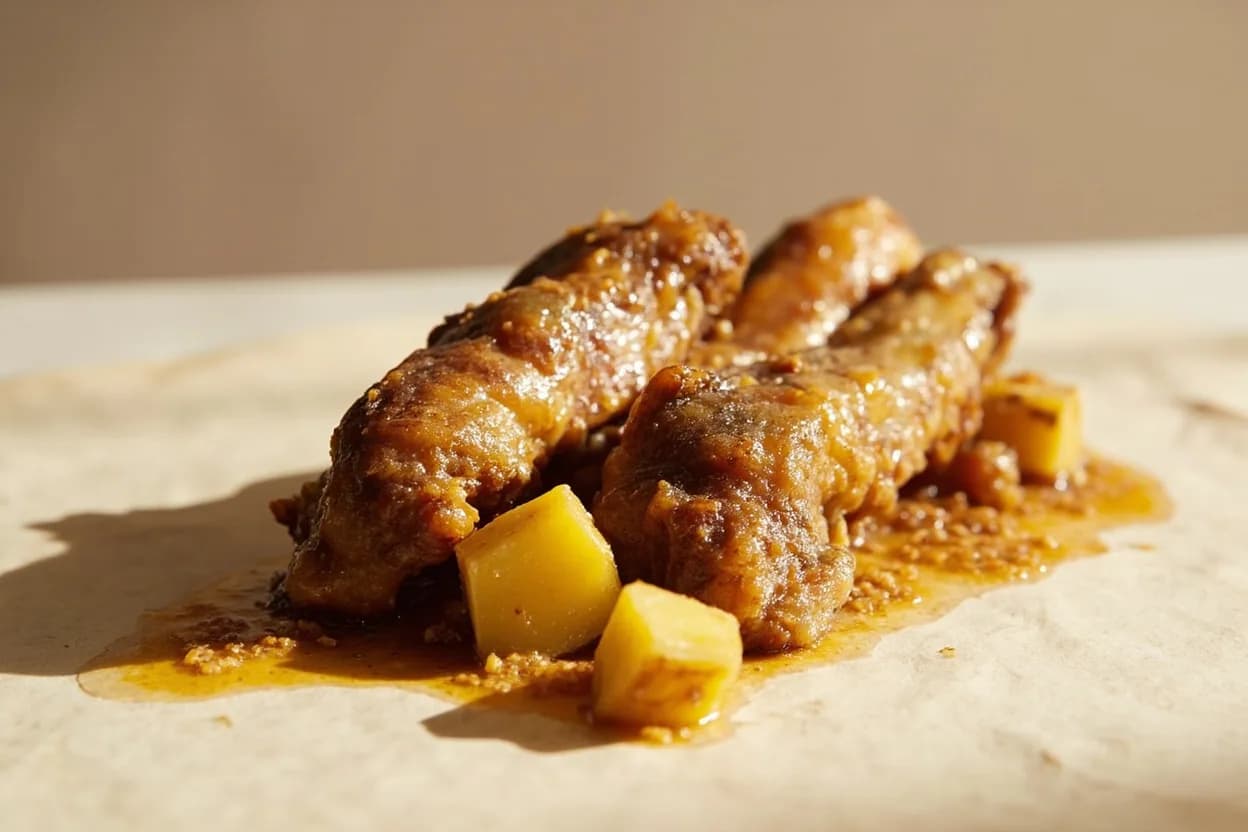
The definitive pairing: duck fat is the cooking medium of duck confit, submerging legs in their own rendered fat at 80°C for 6-8 hours. The fat flavors the meat while the meat flavors the fat in a closed loop of profound richness.
- Potatoes (roast or fried)French, British
Roast potatoes cooked in duck fat are widely regarded as the finest rendition of the dish: the fat's flavor penetrates the starch while its high smoke point ensures an audibly crisp crust and fluffy interior without burning.
- GarlicFrench (Gascon)
Whole garlic cloves slow-roasted in duck fat become confited — soft, sweet, and spread-able; the fat tempers garlic's harshness into a long, mellow sweetness that seasons the fat in return.
- Thyme and bayFrench (South-West)
The aromatics in every French confit crock: thyme's resinous oils and bay's camphor-eucalyptus note infuse into duck fat over long, slow cooking, becoming the seasoning medium for everything cooked in it.
- ShallotsFrench
Shallots slowly sweated in duck fat develop a silky sweetness without browning — a foundation for rich lentil dishes, gratins, and pan sauces served alongside duck confit.
- Lentils (Puy or beluga)French (Périgord)
Puy lentils dressed with duck fat vinaigrette or cooked with confit-fat-rendered aromatics are a classic accompaniment to duck confit in Périgord; fat coats the lentil skins into a silky richness.
- Cabbage (braised or sautéed)French (Alsatian, Gascon)
Duck fat braised cabbage — with a little vinegar and perhaps smoked pork — appears as the standard accompaniment to cassoulet, confit, and choucroute in Southwestern France.
- Eggs (fried or scrambled)French
Frying eggs in duck fat produces a crisped white edge with a richer, more savory fat-absorption than butter; the faint gamey undertone complements runny yolk's own fat without competing.
Adventurous pairings
Duck fat–fried kimchi rice (using duck fat in place of neutral oil for kimchi bokkeumbap) brings a savory, round depth to the fermented, spicy vegetables that neutral oils cannot; the result is richer and more complex.
- Sauerkraut and juniper berries
Braising sauerkraut in duck fat with juniper and caraway bridges Alsatian choucroute and Gascon confit traditions; juniper's piney, gin-like notes cut duck fat's richness cleanly.
- Sweet potato (roasted)
Duck fat's savory depth amplifies sweet potato's natural sugars through caramelization in a way that neutral fats cannot; the sweet-savory interaction produces a complex, restaurant-quality side dish.
- Miso (red) as a rub
Red miso thinned with a little duck fat and sake makes a powerful rub for duck breast or pork belly; the fermented umami of miso and the savory fat together produce a Japanese-French hybrid glaze.
- Polenta (finished with duck fat)
Stirring duck fat into finished polenta instead of butter produces a more savory, less sweet result — ideal beneath braised duck legs or rich mushroom ragù.
Tread carefully
- Delicate white fish (halibut, sole)avoid
Duck fat's characteristic savory, faintly gamey depth overwhelms the clean minerality of fine white fish; neutral oils or butter are always correct for these proteins.
- Light, fresh salads (without acid correction)avoid
Duck fat vinaigrette works beautifully when balanced with strong acid (wine vinegar, Dijon); used as a bare dressing without acid it coats leaves in a heavy, cloying layer.
- Pastry (high-ratio, where butter flavor is essential)avoid
Duck fat can technically replace butter in pie dough for a flakier crust, but the absence of milk solids and its gamey note is wrong for sweet pastry; pâte brisée for fruit tarts demands real butter.
How to use it
- Render from raw duck fat trimmings at 100°C/210°F with a splash of water until solids are golden, then strain — yields superior flavor to commercial product
- Confit: submerge salted duck legs in fat at 80°C/175°F for 6-8 hours; cool, store submerged in fat — refrigerates for weeks
- Roast potatoes: parboil, rough-toss, then roast in duck fat at 220°C/425°F — turn once at 25 minutes for even crisping
- Make a duck-fat vinaigrette: 1 part red wine vinegar + 1 tsp Dijon + 3 parts warm liquid duck fat; emulsify for lentil or frisée salads
- Confited garlic: whole unpeeled cloves submerged in duck fat at 120°C/250°F for 45 minutes — squeeze out for spreads or compound butter
Appears in
Related flavours
- Goose Fat
Richer, more assertively gamey cousin; same techniques, slightly more intense flavor.
- Lard
Pork-based equivalent for confit and frying; lacks duck fat's specific savory character.
- Rosemary
Evergreen herb that complements duck fat's gamey depth in potato dishes and leg confits.
- Duck (breast, leg)
Duck fat's primary co-ingredient; cooking duck in its own fat is a closed flavor loop.
References
- 1.Wells, Patricia. The French Kitchen Cookbook. William Morrow, 2013
- 2.Wolfert, Paula. The Cooking of South-West France. Wiley, 2005
- 3.McGee, Harold. On Food and Cooking: The Science and Lore of the Kitchen. Scribner, 2004
- 4.Bauer, Jeni Britton. 'Duck Fat as a Cooking Medium.' Saveur, 2015
Confidence: high
Notes
Stability and reuse
Duck fat's high oleic-acid content makes it very resistant to oxidation. After using for confit or frying, strain through a fine-mesh sieve, refrigerate, and reuse up to 3-4 times (it deepens in flavor with each use). Discard if it smells rancid or becomes dark and acrid.
Commercial vs. home-rendered
Canned or jarred duck fat (Rougie is the standard French brand; D'Artagnan in the US) is convenient and reliable, though blander than home-rendered fat from trimmings. For potato dishes or vinaigrettes where duck fat is the flavor, home-rendered from a whole duck's fat cap produces a markedly superior result.