Fats, Pastes & Condiments
Red Palm Oil
Also: palm oil, zomi, palm fruit oil, red oil
West Africa's vivid, nutty cooking fat — the orange-red soul of jollof, egusi, and palm-nut soups.
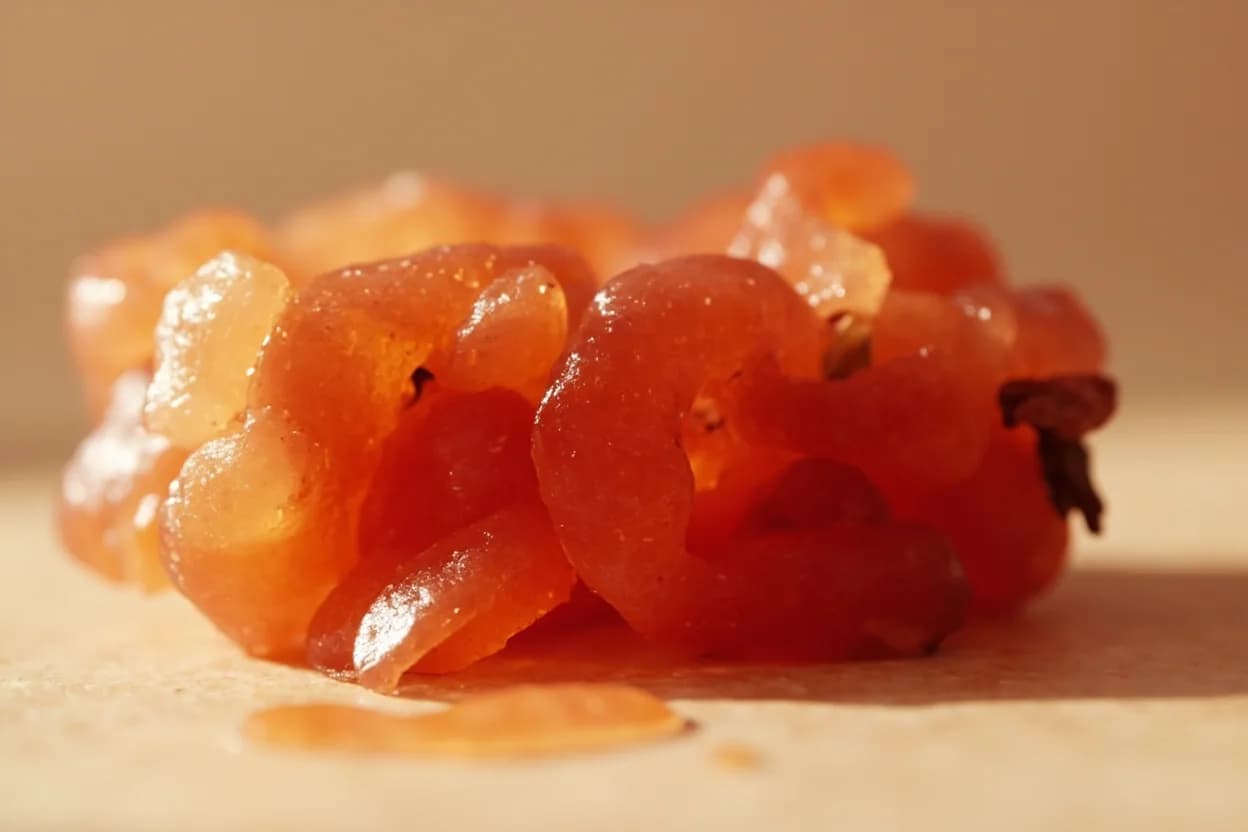
Red palm oil is the unrefined oil pressed from the fruit pulp of the oil palm (Elaeis guineensis), distinct from colorless refined palm oil. Its striking orange-red color comes from extraordinarily high concentrations of carotenoids (beta-carotene and lycopene). Flavor-wise it delivers a distinctly nutty, slightly fruity richness with an earthy, mineral edge and a faint underlying sweetness — nothing like neutral refined oils. It is the foundational cooking fat across a swath of West and Central African cuisines, and has cognates in Brazilian dendê oil used in Afro-Brazilian cooking.
In photos
Flavour profile
Classic pairings
- Egusi (melon seeds)Nigerian/West African
Egusi soup depends on red palm oil to carry the ground seeds — the nutty fat amplifies the melon's savory nuttiness in a self-reinforcing loop.
- Tomatoes and onions (stew base)West African
The carotenoid-rich oil fries down a tomato-onion-pepper base to a concentrated sauce that forms the backbone of jollof rice and Nigerian stews.
- OkraWest/Central African
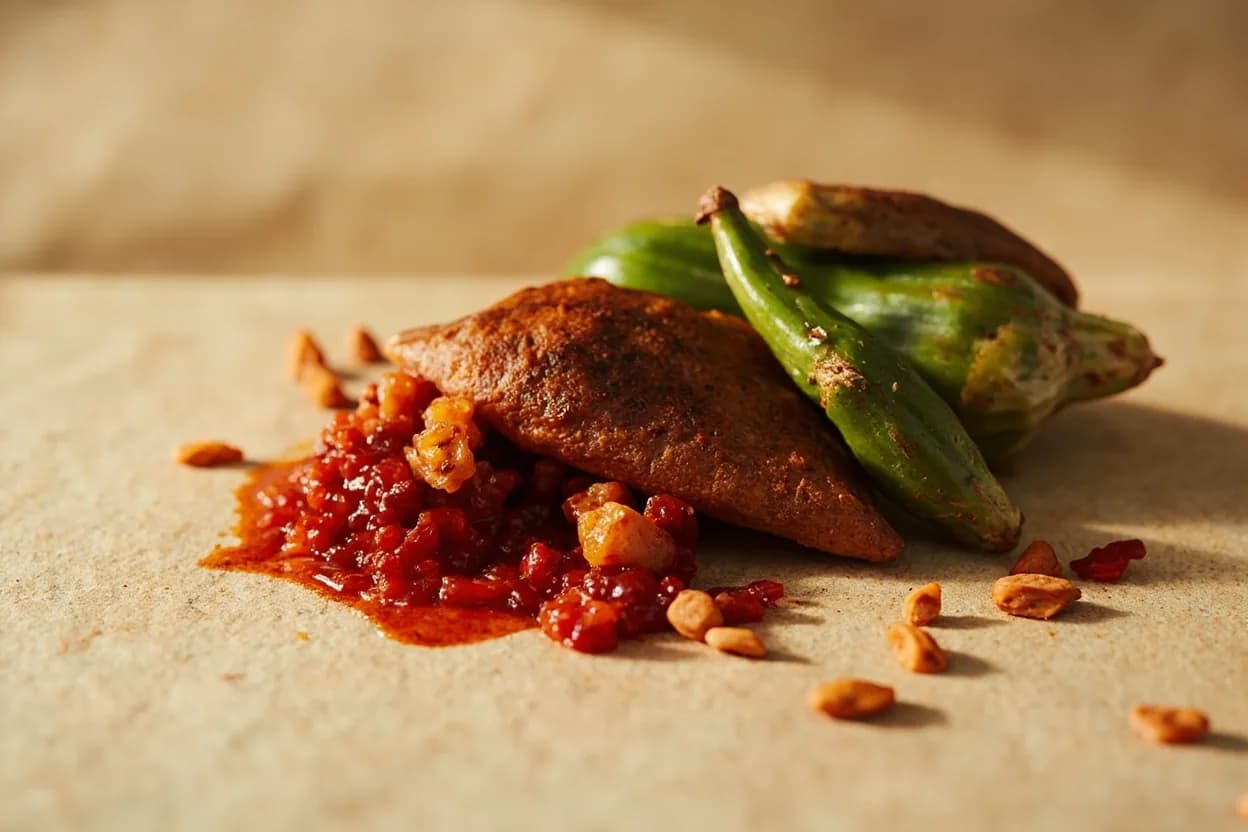
In okra soups the oil's thick body complements the mucilaginous texture and provides a red-orange color contrast.
- PlantainGhanaian
Kelewele and fried ripe plantains cooked in red palm oil develop a caramelized crust with an additional nutty-fruity complexity from the fat itself.
- Black-eyed peas (akara/acarajé)Afro-Brazilian/Nigerian
Deep-frying black-eyed pea fritters in dendê (red palm oil) is the defining technique of acarajé — the fat is inseparable from the dish's identity.
- Palm nuts / bangaNigerian/Delta
Palm nut (banga) soup begins by extracting cream from palm fruit pulp, then adding additional red palm oil — a doubled palm expression giving enormous body.
- Crayfish (dried)West African
The umami punch of dried crayfish and the funky richness of red palm oil are inseparable co-seasonings across West African soups.
Adventurous pairings
- Dark leafy greens (kale, cavolo nero)
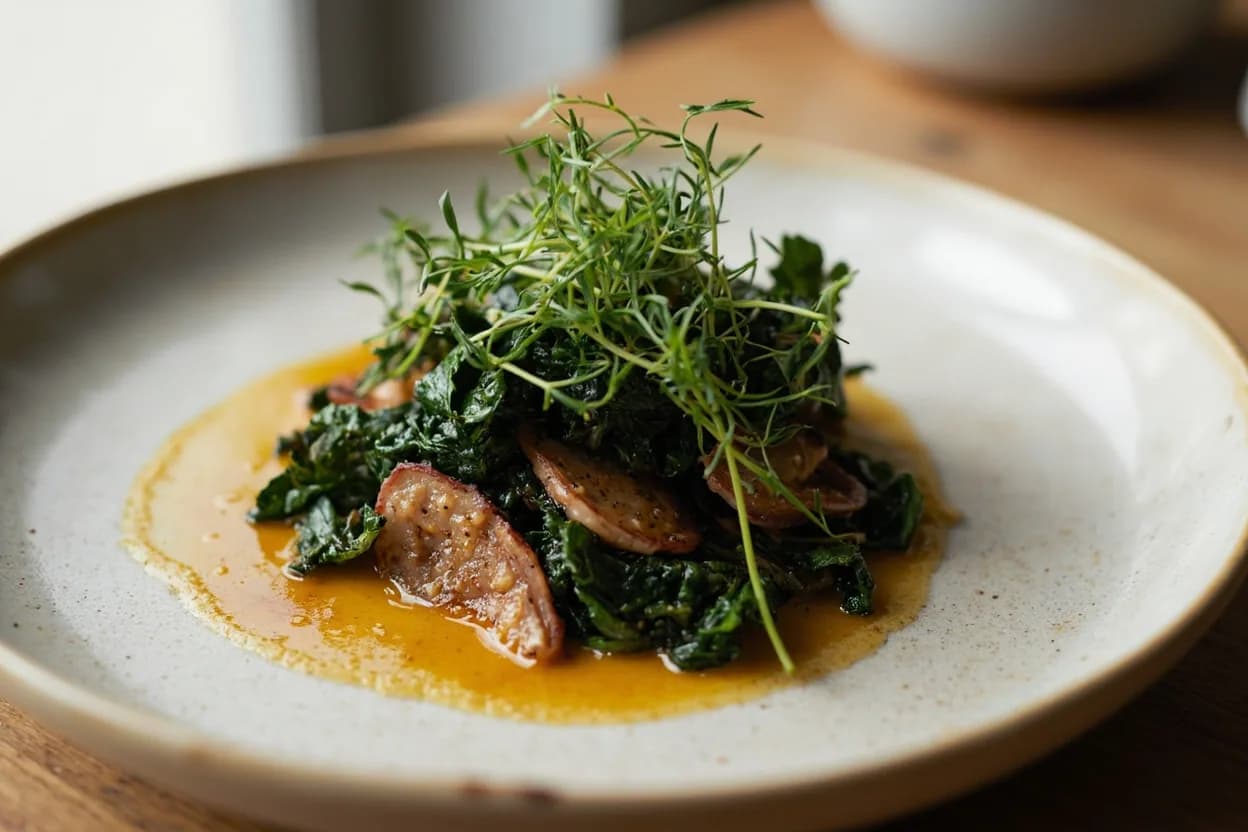
Sautéing kale briefly in red palm oil instead of olive oil introduces deep nuttiness that makes greens far more interesting; a teaspoon is enough.
- Eggs (shakshuka variant)
Replacing olive oil with red palm oil in a shakshuka base gives an unexpected West African character — pair with locust beans for a suya-spiced breakfast.
- Sweet potato
Roasted or mashed sweet potato drizzled with a small amount of red palm oil doubles the carotenoid richness and adds a savory, earthy counterpoint to the vegetable's sweetness.
- Popcorn
Melted and drizzled over popped corn, red palm oil delivers a nutty, faintly savory coating that needs only a pinch of smoked salt to be complete.
Tread carefully
- Delicate white fish (poached or steamed)avoid
Red palm oil's assertive earthiness and color will overwhelm and stain delicate fish preparations where a neutral fat or butter is expected.
- Pastry and baking (sweet applications)avoid
The mineral, savory undertone clashes with most sweet baked goods; its high beta-carotene content turns baked goods an unappetizing orange-yellow.
- High-heat deep frying over extended periodsavoid
Unrefined red palm oil degrades and develops off-flavors faster than refined oils at very high sustained temperatures — use refined palm oil for extended deep-frying.
How to use it
- Fry onions, tomatoes, and peppers down in red palm oil over medium heat until the oil separates ('frying out') — this is the base of most West African stews
- Use in small amounts (1–2 tsp) as a finishing drizzle over completed soups to restore color and aroma
- For milder dishes, temper the earthiness by combining half red palm oil with neutral oil
- Store at room temperature — it solidifies below 25°C/77°F and melts to liquid above; this is normal
- In Afro-Brazilian cooking, use dendê for the final fry and sauce stage of moqueca to preserve maximum flavor
Appears in
Related flavours
- Dendê oil
Dendê is the Brazilian name for red palm oil, used identically in Afro-Brazilian cuisine — the two are the same product from the same tree.
- Locust beans (iru/dawadawa)
Fermented locust beans and red palm oil are a classic savory duet in Yoruba and Igbo cooking — each amplifies the other's umami.
The heat of scotch bonnet is conducted and amplified through palm oil in soups and stews — they are inseparable flavor partners in West African cooking.
References
- 1.Zoe Adjonyoh, 'Zoe's Ghana Kitchen' (2017)
- 2.Yewande Komolafe, cooking columns, The New York Times (2019–2024)
- 3.Jessica B. Harris, 'High on the Hog: A Culinary Journey from Africa to America' (2011)
- 4.James Beard Foundation, West African Pantry Essentials seminar proceedings (2020)
Confidence: high
Notes
Unrefined vs. refined
Only unrefined (red) palm oil delivers the carotenoid color and savory-nutty flavor described here. Refined palm oil is bleached, deodorized, and nearly flavorless — the two are not interchangeable for flavor purposes.
Sustainability note
Conventional palm oil production is associated with deforestation in Southeast Asia. For cooking in the West African tradition, seek RSPO-certified or small-producer West African sourced red palm oil where available.