Fermented Pastes & Sauces
Red Miso (Aka Miso)
Also: aka miso, hatcho miso, sendai miso, mugi miso (when barley-based)
Deeply fermented, robustly savory Japanese soybean paste aged for months to years — the boldest, most complex miso in the Japanese pantry.
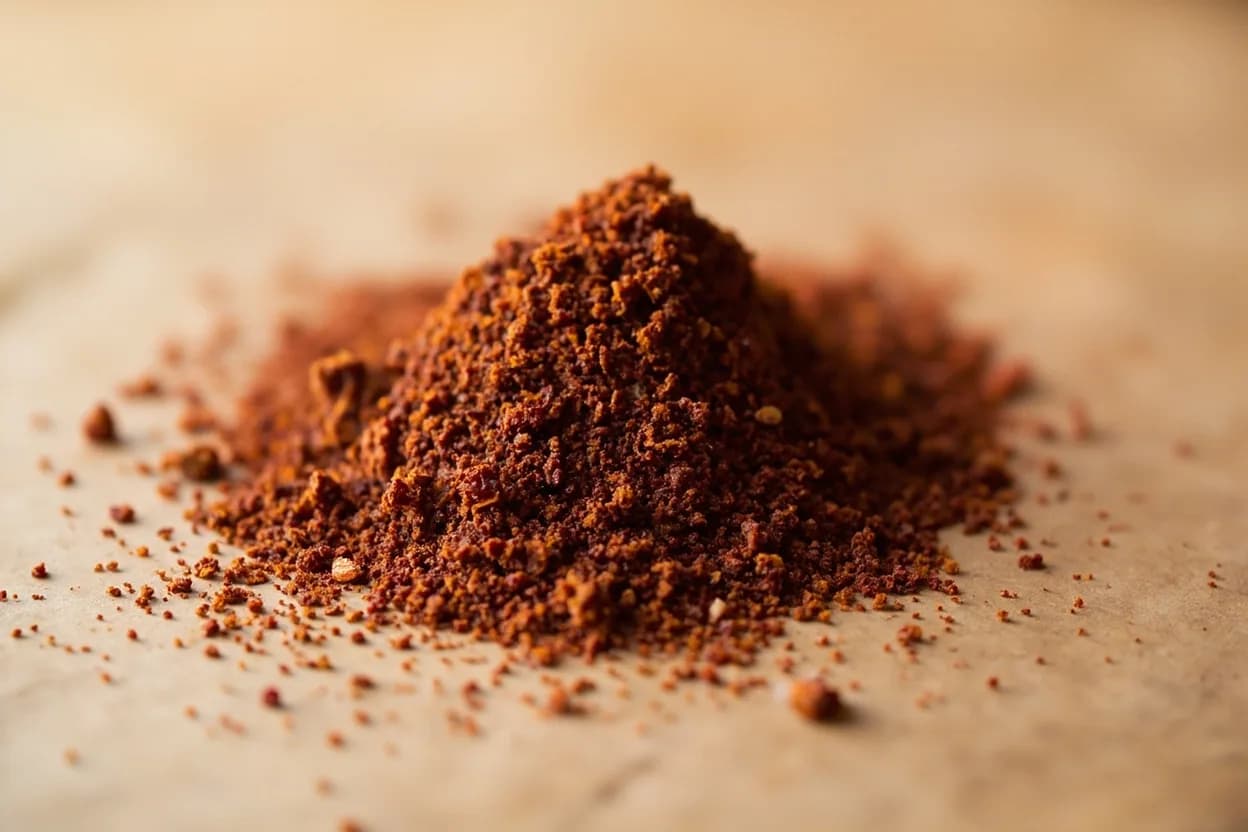
Red miso (aka miso) is fermented from soybeans with a lower proportion of rice or barley koji relative to white miso, and aged for anywhere from three months to over three years. Extended Maillard browning gives it its characteristic reddish-brown to dark mahogany color, and the long fermentation produces concentrated, assertive umami, pronounced saltiness (10–13%), earthy bitterness, and a complex array of esters that range from smoky to chocolatey. Hatcho miso from Aichi Prefecture is the most extreme form — a near-black brick of intense fermented power. Red miso performs best in hearty soups, glazes for red meat, winter braises, and anywhere that demands fermented backbone without subtlety.
In photos
Flavour profile
Classic pairings
- Pork belly and pork shoulderJapanese
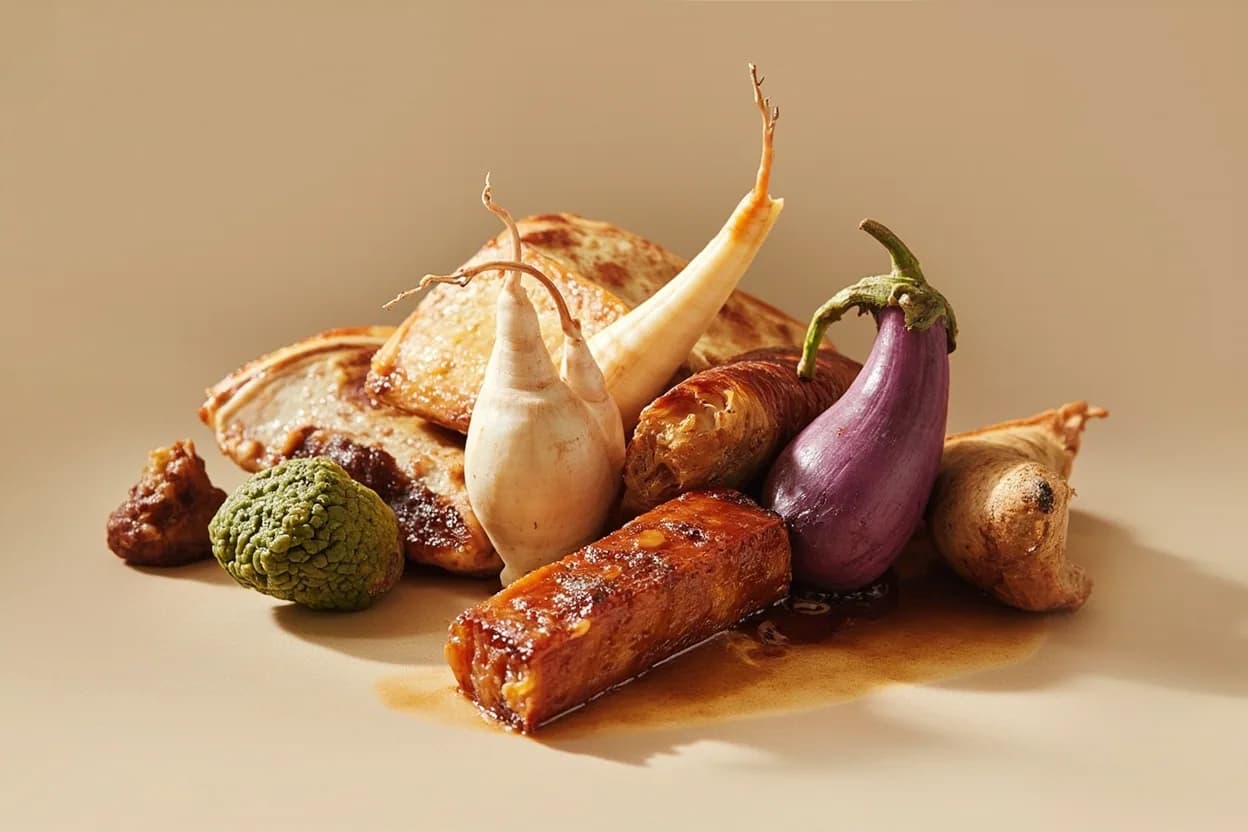
Red miso's salinity and umami penetrate fatty pork deeply in braises and glazes; the long ferment flavors match the richness without being lost.
- Root vegetables (burdock, daikon, turnip)Japanese
Hearty, earthy vegetables find their natural match in red miso's own earthiness; tonjiru pork and root vegetable miso soup is a cold-weather staple.
- EggplantJapanese
Dengaku with red miso is richer and more austere than the white miso version — the bitterness of the paste reads as savory depth against smoky eggplant flesh.
- BeefJapanese
A red miso marinade tenderizes and deeply flavors beef — the proteolytic enzymes from long fermentation break down surface proteins while imparting umami.
- Mirin and sakeJapanese
The trio of red miso, mirin, and sake forms the base of most Japanese glazes and braise liquids; the sweetness of mirin balances the paste's saltiness.
- Sesame (paste and oil)Japanese
Toasted sesame amplifies red miso's roasty undertones; together they appear in goma-miso sauces for noodles and dipping.
- Dashi (kombu-based, rich)Japanese
A rich kombu or shiitake dashi provides the mineral wash that lets red miso's depth bloom without turning harsh — key to hatcho miso soup.
Adventurous pairings
- Dark rye bread
Both are fermented, Maillard-browned, and slightly bitter; red miso butter on dark rye is a natural Nordic-Japanese crossover with startling coherence.
- Lamb
Lamb's lanolin gaminess and red miso's earthiness are mutually flattering — a miso-rosemary marinade for lamb shoulder bridges Japanese and Mediterranean pantries.
- Bitter chocolate (70%+ cacao)
Hatcho miso and dark chocolate share roasted, astringent, complex bitterness; small amounts of miso in a chocolate ganache create extraordinary depth.
Two fermented, intensely savory-salty condiments that seem redundant but actually balance each other — the lemon's citral brightness cuts through miso's density.
- Stout beer
The roasted malt and gentle bitterness of a dry stout echo red miso's fermented darkness; used in glazes and braise liquids for umami-forward results.
Tread carefully
- Delicate white fish and shellfishavoid
Red miso's intensity overwhelms the clean oceanic sweetness of fish like flounder or scallops — use white miso instead.
- Floral aromatics (jasmine, elderflower, lavender)avoid
Volatile floral esters are immediately cancelled by red miso's earthiness; the pairing creates muddy, competing notes.
- Raw application over mild greensavoid
Straight red miso is too salty and bitter to dress tender salad greens without dilution — always thin or balance with sweetener and acid.
How to use it
- Dissolve in hot dashi off the boil for miso soup — never boil once added
- Mix with mirin and sake (1:1:1 ratio) for a versatile glaze base, then brush on and broil
- Blend with butter and garlic for a compound butter for grilled steak or lamb chops
- Thin with dashi to make a marinade for pork or beef — 6–24 hours
- Whisk into braising liquid for depth in winter stews and braises
- Use sparingly as a seasoning paste in soups and sauces — a tablespoon seasons a liter
Appears in
Related flavours
Lighter, sweeter counterpart; use for delicate applications where red miso would dominate
Korean fermented soybean paste — a functional cousin with more pungent, less polished ferment character
- Fermented Black Bean Paste (Doubanjiang)
Shares the fermented-bean umami base but adds chili heat and a distinct Sichuan profile
References
- 1.The Miso Book — John Belleme & Jan Belleme
- 2.Japanese Soul Cooking — Tadashi Ono & Harris Salat
- 3.Shizuo Tsuji — Japanese Cooking: A Simple Art
- 4.On Food and Cooking — Harold McGee
Confidence: high
Notes
Hatcho Miso — The Extreme Case
Hatcho miso, produced within two kilometers of Okazaki Castle in Aichi, is fermented for a minimum of three summers under granite weights. The result is nearly black, extremely low in moisture, and almost crystalline in its umami intensity. Dilute heavily in dashi — far more than standard red miso — or it will salt and bitter a dish into inedibility.
Substitution logic
Where a recipe calls for red miso and you only have white, use approximately 1.5x the volume and add a small amount of soy sauce or tamari to approximate the saltiness and depth. The reverse — subbing white for red — requires adding extra salt and accepting a sweeter, milder result.