Vegetables & Fruits
Raw Mango
Also: green mango, kairi, kachcha aam, unripe mango
Fiercely tart, crisp, and intensely sour — the pickler's mango and the subcontinent's most beloved souring agent.
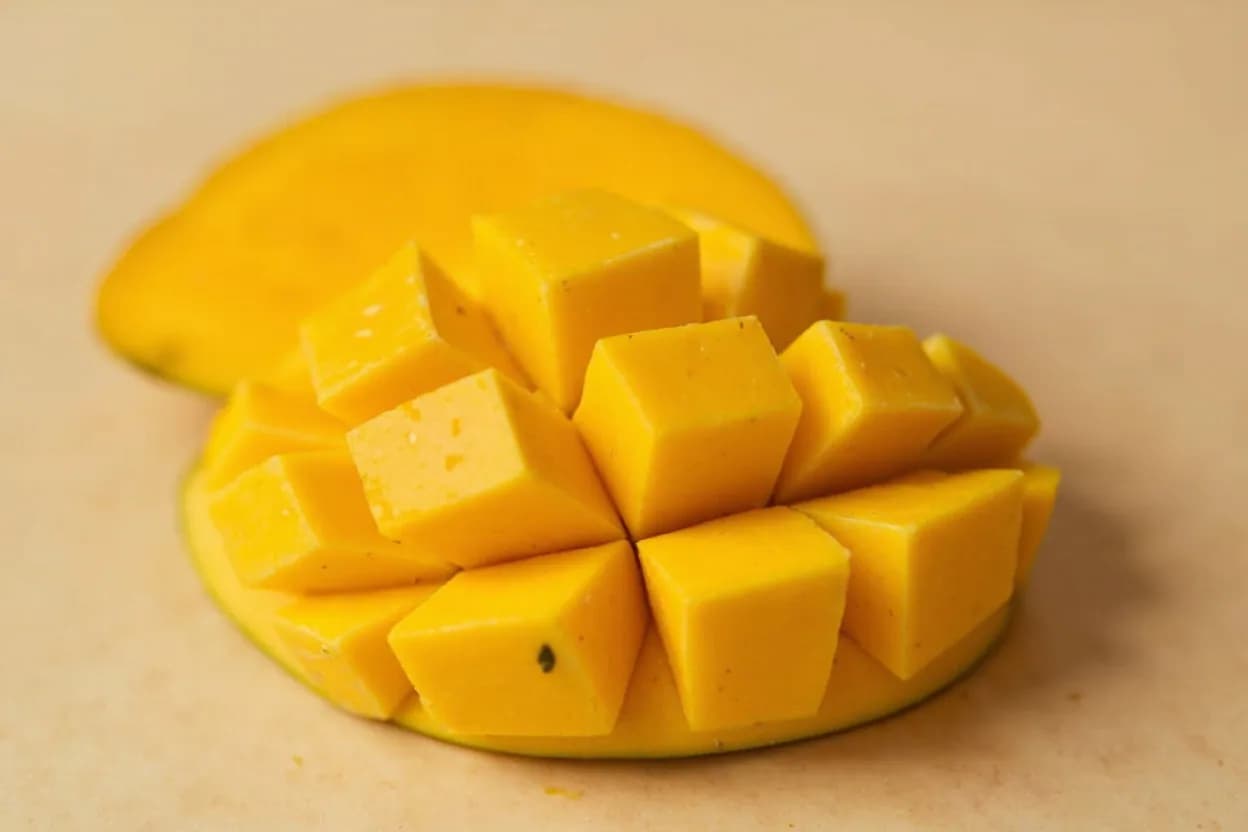
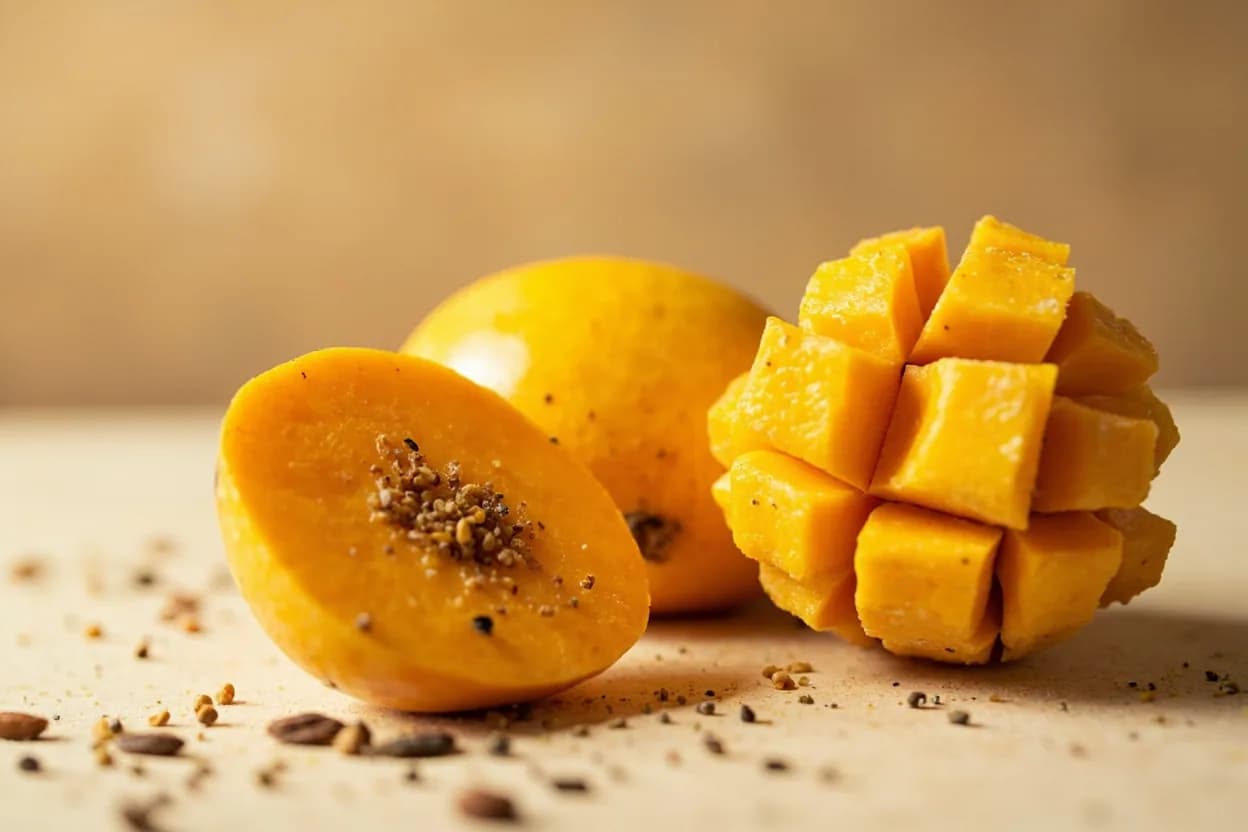
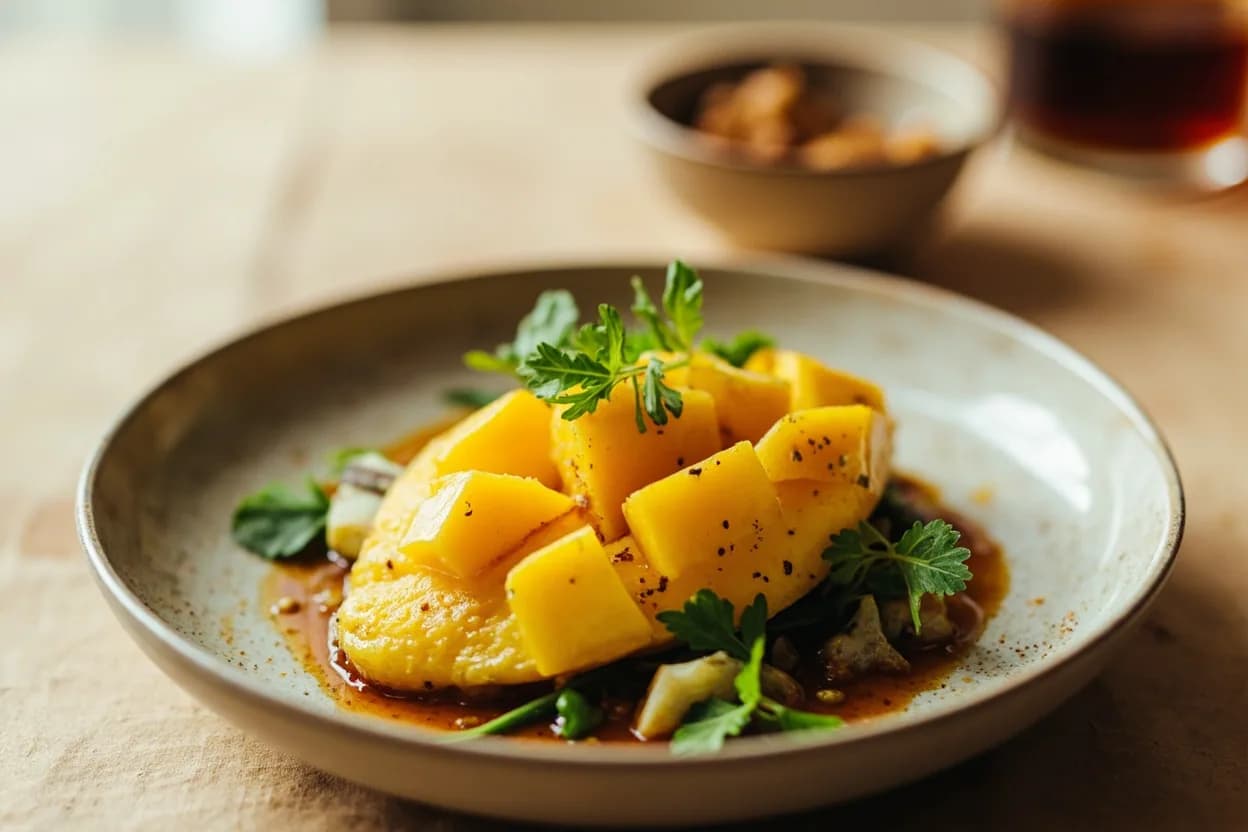
Raw mango refers to the unripe fruit of Mangifera indica harvested before sugars develop. The flesh is firm, pale yellow to white, and loaded with malic and citric acids that deliver a sharp, mouth-puckering sourness without sweetness. A faint aromatic resinous quality lingers beneath the acid. In South Asian cuisines, raw mango is used as a souring agent much like tamarind or kokum — in pickles (aam ka achar), chutneys, dals, rice dishes (pulihora-style), and the summer drink aam panna. In Southeast Asia it appears in papaya-adjacent salads, grilled meat accompaniments, and shrimp pastes.
In photos
Flavour profile
Classic pairings
- Mustard oilNorth Indian
Pungent mustard oil's heat bridges raw mango's acid into North Indian and Bengali pickles (aam ka achar); the fat carries and mellows the tartness.
- Chili (dried red)South Asian
Dried red chilies in pickles and chutneys provide heat that amplifies the sour-spicy thrill raw mango promises.
- Fenugreek seedsNorth Indian / Punjabi
Bitter fenugreek seeds are a canonical pickle spice with raw mango — their bitterness and mucilaginous quality help preserve and deepen the flavor.
- CuminNorth Indian
Roasted cumin powder (jeera) is the defining spice in aam panna (raw mango cooler) and raw mango chaat — its earthiness balances the acid beautifully.
- Shrimp paste (belacan)Malaysian / Thai
In Malaysian and Thai contexts, shredded raw mango is paired with shrimp paste, chilies, and palm sugar in rujak or kerabu — umami and acid create fireworks.
- JaggerySouth Asian
Unrefined cane sugar (jaggery) tames the acid into sweet-sour chutneys like aam ki launji — molasses depth and tartness in perfect equilibrium.
- Black salt (kala namak)North Indian
Sulfurous, eggy black salt is the classic finishing salt for raw mango chaat and aam panna — it intensifies the fruity-sour character.
Adventurous pairings
Raw mango's citric acid and fish sauce's fermented brine create a sour-umami dressing for grilled fish or vegetable salads, bridging South Asian and Southeast Asian sensibilities.
Thinly sliced raw mango over creamy burrata with chili oil and mint — the acid cuts the fat cleanly, creating a summer salad that reads as both Indian and Italian.
- Dark rum
Raw mango puree muddled into a dark rum cocktail (a subcontinental daiquiri variant) — the acid brightens and the molasses rum rounds the tartness.
- Smoked paprika
In fusion chutneys, smoked paprika adds a Spanish-inflected campfire note that pairs surprisingly well with the grassy-acidic mango.
Tread carefully
- Very acidic tomatoesavoid
Doubling up sour agents (raw mango + raw tomato in quantity) creates a thin, one-dimensional acid bomb with nothing to lift or round it.
- Delicate white fish (steamed)avoid
The sheer acidity of raw mango effectively 'cooks' delicate fish proteins (similar to ceviche) — textures become mealy if marinated too long.
- Heavy cream dessertsavoid
Raw mango's acids curdle cream when uncooked — temper the mango first by cooking with sugar before folding into cream-based desserts.
How to use it
- Grate raw mango on a box grater for chutneys, dals, and salads — fine strands distribute acid evenly
- Julienne for Southeast Asian salads (Thai-style yam mamuang); salt-draw first to slightly tenderize
- Boil whole pods with jaggery and spices for aam ki launji (sweet-sour chutney)
- Blend cooked pulp with cumin, mint, and black salt for aam panna cooling drink
- Sun-dry grated raw mango to make amchur powder — concentrated sourness without moisture
- Pickle in oil with spices for long-shelf aam ka achar (Indian mango pickle)
Appears in
Related flavours
Both are primary souring agents in South Asian cooking and can be used interchangeably; tamarind is deeper and fruitier, raw mango is sharper and more vegetal.
Another South Asian souring agent; kokum is more floral and tropical where raw mango is sharper and more astringent.
Amchur is dehydrated raw mango — same tart character in concentrated, shelf-stable powder form.
References
- 1.Madhur Jaffrey's Indian Cooking (1982)
- 2.Prashad: Cooking with Indian Masters — J. Inder Singh Kalra (1986)
- 3.The Complete Asian Cookbook — Charmaine Solomon (1976)
Confidence: high
Notes
Amchur versus fresh raw mango
Amchur (dried raw mango powder) and fresh raw mango are not interchangeable by weight — amchur's flavor is more concentrated and oxidized, losing the fresh green aroma. Use fresh raw mango when texture and brightness are desired; amchur when cooking requires a dry souring agent or long shelf life.