Proteins
Bone Marrow
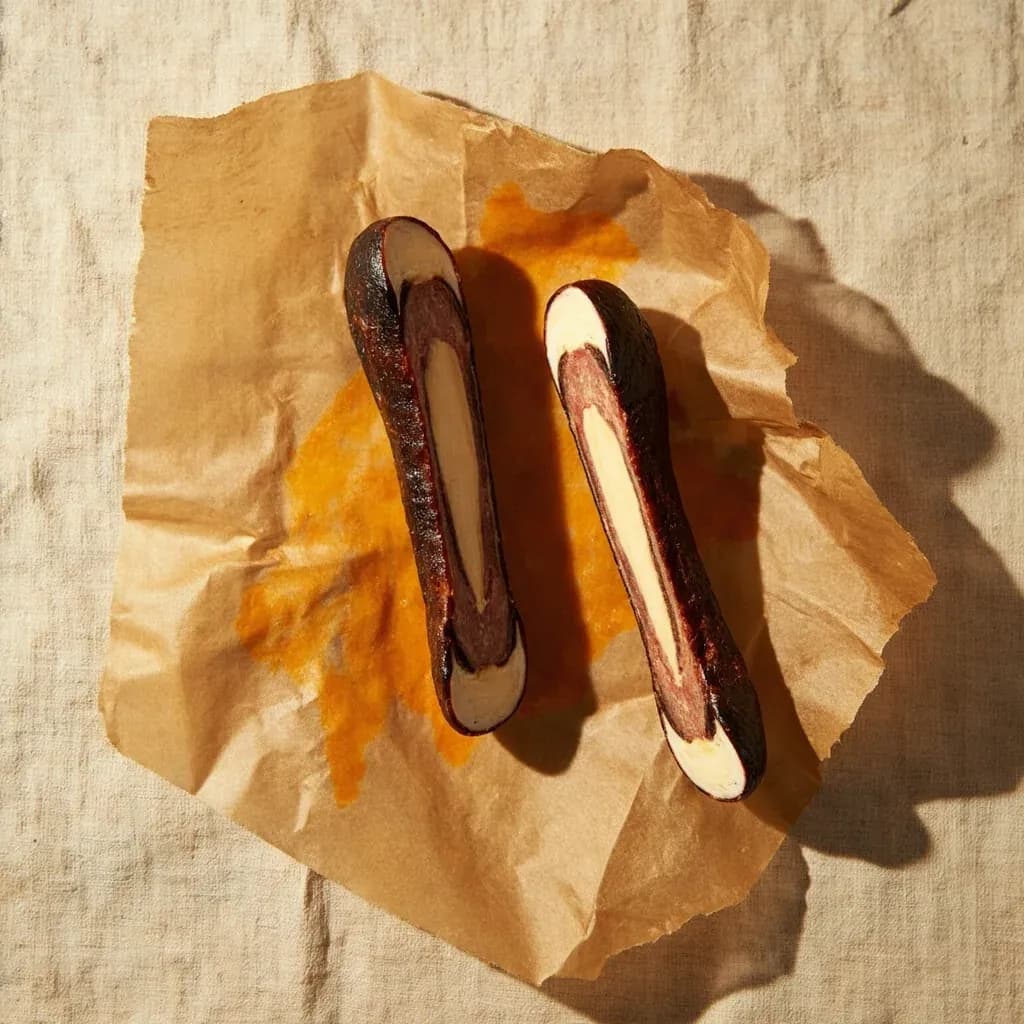
Rich, fatty interior of beef leg bones. Roast canoe-cut bones until the marrow softens and spreads like butter on toast; also enriches stocks, sauces, and braises.
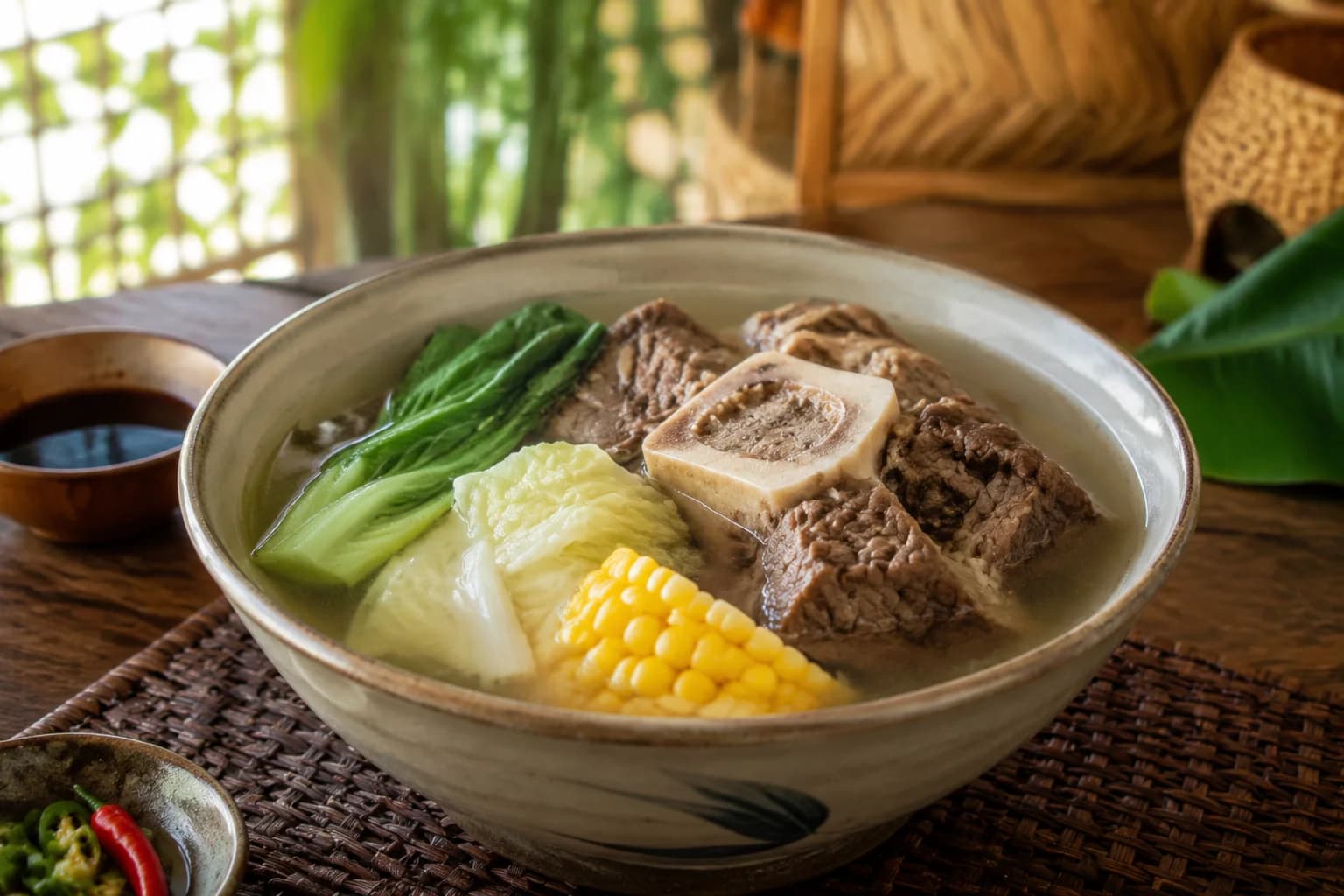
Bone marrow is the soft, fatty tissue that fills the hollow center of long bones, and in the kitchen it is treated less like a meat and more like a luxury butter. Beef femur — split lengthwise into a "canoe" — is the standard cut, prized because the marrow forms a generous cylindrical plug that holds its shape as it softens. Cooked briefly at high heat, marrow turns pale ivory, glistens, and yields to a spoon with the spreadable softness of room-temperature butter; its flavor is rich, faintly sweet, and beefy, with none of the mineral sharpness of the bone itself. It is roughly 80 percent fat, which is why a small amount carries so far in stocks, sauces, and compound butters, and why it spoils faster than muscle meat.
The dish most cooks encounter first is os à moelle — the roasted canoe served on toasted bread with coarse salt — a French bistro classic that was pulled back into the spotlight by the nose-to-tail cooking of Fergus Henderson's St. John restaurant in London. Beyond that role as a star appetizer, marrow is a quiet workhorse: a few spoonfuls folded into a red-wine reduction add gloss and body, a cross-cut bone slipped into a stockpot contributes gelatin and depth, and whipped into softened butter it becomes a finishing fat for steak and vegetables.
The two failure modes to keep in mind are undercooking (chalky, hard to scoop) and overcooking (shrunken, weeping fat, flat flavor), and most of the technique below is aimed at landing in the narrow, perfect middle.
- Measured in
- g
- Storage
- Refrigerate
Find it in
Types & varieties
Femur split lengthwise; the standard cut for roasting and serving as a spreadable appetizer.
Bone sliced across; presents a round disc of marrow, common in soups and stocks.
Smaller, paler, and more delicate; classic in Italian ossobuco-style braises.
Smaller yield with a slightly gamier, sweeter flavor; used in some Middle Eastern and British cooking.
Softer and milder; found in some Asian stocks and braises, less common in Western kitchens.
Buying and storing
Marrow spoils faster than steak, so treat it the way you would a fresh piece of fish. Buy it from a butcher you trust, ask specifically for canoe-cut femur bones, and use it within two to three days. Bones for stock can go straight into the freezer, but bones for roasting are best bought fresh.
The roasted canoe (os à moelle)
This is the canonical preparation, and once you have it down, every other use of marrow falls into place. The aim is a hot bone whose marrow has just softened to spreadable — bulging slightly, glossy, and pale ivory — with a thin, lightly browned surface.
Beyond the canoe
Marrow is a quiet luxury in the rest of the kitchen. A spoonful folded into a finished sauce adds gloss; a marrow butter transforms a plain grilled steak; cross-cut bones dropped into a stockpot give depth and body. Save the empty roasted bones for stock — they are already deeply flavored and add real backbone to a beef broth.
Common uses
Tips & pitfalls
- Ask your butcher to use the band saw for a flat, even face; cleaver-split bones look rustic but often shatter the marrow or leave bone shards.
- Soak the bones in cold salted water overnight to draw out blood — without this step, the cooked marrow can weep a grayish liquid and look unappetizing.
- Pat the bones thoroughly dry before roasting; surface moisture is what causes gray weeping and a dull appearance.
- Roast cut-side up at high heat for a short time. The most common mistake is overcooking, which drives the fat out of the marrow and leaves a dry, shrunken plug in a pool of tallow.
- Salt the marrow generously at the table with coarse flakes — it is almost all fat and reads flat without salt. Fine salt disappears into the surface.
- Use a flat-bladed marrow spoon or a butter knife; a regular teaspoon has the wrong shape and angle to scrape the marrow cleanly out of the bone.
- Don't try to extract the marrow before roasting. The bone insulates it, shapes it, and keeps the fat in place as it softens.
- If freezing, wrap each bone tightly in plastic and then foil. Marrow is high in unsaturated fat and picks up off-flavors from the freezer faster than muscle meat.
Nutrition
Nutrition
No USDA FoodData Central match for Bone Marrow yet. We surface a per-100 g profile once a generic whole-food entry is matched and verified.
In the shops
Matched grocery products
No matched grocery products for Bone Marrow yet.
Good to know
- Primary bone used
- Beef femur (thigh bone), typically split lengthwise into 4–6 inch canoe halves.
- Texture when cooked
- Soft, spoonable, spreadable like soft butter; pale ivory to golden, slightly translucent when hot.
- Typical yield
- Roughly 30–60 g (1–2 oz) of marrow per canoe-cut beef femur half.
- Roasting temperature
- 220–230 °C (425–450 °F).
- Roasting time
- 15–20 minutes for canoe-cut beef femur; internal temp about 63 °C (145 °F).
- Refrigerator shelf life
- 2–4 days from butchering, kept cold and well-wrapped.
- Freezer shelf life
- Up to 3 months when double-wrapped in plastic and foil; flavor drops off after that.
- Key equipment
- Flat-bladed marrow spoon (or butter knife), sheet pan or cast-iron skillet, sharp serrated knife for spreading.
Substitutes
- Softened unsalted butter — Closest texture match for spreading on toast; carries richness but no beefy depth.
- Soft (not fully rendered) beef tallow — Supplies the beef flavor and the fat; lacks the soft, gelatinous body of true marrow.
- Bone-marrow butter (marrow whipped into butter) — A practical hybrid that delivers both spreadable texture and a more intense marrow flavor.
- Duxelles or mushroom pâté on toast — Vegetarian alternative for the 'something rich on toast' role, with umami depth instead of beef fat.
Pairs with
Also called
beef marrow · roasted marrow · canoe-cut marrow bones · marrow bones