Spices
Coarse Salt (Rock Salt)
Large salt crystals for brining, salt crusts, pasta water and finishing texture.
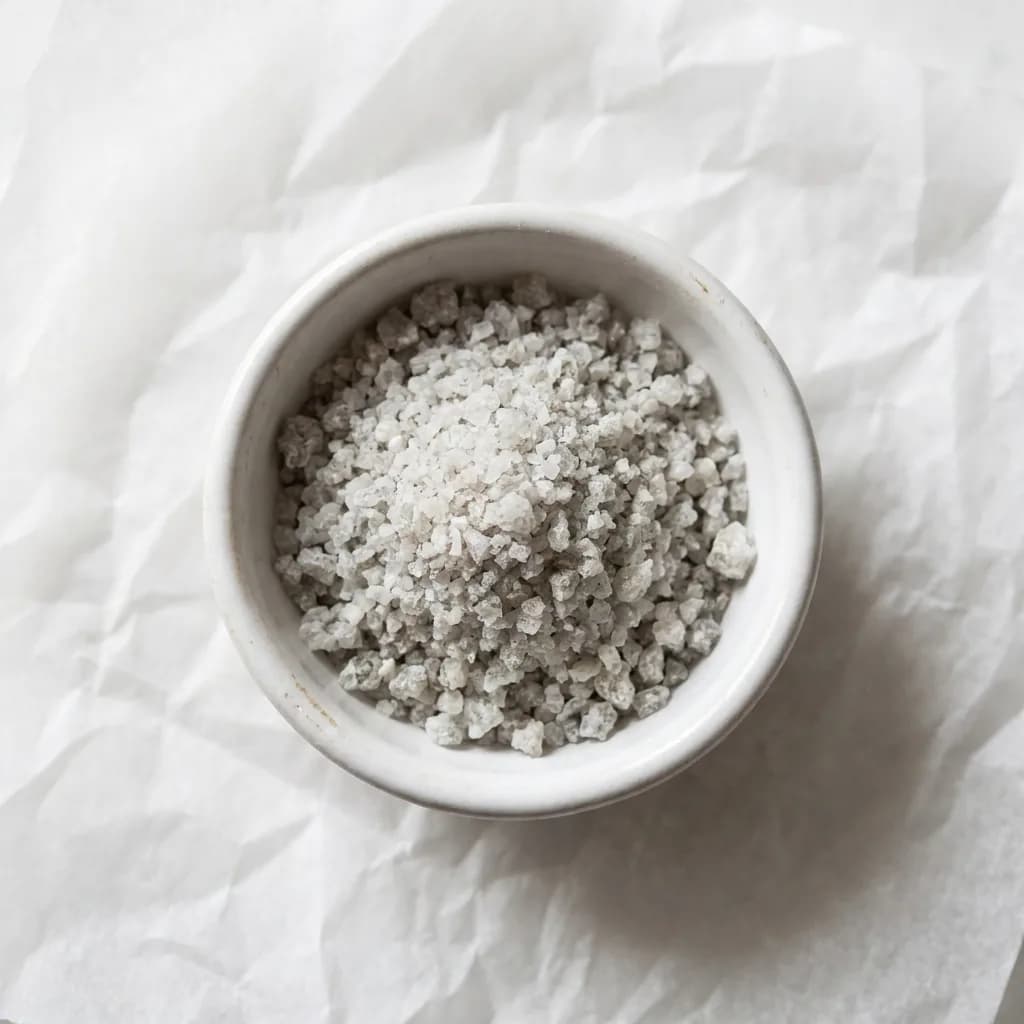
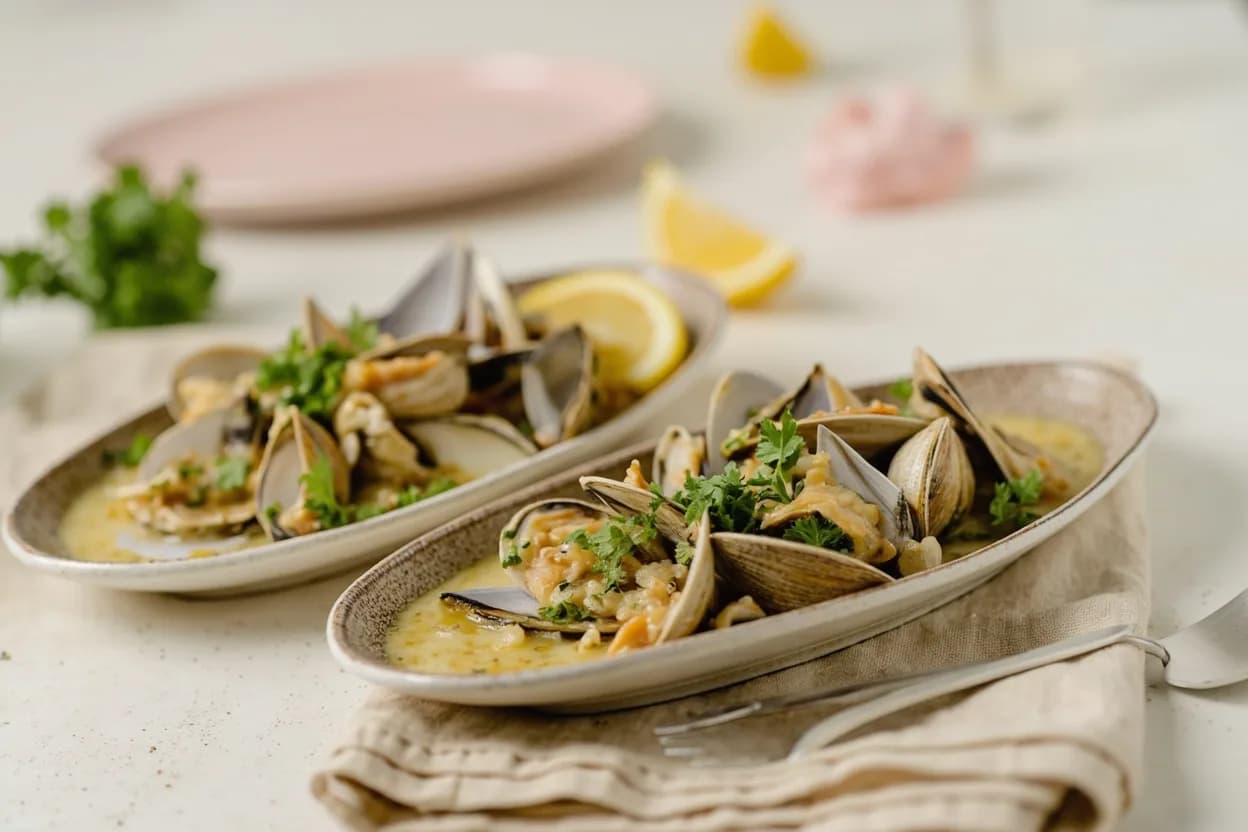
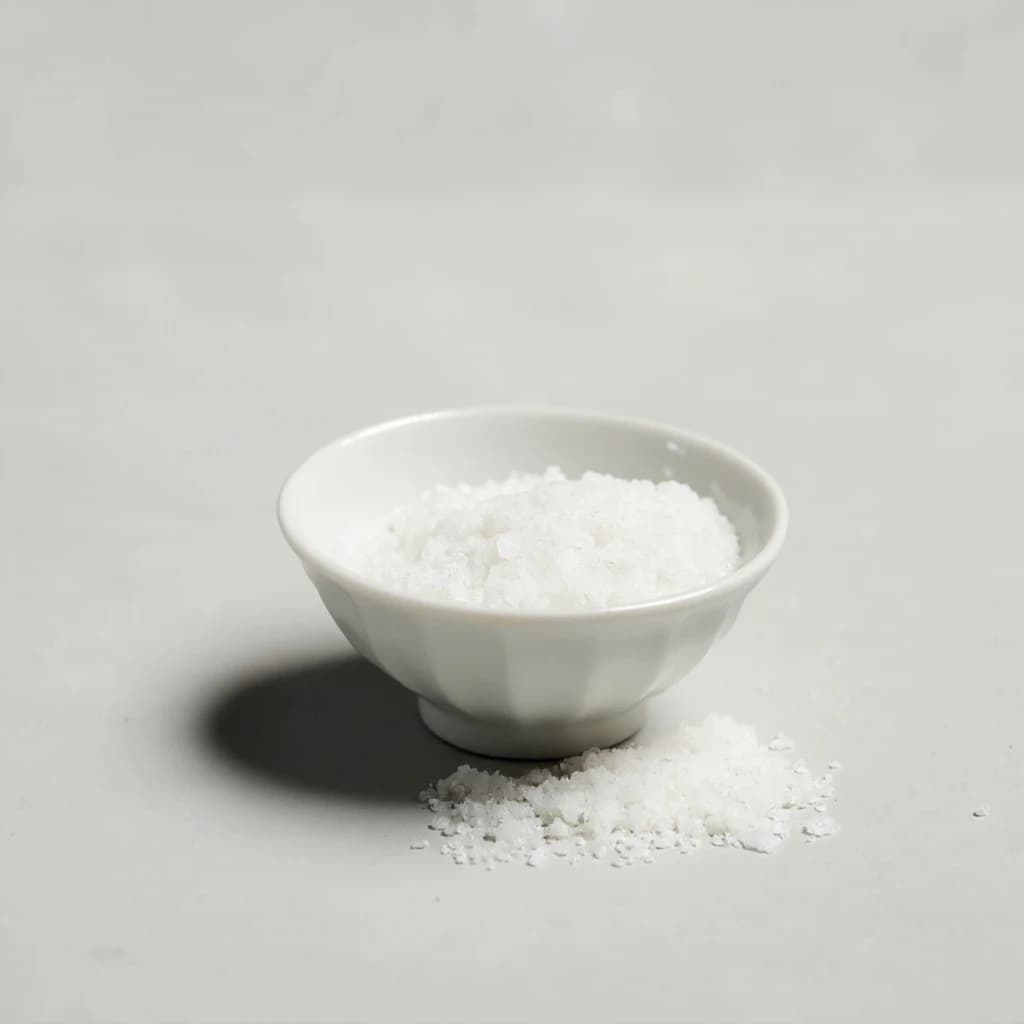
Coarse salt has large, chunky crystals that dissolve slowly, making it ideal for brines, salt crusts, curing and salting pasta water. It is also used as a textural finishing salt and as a bed for roasting or serving shellfish. Its size means it measures less salty by volume than fine table salt.
Coarse salt refers to large, irregular crystals typically ranging from 2–5 mm, produced either by crushing mined halite or evaporating seawater. Unlike fine table salt, its chunky structure makes it easier to pinch and distribute by hand, which is why professional cooks reach for it most often in the kitchen. The large crystal size also means it dissolves more slowly in cold water—a useful property when you want controlled, even seasoning over time rather than immediate dilution.
What sets coarse salt apart is its versatility across both wet and dry applications. Because the crystals are less prone to caking than fine salt, it stores almost indefinitely in a cool, dry place. The critical practical difference between brands is density: Morton's kosher salt is roughly twice as dense by volume as Diamond Crystal, which means a recipe calling for one cannot substitute the other without adjustment. This density variation is the single most common source of seasoning errors in home kitchens, and it is why serious cooks always weigh salt for brines and curing.
Coarse salt functions as both a seasoning and a cooking medium. In brines, the large crystals dissolve steadily, building salinity without overpowering. In salt-crusted preparations, the crust acts as a vapor barrier, trapping steam so the food cooks in its own juices while the exterior gains a light salt crust. For finishing, most cooks prefer flakier salts—but coarse salt's crunch and visual presence have their place, particularly in rustic preparations where texture is intentional rather than incidental.
- Measured in
- g
- Storage
- Pantry
Types & varieties
Twice as dense as Diamond Crystal by volume; the standard in most U.S. professional kitchens; contains anti-caking agents.
Lightweight, hollow flakes that scatter more evenly; preferred by many chefs for hand-seasoning; no anti-caking agents.
Unrefined, may contain trace minerals; typically gray or brown; used for ice cream makers and as a grilling fuel—not food-grade for seasoning.
Harvested from evaporated seawater; may contain trace minerals; available in various crystal sizes from specialty suppliers.
Mined in Punjab, Pakistan; distinctive pink color from iron oxide; harder crystals; popular for finishing and presentation; significantly more expensive.
Contains sodium nitrite/nitrate; used exclusively for meat curing. The pink color distinguishes it from edible salt—never use as a culinary substitute.
Brining with Coarse Salt
Coarse salt is the foundation of effective wet brines. The large crystals dissolve more gradually than fine salt in cold liquid, which produces a more controlled, even salinity throughout the brine period. For poultry, a standard wet brine is 5–8% salt by weight of the liquid—roughly 1 tablespoon Morton kosher salt per cup of water. Brine for 1 hour per pound for poultry, less for delicate fish (30–45 minutes). Pat the protein dry thoroughly after brining; surface moisture prevents proper browning. For thick cuts like pork shoulder, a dry brine (rubbing coarse salt directly on the meat and letting it rest uncovered in the refrigerator) draws moisture out, then reabsorbs it with the salt, resulting in deeply seasoned, juicy meat without the dilution of a wet brine.
- Weigh your salt—volume measurements are unreliable across brands.
- Dissolve salt in cold water for even distribution; stir until fully dissolved before adding protein.
- Pat meat completely dry after brining or dry-brining to ensure browning.
Salt-Crust Cooking
A salt crust creates a sealed cooking environment that steams food in its own juices while lightly seasoning the exterior. For a whole fish or dense vegetable, the crust should be at least 1 inch thick on all sides—roughly 2 lbs (900 g) of coarse salt per 3–4 lbs of food. Pack the salt firmly around the item, optionally sealing with a thin layer of egg white for a more solid crust. Bake at 400–450°F (200–230°C) until an instant-read thermometer reads the target temperature or the crust feels firm and the item shows through the salt. Let rest briefly, then crack the crust open at the table—the interior will be perfectly steamed and subtly seasoned without being overly salty.
- Use 2 lbs salt per 3–4 lbs food; crust must be uniformly 1 inch thick.
- Press the crust firmly to eliminate air pockets.
- Egg white as a binder creates a harder, more presentable crust but is optional.
Seasoning Cast Iron and Carbon Steel
After cleaning and drying cast iron or carbon steel cookware, a light application of coarse salt buffs away any remaining moisture and deposits a thin, even layer of seasoning. Apply a small amount of coarse salt to the heated, oiled surface and rub with a paper towel or soft cloth. The gentle abrasion from the crystals polishes the surface while the heat helps bond the oil. This is especially useful for restoring lightly rusted spots or maintaining cookware between full re-seasonings. Do not use this method on enameled cast iron or nonstick surfaces.
- Work on a barely warm surface, not screaming hot—the salt should glide, not scratch aggressively.
- Use a small amount; excess salt scratches rather than polishes.
- Not suitable for enameled or nonstick cookware.
Common uses
Tips & pitfalls
- Weigh coarse salt for brines and curing—volume measurements are unreliable due to density variation between brands. A standard wet brine is 5–8% salt by weight of liquid.
- Diamond Crystal and Morton are not interchangeable by volume: 1 tablespoon Morton is roughly equivalent to 2 tablespoons Diamond Crystal in a recipe.
- Avoid iodized coarse salt in brines; iodine can impart a metallic flavor to large batches held for hours.
- For salt crusts, estimate roughly 2 lbs (900 g) of coarse salt per 3–4 lbs of food; the crust should be at least 1 inch thick on all sides.
- When making ice cream with a hand churn, use a 4:1 ratio of ice to rock salt by weight for effective freezing.
- Rock salt sold for de-icing is NOT food-grade and may contain contaminants—never use it as a culinary ingredient.
- Some coarse salts contain anti-caking agents considered safe but undesirable for fine work like rimming cocktail glasses where clarity matters.
- For dry-brining thick steaks, season 45 minutes before cooking on a wire rack in the refrigerator; surface moisture evaporates, creating superior browning.
Nutrition
Energy
0 kJ · per 100 g
Protein
0g
0% DV
Carbs
0g
0% DV
Fat
0g
0% DV
Fiber
0g
0% DV
Sugars
0g
of which
Sodium
38758mg
1685% DV
Source · USDA FoodData Central · approx. Salt, table
View on FDC →In the shops
Matched grocery products
 €0.75
€0.75Fine Table Salt
Hacendado · 300 g · Mercadona
 €0.40
€0.40Fine Salt
Hacendado · 1 kg · Mercadona
 €0.40
€0.40Fine Sea Salt
BONPREU · kg · Bonpreu
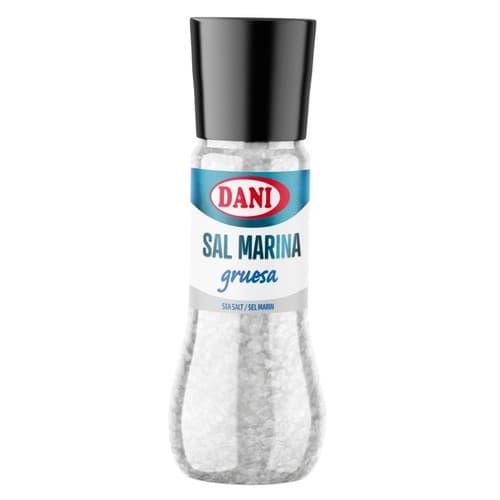 €2.99
€2.99Coarse Sea Salt
DANI · kg · Bonpreu
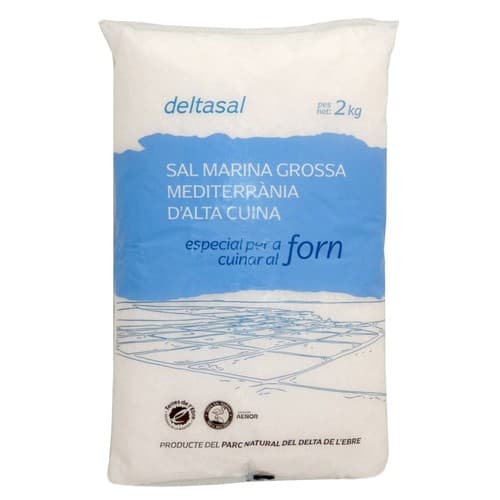 €1.40
€1.40Deltasal Coarse Sea Salt
DELTASAL · kg · Bonpreu
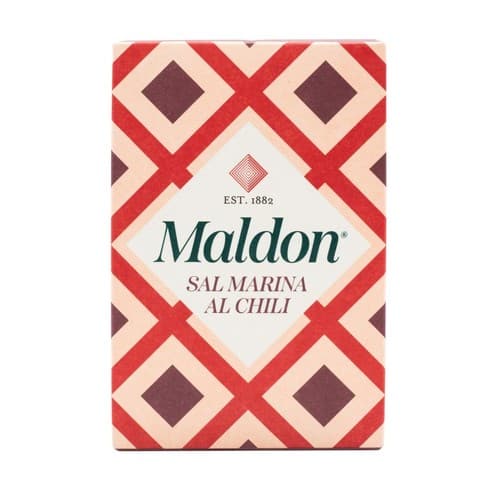 €5.89
€5.89Maldon Chili Sea Salt
MALDON · kg · Bonpreu
Good to know
- Crystal size
- Typically 2–5 mm; irregular, chunky grains that are easy to pinch and spread by hand.
- Density variation
- Morton kosher salt is roughly 2× denser by volume than Diamond Crystal; always weigh for accuracy in brines and curing.
- Sodium content
- Approximately 40% sodium by weight—identical to fine table salt on a weight basis.
- Shelf life
- Indefinite when stored in an airtight container in a cool, dry place; large crystal size resists moisture absorption.
- Source
- Both mined (rock salt/halite) and evaporated from seawater; the same coarse grind produces equivalent culinary results regardless of origin.
- Anti-caking agents
- Some brands (Morton) contain yellow prussiate of soda; avoid these for fine work like cocktail glass rims where clarity matters.
Substitutes
- Fine (Table) Salt — Smaller crystals dissolve instantly but are harder to pinch and distribute evenly; for brines, use roughly ¼ the volume (1 tbsp coarse ≈ ¼ tsp fine by weight equivalence).
- Kosher Salt — Most brands of kosher salt ARE coarse salt—Morton and Diamond Crystal are simply different densities of the same category. Use the same variety to avoid density confusion in recipes.
- Pickling Salt — Pure sodium chloride without anti-caking agents; acceptable in brines but finer than coarse salt, making it harder to distribute evenly by hand.
Pairs with
Also called
rock-salt · coarse-sea-salt
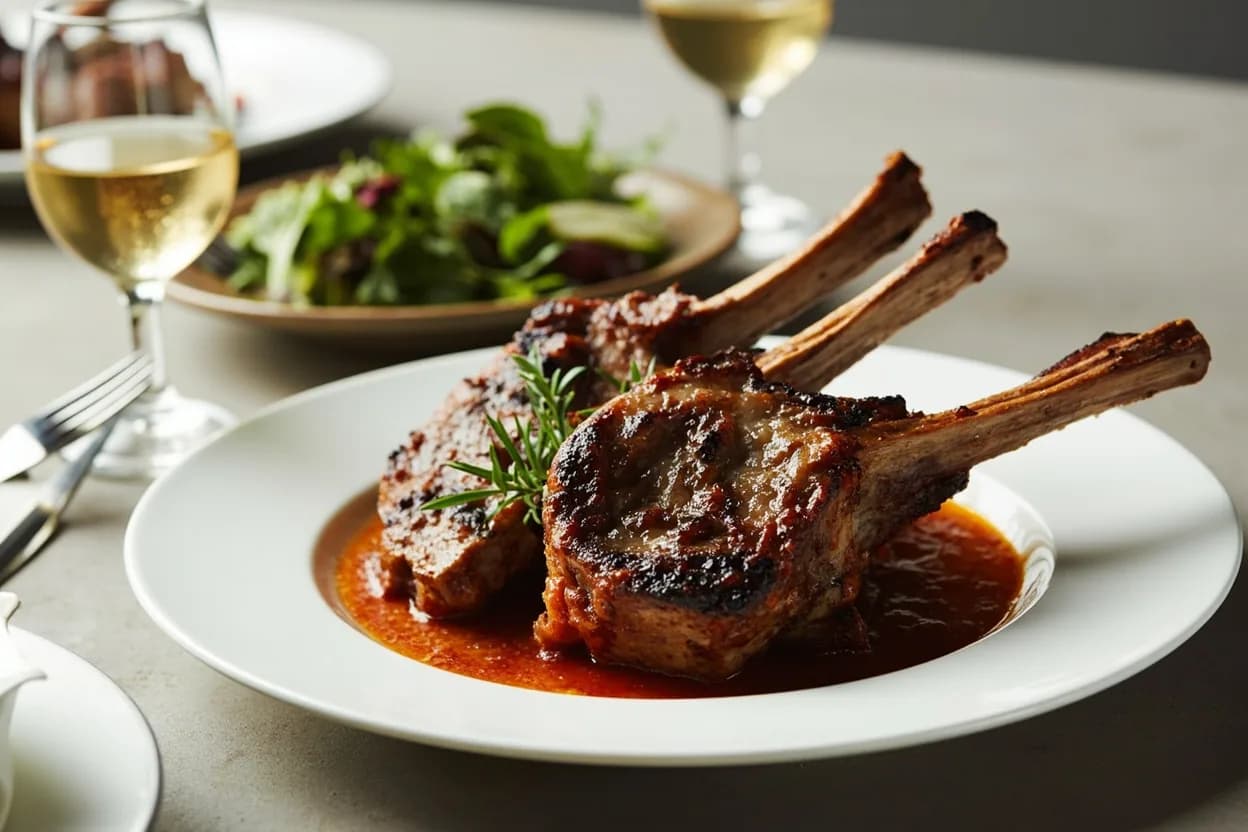
Appears in these dishes

Related
Salt
The one seasoning that makes everything else taste like itself

Black Pepper
Pungent, woody heat — best cracked fresh over anything savory
Amchur
Dried unripe mango ground to a tart, fruity souring powder
Paprika
Sweet, vivid ground pepper for color and gentle warmth
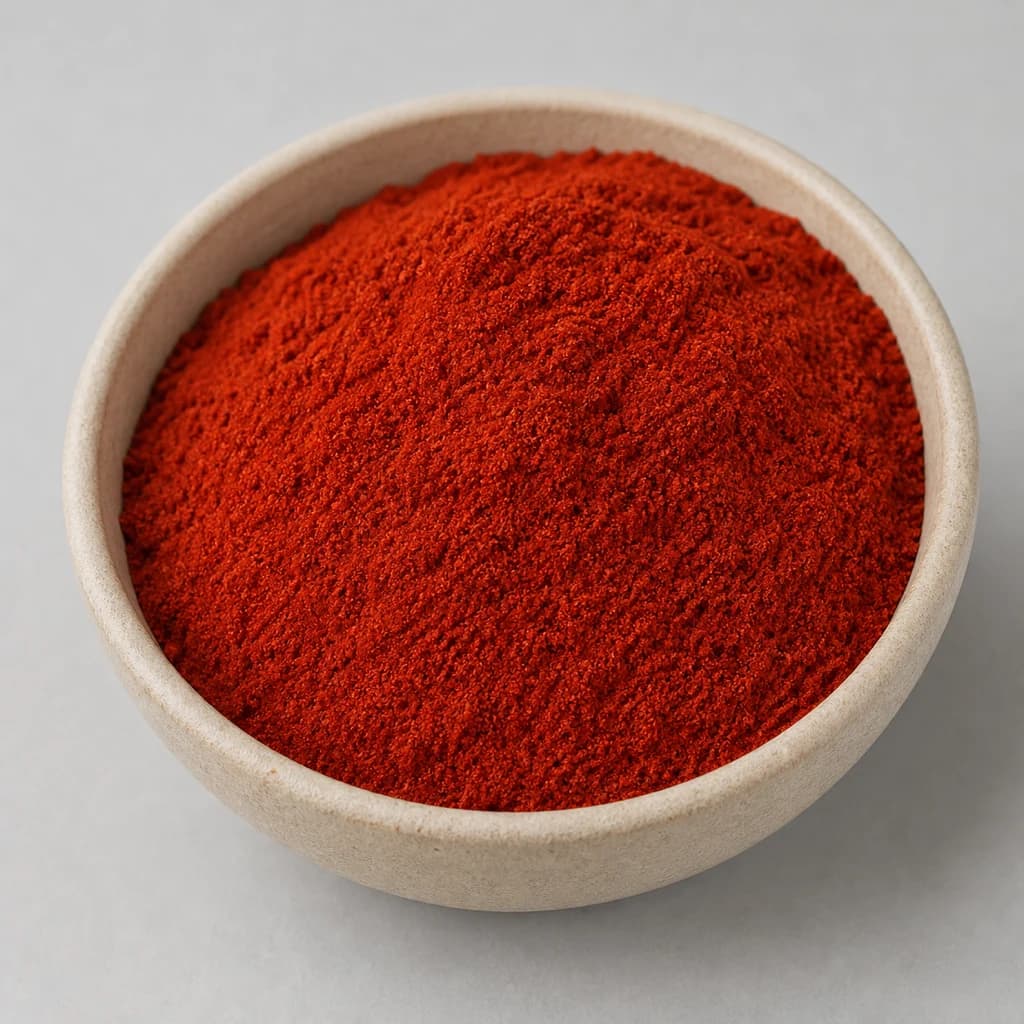
Smoked Paprika
Deep, smoky ground pepper for a campfire warmth
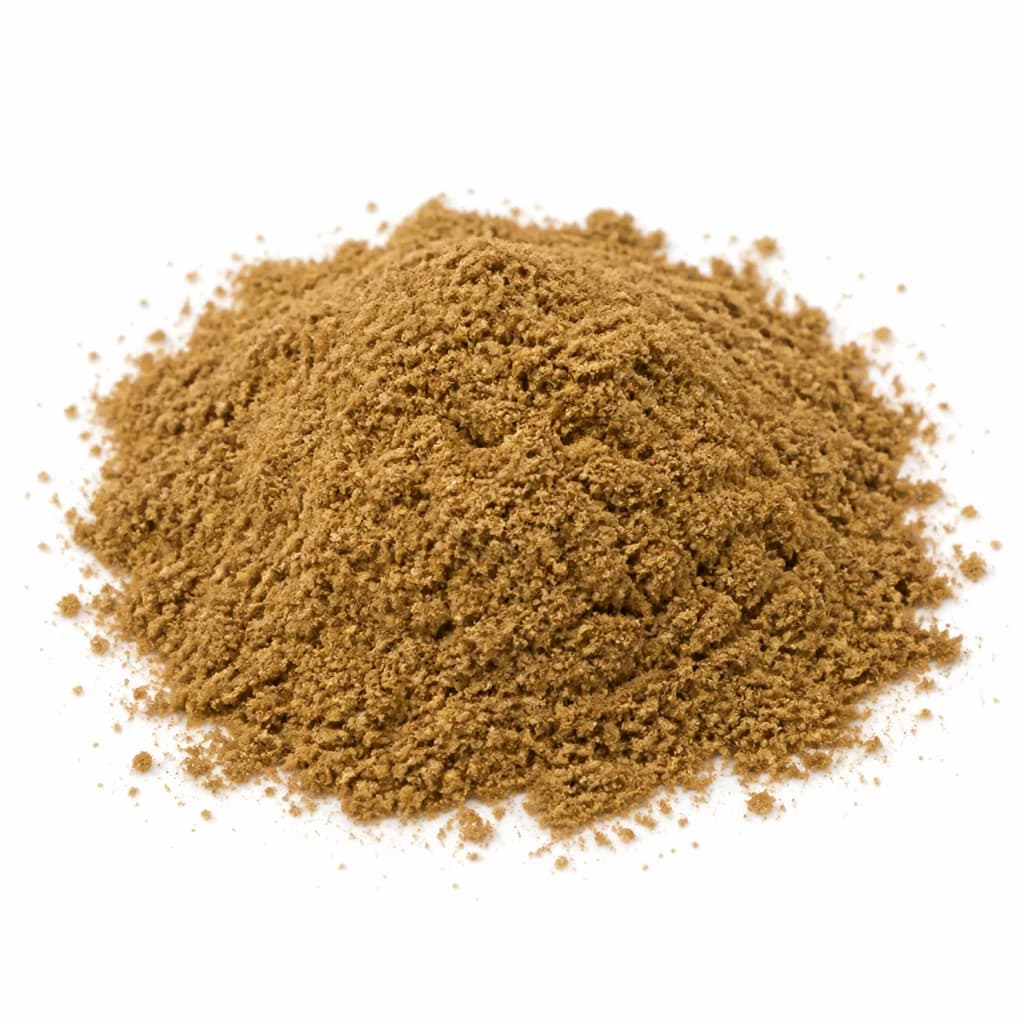
Cumin
Warm, earthy spice central to curries, chili, and tacos
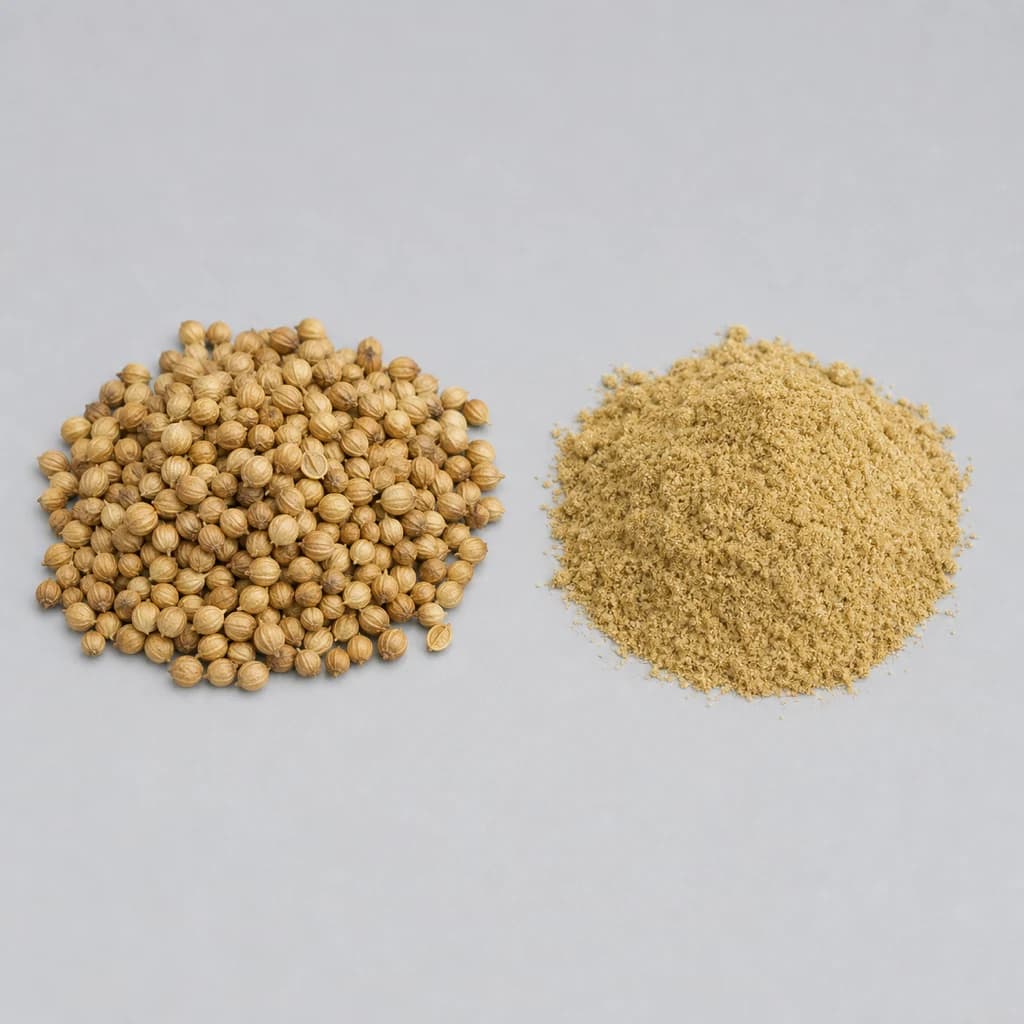
Coriander Seed
Citrusy, warm seed for curries, pickles, and rubs
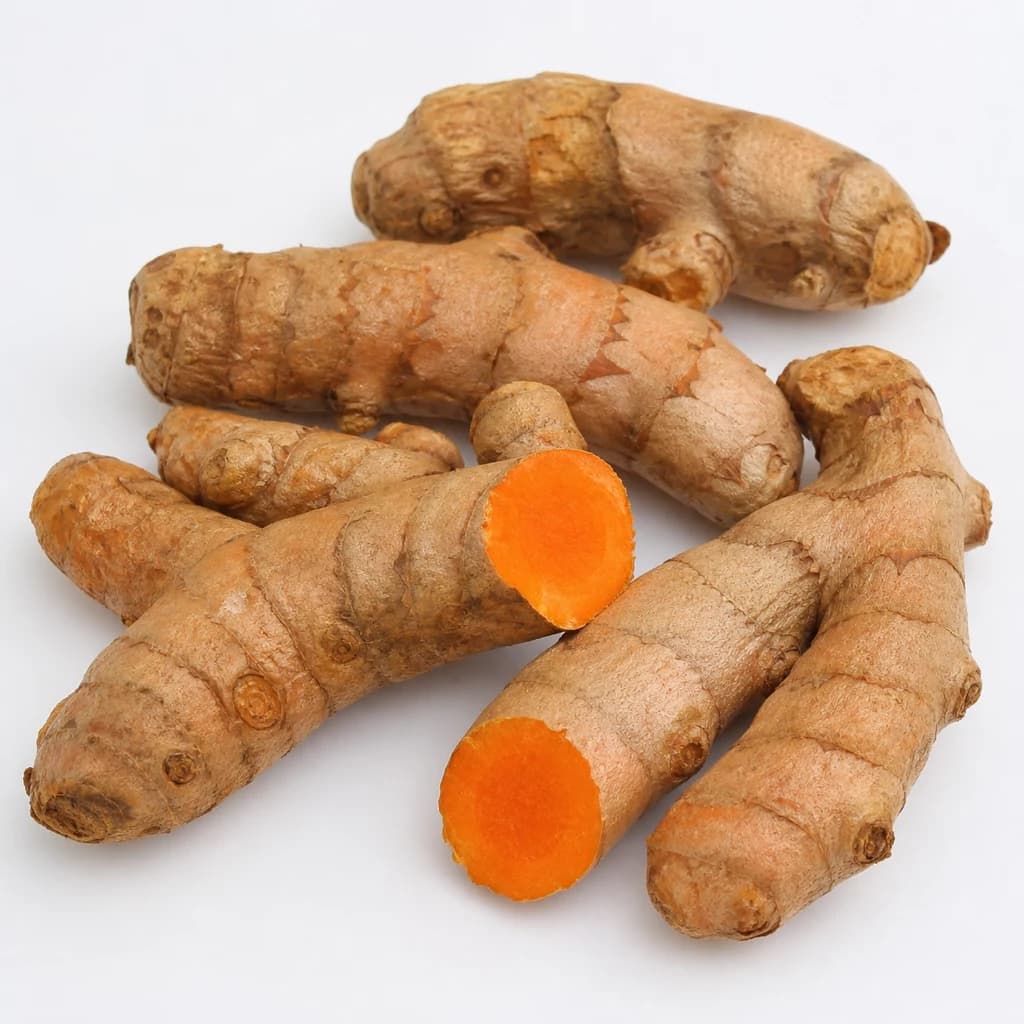
Turmeric
Golden, earthy spice for curries, rice, and color