Spices
Pickling / Canning Salt
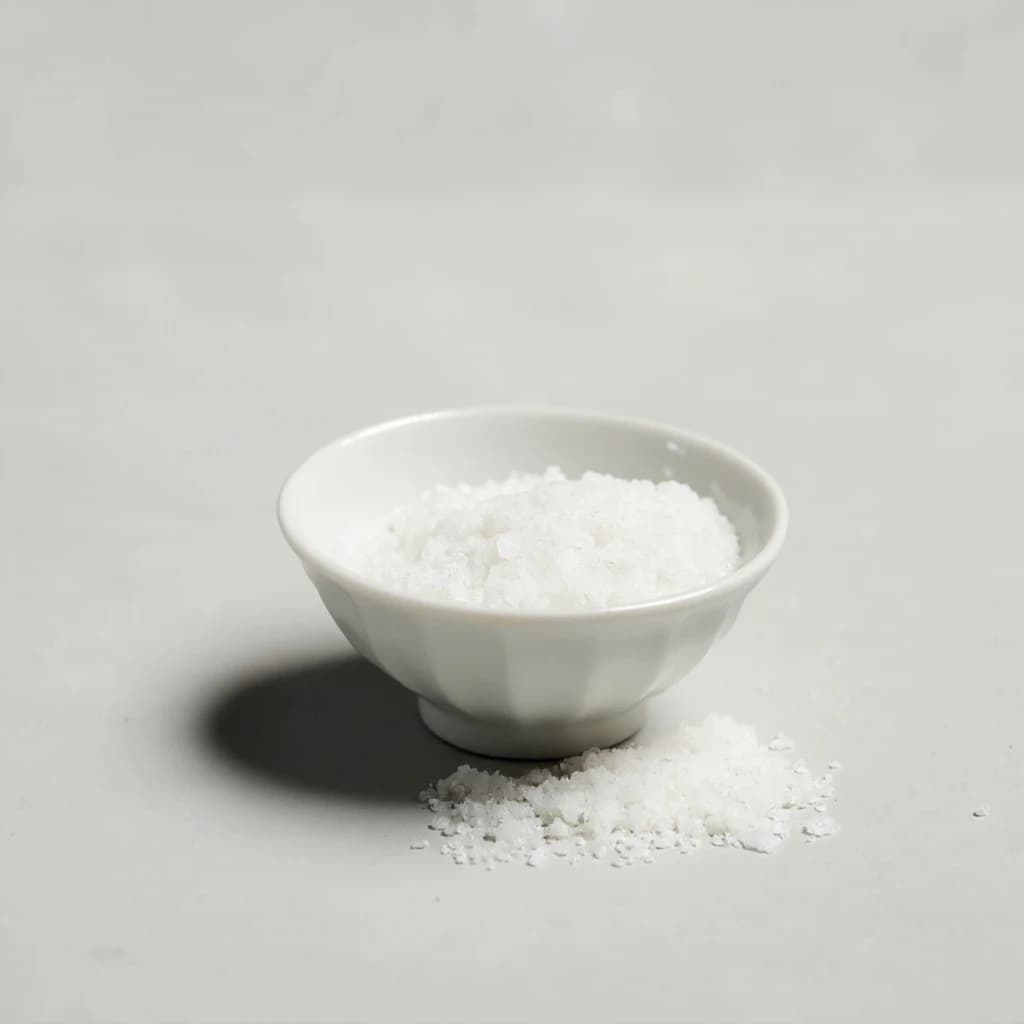
Pure fine salt with no iodine or anti-caking agents that would cloud brine or darken pickles. Dissolves cleanly for ferments and canning; not interchangeable by volume with table salt.
Pickling salt is plain sodium chloride stripped of the two additives found in ordinary table salt — iodine and anti-caking agents — and milled into fine, uniform crystals. That stripped-down composition is the entire point. Iodine, added to table salt to prevent goiter, reacts with pigments in cucumbers, cauliflower, and eggs to produce dull gray or purplish tones. Anti-caking compounds like calcium silicate and sodium ferrocyanide leave a visible haze and sediment in glass jars. For a ferment or a clear-brine pickle, neither is acceptable.
Functionally, the salt does the same job any salt does in a pickle: it seasons, draws water out of the vegetable by osmosis to form its own brine, lowers water activity to favor lactic acid bacteria over spoilage organisms, and helps preserve crunch by firming pectin. What changes is the visual and aromatic result — clean brine, bright color, no off-notes. Pickling salt is also denser by volume than flaked kosher salts, which is why cup-for-cup substitutions in older canning recipes can quietly oversalt a batch.
It is sold in fine crystal form, similar in feel to table salt, which dissolves quickly and completely in cold and warm brines. The most familiar packaging in North America is the 3-pound yellow carton of Morton Pickling Salt, though pure fine sea salt and unadorned popcorn salt do the same job if the label confirms the absence of additives.
- Measured in
- tbsp
- Storage
- Store In An Airtight Container In A Dry Place
Find it in
Suits
Types & varieties
The dominant US brand; fine, dense crystals sold in a recognizable 3 lb yellow box
Finer and denser than Diamond Crystal's kosher flake; less widely stocked than the Morton product
Often relabeled Morton or an equivalent pure fine salt; same specifications, frequently cheaper
Why Purity Matters
Pickling salt exists as a distinct product because the two additives in everyday table salt both create problems in a jar. Iodine is the bigger concern: in the presence of the phenolic compounds that give cucumbers, cauliflower, eggs, and some peppers their color, it forms dark complexes that turn pickles gray, greenish-brown, or even purplish. Anti-caking agents are subtler but visible — they suspend as a fine haze in cold brines and settle as pale sediment at the bottom of the jar. Stripping both additives out of the salt returns the brine to the clear, bright state that home canners and fermenters expect, and the result also tastes cleaner because iodine carries a faint metallic note that becomes noticeable against vinegar and lactic acid.
- Iodine reacts with phenolic pigments in cucumbers, cauliflower, and eggs to produce gray or purplish tones.
- Anti-caking agents such as calcium silicate and sodium ferrocyanide cloud cold brines and leave sediment.
- Both effects are purely cosmetic and flavor-related — the safety and preservation chemistry is unchanged — but they are exactly what pickling salt is formulated to prevent.
Salt by Weight, Not Volume
Most older canning recipes, and many modern ones, list salt in tablespoons or cups. That worked when pickling salt was the default and its density was assumed. The moment you reach for a different salt, the volume measure quietly changes. A cup of fine pickling salt weighs roughly 250 g; a cup of Diamond Crystal kosher flake weighs about 140 g; a cup of Morton kosher salt weighs closer to 180 g. The cup of pickling salt is therefore nearly double the weight of a cup of flaked kosher salt, and substituting one-for-one by volume will oversalt the brine enough to slow fermentation to a crawl or make quick pickles unpleasantly sharp. The fix is simple: use a kitchen scale, treat grams as the universal currency, and treat cups as approximate at best.
- 1 cup fine pickling salt is roughly 240–250 g.
- 1 cup Diamond Crystal kosher flake is roughly 140 g.
- 1 cup Morton kosher salt is roughly 180 g.
- When in doubt, weight-for-weight substitution across pure salts is reliable; volume-for-volume is not.
Common uses
Tips & pitfalls
- Measure pickling salt by weight when precision matters — it is denser than flaked kosher salts, so cup-for-cup substitution will oversalt the brine.
- Never swap in iodized table salt without expecting cloudy brine and darkening of the pickles; iodine reacts with pigments in cucumbers, cauliflower, and eggs, and anti-caking agents cloud the liquid.
- If substituting kosher salt for pickling salt, do it 1:1 by weight, not by volume — flaked kosher salt is roughly half to two-thirds the density of fine pickling salt.
- Dissolve the salt fully in the brine before pouring it over vegetables; undissolved grains sink and create concentrated pockets that oversalt and toughen the produce at the bottom of the jar.
- For lacto-fermented pickles, target a 2–5% salinity brine by weight (about 20–50 g salt per liter of water); the higher end slows fermentation, retains crunch, and yields a more shelf-stable result.
- For quick vinegar pickles, recipes typically call for 1–2 tablespoons per quart of brine — check the specific recipe, since levels vary by vegetable and by desired sharpness.
- Do not rinse vegetables after salting for a dry-salt ferment; the salt must remain on the produce to draw out water and form the brine in place.
- Hard tap water (high in calcium and magnesium) can soften pickles regardless of which salt you use — add a few grape leaves, oak leaves, horseradish leaves, or a small pinch of calcium chloride to the jar to keep the crunch.
Nutrition
Energy
0 kJ · per 100 g
Protein
0g
0% DV
Carbs
0g
0% DV
Fat
0g
0% DV
Fiber
0g
0% DV
Sugars
0g
of which
Sodium
38758mg
1685% DV
Source · USDA FoodData Central · approx. Salt, table
View on FDC →In the shops
Matched grocery products
 €0.75
€0.75Fine Table Salt
Hacendado · 300 g · Mercadona
 €0.40
€0.40Fine Salt
Hacendado · 1 kg · Mercadona
 €0.40
€0.40Fine Sea Salt
BONPREU · kg · Bonpreu
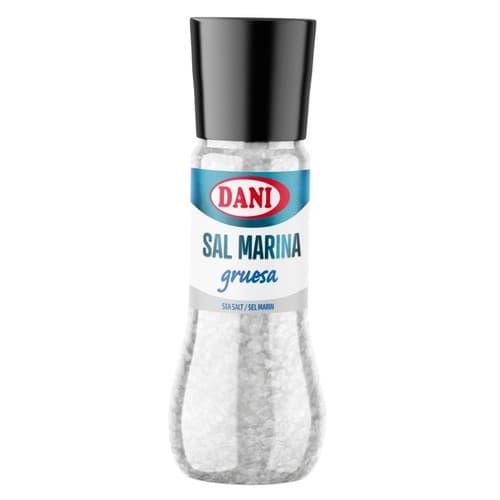 €2.99
€2.99Coarse Sea Salt
DANI · kg · Bonpreu
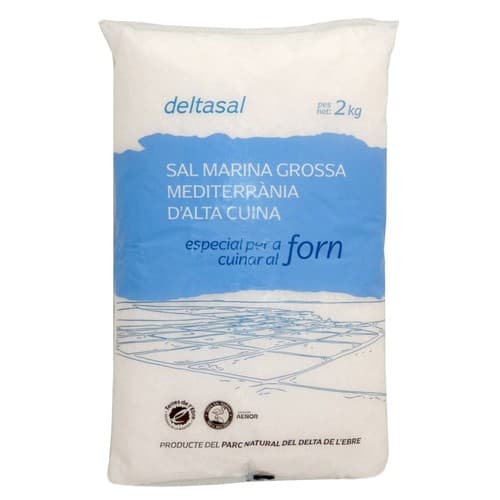 €1.40
€1.40Deltasal Coarse Sea Salt
DELTASAL · kg · Bonpreu
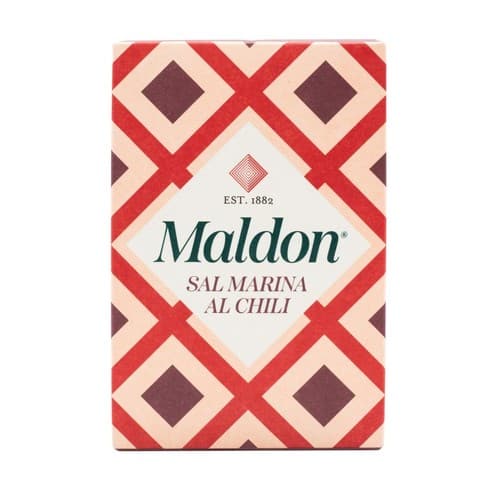 €5.89
€5.89Maldon Chili Sea Salt
MALDON · kg · Bonpreu
Good to know
- Composition
- Essentially pure sodium chloride (NaCl), typically 99% or higher
- Additives
- None — no iodine, no anti-caking agents such as calcium silicate or sodium ferrocyanide
- Granulation
- Fine, uniform crystals similar to table salt; dissolves quickly and clearly in cold and warm liquids
- Density
- Denser by volume than flaked kosher salts; roughly comparable to fine table salt
- Source
- Usually derived from underground salt deposits or evaporated seawater, then purified
- Function in Pickling
- Draws water out of vegetables by osmosis, seasons the brine, favors lactic acid bacteria over spoilage organisms, and lowers water activity for preservation
- Flavor
- Clean and purely salty — no metallic or iodine off-notes
- Shelf Life
- Indefinite if kept dry; clumps in humid conditions because it lacks anti-caking agents, but the caking is purely cosmetic
Substitutes
- Kosher salt (pure, no additives) — Best substitute; use it 1:1 by weight with the recipe's pickling salt, not by volume, since flaked kosher salt is roughly half to two-thirds the density
- Pure fine sea salt (no anti-caking agents) — Works 1:1 by weight; check the label carefully, as many sea salts include anti-caking agents that will cloud the brine
- Popcorn salt or pretzel salt — Typically very fine, pure NaCl with no additives; usable by weight as a direct substitute
- Iodized table salt — Not recommended — iodine darkens pickles (especially cucumbers, cauliflower, and eggs) and anti-caking agents cloud the brine; only use as a last resort, and expect visible and flavor changes
Also called
canning salt · preserving salt